We could all use some shuteye at the end of a long day. Why? For humans, sleep lets the body repair damaged cells after a workout or injury, boost an immune response to unwanted pathogens, and store new memories and knowledge in the brain. It’s hard to imagine that a fish swimming in the ocean all day wouldn’t require the same respite. So, how do marine animals sleep? The answer depends on the animal.
The word “sleep" may be a bit misleading when it comes to many species of ocean life. That’s because it implies a state of complete unconsciousness and suppressed awareness. While many species do sleep in the traditional sense, many more can be more accurately described as engaging in rest. These are defined as periods of reduced physical and metabolic activity when marine organisms replenish their energy, while still keeping their brains alert enough to evade nearby predators. A majority of crustaceans and mollusks, which don’t have complex brains like those found in mammals, engage in rest as opposed to sleep.
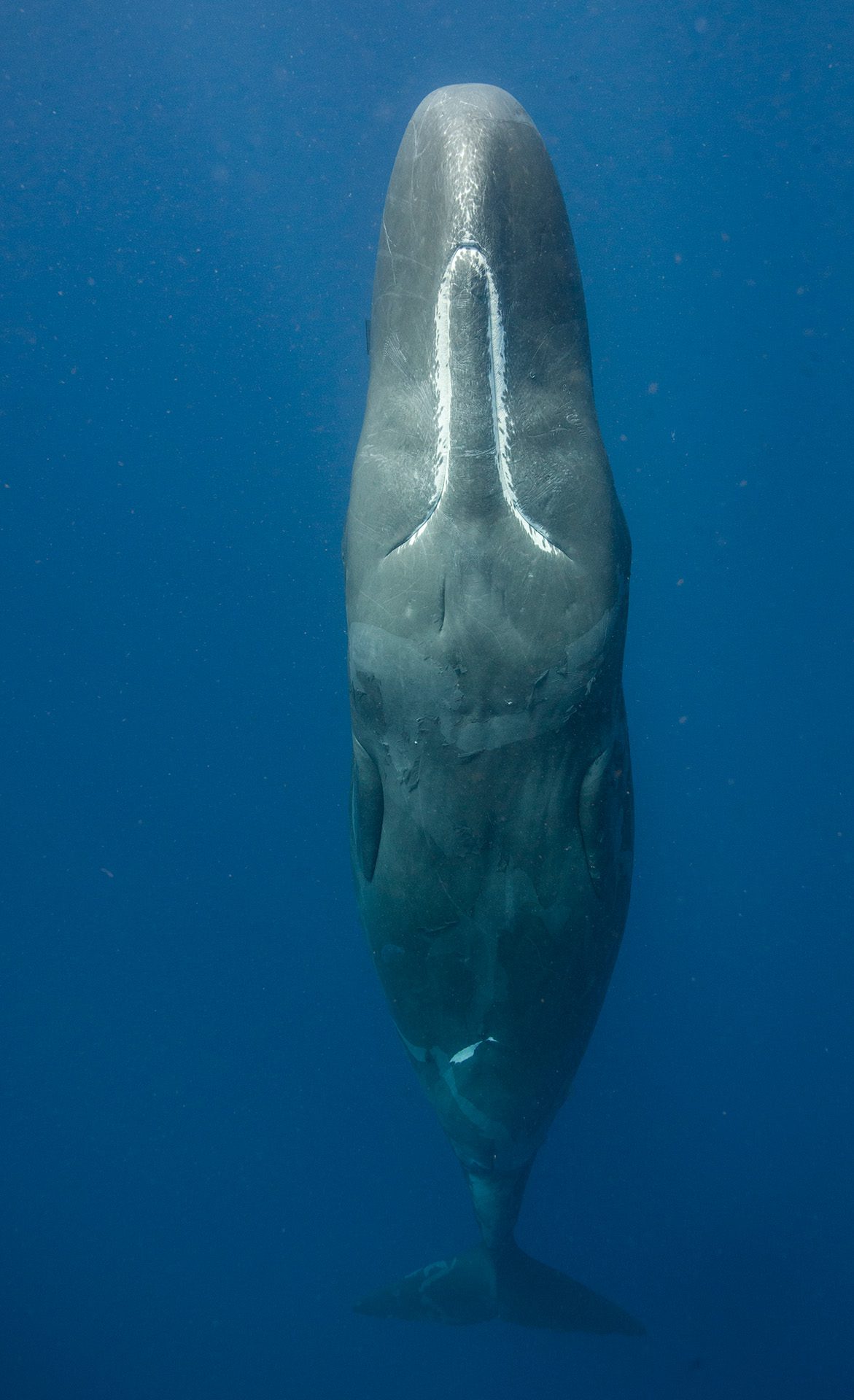
Sperm whale sleeping. (Credit: iStock photos)
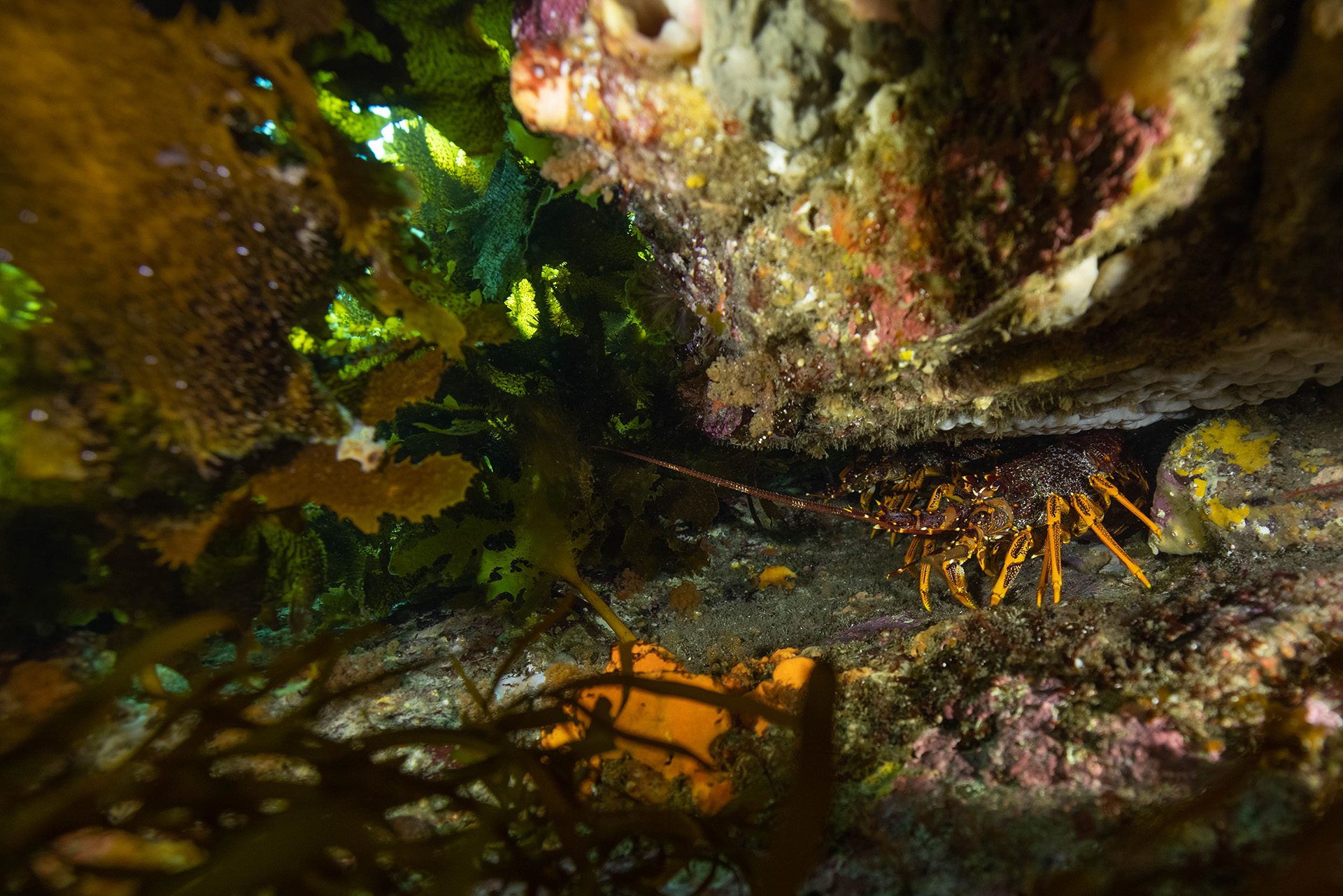
Rock lobsters, for example, are nocturnal and conserve energy by remaining motionless for up to 14 hours a day—often under cover of a dark overhang to give their lidless eyes a break from sunlight. Clams and other bivalves rest by relaxing the adductor muscles that hold their shells closed. This action allows them to open wider and increase their respiration. Alternatively, sessile (stationary) animals fixed to the seafloor, such as corals, rely more heavily on cues from temperature and sunlight to reduce or increase their metabolic activities throughout the day—an internal clock we humans also use called a circadian rhythm—or cues from tides (circatidal rhythms).
Other marine animals take a load off by turning a lobe off. Many species of shark as well as cetaceans (dolphins and whales) will quite literally shut down half of their brain to rest, a process known as unihemispheric slow-wave sleep (USWS). Like us, dolphins and whales are mammals that need to breathe air. In USWS, these animals can “sleep swim” their way to the surface for a breath. Sperm whales famously sleep in a vertical orientation, like floating pillars, during USWS. Obligate ram ventilators—species of shark that need to pass water continuously over their gills to breathe—also rely on USWS to breathe during sleep by swimming on autopilot. Great white, mako, and tiger sharks have all been known to enter currents to minimize their movement and increase water flow over the gills during USWS—a resourceful behavior known as dynamic surfing.
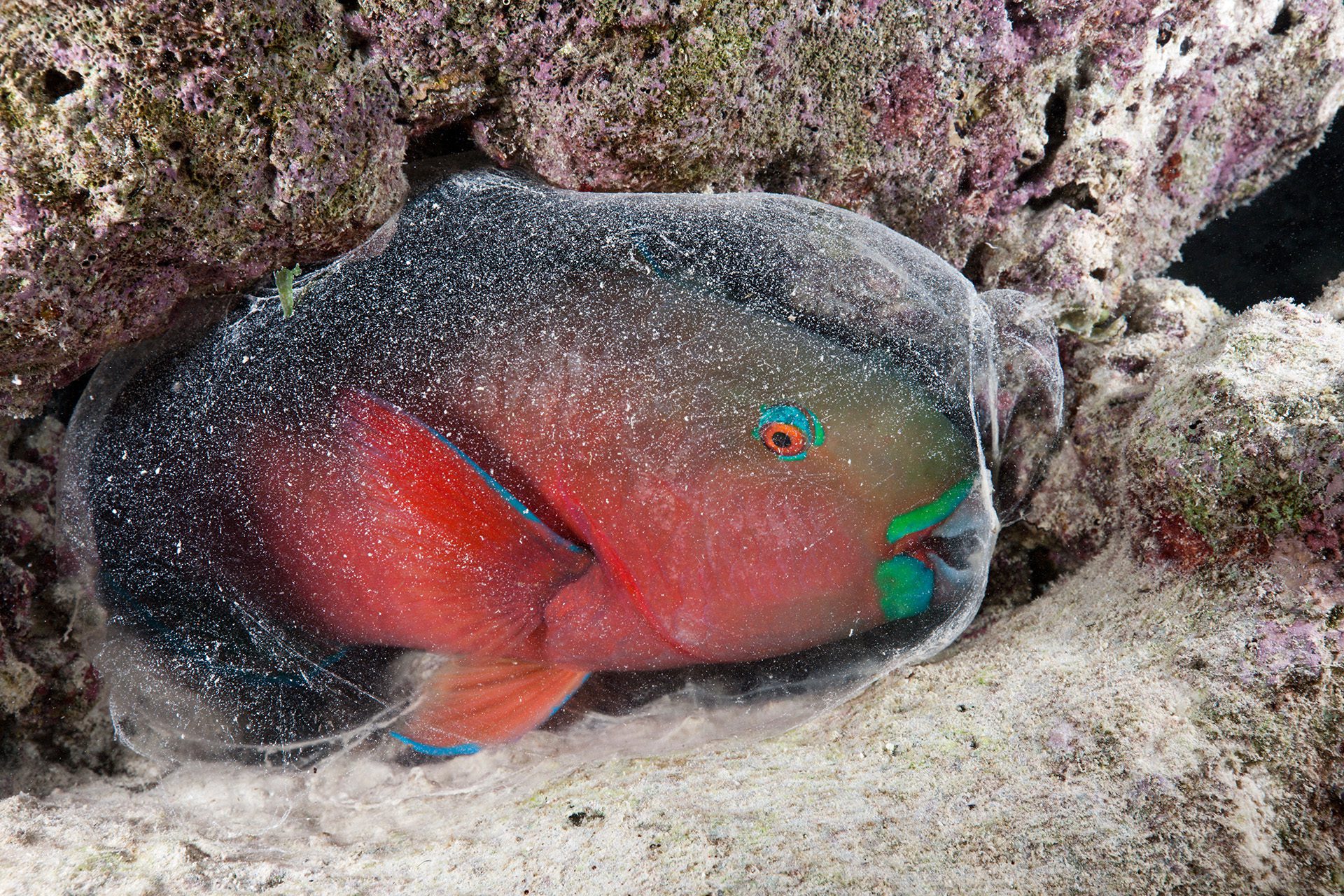
Finally, there are some species that can both rest and sleep. Parrotfish sleep by reducing activity in both lobes of their brain to allow for deep, restorative rest similar to what we humans experience. Night divers regularly find these fish cocooned in a clear mucus bubble—an ingenious trip alarm that parrotfish secrete to evade late-night intruders.
learn more
Marine mammals
Marine mammals are warm-blooded vertebrates that bear live young and nourish them with milk as land mammals...
Ocean life
Incredible diversity exists in the ocean, from microscopic organisms to the largest animals on Earth.

Rethinking Ocean Predators
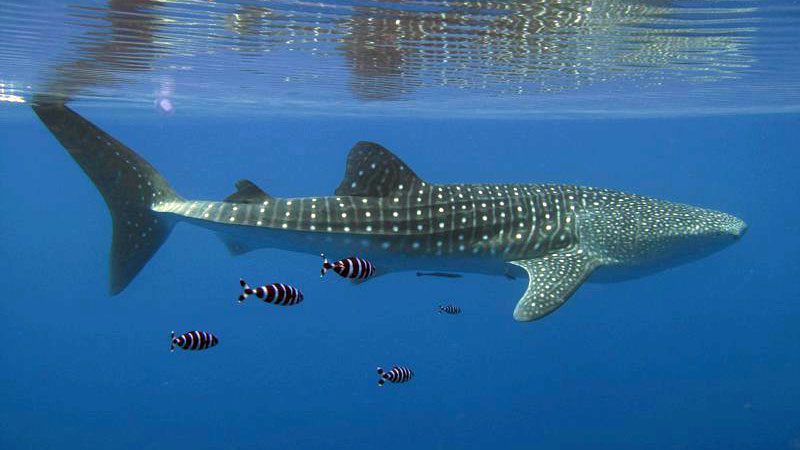
The ocean is home to many of Earth’s most iconic and often feared predators. But did you know that some of the largest are actually gentle giants that feed on the tiniest prey?
How do marine animals hear?
Sound travels faster and farther in water than air, helping marine animals like whales, corals, and crabs...
Ayalon, Inbal, et al. “Red Sea Corals under Artificial Light Pollution at Night (ALAN) Undergo Oxidative Stress and Photosynthetic Impairment.” Global Change Biology, vol. 25, no. 12, 2019, pp. 4194–4207. Wiley Online Library, doi:10.1111/gcb.14795. https://pubmed.ncbi.nlm.nih.gov/31512309/
Baguet, F., and J. M. Gillis. “The Respiration of the Anterior Byssus Retractor Muscle of Mytilus edulis (ABRM) after a Phasic Contraction.” The Journal of Physiology, vol. 188, no. 1, 1967, pp. 67–82. PubMed Central, doi:10.1113/jphysiol.1967.sp008124. https://physoc.onlinelibrary.wiley.com/doi/abs/10.1113/jphysiol.1967.sp008124
Gian Gastone Mascetti (2016) Unihemispheric sleep and asymmetrical sleep: behavioral, neurophysiological, and functional perspectives, Nature and Science of Sleep, , 221-238, DOI: 10.2147/NSS.S71970 https://www.dovepress.com/unihemispheric-sleep-and-asymmetrical-sleep-behavioral-neurophysiologi-peer-reviewed-fulltext-article-NSS
Grabek, Katharine R., and Christopher C. Chabot. “Daily Rhythms of PERIOD Protein in the Eyestalk of the American Lobster, Homarus americanus.” Marine and Freshwater Behaviour and Physiology, vol. 45, no. 4, 2012, pp. 269–279, doi:10.1080/10236244.2012.730209. https://pmc.ncbi.nlm.nih.gov/articles/PMC3593242/
Jury, Steven H., et al. “Daily and Circadian Rhythms of Locomotor Activity in the American Lobster, Homarus americanus.” Journal of Experimental Marine Biology and Ecology, vol. 318, no. 1, 2005, pp.61–70, doi:10.1016/j.jembe.2004.12.006. https://www.sciencedirect.com/science/article/pii/S0022098104006598
Lobster Institute. “Educational Resources.” University of Maine, https://www.umaine.edu/lobsterinstitute/educational-resources/ Accessed 3 Sept. 2026.
“Circadian Rhythms in Crustaceans.” Frontiers in Bioscience-Landmark, IMR Press, https://storage.imrpress.com/imr/journal/FBL/article/494075/1752772951759.pdf
Tran, Damien, et al. “Bivalve Mollusc Circadian Clock Genes Can Run at Tidal Frequency.” Proceedings of the Royal Society B: Biological Sciences, vol. 287, no. 1918, 2020, article 20192440, doi:10.1098/rspb.2019.2440. https://pmc.ncbi.nlm.nih.gov/articles/PMC7003461/