What is Microbial Life?
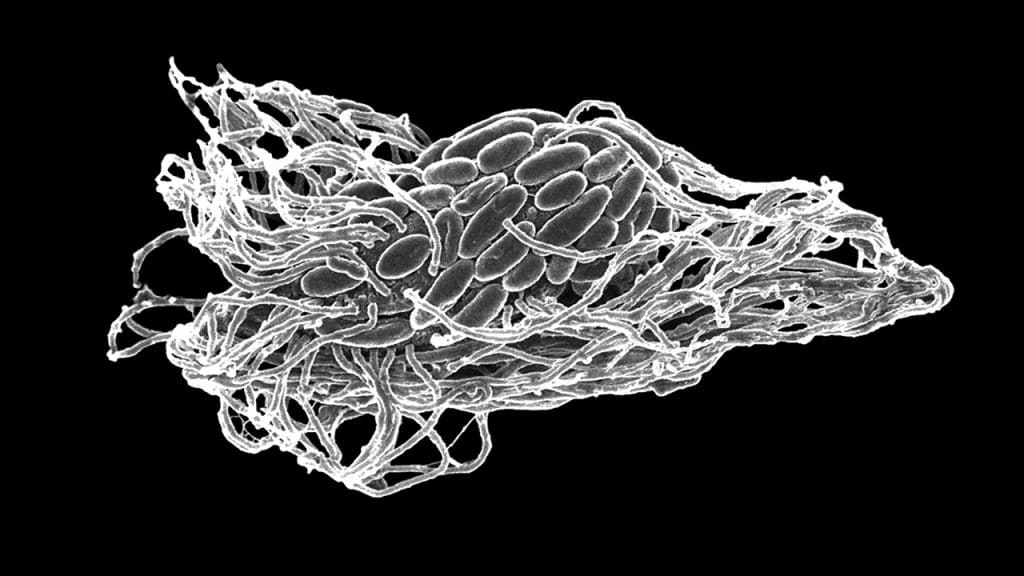
"Microbe" is a general term that encompasses almost any microscopic organism, including bacteria and archaea, which lack a cell nucleus or other membrane-bound cellular structures, and protists (mostly unicellular organisms that lack specialized tissues, and hence, are neither plant nor animal nor fungus). They can be found throughout the ocean, from rocks and sediments beneath the seafloor, across the vast stretches of open water, to intertidal and surf zones.
Did you know?
How do tiny marine microbes affect global carbon?
Tiny marine microbes transform ocean carbon, helping lock it away for centuries and slowing pace of global climate change.
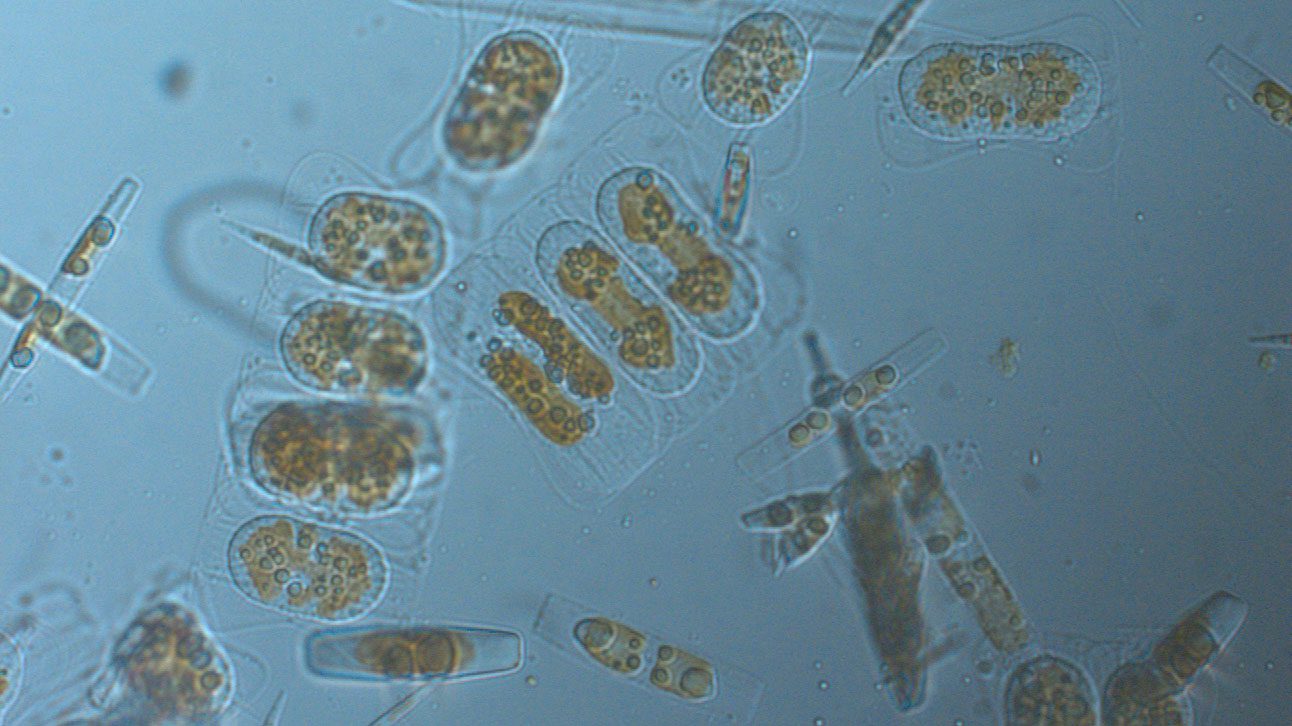
The diversity and number of microbes in the ocean far exceed that of macroscopic life, and many employ unique life strategies not seen anywhere else on Earth. Without them, life on Earth almost certainly would not be possible.
Some microbes are photosynthetic, deriving their energy from the sun. Below the photic zone (the uppermost, sunlit portion of the ocean), and especially at deep-ocean sites and around hydrothermal vents and seeps, microbes are chemosynthetic, meaning they derive energy from chemical reactions to drive their metabolic processes. Some microbes prey on others, some obtain carbon from inorganic sources, and some are scavengers that feed on dead organisms, fecal pellets, or other waste organic matter. Some can even consume hydrocarbons, aiding in the cleanup of oil from spills such as Deepwater Horizon. A few, such as diatoms and foraminifera, make hard, calcite “shells” that last for thousands of years in seafloor sediments and provide clues to past climate and ocean conditions.
 Illustration
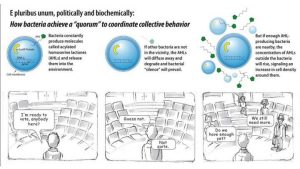
How bacteria achieve a “quorum”
Bacteria utilize quorum sensing to coordinate collective behavior, a process that allows them to communicate and respond as a unified group. This fascinating mechanism plays a crucial role in their survival and adaptation in diverse environments.
 Illustration
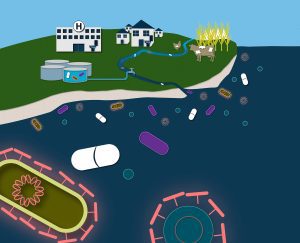
How bacteria is transported through the environment into the ocean
Wastewater carries antibiotics and bacteria to oceans, where antibiotic-resistant microbes emerge. Researchers study these impacts on marine and human health.
 Illustration
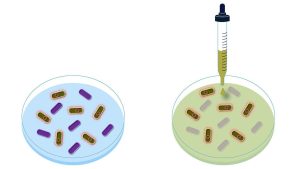
Growing bacteria in petri dishes applied with antibiotics
Antibiotics can encourage antibiotic resistance by killing off all the susceptible bacteria and leaving only the resistant bacteria to grow and multiply.
 Illustration
Cystic fibrosis
Cystic fibrosis impairs lung function due to a faulty protein. WHOI scientists seek marine molecules that might help restore normal function.
 Illustration
Decoding microbes by their lipids
Scientists use lipid chemistry to identify ocean microbes—distinguishing light-powered autotrophs from carbon-processing heterotrophs in seawater samples.
 Illustration
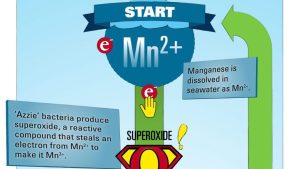
Two Chemical Roads Diverge in an Open Ocean illustration
An exploration of how and why manganese oxide deposits form in the environment
 Illustration
Diatoms and Bacteria: A Complex Ocean Partnership
Diatoms and bacteria rely on each other for nutrients like organic carbon and B12 but compete for scarce iron, creating a delicate balance in ocean chemistry.
 Illustration
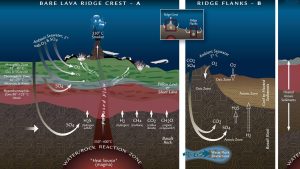
A smorgasbord of chemical reactions
Deep-sea microbes thrive near hydrothermal vents by using diverse chemical reactions—both with and without oxygen—to extract energy and grow underground.
 Illustration
Photosynthesis process featuring its light and dark stages
To cope with fluctuating light levels, many phytoplankton have accessory pigments that can change structure and to send more or less energy to choloroplasts.
 Illustration
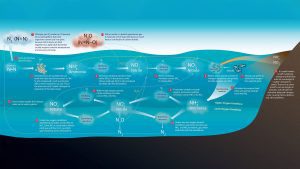
Nitrogen cycle, with imbedded callouts, captions
Chemical detectives follow nitrogen's elusive and essential trail in the ocean.
 Illustration
Microbial Life Tree
Genetic analyses trace deep-sea microbes' diverse metabolic paths across bacteria, archaea, and eukaryotes, unveiling life's complex tree.
 Illustration
Microbial "Trojan horses" stages
Some bacteria ingested by protists escape digestion, survive, and even reproduce—eventually returning to the environment, potentially still infectious.
 Illustration
Mesodinium rubrum Animal/Plant-Bending Transitions
Mesodinium rubrum usually grow by eating algae, but it can also steal cellular machinery from algae and use it to make its own food via photosynthesis.
 Illustration
Mesodinium rubrum Boom-and-bust Cycles
Mesodinium rubrum usually grow by eating algae, but it can also steal cellular machinery from algae and use it to make its own food via photosynthesis.
 Illustration
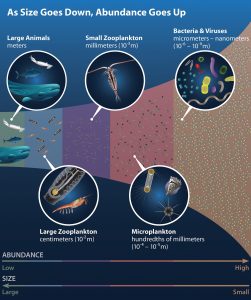
Marine Life Size vs Abundance
Ocean life spans from tiny bacteria and viruses to massive whales, with fewer larger animals. Most creatures prey on organisms just smaller than themselves in the food chain.
 Illustration
The existence of ancient vent microbes
Microbes deep below the seafloor survive on chemicals from seawater-rock reactions. Ancient mantle rocks reveal preserved traces of their life.
 Illustration
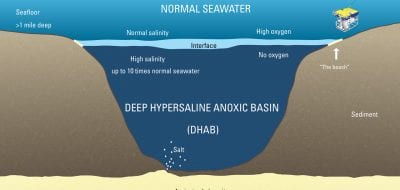
How a Deep Hypersaline Anoxic Basin (DHAB) forms
Deep hypersaline anoxic basins form when salt dissolves into seafloor water, creating dense, oxygen-free water trapped below normal seawater in ocean valleys.
 Illustration
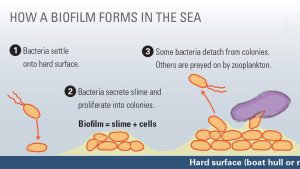
How a biofilm forms in the sea
Bacteria settle on surfaces, secrete slime, and grow into colonies. Some detach or are eaten by zooplankton. Large organisms can attach if the biofilm becomes thick enough.
 Illustration
Illustration depicting the formation of the Samoan Islands chain
Like Hawaii, the Samoan Islands formed over a volcanic hotspot.
 Illustration
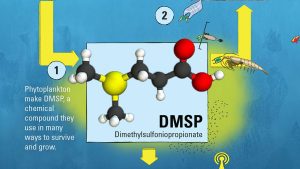
How the Dimethylsulfoniopropionate (DMSP) compound affects the environment
DMSP is synthesized by phytoplankton—the microscopic marine plants at the heart of the ocean food web—for a variety of beneficial uses.
Why is it important?
Ocean microbes play an important role in Earth's biogeochemical cycles, particularly the carbon, nitrogen, phosphorus, iron, and sulfur cycles. They also form the very base of the marine food chain, recycle nutrients and organic matter, and produce vitamins and cofactors needed by higher organisms to grow and survive. Many have evolved over millions of years to form symbiotic relationships with animals that allow the host animals to live in harsh or otherwise toxic environments, such as the hot, sulfur-rich waters around hydrothermal vents.
Some microbes are pathogens (toxic to humans and marine life) and result in billions of dollars lost or spent each year; others have resulted in billions of dollars and millions of lives saved through the development and production of pharmaceuticals or other commercial products.
Ocean Encounters: Small but Mighty
Microbes and plankton may be small, but they have a big part to play in shaping our planet. The ocean’s smallest inhabitants form the base of marine food webs, help regulate global climate, and may hold the secrets to the origins of life on Earth.
More topics like this
Sargassum
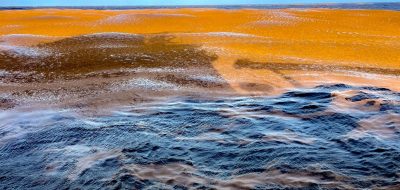
Sargassum sustains ocean life, but massive blooms increasingly threaten coastal ecosystems, economies, and human health.
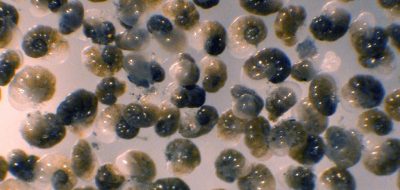
Benthic life
Benthic animals live on the sea floor and are typically invertebrates, such as sea anemones, sponges, corals, sea stars, sea urchins, worms, mussels, crabs, and more.
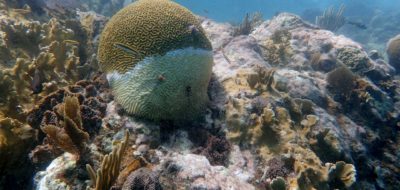
Coral stressors
Stressors can affect organisms living on the reef or they can affect the corals, themselves. When corals die, other organisms must relocate or struggle to survive.
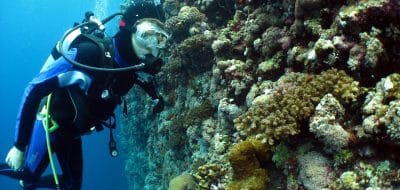
Corals
Many people think of coral as hard, rock-like formations that attract abundant, diverse marine life. In fact, corals are tiny marine animals called polyps that live together in colonies.
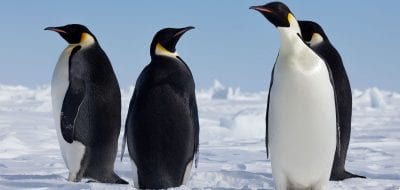
Emperor penguins
The emperor penguin is the largest living penguin species standing around 115 centimeters tall. Once they have found a partner, they work together to keep their young fed and safe.
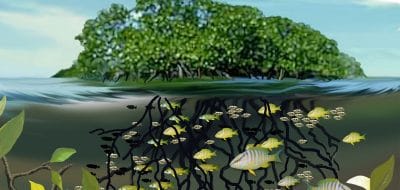
Coastal ecosystems
The narrow region where land and ocean meet includes salt marshes, mangroves, wetlands, estuaries, reefs, and bays often linked in a network of physical, chemical, and biological interchanges.
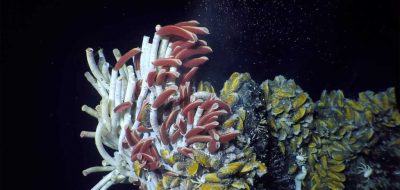
Ecosystems
Ocean ecosystems are found in polar regions, coastal waters, coral reefs, hydrothermal vents, the abyssal plain, and at the bottom of the sea.
Environmental DNA (eDNA)
Environmental DNA (eDNA) is essentially DNA collected from the environment. As animals swim through the ocean, they're constantly releasing DNA as they shed skin or scales into the water column.
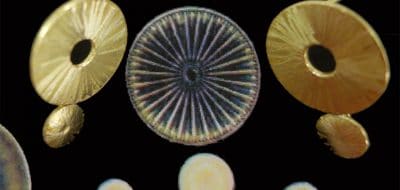
Phytoplankton
Phytoplankton are primary producers of the ocean—the organisms that form the base of the food chain. WHOI explores the microscopic, single-celled organisms.
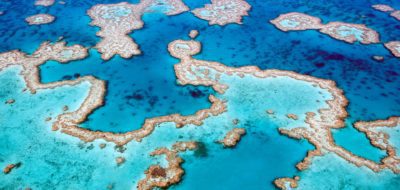
Reef ecosystems
A healthy reef protects coastlines from wave damage, plays a critical role in providing food, boosts the economy, and provides materials for pharmaceuticals.
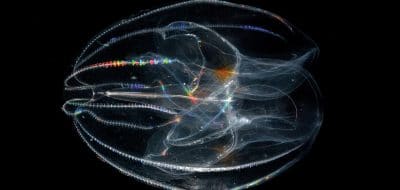
Jellyfish & other zooplankton
These animals live all or part of their life suspended and drifting in fresh or salt water, rarely come in contact with hard surfaces.
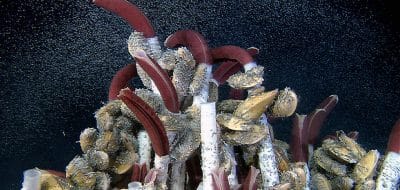
Life at vents & seeps
Hydrothermal vents and cold seeps are places where chemical-rich fluids emanate from the seafloor, often providing the energy to sustain lush communities of life in some very harsh environments.
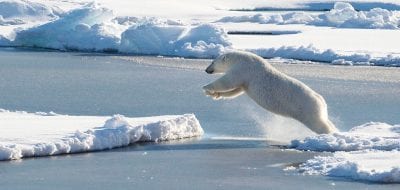
Polar life
By human standards, they are extreme environments. Yet life not only persists in the poles...it thrives.
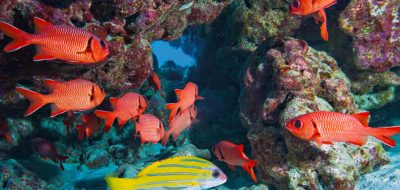
Reef fish
Fish that inhabit a coral reef play essential roles in the reef ecosystem, and reefs without fish struggle to recover from bleaching or other events that damage the coral.
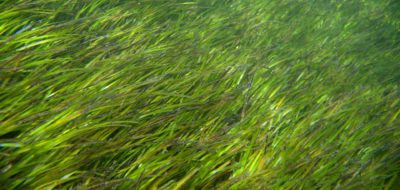
Seagrass meadows
Seagrass meadows are plants adapted to live a completely submerged life in the salty shallows.
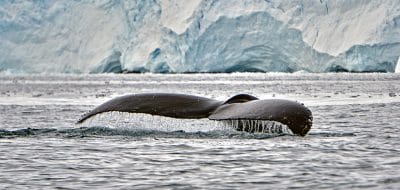
Marine mammals
Marine mammals are warm-blooded vertebrates that bear live young and nourish them with milk as land mammals do, but that spend most or all of their lives in the ocean.
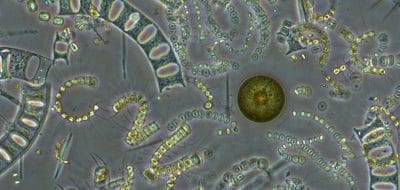
Ocean plants
Ocean plants are critical to marine life—they are an important food source, they provide oxygen to surrounding marine life, and they supply refuge and nursery grounds.
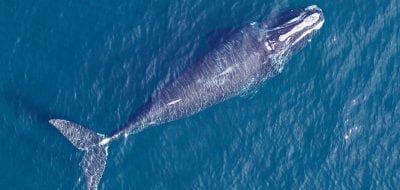
Right whales
The North Atlantic right whale is one of the ocean's most endangered large animals, with only a few hundred left. Slow-moving and often near the surface, these baleen whales are especially vulnerable to ship strikes and entanglement in fishing gear.

Seabirds
Seabirds have adapted to life in an ocean environment. There are many species of seabirds, and they vary greatly in behavior and physiology
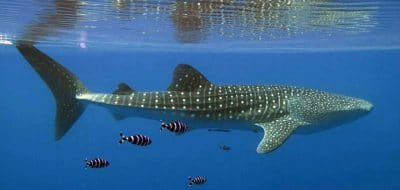
Sharks & other fish
Fish are vital to healthy ecosystems and economies, serving as predators and prey while maintaining balanced food webs and protecting habitats like coral reefs and mangroves.
Oceanus magazine
[ ALL ]In-depth research on Marine microbes

Our eyes on the seafloor

Bridge-to-PhD program at WHOI opens doors for new scientists

A coral reef kickstart
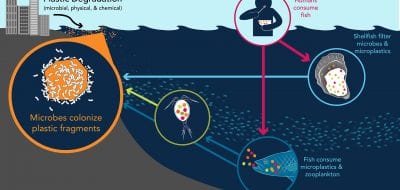
Junk Food

A Lobster Trap for Microbes

The Unseen World on Coral Reefs

The Recipe for a Harmful Algal Bloom

The Bacteria on Your Beaches

Scientists Reveal Secrets of Whales

In the Gardens of the Queen

The Amazing Acquired Phototroph!
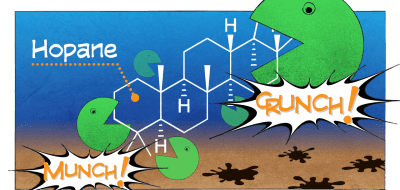
What Happened to Deepwater Horizon Oil?




WHOI News Room
[ ALL ]Press releases
What can a whale’s breath tell us? According to a new study, a lot about its health
Woods Hole Oceanographic Institution’s Julie Huber awarded prestigious Rachel Carson Lecture by the American Geophysical Union
Get the ocean in your inbox
Fresh discoveries, research, and stories from WHOI — free, every week.