What are Hydrothermal Vents?
In 1977, scientists exploring an oceanic spreading ridge near the Galápagos Islands made a stunning discovery: openings in the Pacific Ocean seafloor with warm, chemical-rich fluids flowing out. The discovery of these hydrothermal vents fundamentally changed our understanding of life on Earth.
Hydrothermal vents on the ocean floor are similar to hot springs found on land. Both form where magma under Earth’s crust heats subterranean water to extreme temperatures. That water erupts through the crust, sometimes forcefully, other times in gentle seeps.
In the ocean, most hydrothermal vents occur along mid-ocean ridges—long mountain chains that form where tectonic plates separate, allowing magma to bubble up toward the ocean floor. Cold water sinks into the seafloor through cracks in the rock. Once beneath the surface, underlying magma chambers heat the seawater, which causes it to chemically react with the surrounding rock.
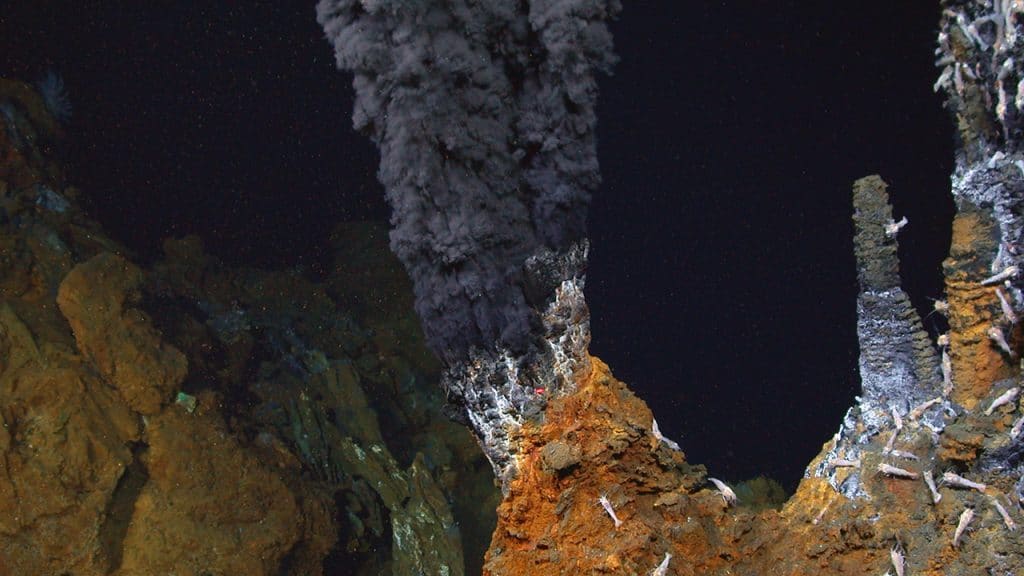
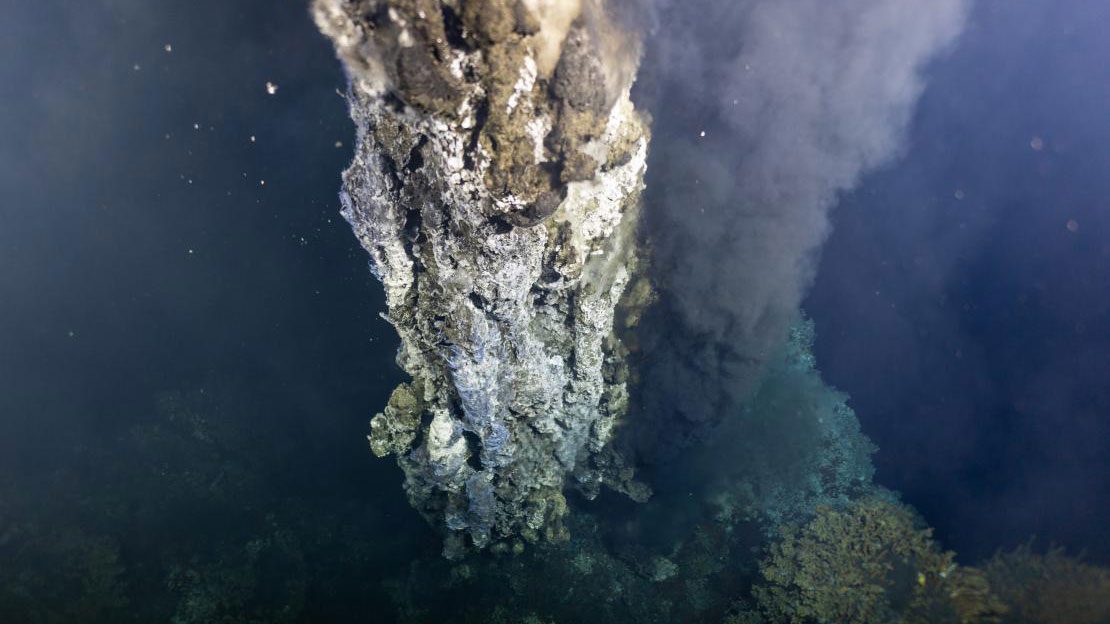
These chemical changes transform seawater into hydrothermal fluid, which flows upward through hydrothermal vents, bringing a hot, chemical-rich flow into the ocean. The fluid venting out of the seafloor can reach temperatures of 400° Celsius (750° Fahrenheit). Minerals and chemicals provide a source of energy for deep-sea ecosystems that exist nowhere else on the planet.
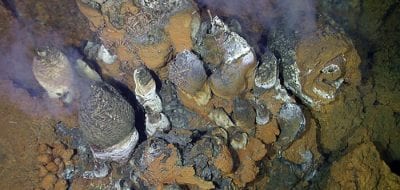
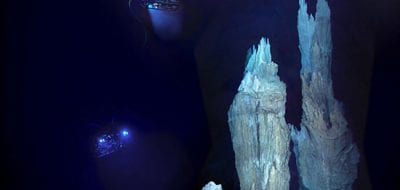
Scientists recognize several types of hydrothermal vents, including two well-known types: black smokers and Lost City vents. Black smokers are tall, chimney-like structures that vent high-temperature mineral-rich fluids. As these fluids mix with cold seawater, iron sulfides and other minerals precipitate, creating the characteristic black “smoke.” Black smoker hydrothermal fluid typically measures around 350° Celsius (660° Fahrenheit) as it exits the chimney. Lost City vents are much cooler, releasing water between 50° and 90° Celsius (122° to 194° Fahrenheit).
 Interactive science
Photosynthesis vs. Chemosynthesis
Plants use sunlight to make food. Microbes near deep-sea vents use chemicals instead. Compare how life gets energy when the sun doesn't shine.
 Interactive science
Vents Around the World
Explore global hydrothermal vents—from mid-ocean ridges to arc volcanoes—and see how confirmed and inferred vents are worldwide.
 Interactive science
Vent Boiling Points
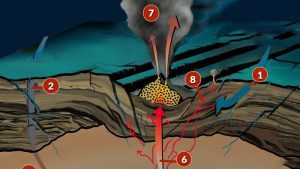
Water boils at different temperatures depending on depth. Click the markers to see how pressure affects boiling points as you descend into the deep ocean.
 Interactive science
Vent Chemistry
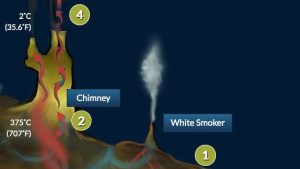
Hot fluids from vents mix with seawater, cycling metals like copper and zinc, fueling unique chemical reactions and chemosynthetic life deep in the ocean.
 Interactive science
Hydrothermal Vent Basics
Discover how hydrothermal vents form, what they release, and why these extreme environments are hotspots for ocean chemistry and deep-sea life.
Why are they important?
Because hydrothermal vents transport minerals and other chemicals from the ocean floor into circulating seawater, they play a critical role in Earth’s geochemical cycles. In addition to iron and other minerals, hydrothermal fluid carries methane, hydrogen, and other gases that microbes convert to energy so they can grow and reproduce. Microbes form the base of complex deep-ocean food webs. The diversity of life inhabiting vent fields could provide important discoveries for medicines and has already benefited human health: An enzyme isolated from a hydrothermal vent microbe played a critical role in the development of COVID-19 tests.
What kinds of organisms can be found near hydrothermal vents?
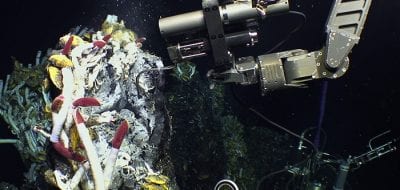
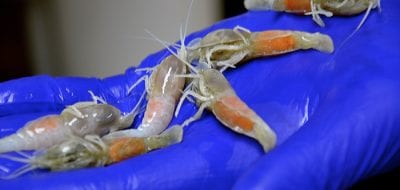
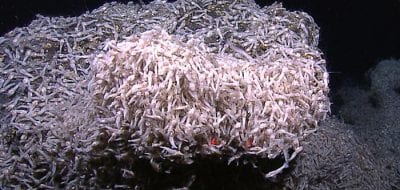
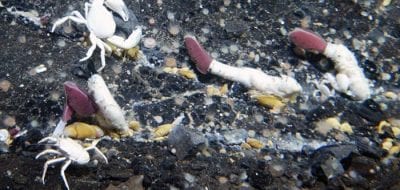
Most of the organisms in a hydrothermal vent ecosystem are microscopic. These microorganisms feed on the chemicals spewing from the vent, converting the chemicals into energy. In addition, scientists estimate that 800 animal species live in vent ecosystems. These are often deep-water-adapted relatives of animals commonly found at shallower depths. Shrimp, clams, mussels, crabs, and tubeworms thrive near hydrothermal vents. Some feed on microbial mats on the seafloor while clams, mussels, tubeworms, and others filter free-floating microbes out of the water when they feed. These animals are well adapted to the extreme pressure, lack of light, and shifting temperatures found at hydrothermal vents. Many microbes have a waxy outer layer that keeps them from being crushed, and shrimp have primitive “eyes” that detect heat, rather than light.
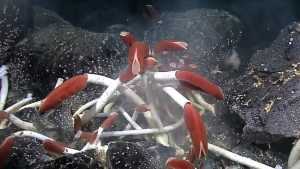
Some animals have a symbiotic relationship with microbes. Six-foot-tall tubeworms lack mouths or digestive systems. Instead they host microbes inside special chambers in their bodies. The microbes convert hydrothermal chemicals into energy that they share with their tubeworm hosts. Yeti crabs, named for their hairy forelegs, hold their bristly appendages over hot hydrothermal fluid, possibly to allow bacteria housed inside the hairs access to food.
Each individual vent field is only about the size of a soccer pitch, and fields can be separated by as much as 1,000 kilometers (about 620 miles). The animal communities found at individual vent fields can form unique ecosystems found nowhere else in the ocean. Despite the long distances separating some vent fields, animals can colonize new fields through their offspring. Tiny, free-swimming larvae hitch a ride on currents, settling once they encounter a vent field that provides the necessary conditions.
 Illustration
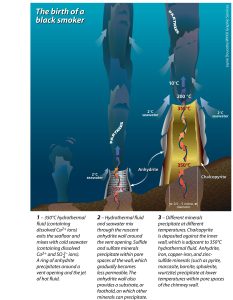
The birth of a black smoker
Black smoker chimneys form as hot vent fluids mix with cold seawater, first building walls of anhydrite, then layering on metal sulfides over time.
 Illustration
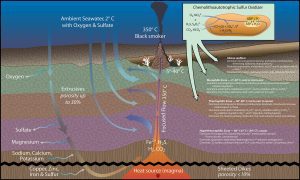
Life and chemistry at deep-sea hydrothermal vents
Hydrothermal vents host extreme microbes that drive key chemical cycles—oxidizing sulfur, fixing CO?, and producing methane in a hot, mineral-rich environment.
 Illustration
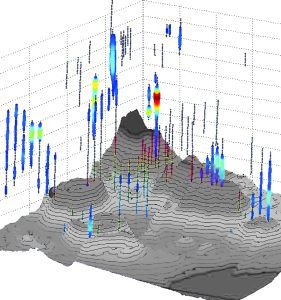
Hunting hydrothermal plumes with a CTD Tow-Yo
Oceanographers use a CTD—an instrument towed through deep water—to detect hydrothermal plumes by sensing heat, minerals, and chemicals below the surface.
 Illustration
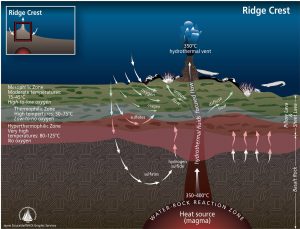
A microbial garden beneath the seafloor
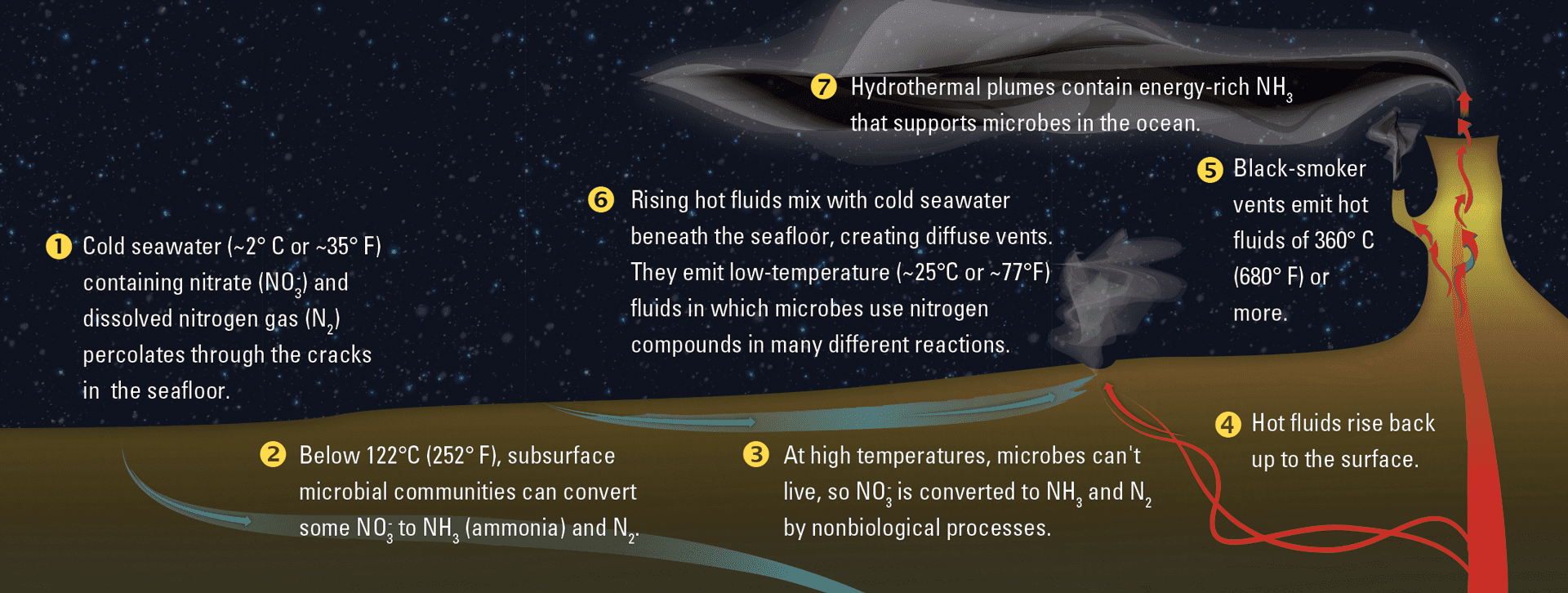
Chemical reactions below the seafloor create energy-rich fluids that sustain a vast, diverse microbial biosphere adapted to specific underground niches.
 Illustration
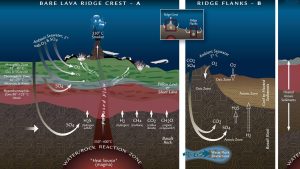
A smorgasbord of chemical reactions
Deep-sea microbes thrive near hydrothermal vents by using diverse chemical reactions—both with and without oxygen—to extract energy and grow underground.
 Illustration
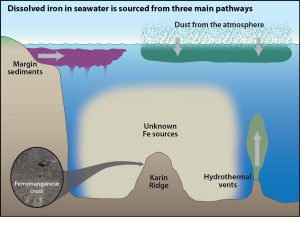
Sources of dissolved iron in seawater
New research shows deep-ocean vents and sediments supply much dissolved iron to the central Pacific, traveling far—challenging the dust-only iron source view.
 Illustration
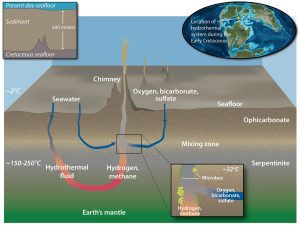
Microbial life is discovered in vents
Scientists found 100-million-year-old microbial life in seafloor rocks near Portugal, thriving deep underground where hydrothermal fluids mixed with seawater.
 Illustration
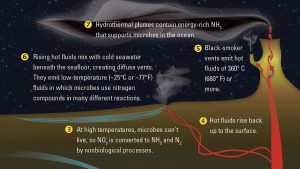
How a hydrothermal vent system works
Hydrothermal vents form in places where there is volcanic activity, such as along the Mid-Ocean Ridge.
 Illustration
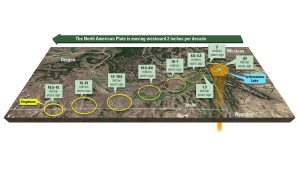
Eruptions along the North American Plate and Yellowstone hotspot
The North American Plate has slowly moved westward over an active magma chamber, leaving a trail of past eruptions. The hotspot now lies beneath Yellowstone Park.
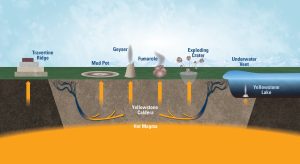 Illustration
Conceptual cross-section view of Yellowstone Lake geothermal dynamics
Yellowstone's colorful pools and geysers are surface features of a vast geothermal system that stretches beneath the northern half of Yellowstone Lake.
What do hydrothermal vents tell us about life on Earth and other planets?
The chemical processes taking place in hydrothermal vents likely mimic those seen early in Earth’s history and offer compelling evidence for how geochemical reactions might have given rise to microbial metabolic processes. Scientists suspect that similar processes may take place on other planetary bodies that host saltwater oceans, including moons in the outer solar system. Although these moons are too far from the sun for photosynthesis, hydrothermal vents deep in their oceans could still sustain life.
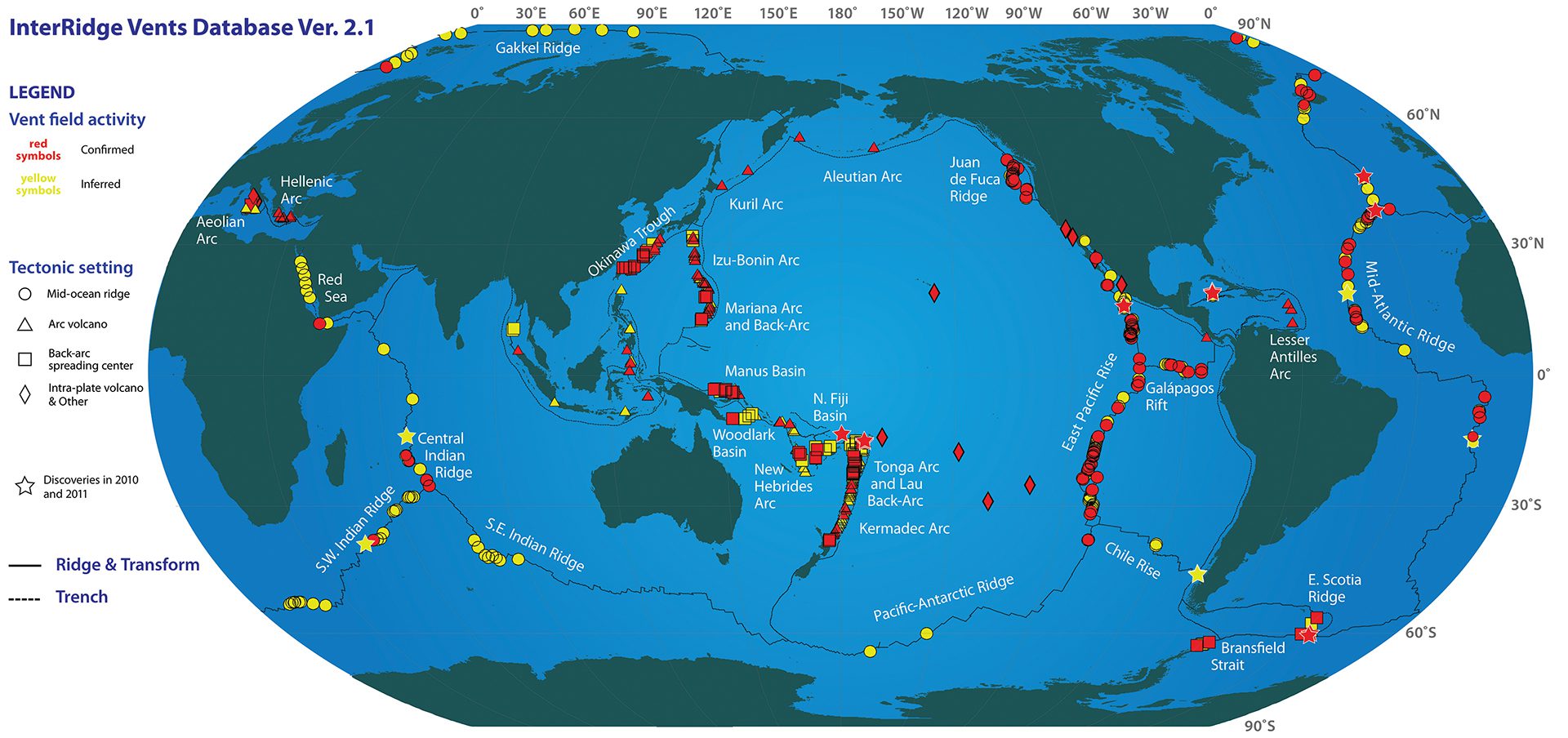
2011 global hydrothermal vents
2011 map showing the global distribution of hydrothermal vent locations, either suspected or confirmed.
Are hydrothermal vents and their ecosystems under threat?
Vent fields lie too deep to be damaged by ocean traffic, but there is growing interest in mining the seafloor for minerals. Hydrothermal vents circulate minerals from below the seabed up into the water column. These minerals are often deposited nearby after settling out of the hydrothermal fluid, making them a potential source for mining activities. But vent fields are small in size and uncommon on the vast ocean floor, making them especially vulnerable to damage. Without protection, mining could destroy these unique ecosystems, so scientists and policymakers are working to protect vent fields to ensure that mining activities minimize damage to vent fields and their corresponding ecosystems.
 Video
Video
What are hydrothermal vents?
Discover the fascinating world of hydrothermal vents, where unique ecosystems thrive in darkness, reshaping our understanding of life on Earth. Explore now.
 Video
Video
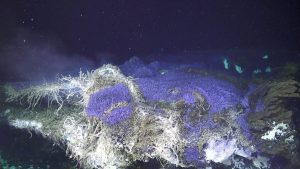
Illuminating the Seafloor
Teamwork between a deep-sea robot and a human-occupied submarine led to the discovery of five new hydrothermal vents on the seafloor of the eastern Tropical Pacific Ocean.
 Video
Video
Investigating the world of microbes with ROV Jason
At Axial Seamount, WHOI scientists filmed vibrant life at deep-sea vents—ecosystems powered by chemosynthetic microbes in total darkness.
 Video
Video
Ocean Encounters: Hydrothermal Vents
Deep-sea vents are teeming with life. Discover what scientists have learned about vents and the surprising organisms that thrive there— and what they reveal about life on Earth.
 Video
Video
Live from the seafloor in the Gulf of California
Join scientists LIVE aboard Roger Revelle in the Gulf of California as they explore Guaymas Basin's hydrothermal vents with ROV Jason and AUV Sentry.
 Video
Video
The Creepy, Unbelievably Inspiring World of Deep Sea Parasites
Ocean hitchhikers and bodysnatchers abound in the ocean, from the surface down to the deepest trenches. The question is, why? And is it a good thing?
 Video
Video
Life on an Ocean World
"Are we alone in the Universe?" It's a timeless question—and one we may be able to answer within our lifetime.
 Video
Video
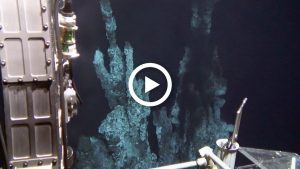
ROV Jason captures underwater video during earthquake
In early 2020, R/V Atlantis and ROV Jason explored Cayman Rise hydrothermal vents, observing deep-sea shrimp and studying impacts of a nearby earthquake.
 Video
Video
Hydrothermal Vents: Oasis in the dark
The waters around hydrothermal vents may seem inhospitable to life, but they support diverse ecosystems that survive on the chemicals that flow from the seafloor.
 Video
Video
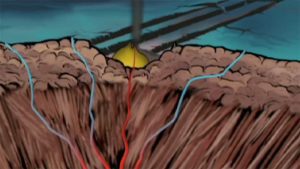
Ocean Robots: Hydrothermal Vents
Since their 1977 discovery, hydrothermal vents have amazed scientists. Now, ocean robots are helping uncover new vent sites across the globe.
 Video
Video
Hydrothermal Vents
Geologist Susan Humphris explains hydrothermal vents — seafloor openings where heated, mineral-rich water escapes from Earth's crust.
How do scientists study hydrothermal vents?
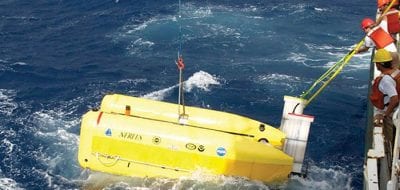
Scientists use a variety of instruments to locate and study hydrothermal vents, including towed camera systems, tethered remotely operated vehicles, and human-occupied submersibles. More recently, scientists and engineers have developed autonomous underwater vehicles (AUVs) that can dive to full ocean depth (nearly 11 kilometers, or 7 miles) to collect samples, take photos, and video of geologic structures and the animals that inhabit the area, and create 3D maps of the seafloor. To understand the incredible diversity of microbes inhabiting vent fields, researchers deploy submersible incubation devices called Vent-SIDs. These mini laboratories collect water samples and incubate microbes to better understand their growth rates and metabolic needs.
Did you know?
The bristlemouth, a tiny twilight-zone fish, may be the most abundant vertebrate on Earth.
References
Hugus. Finding answers in the ocean. Oceanus. November 10, 2020. https://www.whoi.edu/oceanus/feature/finding-answers-in-the-ocean/
K.M. Kusek. Deep-sea Tubeworms Get Versatile ‘Inside’ Help. Oceanus. January 12, 2007. https://www.whoi.edu/oceanus/feature/deep-sea-tubeworms-get-versatile-inside-help/
Lubofsky. The Discovery of Hydrothermal Vents. Oceanus. June 11, 2018. https://www.whoi.edu/oceanus/feature/the-discovery-of-hydrothermal-vents/
Martin et al. Hydrothermal vents and the origin of life. Nature Reviews Microbiology. Vol. 6, p. 805. September 29, 2008. doi: 10.1038/nrmicro1991.
Menini et al. Towards a global strategy for the conservation of deep-sea active hydrothermal vents. npj Ocean Sustainability. Vol. 22. November 27, 2023. doi: 10.1038/s44183-023-00029-3
A.E. Nevala. Lurking Benignly on the Seafloor, the ‘Yeti’Crab is Discovered. Oceanus. April 27, 2006. https://www.whoi.edu/oceanus/feature/lurking-benignly-on-the-seafloor–the–8216-yeti-8217–crab-is-discovered/
Smithsonian Ocean Team. The Microbes that Keep Hydrothermal Vents Pumping. Smithsonian Ocean. March 2016. https://ocean.si.edu/ecosystems/deep-sea/microbes-keep-hydrothermal-vents-pumping
S.N. White. ALISS in Wonderland. Oceanus. December 1, 1998. https://www.whoi.edu/oceanus/feature/aliss-in-wonderland/
Deeper Discovery: Hydrothermal Vents
From Dive and Discover
Dive & Discover: Dark Life at Deep-sea Vents
In the winter of 2014, Expedition 15 ventured into the Pacific Ocean to examine life in some of the most extreme environments on Earth—deep-sea hydrothermal vents.
OASES 2012: Return to the Cayman Rise
January 6 to 27, 2012
Join researchers as they study the biology, geology, and chemistry of some of the deepest hydrothermal vents on Earth.
Vent Larvae Cruises
A blog following the Mullineaux Lab’s research cruises to study larvae at deep-sea hydrothermal vents.
Oases for Life on the Mid-Cayman Rise
October 7 to November 6, 2009
Follow researchers as they explore one of the deepest points in the Caribbean Sea, searching for life in extreme seafloor environments.
Dive and Discover: Return to Galápagos Rift
May 20 to June 3, 2005
Dive and Discover: Juan de Fuca Ridge
May 24 to June 10, 2004
Dive and Discover: Galápagos Rift
May 24 to June 4, 2002
Dive and Discover: Indian Ocean
March 27 to May 1, 2001
Dive and Discover: East Pacific Rise 2
March 24 to May 10, 2000
Dive and Discover: East Pacific Rise
January 27 to February 28, 2000
Dive and Discover: Guaymas Basin
January 12 to 22, 2000
Molecular Ecology & Evolution Lab
January 12 to 22, 2000
Mullineaux Lab
January 12 to 22, 2000
Sievert Lab for Microbial Ecology & Physiology
January 12 to 22, 2000
Life without Sunlight at Deep-sea Hot Springs
Sunday, August 27, 2017 • 6 to 8 p.m.
Precious Metals from Deep-Sea Vents
April 2, 2009
Deep-Sea Mining of Seafloor Massive Sulfides: A Reality for Science and Society in the 21st Century. The 5th Elisabeth and Henry Morss Jr. Colloquium.
More topics like this
Mid-ocean ridges
The mid-ocean ridge occurs along boundaries where plates are spreading apart.
Natural oil seeps
As much as one half of the oil that enters the coastal environment comes from natural seeps of oil and natural gas.
Seamounts
Mountains rising from the ocean seafloor that do not reach to the water's surface.
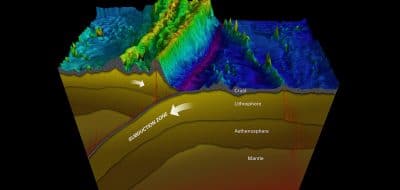
Ocean trenches
Ocean trenches are steep depressions exceeding 6,000 meters in depth, where old ocean crust from one tectonic plate is pushed beneath another plate.
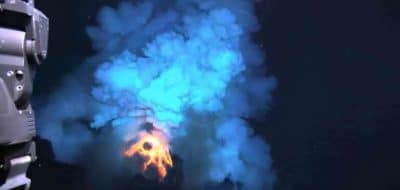
Underwater volcanoes
These eruptions of molten rock and ash can be destructive to human settlements, but vitally creative for the rest of the planet.
Oceanus magazine
[ ALL ]In-depth research on Hydrothermal vents
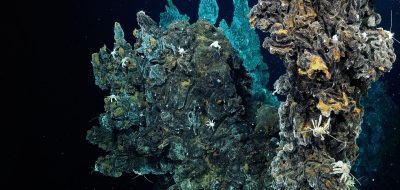




Falling in love with deep-sea parasites

Five extreme places to do ocean research
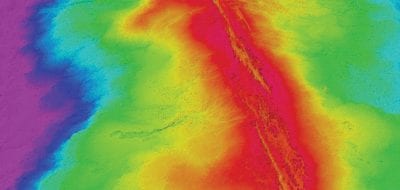
Racing an undersea volcano
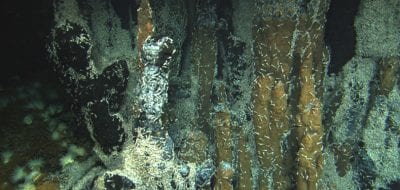
Finding answers in the ocean
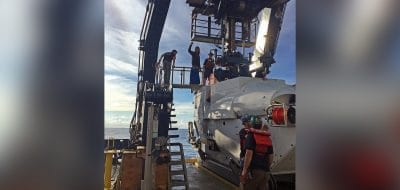
Journey to the Bottom of the Sea
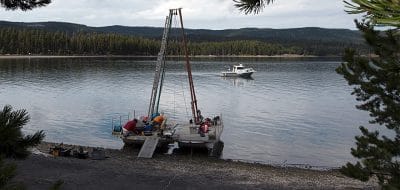
The Hot Spot Below Yellowstone Park
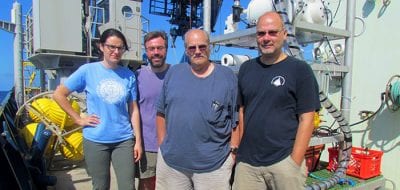
Bringing a Lab to the Seafloor
Big Questions About Tiny Bacteria
WHOI News Room
[ ALL ]Press releases
International research team discovers a potential source of abiotic methane in the Arctic Ocean
Scientists uncover a new way to forecast eruptions at mid-ocean ridges through hydrothermal vent temperatures
Get the ocean in your inbox
Fresh discoveries, research, and stories from WHOI — free, every week.