What is a dead zone?
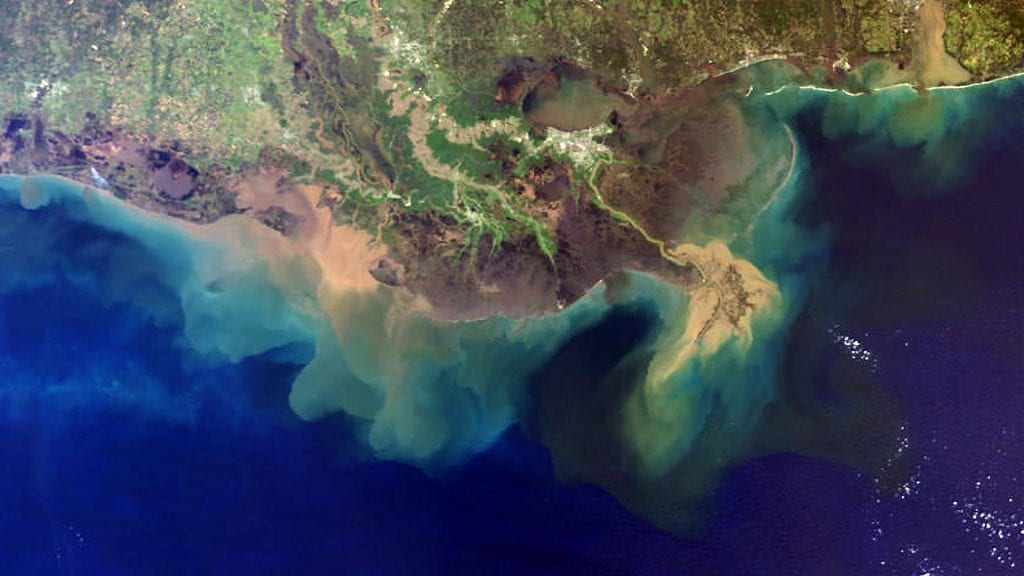
A strange thing happens when water from the Mississippi River empties into the Gulf of Mexico. Instead of supporting a rich ecosystem, the water, laden with nutrients from upstream, creates a massive dead zone, so named for its apparent lack of life. No fish or shellfish can be found in an area that, some years, equals the size of New Jersey. It’s the second largest dead zone in the world behind the Baltic Sea, and one of hundreds—perhaps as many as a thousand—that exist along coastlines worldwide.
Dead zones occur when the water lacks oxygen. Like us, marine animals require oxygen to breathe, and when oxygen levels drop too low they can suffocate. Under most circumstances, oxygen is plentiful. At the ocean’s surface, the gas enters water from the atmosphere, then diffuses into lower layers as they are mixed via wind and wave action. Plants and macroalgae growing in shallow areas also release oxygen as they photosynthesize. Animals thrive in these areas where a rich three-dimensional habitat produces abundant shelter, food, and breathable water.
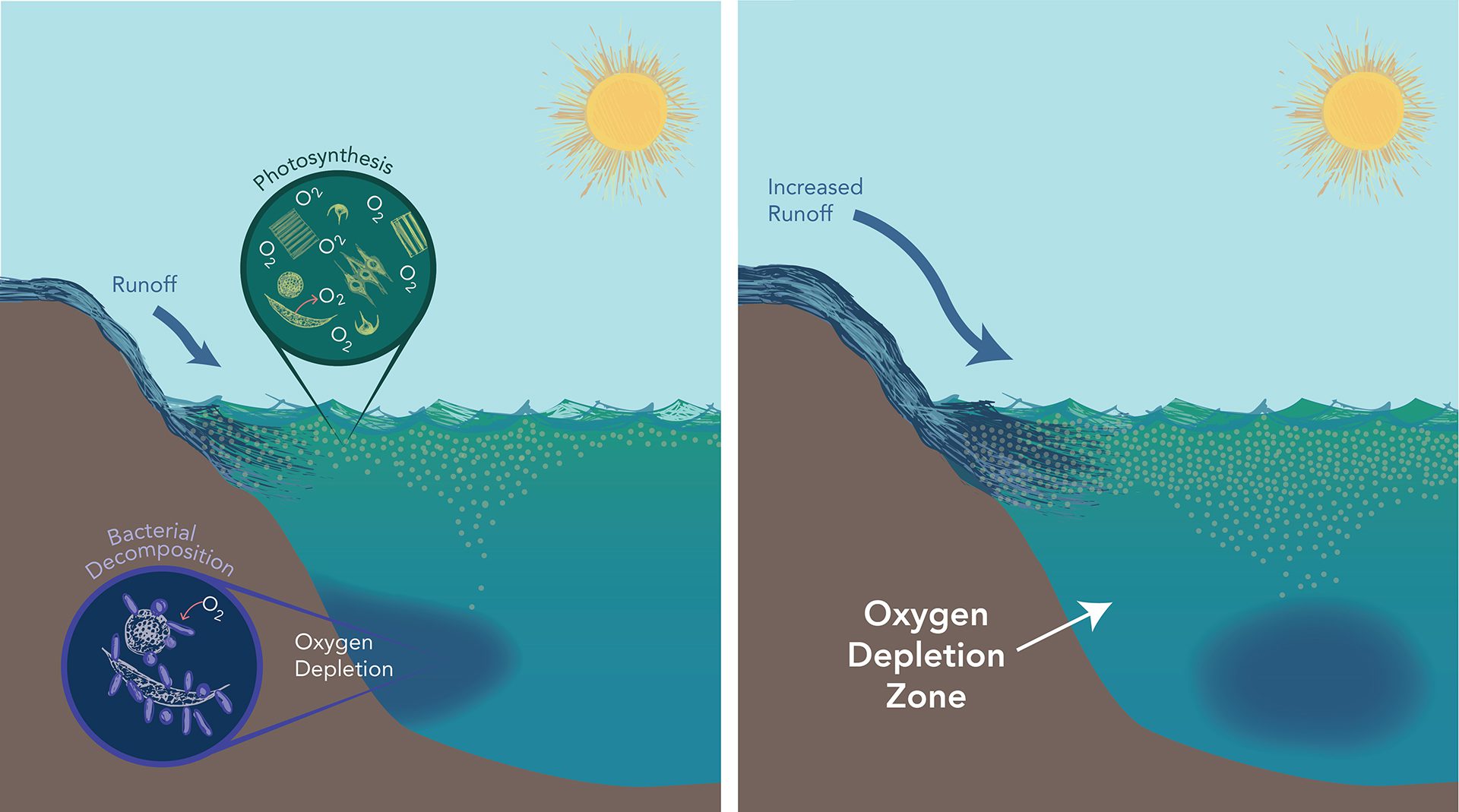
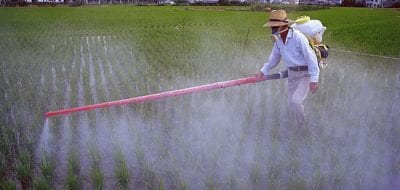
Nutrients from upstream nourish these ecosystems where rivers drain into the ocean, but an overabundance of nutrients can be harmful. On land, people apply fertilizers to agricultural fields and lawns to stimulate plants to grow. These applications are high in nitrogen and phosphorous, two elements plants need to photosynthesize. But when fertilizers are used too often or applied too heavily, or when there is heavy rain, these nutrients wash off the land where they were applied, running downhill until they eventually reach the ocean. Vast quantities of fertilizer wind up in the river and ultimately the Gulf, where it does what it’s intended to do: It stimulates photosynthesis. But here, the photosynthesizers are algae and cyanobacteria.
These single-celled organisms make the most of the influx of nutrients, dividing again and again until an algal bloom forms. When the bloom dies, it sinks to the seafloor, where bacteria and other decomposers start to break it down. The process of decomposition uses up large amounts of oxygen. The more algae decays, the more oxygen is removed from the water. When oxygen levels drop to 2 milligrams per liter of water or lower, most organisms can no longer survive. Those that can leave the area do so. Those that cannot may experience slow growth, become unable to reproduce, and eventually die.
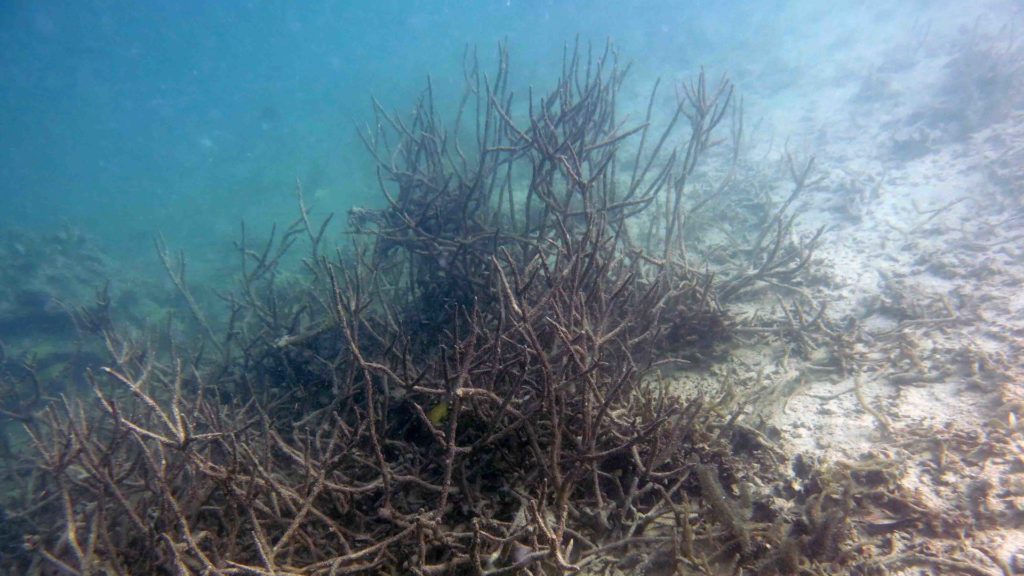
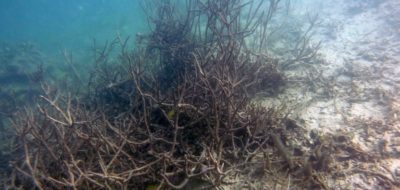
Acropora coral were decimated after severely low-oxygen water shoaled onto a shallow-water reef in Panama over a few days in 2017. (Photo courtesy of Maggie Johnson)
Why are dead zones important?
River deltas and nearby coastlines should be teeming with life, but when nutrient overload turns them into dead zones, fisheries suffer. The areas where fish can survive become smaller, which changes interactions between fish and their predators, including people. Gulf shrimp are one of the biggest fisheries in the United States, but harvests vary widely from one year to the next. Some years, the dead zone covers larger areas, and in those years, shrimp can be found only along the margins, where they survive but are slow to grow. Fisheries, essential to many people’s livelihoods, may be closed to allow shrimp time to grow larger before harvest. Similarly, Atlantic cod grow slowly in low-oxygen waters, and their population in the Baltic Sea may not survive long-term.
Because oxygen diffuses into water at the surface, it’s only deeper waters that are affected by low-oxygen conditions. Fish such as shark and tuna that typically spend their time in deeper waters respond to dead zones by moving into the shallows. This makes them easier to fish and can make populations seem more abundant than they really are, which can lead to overfishing. It also has the potential to alter entire food webs, as these predators feed on new and different kinds of prey.
First view
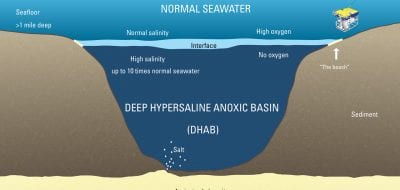
ROV Jason gave scientists their first live look at a Deep Hypersaline Anoxic Basin (DHAB) on November 29, 2011. At left is normal seafloor, at right is the DHAB, and between them is the white interface zone researchers dubbed “the beach.” (By Cherie Winner, Woods Hole Oceanographic Institution :: Originally published online September 19, 2013)
What are scientists doing about dead zones?
Researchers have uncovered the link between dead zones and nutrient overload from land. This can come from fertilizers or from improperly treated sewage, both of which can be solved with changes in fertilizer use and sewage treatment. Mitigation strategies work: In Florida, the city of Tampa Bay restored wetland and seagrass beds by reducing nutrient levels entering the coastal area. The nine countries that surround the Baltic Sea are working to reduce nutrient levels by implementing sustainable farming practices and improving the quality of water discharged from sewage treatment plants.
But the issue goes beyond nitrogen and phosphorous levels. As waters warm, the surface separates into a layer that’s distinct from colder waters beneath. Such stratification greatly reduces mixing, preventing oxygen from reaching deeper waters. Warmer waters also hold less oxygen, which means those surface waters cannot absorb as much oxygen to begin with. In addition to reducing nutrient discharge, addressing climate change will be an essential step in reducing the size of dead zones around the globe.
How fast deoxygenation can happen
Left panel: Phytoplankton at the sea surface use nutrients from runoff and sunlight in photosynthesis to produce organic matter and oxygen. Right panel: In the past, increased nutrients and warmer temperatures revved up this process, leading to large oxygen-depleted zones and mass extinctions of marine life. Unfortunately, today's ocean is exhibiting similar symptoms. (Illustration by Natalie Renier, © Woods Hole Oceanographic Institution)
References
Limburg, K.E. et al. Ocean Deoxygenation: A Primer. One Earth. Vol. 2. January 24, 2020. doi: 10.1016/j.oneear.2020.01.001.
NOAA. Dealing with Dead Zones: Hypoxia in the Ocean. https://oceanservice.noaa.gov/podcast/feb18/nop13-hypoxia.html
NOAA Fisheries. Brown shrimp. https://www.fisheries.noaa.gov/species/brown-shrimp
NOAA. What is a dead zone? https://oceanservice.noaa.gov/facts/deadzone.html
Federer, A. et al. Assessing the influence of ocean alkalinity enhancement on a coastal phtyoplankton community. Biogeosciences. Preprint. 2022. doi: 10.5194/bg-2022-17.
Lubofsky, Evan. The ocean has a serious case of heartburn. Is relief on the way? Oceanus. July 1, 2021. https://www.whoi.edu/oceanus/feature/ocean-alkalinity/
More topics like this
Biogeochemistry
Biogeochemistry studies the cycles of crucial elements, such as carbon and nitrogen, and their interactions with other substances and organisms as they move through Earth's atmosphere, hydrosphere, biosphere, and lithosphere.
Ocean acidification
Ocean acidification is a reduction in the pH of the ocean over an extended period of time, caused primarily by an increase of carbon dioxide from the atmosphere.
AMOC—The Atlantic Ocean’s conveyor belt
The ocean's conveyor-like global circulation influences today's climate system.
Biological carbon pump
Every day, microscopic phytoplankton pull carbon dioxide from surface waters and send it sinking into the deep sea—where the ocean's biological carbon pump can lock it away for hundreds to thousands of years, quietly shaping Earth's climate.
Changing shorelines & erosion
Waves, currents, wind, storms, and tides form complex interactions over time to cause erosion along some stretches of shoreline and growth in others.
El Niño
El Niño is a natural climate pattern that occurs every two to seven years, when unusually warm Pacific Ocean waters alter global weather, causing floods, droughts, and marine ecosystem disruptions.
Hydrothermal vents
In the sunless deep, hydrothermal vents gush superheated, mineral-rich fluid from the seafloor, building towering mineral chimneys. Around them thrives one of Earth's strangest ecosystems—tubeworms, shrimp, and microbes that live on chemistry instead of sunlight, powered by the planet's inner heat.
Sunlit zone
The upper layer of the ocean is known as the sunlit, or euphotic, zone. Because water strongly absorbs light, sunlight penetrates only to depths of about 200 meters (656 feet).
Arctic ocean circulation
The complex ocean circulation system in the Arctic — which impacts the entire food web — is in a delicate balance.
Carbon cycle
Carbon is the building block of life on Earth and has a powerful impact on the planet’s climate.
Cycles
Oceanic cycles — chemical, physical, and biological — are related to cyclic processes in the Earth's atmosphere, such as the seasons, El Niño events, and long-term climate changes.
Glaciers & ice sheets
Glaciers are large ice masses created by snowfall that has transformed into ice and compressed over the course of many years. An ice sheet is a mass of glacial land ice extending more than 20,000 square miles.
Mid-ocean ridges
The mid-ocean ridge occurs along boundaries where plates are spreading apart.
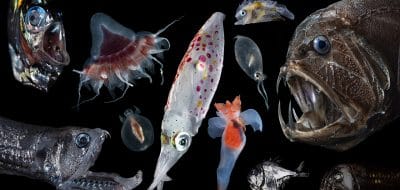
Twilight zone
The ocean twilight zone is a layer of water that stretches around the globe. It lies 200 to 1,000 meters below the ocean surface, just beyond the reach of sunlight.
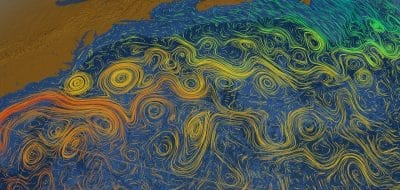
Currents, gyres, & eddies
At the surface and beneath, currents, gyres and eddies physically shape the coasts and ocean bottom.
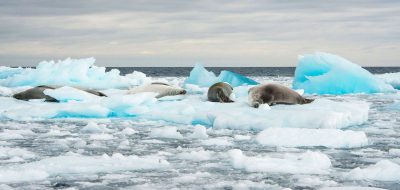
Frozen ocean
The polar regions are experiencing unprecedented environmental changes that have significant potential impacts on global climate, ecosystems, and society.
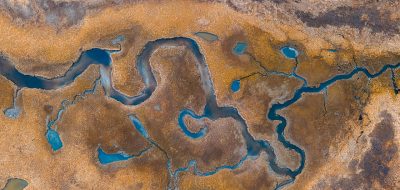
Groundwater
Groundwater is water that exists underground in the spaces between grains of sand or gravel or in the cracks and fractures in solid rock—part of the global water cycle.
Midnight zone
The midnight zone, or bathypelagic, extends to about 4,000 meters (about 13,100 feet), which reaches the ocean floor in many places is in perpetual darkness.
Natural oil seeps
As much as one half of the oil that enters the coastal environment comes from natural seeps of oil and natural gas.
Rivers, estuaries, & deltas
Rivers, estuaries, and deltas are key to understanding the chemical structure of seawater, and are home to some of the world's most diverse ecosystems.
Oceanus magazine
[ ALL ]In-depth research on Oxygen dead zones

WHOI News Room
[ ALL ]Press releases
A new study reveals how oxygen first reached Earth’s oceans
Get the ocean in your inbox
Fresh discoveries, research, and stories from WHOI — free, every week.