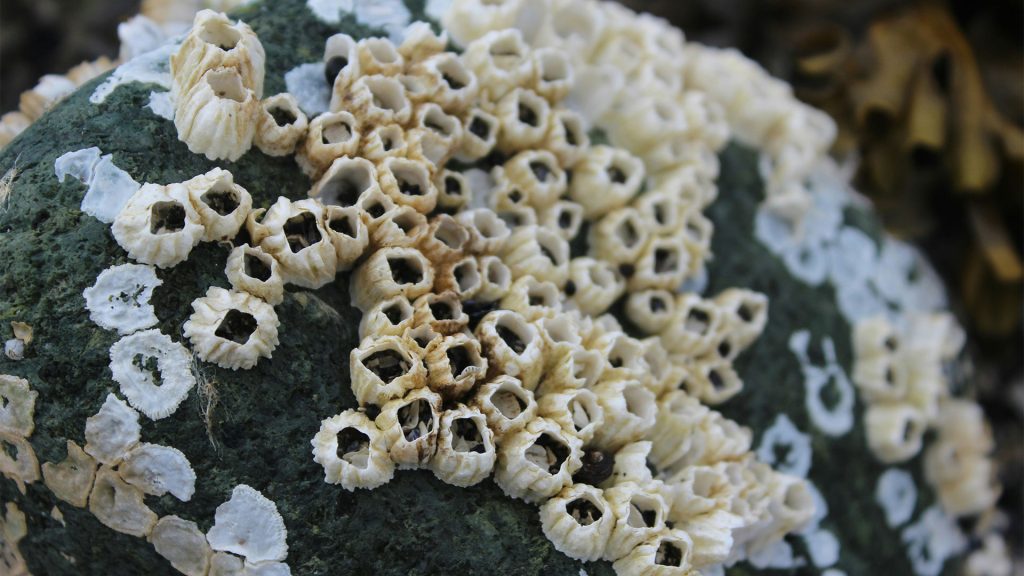
What are barnacles?
Barnacles are tiny, upside-down-living crustaceans that are relatives of crabs, lobsters, and shrimp. They spend most of their adult lives glued head-first to a surface. As larvae, they drift through the ocean as part of zooplankton, looking for the perfect place to settle. Once they commit, they cement themselves in place with a strong natural adhesive and build a cone-shaped shell of calcium plates around their bodies. When the tide comes in, they open their operculum, which functions like a tiny trapdoor, and sweep the water with feathery legs, called cirri, to catch plankton for food. When the tide goes out, they shut tight to avoid drying out.
 Image
Image
Biofouled
A thick coat of young barnacles covers this orange float after it had been deployed in the Chukchi Sea north of Alaska for 13 months. Ship hulls, instruments, buoys, and rigging lines provide convenient hard surfaces for barnacles, algae, and slimy gunk called biofilms to accumulate. This phenomenon, known as biofouling, is a longstanding problem for sailors...
 Image
Image
Fair or Foul
WHOI postdoctoral scholar Kirstin Meyer points out some brownish bryozoans and orange tunicates on panels she recovered from Woods Hole’s Eel Pond. Along with barnacles, sponges, and other invertebrates, these animals make up the local biofouling community—organisms that grow in abundance on docks, ships, rocks, and other hard, underwater surfaces. Meyer recently monitored their growth...
 Image
Image
Who’s On First?
This summer, WHOI postdoctoral scholar Kirstin Meyer hung plastic panels off the WHOI pier and a dock at Eel Pond in Woods Hole, to learn what organisms would settle on them, and how that “fouling community” would change over time. As part of the experiment, she removed certain organisms from some panels to see what...
 Image
Image
Competing for Attention
The “petals” of these delicate golden “flowers” are actually individual animals. They are clones of colonial invertebrates called star tunicates (Botryllus schlosseri). Tunicates, also known as ascidians or sea squirts, can form dense mats on the submerged undersides of piers and boats, aquatic plants, and even the shells of snails and other marine life. They...
 Image
Image
Foul-bio
Jim Ryder, a senior engineering assistant at WHOI, inspects components of a mooring and buoy that have been biofouled—that is, coated with algae, barnacles, or other gripping organisms. Biofouling is a scourge of mariners, particularly when it occurs on ships’ hulls. It starts when marine microbes settle on hard surfaces creating a biofilm. That attracts...
 Image
Image
Barnacle Hunt
On a chilly spring trip to a rocky beach near Woods Hole, Ping Zuo (left) from Nanjing University and WHOI research specialist Annette Frese Govindarajan look for barnacles recently settled on rocks exposed by low tide. Govindarajan, with WHOI biologist Jesús Pineda, studies how water movements influence where planktonic larvae settle to become adults. Zuo has been a...
 Image
Image
Barnacles in Bulk
The same organisms that have plagued mariners for thousands of years have also been a problem for oceanographers deploying moored instruments. Here, barnacles, algae, and other organisms cover the bottom of a mooring float that had been deployed on Line W in the North Atlantic. Such biofouling begins with the formation of a slimy biofilm...
 Image
Image
A Bite out of Biofilms
“Biofouling” by barnacles and other organisms begins with a biofilm, a layer of microbes adhering to a ship hull or other hard surface. Biofilms form (1) when bacteria settle onto the surface, where they proliferate (2) and produce slime. Most efforts to combat biofouling have targeted these steps. Based on his recent research, WHOI biochemist...
 Image
Image
Sailors’ Bane
Barnacles and other organisms cling to the hull of R/V Knorr. Such “biofouling” greatly increases frictional drag on ships, costing ship owners millions of dollars a year in added fuel expenses. WHOI microbiologist Ben Van Mooy has been investigating the formation of biofilms—thin, slimy layers of bacteria that develop on hulls and provide attachment sites...
 Image
Image
Barnacle Buoy
Instruments, buoys, and rigging lines placed in the sea attract a wide variety of organisms. After 13 months in the Chukchi Sea north of Alaska, this orange float sported a thick coat of young barnacles that had attached themselves to the hard surface. Such biofouling has been a challenge for sailors and oceanographers ever since...
 Image
Image
Barnacle Build-Up
An adult snail (large brown shell) and Northern rock barnacles of various ages crust a rock in the intertidal zone of Buzzards Bay. A large white barnacle is attached to the snail, two small barnacles are attached to the large one, and dozens more have settled onto the rock. Northern rock barnacles (Semibalanus balanoides) start...
 Image
Image
A barnacle’s life
For his graduate research, WHOI postdoctoral investigator Jonathan Blythe studied the intertidal barnacle Semibalanus balanoides at Gardiner Beach in Woods Hole. He focused on the transition between the larval and adult stages of the barnacle lifecycle and the creature’s ability to cope with varying environmental conditions such as wind and wave action. “It appears that...
 Image
Image
Barnacle Beauties
Adult barnacles, about one year old, form plates to hold their body together and for protection. (Photo by Vicke Starczak, Woods Hole Oceanographic Institution)
What do barnacles do, and why are they important?
Barnacles may be small, but they punch above their weight in coastal ecosystems. By filtering plankton from the water, they help keep nearshore waters clearer and recycle nutrients. They are also a key part of the food web, serving as prey for animals like whelks and influencing competition with species like mussels. Equally important, barnacles help define the structure of the intertidal zone, the strip of shoreline alternately covered and uncovered by tides. Their presence creates microhabitats for other organisms and signals how life adapts to harsh, changing conditions. According to the National Oceanic Atmospheric Administration and National Marine Fisheries Service, organisms like barnacles are essential indicators of ecosystem health because they respond quickly to environmental changes such as temperature shifts, pollution, and ocean acidification.
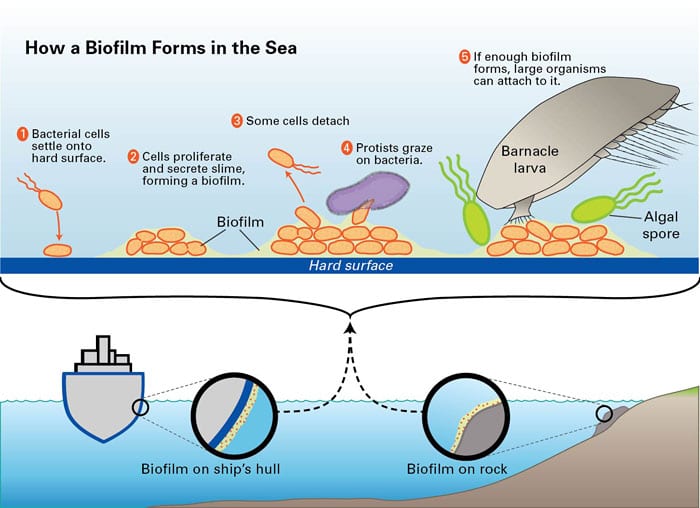
How a biofilm forms in the sea
Biofilms form when bacteria settle onto a hard surface (1), where they proliferate and produce slime (2). Most efforts to fight biofouling have targeted these steps. WHOI biochemist Ben Van Mooy thinks a better approach might be to enhance the processes that naturally reduce the size of biofilms: detachment of some of the bacteria (3) and predation by protists (4). (Illustration by Jack Cook, Wood Hole Oceanographic Institution)
What are scientists doing to understand barnacles?
Marine biologists study barnacles to understand broader environmental trends. Because barnacles are sensitive to changes in temperature, salinity, and ocean chemistry, tracking their growth and distribution helps scientists monitor climate change impacts on coastal ecosystems. Other researchers investigate how barnacles choose where to settle, which has implications for managing invasive species and preventing biofouling, which occurs when barnacles clog ship hulls and infrastructure. There is even ongoing research into how barnacles grow their shells without leaving them, essentially remodeling their homes from the inside out. It is a slow construction project that scientists are still trying to fully explain.
References
National Oceanic and Atmospheric Administration (NOAA). (n.d.). What is the intertidal zone?
https://oceanservice.noaa.gov/facts/intertidal-zone.html
National Oceanic and Atmospheric Administration (NOAA). (n.d.). What are zooplankton?
https://oceanservice.noaa.gov/facts/zooplankton.html
National Marine Fisheries Service (NMFS). (n.d.). Ecosystem-based fisheries management.
https://www.fisheries.noaa.gov/insight/ecosystem-based-fisheries-management
Seattle Aquarium. (n.d.). Barnacles and other intertidal invertebrates.
https://www.seattleaquarium.org/animals/barnacles
University of California Museum of Paleontology. (n.d.). Introduction to the Cirripedia (barnacles).
https://ucmp.berkeley.edu/arthropoda/crustacea/cirripedia.html
More topics like this
Sargassum
Sargassum sustains ocean life, but massive blooms increasingly threaten coastal ecosystems, economies, and human health.
Benthic life
Benthic animals live on the sea floor and are typically invertebrates, such as sea anemones, sponges, corals, sea stars, sea urchins, worms, mussels, crabs, and more.
Coral stressors
Stressors can affect organisms living on the reef or they can affect the corals, themselves. When corals die, other organisms must relocate or struggle to survive.
Corals
Many people think of coral as hard, rock-like formations that attract abundant, diverse marine life. In fact, corals are tiny marine animals called polyps that live together in colonies.
Emperor penguins
The emperor penguin is the largest living penguin species standing around 115 centimeters tall. Once they have found a partner, they work together to keep their young fed and safe.
Coastal ecosystems
The narrow region where land and ocean meet includes salt marshes, mangroves, wetlands, estuaries, reefs, and bays often linked in a network of physical, chemical, and biological interchanges.
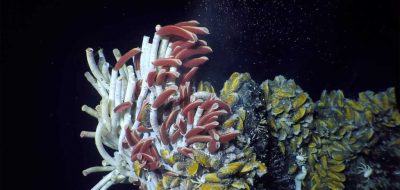
Ecosystems
Ocean ecosystems are found in polar regions, coastal waters, coral reefs, hydrothermal vents, the abyssal plain, and at the bottom of the sea.
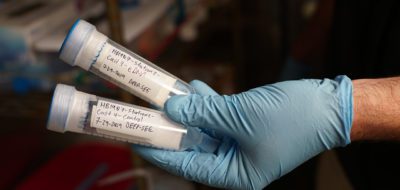
Environmental DNA (eDNA)
Environmental DNA (eDNA) is essentially DNA collected from the environment. As animals swim through the ocean, they're constantly releasing DNA as they shed skin or scales into the water column.
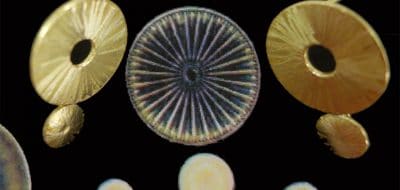
Phytoplankton
Phytoplankton are primary producers of the ocean—the organisms that form the base of the food chain. WHOI explores the microscopic, single-celled organisms.
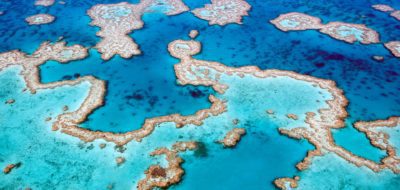
Reef ecosystems
A healthy reef protects coastlines from wave damage, plays a critical role in providing food, boosts the economy, and provides materials for pharmaceuticals.
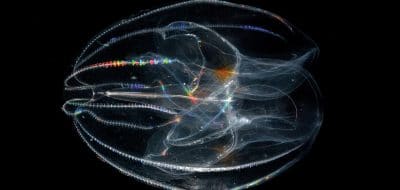
Jellyfish & other zooplankton
These animals live all or part of their life suspended and drifting in fresh or salt water, rarely come in contact with hard surfaces.
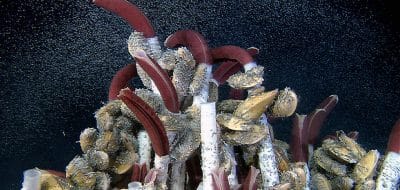
Life at vents & seeps
Hydrothermal vents and cold seeps are places where chemical-rich fluids emanate from the seafloor, often providing the energy to sustain lush communities of life in some very harsh environments.
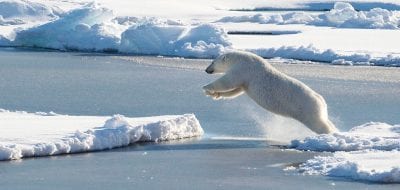
Polar life
By human standards, they are extreme environments. Yet life not only persists in the poles...it thrives.
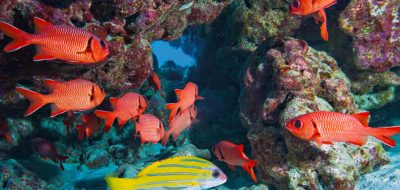
Reef fish
Fish that inhabit a coral reef play essential roles in the reef ecosystem, and reefs without fish struggle to recover from bleaching or other events that damage the coral.
Seagrass meadows
Seagrass meadows are plants adapted to live a completely submerged life in the salty shallows.
Marine mammals
Marine mammals are warm-blooded vertebrates that bear live young and nourish them with milk as land mammals do, but that spend most or all of their lives in the ocean.
Marine microbes
Microbial life can be found throughout the ocean, from rocks and sediments beneath the seafloor, across the vast stretches of open water, to intertidal and surf zones.
Ocean plants
Ocean plants are critical to marine life—they are an important food source, they provide oxygen to surrounding marine life, and they supply refuge and nursery grounds.
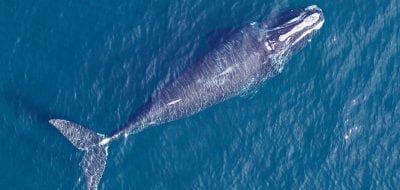
Right whales
The North Atlantic right whale is one of the ocean's most endangered large animals, with only a few hundred left. Slow-moving and often near the surface, these baleen whales are especially vulnerable to ship strikes and entanglement in fishing gear.
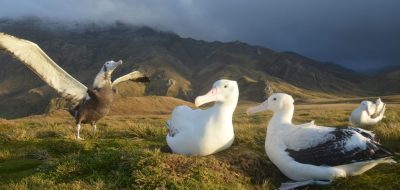
Seabirds
Seabirds have adapted to life in an ocean environment. There are many species of seabirds, and they vary greatly in behavior and physiology
Oceanus magazine
[ ALL ]In-depth research on Barnacles



WHOI News Room
[ ALL ]Press releases
New AUV Plankton Sampling System Deployed
Life in Extreme Environments
Barnacles and Mangroves
Get the ocean in your inbox
Fresh discoveries, research, and stories from WHOI — free, every week.