What are marine mammals?
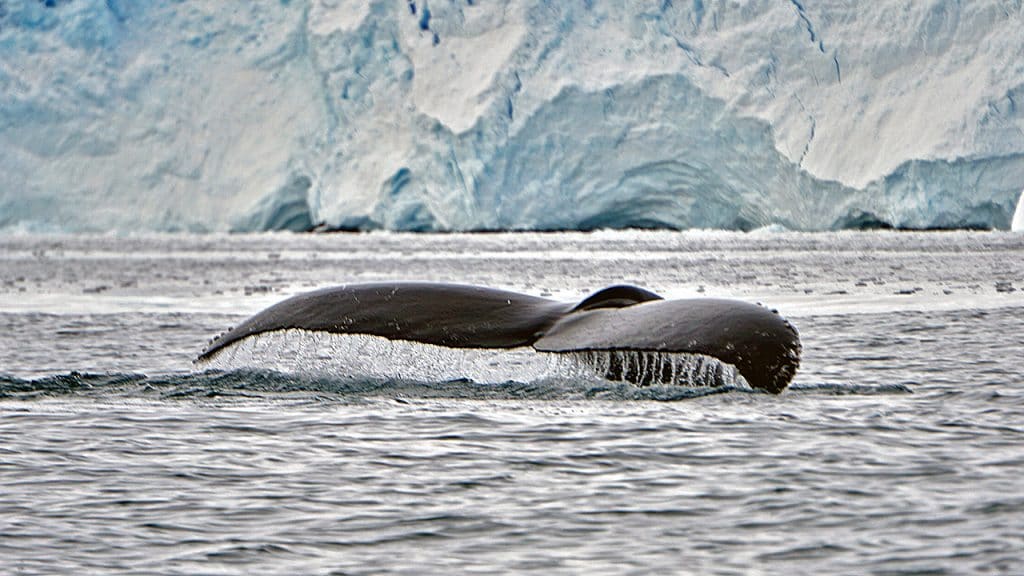
Marine mammals are warm-blooded vertebrates (animals with a backbone) that bear live young and nourish them with milk as land mammals do, but that spend most or all of their lives in the ocean. They are broken into three groups that share similar adaptations to their aquatic life, but that have very different origins and life patterns.
Did you know?
Right whales
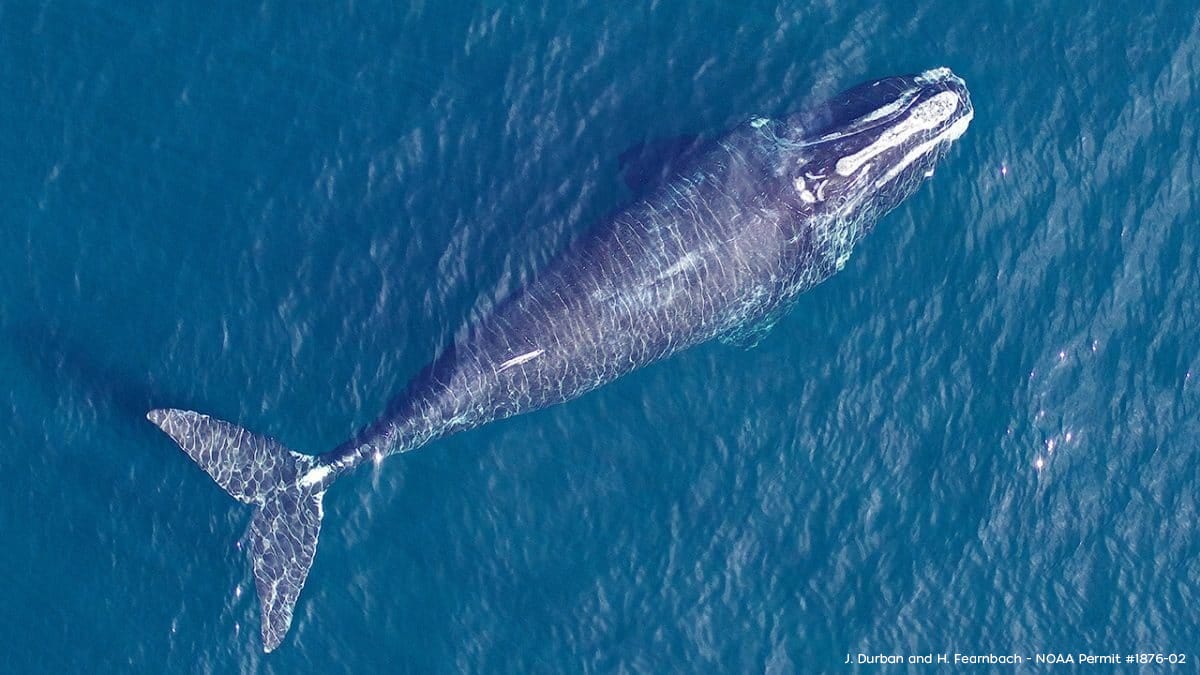
The North Atlantic right whale is one of the ocean's most endangered large animals, with only a few hundred left. Slow-moving and often near the surface, these baleen whales are especially vulnerable to ship strikes and entanglement in fishing gear.
Sirenians, the manatees and dugongs, are slow plant feeders found in warm, shallow coastal habitats. Pinnipeds, the seals, sea lions and walruses, bear young on land, but spend most of their time in the ocean. Cetaceans, the dolphins, porpoises and whales that spend all of their lives in the ocean, include both toothed species that are carnivorous predators, and filter-feeding baleen whales that consume huge quantities of tiny plankton. In size, marine mammals range from small seals and porpoises to the largest animal that has ever lived, the blue whale. Many cetaceans and pinnipeds dive to remarkable depths to feed, feats only recently discovered using digital tags that record the animals' movements, direction, and depth over time.
Marine mammals play important ecological roles as both predator (many hunt for fish) and as prey, both for sharks and other, larger marine mammals. Humans have also long hunted marine mammals for food and fur. Although hunting pressures have declined, marine mammals still suffer from low numbers and inadvertent human activities such as certain fishing methods, boating and shipping traffic, and increasing ocean noise.
Did you know?
Seals
Seals are pinnipeds, a group of animals with three separate families—phocidae, otaridae, and odobenidae—that are the only mammals that feed in the water and breed on land.

WHOI scientists have conducted marine mammal research for decades, from making the first underwater recordings of marine mammal sounds in the 1940s, to the development of digital tracking tags and CT scanning methods. The WHOI Marine Mammal Center (MMC), fosters research on whales, dolphins, and seals, including their behavior, health, anatomy, and perception; methods to free entangled whales and the causes of strandings; and marine mammal populations' link to ocean conditions and plankton abundance. A particular focus is the endangered north Atlantic right whale, an animal that was hunted nearly to extinction and whose population only includes 300 to 400 individuals.
 Video
Video
Earliest preserved whale song discovered in the WHOI archives
A 1949 recording of a humpbackwhale, captured near Bermuda during acoustic experiments aboard the original R/V Atlantis, was discovered in the WHOI archives
 Video
Video
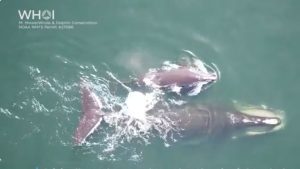
Tangled Up in Fishing Gear
What scientists learned from a right whale named Eg 3911.
 Video
Video
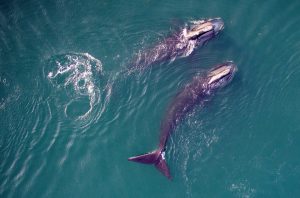
Researching North Atlantic right whales in Cape Cod Bay
As these critically-endangered marine mammals migrate from their southern breeding grounds, WHOI researchers head out to observe them.
 Video
Video
North Atlantic right whale population leveled off in 2022
There are 356 North Atlantic right whales left, with births balancing deaths—but their critically endangered status remains urgent.
 Video
Video
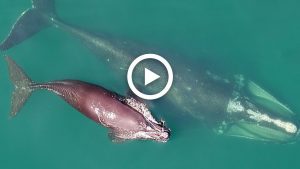
Swim alongside a Right Whale and her calf
A rare video shows right whale Spindle nursing her calf—one of just ~340 left in this endangered species.
 Video
Video
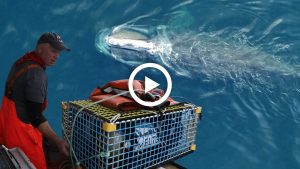
We are all Whalers: a reading and conversation
Join us for a virtual conversation and book reading with author and WHOI veterinarian and marine scientist, Dr. Michael Moore.
 Video
Video
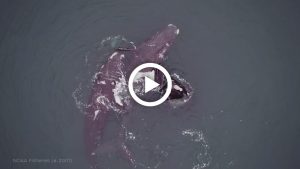
Collaborating to Save the Right Whale
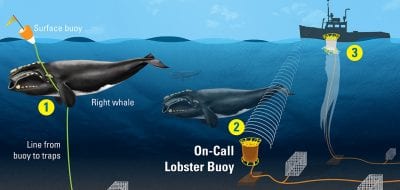
To protect the 400 remaining North Atlantic Right Whales, teams are testing ropeless fishing gear to reduce deadly entanglements in buoy lines.
 Video
Video
North Atlantic right whale rare drone footage
Drone footage captured rare, intimate moments of endangered right whales in Cape Cod Bay—offering hope for their recovery and a reminder of the need to protect them.
 Video
Video
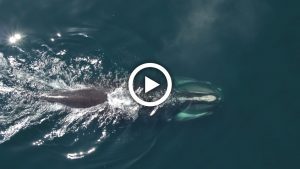
Ocean Encounters: Saving the North Atlantic Right Whale
With only ~366 left, North Atlantic right whales face extinction. Learn how science, industry, and policy aim to save them.
 Video
Video
A win for lobstermen and right whales
A WHOI study finds lobster fishers can catch the same with less gear and time—offering a win-win for right whale protection and a sustainable fishery.
 Video
Video
Oases in Sea Ice Are Essential to Life in Antarctica
Researchers study Antarctic polynyas—ocean oases of life—to uncover how physical and biological processes shape and respond to environmental change.
 Video
Video
Whale Blow Microbiome
Collecting whale blow samples with a drone.
 Video
Video
Whale Biopsy Collection
Gathering whale skin samples with darts.
 Video
Video
Girls in Science Program: bioacoustics
Girls in Science Fellowship brings young women to Woods Hole to explore marine STEM careers, guided by experts analyzing marine mammal sounds.
 Video
Video
The Man Who Opened Our Ears to the Ocean
Historic archive of marine mammal recordings established.
 Video
Video
Dolphin Assist
Data-logging tags help scientists track marine mammals underwater—but what impact do these tools have on the animals themselves?
 Video
Video
Marine Mammals Meet Modern Medicine
Whales are not the easiest patients, but CT scans, MRIs, ultrasounds, hyperbaric chambers, and other medical tools are making it easier to learn about them.
 Video
Video
Carousel Feeding
Orcas use coordinated movements and tail slaps to stun herring during carousel feeding. This video shows data captured by WHOI's D-tags tracking their behavior.
 Video
Video
Buoys Help Avert Whale-Ship Collisions
Smart buoys help detect endangered right whales in real time—alerting ships to slow down and avoid deadly collisions.
 Video
Video
Learning How a Porpoise Locates Prey
In trials in Denmark, porpoises use echolocation to find fish. Eyecups block vision so scientists can study how sound guides their hunt.
References
Marine Animal Identification Network
Have you seen a tag? A uniquely marked individual? An interesting behavior? Report a sighting and learn more.
Sperm Whales of New Zealand
February 18 to March 6, 2013 Tagging and tracking the sperm whales and other marine mammals that forage in the waters of the Kaikoura Canyon off the coast of New Zealand’s South Island.
Sensory Ecology
October 20 to November 16, 2011 Examing the bioacoustic behavior of Hawaii’s false killer and melon headed whales.
Computerized Scanning and Imaging Facility (CSI)
Watkins Memorial Marine Mammal Bioacoustics Symposium
Morss Colloquium
Saturday, March 28, 2015 • 7 to 9:30 p.m.
More topics like this
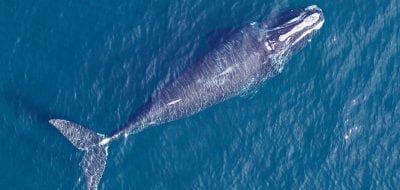
Right whales
The North Atlantic right whale is one of the ocean's most endangered large animals, with only a few hundred left. Slow-moving and often near the surface, these baleen whales are especially vulnerable to ship strikes and entanglement in fishing gear.
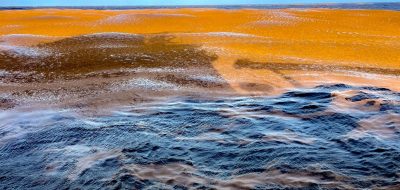
Sargassum
Sargassum sustains ocean life, but massive blooms increasingly threaten coastal ecosystems, economies, and human health.
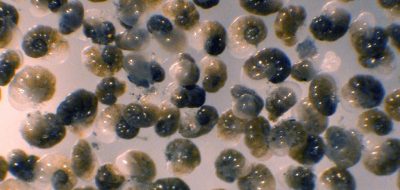
Benthic life
Benthic animals live on the sea floor and are typically invertebrates, such as sea anemones, sponges, corals, sea stars, sea urchins, worms, mussels, crabs, and more.
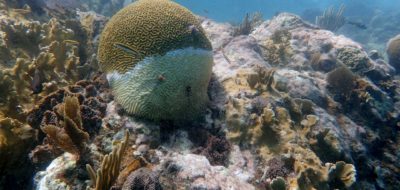
Coral stressors
Stressors can affect organisms living on the reef or they can affect the corals, themselves. When corals die, other organisms must relocate or struggle to survive.
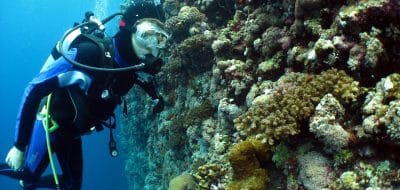
Corals
Many people think of coral as hard, rock-like formations that attract abundant, diverse marine life. In fact, corals are tiny marine animals called polyps that live together in colonies.
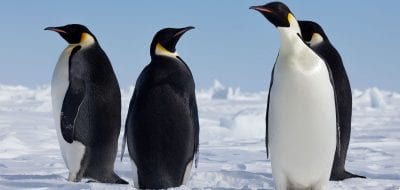
Emperor penguins
The emperor penguin is the largest living penguin species standing around 115 centimeters tall. Once they have found a partner, they work together to keep their young fed and safe.
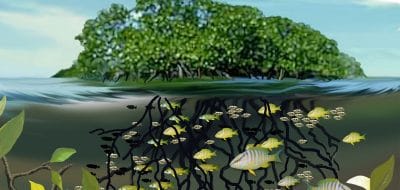
Coastal ecosystems
The narrow region where land and ocean meet includes salt marshes, mangroves, wetlands, estuaries, reefs, and bays often linked in a network of physical, chemical, and biological interchanges.
Ecosystems
Ocean ecosystems are found in polar regions, coastal waters, coral reefs, hydrothermal vents, the abyssal plain, and at the bottom of the sea.
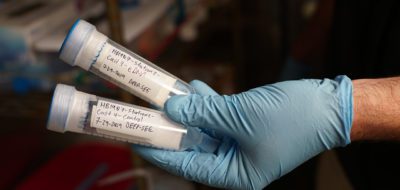
Environmental DNA (eDNA)
Environmental DNA (eDNA) is essentially DNA collected from the environment. As animals swim through the ocean, they're constantly releasing DNA as they shed skin or scales into the water column.
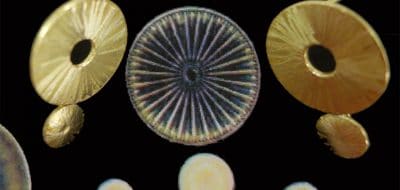
Phytoplankton
Phytoplankton are primary producers of the ocean—the organisms that form the base of the food chain. WHOI explores the microscopic, single-celled organisms.
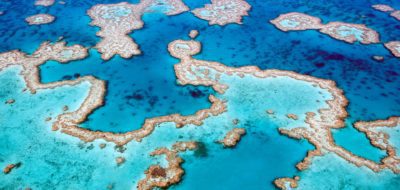
Reef ecosystems
A healthy reef protects coastlines from wave damage, plays a critical role in providing food, boosts the economy, and provides materials for pharmaceuticals.
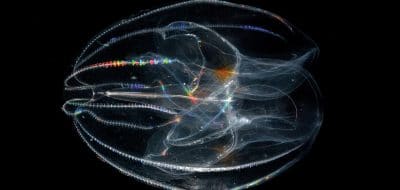
Jellyfish & other zooplankton
These animals live all or part of their life suspended and drifting in fresh or salt water, rarely come in contact with hard surfaces.
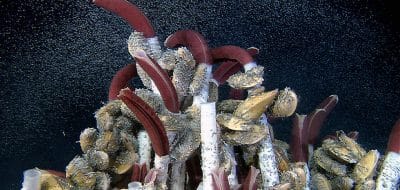
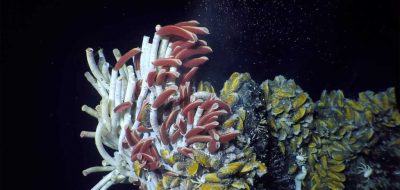
Life at vents & seeps
Hydrothermal vents and cold seeps are places where chemical-rich fluids emanate from the seafloor, often providing the energy to sustain lush communities of life in some very harsh environments.
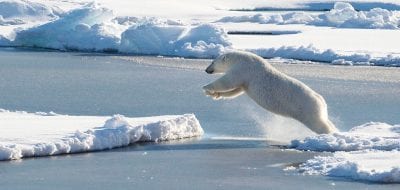
Polar life
By human standards, they are extreme environments. Yet life not only persists in the poles...it thrives.
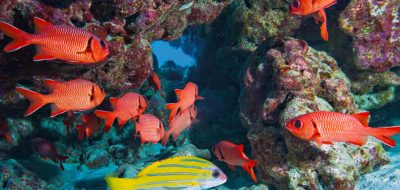
Reef fish
Fish that inhabit a coral reef play essential roles in the reef ecosystem, and reefs without fish struggle to recover from bleaching or other events that damage the coral.
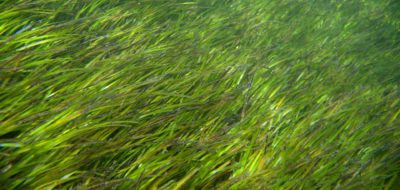
Seagrass meadows
Seagrass meadows are plants adapted to live a completely submerged life in the salty shallows.
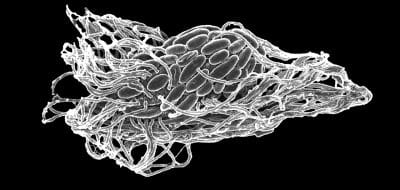
Marine microbes
Microbial life can be found throughout the ocean, from rocks and sediments beneath the seafloor, across the vast stretches of open water, to intertidal and surf zones.
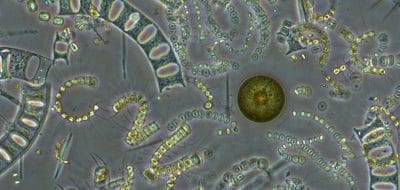
Ocean plants
Ocean plants are critical to marine life—they are an important food source, they provide oxygen to surrounding marine life, and they supply refuge and nursery grounds.
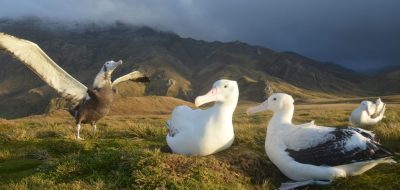
Seabirds
Seabirds have adapted to life in an ocean environment. There are many species of seabirds, and they vary greatly in behavior and physiology
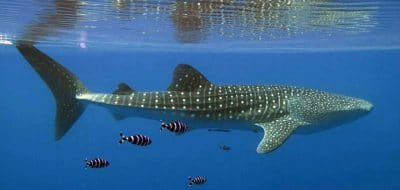
Sharks & other fish
Fish are vital to healthy ecosystems and economies, serving as predators and prey while maintaining balanced food webs and protecting habitats like coral reefs and mangroves.
Oceanus magazine
[ ALL ]In-depth research on Marine mammals
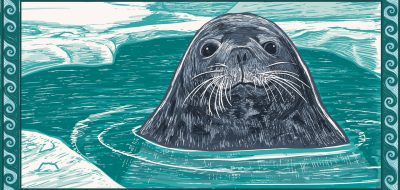
A mother seal dives
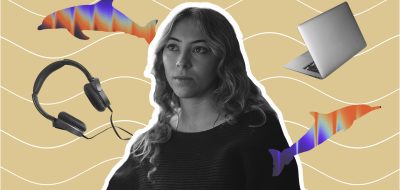
One researcher, 15,000 whistles: Inside the effort to decode dolphin communication
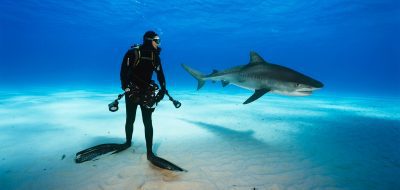
Lessons from a lifetime of exploration

Whale aware!
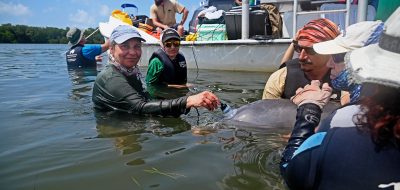
Whistle! Chirp! Squeak! What does it mean?

Saving Tico

A cascade of life
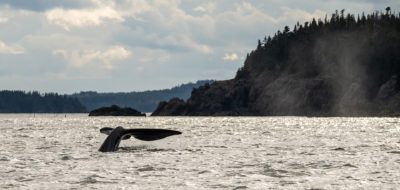
For right whales, a dwindling food source is causing concern








WHOI News Room
[ ALL ]Press releases
WHOI discovers the oldest known whale recordings, dating to 1949
Get the ocean in your inbox
Fresh discoveries, research, and stories from WHOI — free, every week.