What are underwater vehicles?
In order to understand the ocean, scientists often find they have to get themselves or their instruments into very specific parts of it. Traditionally, researchers have used ships to photograph the depths, to drop floats and drifters into the currents, and to collect samples of water, rock, and marine life. In recent years, the spectrum of available observing tools has grown to include human-occupied submersibles, remote-controlled vehicles, and autonomous robots.
Human Occupied Vehicles (HOVs)
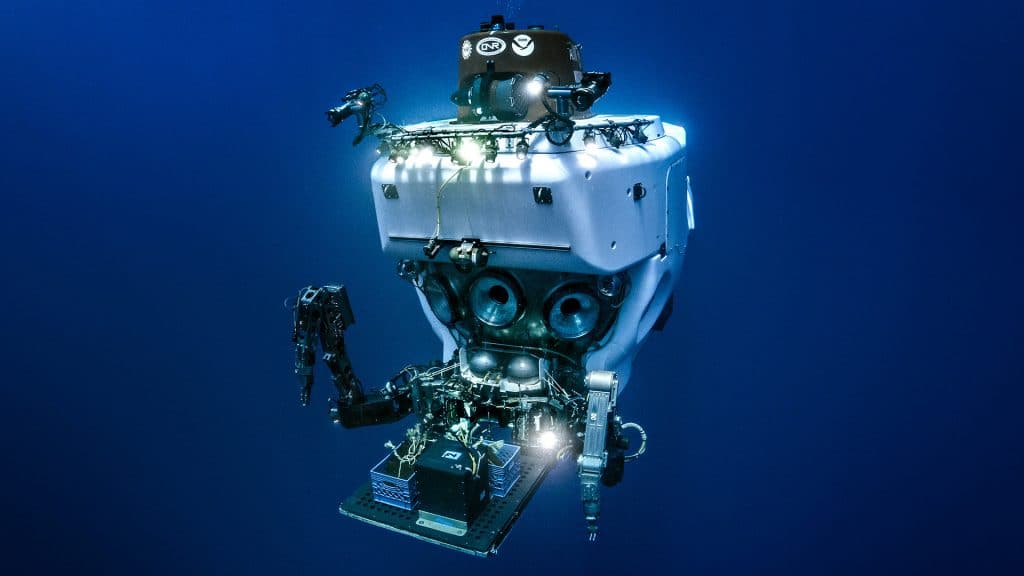
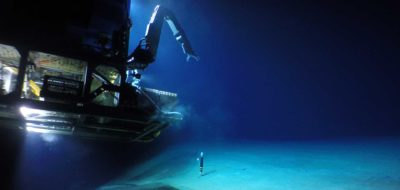
HOVs take small teams of scientists and engineers directly to the seafloor for limited periods of time. They usually accommodate three people and are built to withstand the extreme pressure thousands of meters below the surface of the ocean and permit scientists to make detailed observations, collect specific samples, and place, retrieve, or conduct experiments on the seafloor and in the deep ocean. In addition to the vehicle’s manipulator arm, cameras, sensors, and collection instruments, the HOV also carries another important data-gathering device: the scientists’ own eyes and knowledge of the deep, which is a key advantage of using the vehicles, despite the additional complexity of designing and deploying them.
Remotely Operated Vehicles (ROVs)
ROVs are tethered robots that allow researchers to make observations, collect samples, and conduct experiments while controlling the vehicle from the surface. The vehicles can remain below the surface for a day or more at a time, and can hover like a helicopter over a seafloor target or survey a wide area. The tether sends and receives control signals, vehicle sensor data, and images and allows the pilot to control the vehicle’s manipulator arm in real time to carry out targeted surveys and collections, and help carry out detailed experiments in the deep ocean.
Autonomous Underwater Vehicles (AUVs)
AUVs are programmable, robotic vehicles that, depending on their design, can drift, drive, or glide through the ocean without real-time control by human operators. Some AUVs communicate with operators periodically or continuously through satellite signals or underwater acoustic beacons to permit some level of control. AUVs allow scientists to conduct other experiments from a surface ship while the vehicle is off collecting data elsewhere on the surface or in the deep ocean. Some AUVs can also make decisions on their own, changing their mission profile based on environmental data they receive through sensors while under way.
Hybrid Remotely Operated Vehicle (HROVs)
HROVs combine design advantages of two types of vehicles in a single platform. An HROV can operate as a free-swimming autonomous underwater vehicle (AUV), flying through the ocean like an aircraft to survey and map large areas with onboard sonar, sensors, and cameras. It can also be converted aboard ship into a remotely operated vehicle (ROV), connected to a surface ship via a lightweight, micro-thin fiber-optic tether that permits scientists and operators on the surface to control the vehicle and its manipulator arm to carry out targeted surveys and collections, and help carry out detailed experiments in the deep ocean.
 Video
Video
Navigating murky waters—with robots!
How can you collect a precious deep-sea sample if you can't see?!
 Video
Video
Jason to the Rescue
Using the dexterous mechanical arms of ROV Jason, pilots and scientists remove lava chunks from a singed ocean-bottom sesimometer
 Video
Video
Asking ocean explorers deep questions
Students joined a live Q&A with ocean explorers from NOAA, WHOI, and Ocean Exploration Trust to learn about the challenges and tools of deep-sea exploration.
 Video
Video
Boundary of Creation: A Report on Project FAMOUS
Celebrate 60 years of Alvin with an inside look at the global mission to map the Mid-Atlantic Ridge
 Video
Video
7 Places ALVIN can now explore
Deep-Sea Sub ALVIN's Top 7 Exploration Bucket List
 Video
Video
A robot to explore the dark ocean!
Meet Mesobot, a deep-sea robot designed to follow ocean twilight zone creatures without disturbing them—capturing stunning footage and collecting eDNA samples.
 Video
Video
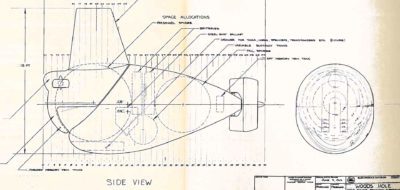
The commissioning of Alvin: June 5, 1964
Listen to speeches given during Alvin's commissioning ceremony on June 5, 1964. Edited footage includes imagery from the commissioning ceremony, initial vehicle deployment, and testing in Woods Hole, MA.
 Video
Video
Illuminating the Seafloor
Teamwork between a deep-sea robot and a human-occupied submarine led to the discovery of five new hydrothermal vents on the seafloor of the eastern Tropical Pacific Ocean.
 Video
Video
Betty Bunce on To Tell The TRUTH (1960s CBS)
Enjoy this throwback segment from the 1960s game show To Tell The Truth featuring WHOI Scientist Emeritus and a woman pioneer in oceanography, Elizabeth "Betty" Bunce.
 Video
Video
Rare look at animals in the ocean twilight zone
The ocean is vast, so scientists use two ocean robots to better spot and study elusive creatures from the deep, dark twilight zone.
 Video
Video
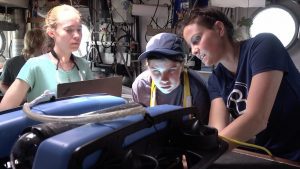
WHOI robotics class sets sail
High school students set sail with WHOI to explore ocean robotics over spring break.
 Video
Video
Mia and Molly: Between Two Robots
In BETWEEN TWO ROBOTS, kid host Mia chats with WHOI "robotologist" Molly Curran about how Mesobot sees and tracks creatures in the deep, dark Twilight Zone.
 Video
Video
Mia and Kaitlyn: Between Two Robots
In BETWEEN TWO ROBOTS, kid host Mia asks WHOI robot trainer Kaitlyn Tradd how she protects AUVs from curious (but not hungry!) sharks in the Twilight Zone.
 Video
Video
Marlon and Ciara: Between Two Robots
Kids take the mic in BETWEEN TWO ROBOTS! In this episode, Marlon asks MIT-WHOI student Ciara Willis why poop matters in the Ocean Twilight Zone.
 Video
Video
Marlon and Dana: Between Two Robots
In BETWEEN TWO ROBOTS, kid host Marlon asks Dana Yoerger—Mesobot's "dad"—what his robot tastes like and what it sees in the deep, dark Ocean Twilight Zone.
 Video
Video
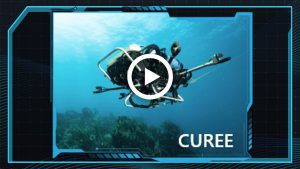
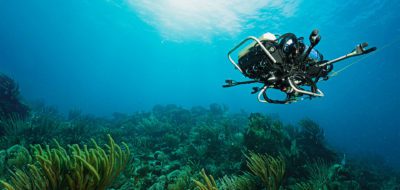
Ocean: Impossible | Meet CUREE
Meet CUREE. The deep ocean is dark, cold, and risky for humans—so we rely on robots to explore and guide us in this vast frontier.
 Video
Video
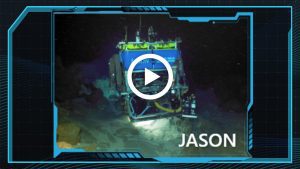
Ocean: Impossible | Meet Jason
Meet Jason. The deep ocean is dark, cold, and risky for humans—so we rely on robots to explore and guide us in this vast frontier.
 Video
Video
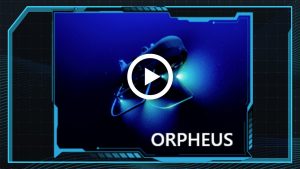
Ocean: Impossible | Meet Orpheus
Meet Orpheus. The deep ocean is dark, cold, and risky for humans—so we rely on robots to explore and guide us in this vast frontier.
 Video
Video
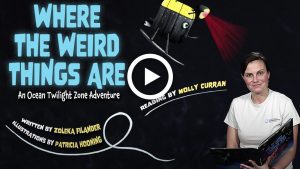
Where the Weird Things Are: An Ocean Twilight Zone Adventure
Join Meso, an intrepid underwater robot, on its very first expedition to explore the ocean twilight zone, and meet all the creatures that live there!
 Video
Video
Summary of when Alvin visited Titanic in 1986
Dr. Robert Ballard summarizes the first time HOV Alvin and Jason Junior explored the wreck of the Titanic in 1986.
References
HOV Alvin
A 3-person research submarine taking scientists deep into the ocean.
HOVDeep Sea Challenger
A one-person human-occupied vehicle (HOV) that was built to descend to and explore the deepest places in the ocean.
HROV Nereus
Operating in two modes; as an autonomous, or free-swimming, vehicle for wide area surveys (left) and as a tethered, or cabled, vehicle for sampling and other tasks.
ROV Jason
A remotely operated vehicle that gives scientists immediate, real-time access to the sea floor.
AUV REMUS
An series of autonomous vehicles designed for coastal monitoring as well as survey operations at various depths in the ocean.
AUV Sentry
An autonomous underwater vehicle capable of exploring the ocean down to 4,500 meters.
AUV Seabed
An autonomous vehicle suited to collect highly detailed sonar and optical images of the deep seafloor.
Spray Glider
An autonomous vehicle that can dive to depths of over 1,000 meters and can stay at sea for months at a time.
National Deep Submergence Facility
More topics like this
Acoustics
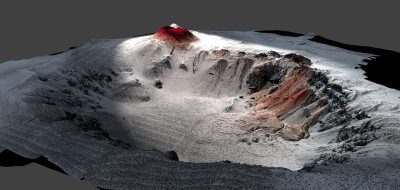
A strong understanding of how sound behaves in different conditions in the ocean helps scientists answer fundamental questions about the planet, the ocean, and marine life.
Imaging
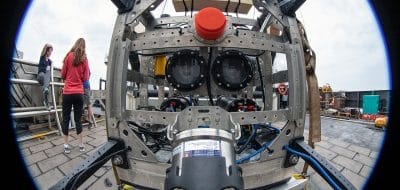
Underwater imaging continues to advance in technology, allowing research to be conducted in the pressure-filled, extreme environments of the ocean.
Moorings & buoys
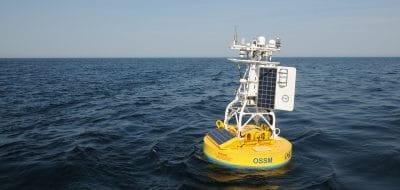
An oceanographic mooring consists of a long cable with an anchor at one end, a float at the other, and instruments attached to the line in between or to a float.
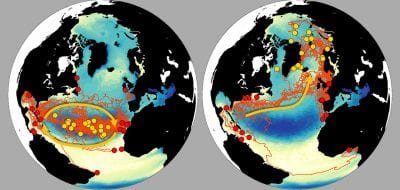
Ocean modeling
Ocean models are mathematical models of ocean properties and circulation, which helps us to better understand the ocean's influence on weather and climate.
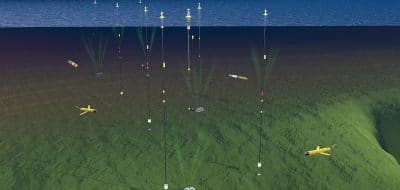
Ocean observatories
Ocean observatories have suites of instruments and sensors with long-term power supplies and permanent communications links that feed data in real-time.
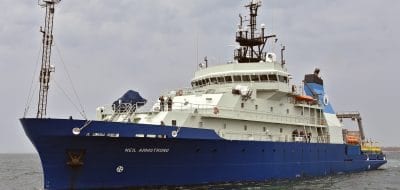
Ships
Oceanographers rely on sophisticated ships to get a firsthand look at the ocean environment and to carry their tools and instruments into it.
Oceanus magazine
[ ALL ]In-depth research on Underwater vehicles
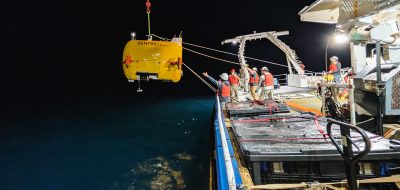

Inside Room 71: WHOI history in seven artifacts
Three ocean robots that plunge into active volcanoes
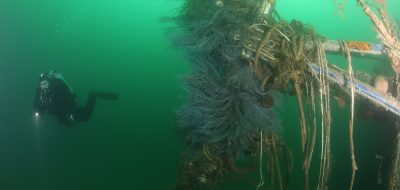
A new underwater robot could help preserve New England’s historic shipwrecks
Three questions with Carl Hartsfield

WHOI News Room
[ ALL ]Press releases
Get the ocean in your inbox
Fresh discoveries, research, and stories from WHOI — free, every week.