
Research Highlights
Oceanus Magazine
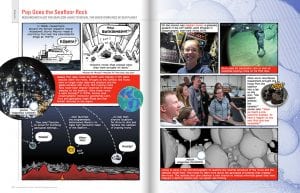
WHOI scientists used the human-occupied submersible Alvin and the autonomous underwater vehicle Sentry to explore a surprising discovery: gas-filled volcanic rocks on the seafloor that “pop” when brought up to the surface.
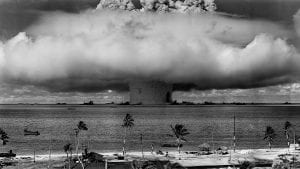
WHOI scientists returned to the Pacific islands of Bikini and Enewetak in 2015 to study radioactive contamination nearly 70 years after the U.S. used the islands for nuclear weapons testing. What they learned could also be applied to a more recent nuclear disaster: the 2011 Fukushima Daiichi reactor meltdown in Japan.
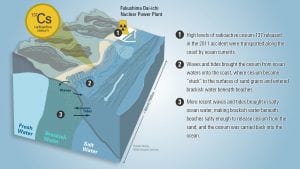
Scientists have found a previously unsuspected place where radioactive material from the Fukushima Dai-ichi nuclear power plant disaster has accumulated—in sands and brackish groundwater beneath beaches up to 60 miles away.
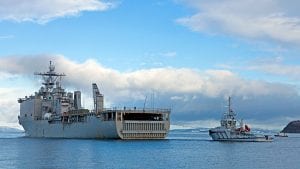
When U.S. Navy were preparing a major NATO military exercise, they solicited help from WHOI scientists to plan how to mitigate potential environmental damage from oil spills.
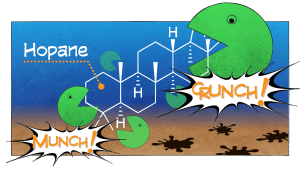
Officials pumped a huge amount of chemicals into the deep ocean during the 2010 Deepwater Horizon oil spill in an effort to disperse the oil. A study published this week in the Proceedings of the National Academy of Sciences offers evidence that the dispersant may helped microbes break down the oil.
News Releases
A new National Academies report lays out a research strategy for studying the ocean’s ability to sequester carbon
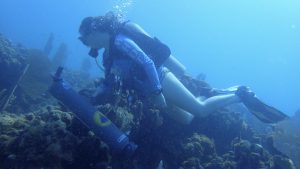
An interdisciplinary approach reveals how chemistry, microbes, and ocean circulation work together to shape reef ecosystems
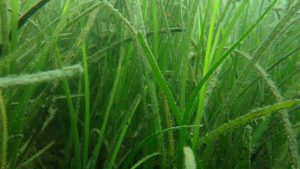
The Massachusetts Department of Environmental Protection is supporting a two-year study to quantify carbon storage in both natural and restored eelgrass meadows in coastal waters.
Researchers have identified a diverse set of molecules released by marine phytoplankton that fuel microbial life and help drive Earth’s carbon cycle
A new paper argues that larger, longer studies with rigorous monitoring and clear safeguards are needed to accurately assess OIF as a potential long-term CO2 storage solution.
News & Insights
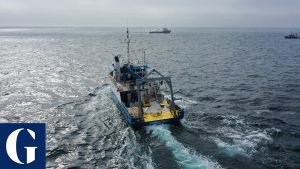
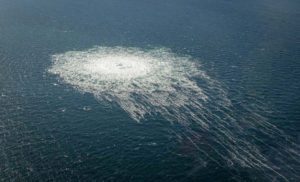
WHOI marine chemist Chris Reddy weighs in on a methane leak in the Baltic Sea
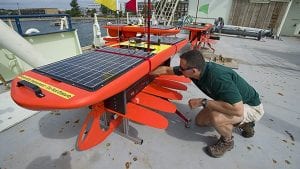
WHOI geochemist Chris German pairs an autonomous surface vehicle (ASV) called a Wave Glider with other vehicles to expand research here and on other Ocean Worlds
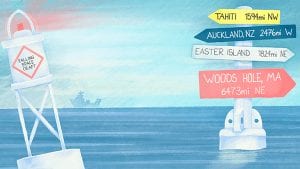
Researchers investigate dust from the ocean’s farthest point from land to reconstruct the climactic history of the Southern Hemisphere, and understand how micronutrients have influenced biological productivity in this oceanic desert.
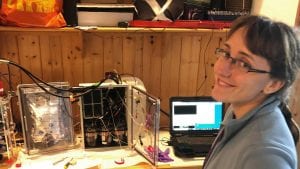
WHOI-MIT joint program student outfits her basement to do vital work on a marine carbon sensor