
Research Highlights
Oceanus Magazine
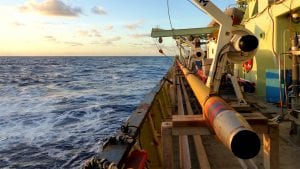
Some minerals actually don’t form without a little help from microscopic organisms, using chemical processes that scientists are only beginning to reveal.
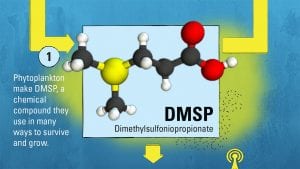
What gives sea air its distinctive scent? A chemical compound called dimethylsulfide. In a new study, WHOI scientists show that the compound may also be used by marine microbes to communicate with one another.
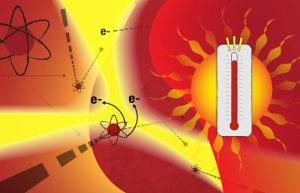
Mass spectrometer facilities can be a rite of passage for scientists—as well as for the samples analyzed inside the mass specs.
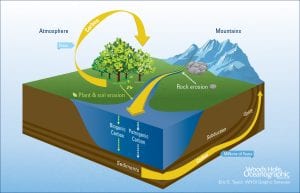
Like blood in our arteries in our body, water in rivers carry chemical signals that can tell us a lot about how the entire Earth system operates.
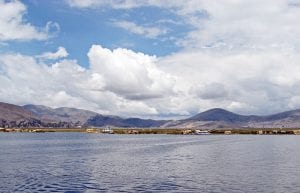
Lake Titicaca in the Andes Mountains of South America is an extraordinary place to explore ancient human civilization, Earth’s climate history, and the flow of carbon through our planet.
News Releases
A new National Academies report lays out a research strategy for studying the ocean’s ability to sequester carbon
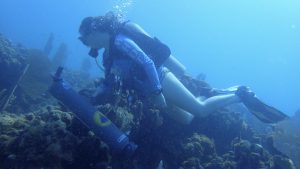
An interdisciplinary approach reveals how chemistry, microbes, and ocean circulation work together to shape reef ecosystems
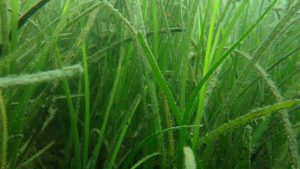
The Massachusetts Department of Environmental Protection is supporting a two-year study to quantify carbon storage in both natural and restored eelgrass meadows in coastal waters.
Researchers have identified a diverse set of molecules released by marine phytoplankton that fuel microbial life and help drive Earth’s carbon cycle

A new paper argues that larger, longer studies with rigorous monitoring and clear safeguards are needed to accurately assess OIF as a potential long-term CO2 storage solution.
News & Insights
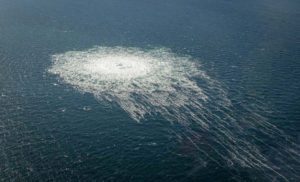
WHOI marine chemist Chris Reddy weighs in on a methane leak in the Baltic Sea
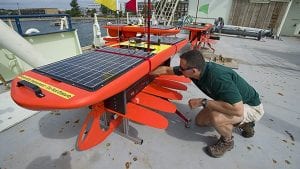
WHOI geochemist Chris German pairs an autonomous surface vehicle (ASV) called a Wave Glider with other vehicles to expand research here and on other Ocean Worlds

Researchers investigate dust from the ocean’s farthest point from land to reconstruct the climactic history of the Southern Hemisphere, and understand how micronutrients have influenced biological productivity in this oceanic desert.
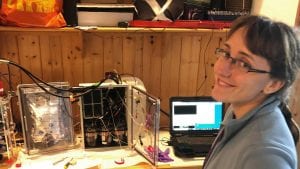
WHOI-MIT joint program student outfits her basement to do vital work on a marine carbon sensor