
Research Highlights
Oceanus Magazine
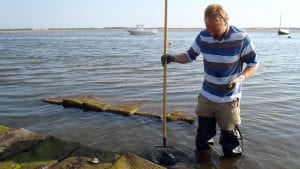
Towns in Cape Cod are looking to shellfish not only as culinary treats, but as a way to help clean up waters suffering from excess nitrogen. Nitrogen is an essential nutrient for plants and animals, but too much nitrogen-often from…
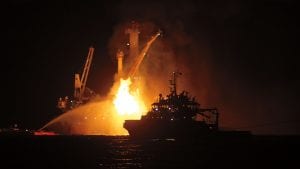
In the heat of the 2010 Deepwater Horizon disaster, U.S. government and industry responders had to make a crucial decision. They were facing an enormous oil spill, gushing uncontrollably from a wellhead at the seafloor—at a depth where no oil…
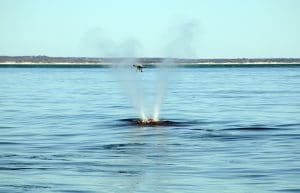
Researchers have known for decades that whales create elaborate songs. But a new study has revealed a component of whale songs that has long been overlooked-sort of a booming baseline to go along with the treble. Aboard a small research…
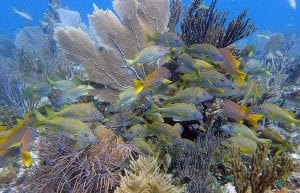
An unprecedented research cruise investigated one of the most beautiful and unexplored coral reefs in the Caribbean and fostered collaboration between U.S. and Cuban scientists.
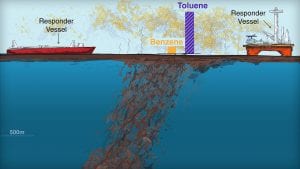
Seven years after the disastrous Deepwater Horizon oil spill in the Gulf of Mexico, the decision to inject chemical dispersants into the deep ocean has remained contentious. New evidence reveals an unexpected benefit.
News Releases
A new National Academies report lays out a research strategy for studying the ocean’s ability to sequester carbon
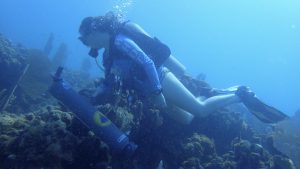
An interdisciplinary approach reveals how chemistry, microbes, and ocean circulation work together to shape reef ecosystems
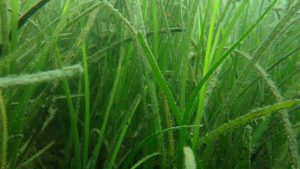
The Massachusetts Department of Environmental Protection is supporting a two-year study to quantify carbon storage in both natural and restored eelgrass meadows in coastal waters.
Researchers have identified a diverse set of molecules released by marine phytoplankton that fuel microbial life and help drive Earth’s carbon cycle
A new paper argues that larger, longer studies with rigorous monitoring and clear safeguards are needed to accurately assess OIF as a potential long-term CO2 storage solution.
News & Insights
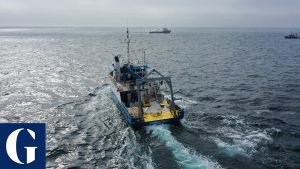
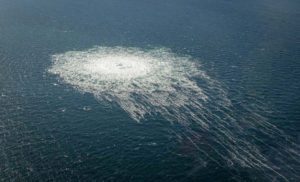
WHOI marine chemist Chris Reddy weighs in on a methane leak in the Baltic Sea
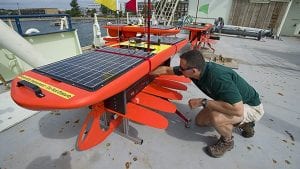
WHOI geochemist Chris German pairs an autonomous surface vehicle (ASV) called a Wave Glider with other vehicles to expand research here and on other Ocean Worlds
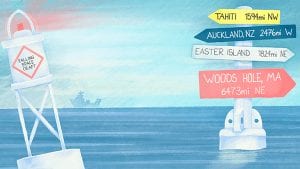
Researchers investigate dust from the ocean’s farthest point from land to reconstruct the climactic history of the Southern Hemisphere, and understand how micronutrients have influenced biological productivity in this oceanic desert.
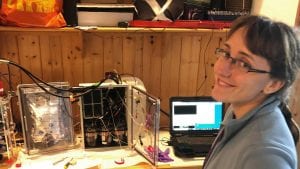
WHOI-MIT joint program student outfits her basement to do vital work on a marine carbon sensor