
Research Highlights
Oceanus Magazine
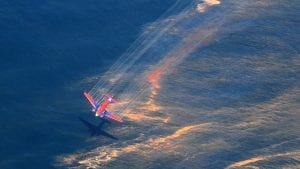
Scientists followed evidence from the 2010 Deepwater Horizon oil spill to discover an unexpected phenomenon.
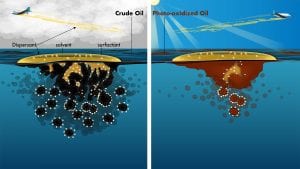
A new discovery could change the way officials approach oil spill cleanups.
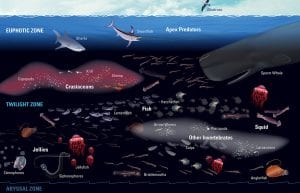
The twilight zone is a part of the ocean 660 to 3,300 feet below the surface, where little sunlight can reach. It is deep and dark and cold, and the pressures there are enormous. Despite these challenging conditions, the twilight zone teems with life that helps support the ocean’s food web and is intertwined with Earth’s climate. Some countries are gearing up to exploit twilight zone fisheries, with unknown impacts for marine ecosystems and global climate. Scientists and engineers at Woods Hole Oceanographic Institution are poised to explore and investigate this hidden frontier.
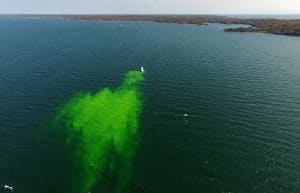
WHOI scientists are helping to develop a robotic underwater vehicle that can track oil spills and help responders mitigate damage in remote or ice-covered areas such as the Arctic Ocean and the Great Lakes.
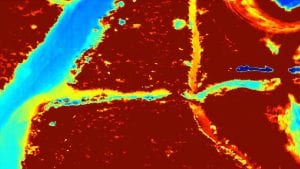
Nope, it’s not a bird or a plane. It’s a drone on a scientific mission to restore a river long impaired by dams and to help bring back populations of prized fish that once flourished in it. For more than…
News Releases
A new National Academies report lays out a research strategy for studying the ocean’s ability to sequester carbon
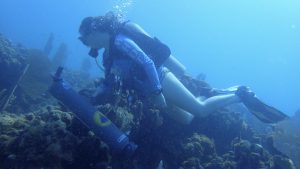
An interdisciplinary approach reveals how chemistry, microbes, and ocean circulation work together to shape reef ecosystems
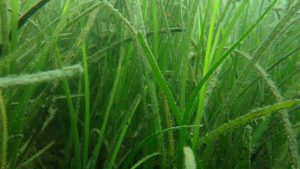
The Massachusetts Department of Environmental Protection is supporting a two-year study to quantify carbon storage in both natural and restored eelgrass meadows in coastal waters.
Researchers have identified a diverse set of molecules released by marine phytoplankton that fuel microbial life and help drive Earth’s carbon cycle
A new paper argues that larger, longer studies with rigorous monitoring and clear safeguards are needed to accurately assess OIF as a potential long-term CO2 storage solution.
News & Insights
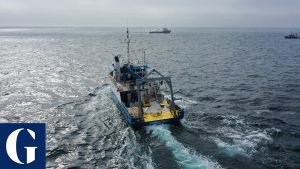
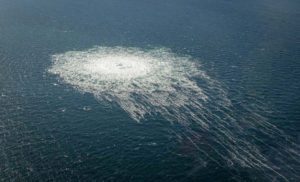
WHOI marine chemist Chris Reddy weighs in on a methane leak in the Baltic Sea
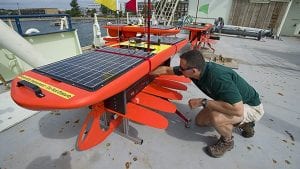
WHOI geochemist Chris German pairs an autonomous surface vehicle (ASV) called a Wave Glider with other vehicles to expand research here and on other Ocean Worlds
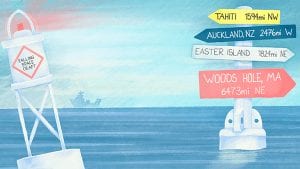
Researchers investigate dust from the ocean’s farthest point from land to reconstruct the climactic history of the Southern Hemisphere, and understand how micronutrients have influenced biological productivity in this oceanic desert.
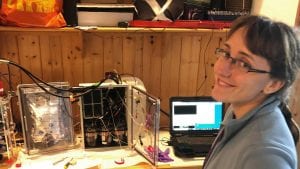
WHOI-MIT joint program student outfits her basement to do vital work on a marine carbon sensor