
Research Highlights
Oceanus Magazine
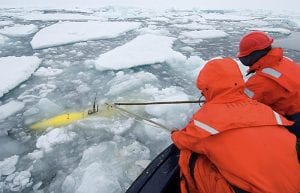
In the summer of 2007, an international team led by scientists at Woods Hole Oceanographic Institution sailed to the Arctic Ocean aboard the Swedish icebreaker Oden. Their missions: to test new robotic vehicles designed for use in ice-covered oceans and…
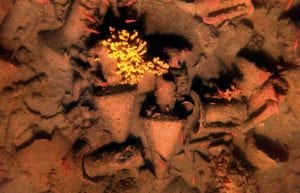
Scraping inside clay jars recovered from a 2,400-year-old shipwreck, two researchers found DNA fragments that revealed the jars’ long-disappeared probable cargo: oregano, olive oil, and wine. The genetic technique, developed by Maria Hansson and Brendan Foley, offers a new window…
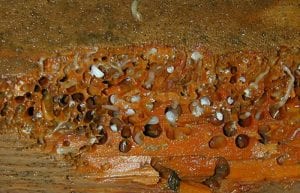
Aboard a research ship in 1997, Janet Voight was amazed when she examined a small log that researchers just happened to trawl up from the bottom of the sea: It had been colonized by a lush community of snails. “These…
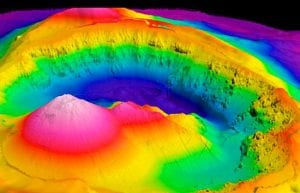
Painting with sonar, each brushstroke a “ping” of sound reflected off the seafloor, the robotic underwater vehicle called ABE created a masterpiece of a landscape—one that is submerged about a mile deep in the Pacific Ocean. On an international expedition…
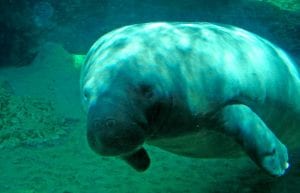
When boats hit manatees, the outcome is often grim. Bones are broken and skins sliced. Despite regulations designed to prevent collisions, dozens of manatees in Florida continue to be injured or killed—including a near-record 86 deaths in 2006. Searching for better…
News Releases
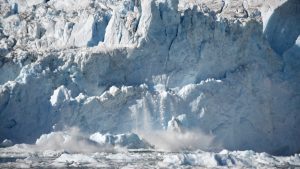
WHOI researchers use more than 15,000 satellite observations of ice cliffs to reduce uncertainty in future sea level rise projections
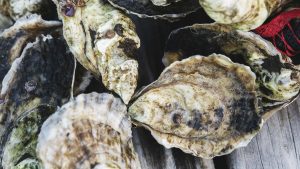
High-speed imaging reveals how oyster larvae’s dense shell helps them feed—and may offer clues to why ocean acidification threatens their survival
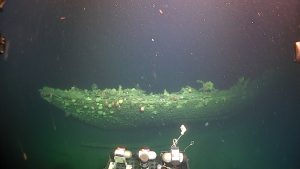
The Heroic Age Expedition, led by the Royal Canadian Geographical Society in partnership with Woods Hole Oceanographic Institution, reveals the famed Antarctic explorer’s last ship, Terra Nova in stunning detail
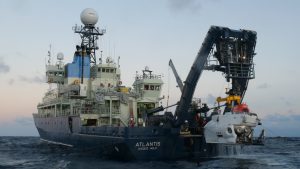
The Royal Canadian Geographical Society, in partnership with WHOI, will undertake “once-in-a-generation” expedition to survey Sir Ernest Shackleton’s Quest and Captain Robert Falcon Scott’s Terra Nova
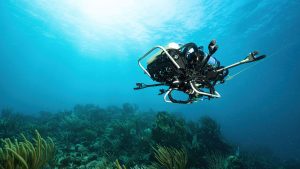
New underwater robot opens new possibilities in coral reef conservation by autonomously identifying biodiversity “hotspots”
News & Insights
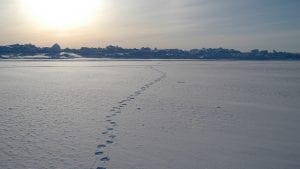
NSF program fosters collaboration between indigenous communities and traditional scientists, allowing WHOI’s autonomous vehicles to shed light on a changing Arctic
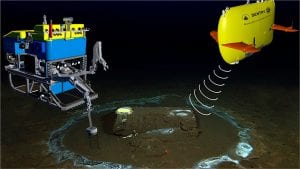
An investigative report this week in the LA Times features the work of WHOI’s marine geochemistry lab in identifying the discarded barrels and analyzing samples from the discovery.