
Research Highlights
Oceanus Magazine
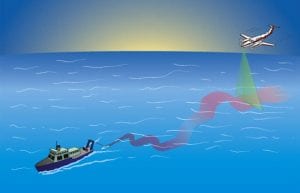
WHOI scientists are exploring an experimental technique to track the complex movements of water in the oceans using harmless fluorescent dyes and airplanes equipped with Light Detection and Ranging instruments. To detect motion, LIDAR uses pulses of laser light, which cause the flowing dye to fluoresce.
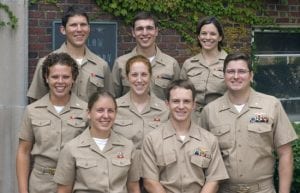
Nine U.S. Navy officers are pursuing graduate degrees in the MIT/WHOI Joint Program in Oceanography/Applied Ocean Science and Engineering through a special arrangement between the institutions.
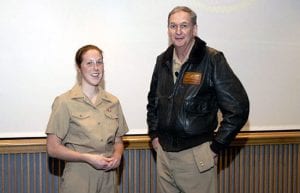
Ensign Allison Berg won the first Pittenger Fellowship for naval officers in MIT/WHOI Joint Program. In collaboration with WHOI Research Specialist Eugene Terray, Berg will conduct a field experiment using Sonic Detection and Ranging (SODAR) systems to study winds near the ocean?s surface.
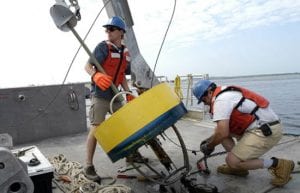
In science, some of the most confounding and interesting questions come from the borderlands, where one physical world collides with another. In marine science, one of the most dynamic environments is where rivers meet the sea, in partially enclosed bays…
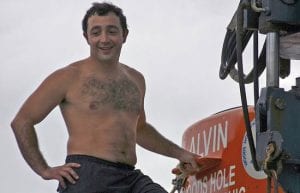
Like many boys who spend their youths throwing baseballs in Massachusetts parks, Tarantino dreamed of playing for the Red Sox. When not pitching, he liked to take apart his toys and put them back together, which ultimately led to a…
News Releases

WHOI researchers use more than 15,000 satellite observations of ice cliffs to reduce uncertainty in future sea level rise projections
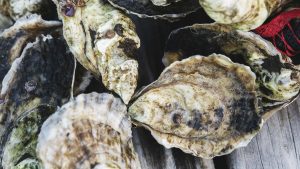
High-speed imaging reveals how oyster larvae’s dense shell helps them feed—and may offer clues to why ocean acidification threatens their survival
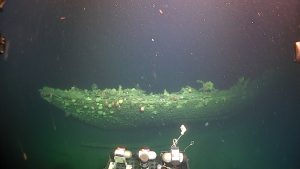
The Heroic Age Expedition, led by the Royal Canadian Geographical Society in partnership with Woods Hole Oceanographic Institution, reveals the famed Antarctic explorer’s last ship, Terra Nova in stunning detail
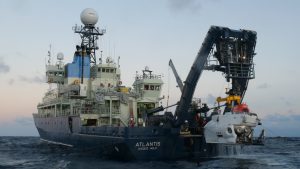
The Royal Canadian Geographical Society, in partnership with WHOI, will undertake “once-in-a-generation” expedition to survey Sir Ernest Shackleton’s Quest and Captain Robert Falcon Scott’s Terra Nova
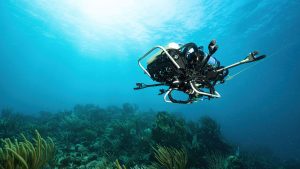
New underwater robot opens new possibilities in coral reef conservation by autonomously identifying biodiversity “hotspots”
News & Insights
NSF program fosters collaboration between indigenous communities and traditional scientists, allowing WHOI’s autonomous vehicles to shed light on a changing Arctic
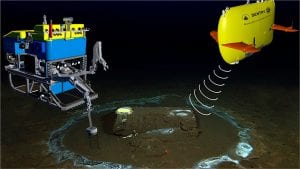
An investigative report this week in the LA Times features the work of WHOI’s marine geochemistry lab in identifying the discarded barrels and analyzing samples from the discovery.