
Research Highlights
Oceanus Magazine
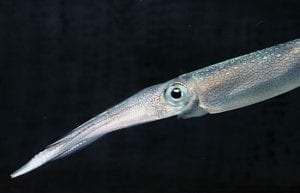
Squid fishing has increased substantially in the past decade, with no way to assess the continuing viability of the stock?until now.
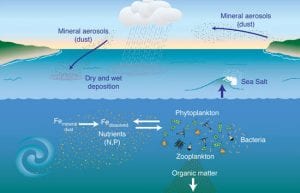
Like most living things, microscopic marine plants need iron and other minerals to live and grow. On land, soil provides a ubiquitous source of minerals, but how do essential nutrients get into vast watery stretches of the open ocean? The…
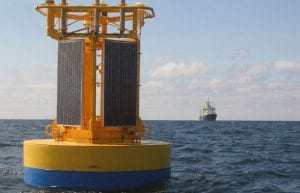
How do you get long-term ocean measurements from any spot on the globe, with day by day feedback and low costs? If you are Dan Frye of the WHOI Advanced Engineering Laboratory, you take an old oceanographic concept?the moored buoy?and bring it into the 21st century with wireless technology.
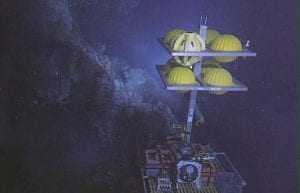
Exploring the sunless seafloor can be like using a flashlight to find something in a dark basement. Now Woods Hole Oceanographic Institution scientists and engineers have built a portable light system to illuminate the depths, essentially transforming areas of the deep sea into a photography studio.
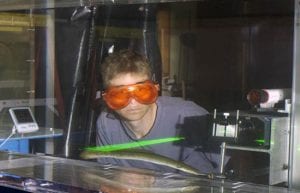
Erik Anderson was vexed by some scientific papers he read during his first year of graduate studies. Engineers had asserted that squids likely propelled themselves through water by creating vortex rings. Anderson begged to differ. Together with Mark Grosenbaugh, he set up a series of experiments to check the theories against some observational evidence.
News Releases
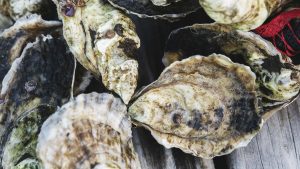
High-speed imaging reveals how oyster larvae’s dense shell helps them feed—and may offer clues to why ocean acidification threatens their survival
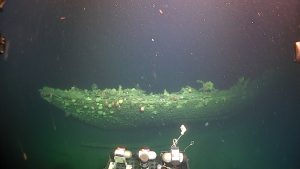
The Heroic Age Expedition, led by the Royal Canadian Geographical Society in partnership with Woods Hole Oceanographic Institution, reveals the famed Antarctic explorer’s last ship, Terra Nova in stunning detail
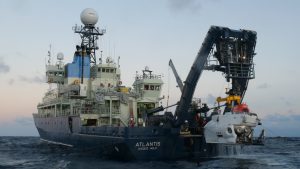
The Royal Canadian Geographical Society, in partnership with WHOI, will undertake “once-in-a-generation” expedition to survey Sir Ernest Shackleton’s Quest and Captain Robert Falcon Scott’s Terra Nova
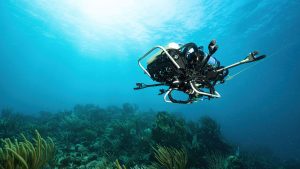
New underwater robot opens new possibilities in coral reef conservation by autonomously identifying biodiversity “hotspots”
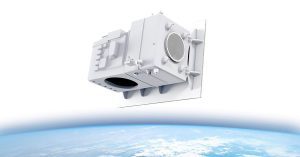
Satellite measuring land, polar, and coastal regions could launch by 2030
News & Insights
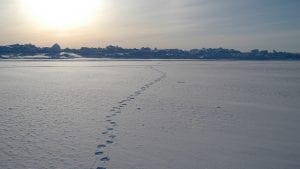
NSF program fosters collaboration between indigenous communities and traditional scientists, allowing WHOI’s autonomous vehicles to shed light on a changing Arctic
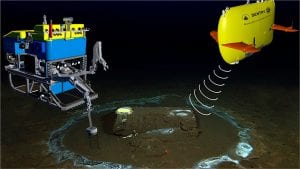
An investigative report this week in the LA Times features the work of WHOI’s marine geochemistry lab in identifying the discarded barrels and analyzing samples from the discovery.