
Research Highlights
Oceanus Magazine
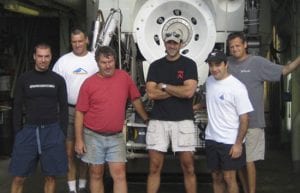
Forty summers ago in the Bahamas, two men climbed inside a 23-foot white submarine named Alvin and drove it to a depth 6,000 feet, a dive that certified them as the first pilots of the world’s deepest-diving research sub. Bill…
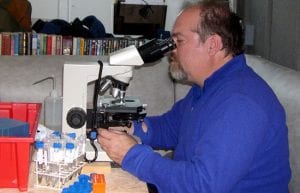
The historic bloom of toxic algae that blanketed New England’s waters and halted shellfishing from Maine to Martha’s Vineyard in the spring of 2005 is over. But scientists are now wondering if there will be an encore.
Before departing, the algae likely left behind a colonizing population that may promote blooms in southern New England for at least the next few years.
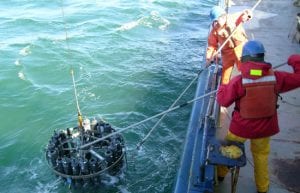
Coastal resource managers shut down shellfish beds in three New England states in mid-May—including rare closures of Massachusetts Bay and Cape Cod Bay—because of an intense bloom of the toxic algae Alexandrium fundyense. Researchers from the Woods Hole Oceanographic Institution saw the ‘red tide’ coming before its toxic effects reached the shore.
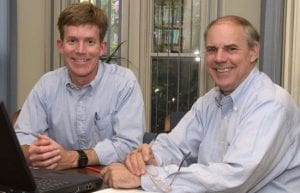
Researchers from Woods Hole Oceanographic Institution, the Marine Biological Laboratory (MBL), and the Massachusetts Institute of Technology (MIT) have embarked on a novel collaboration to investigate harmful algal blooms, ocean-borne pathogens, and potential pharmaceuticals from marine sources.
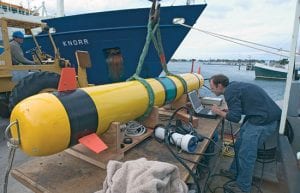
In the mid-1990s, the Navy began funding research for small, robotic vehicles to perform unmanned reconnaissance in coastal waters. At WHOI, that helped spark the development of REMUS (Remote Environmental Monitoring UnitS), designed and built by Chris von Alt, Ben Allen, and colleagues in the Oceanographic Systems Laboratory.
News Releases
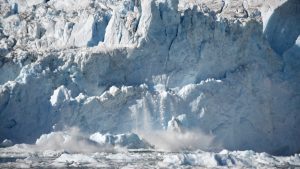
WHOI researchers use more than 15,000 satellite observations of ice cliffs to reduce uncertainty in future sea level rise projections
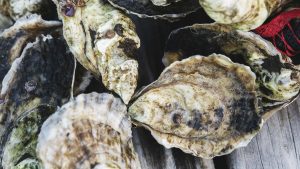
High-speed imaging reveals how oyster larvae’s dense shell helps them feed—and may offer clues to why ocean acidification threatens their survival
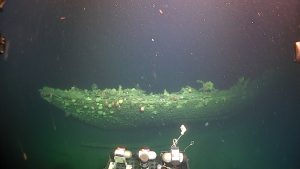
The Heroic Age Expedition, led by the Royal Canadian Geographical Society in partnership with Woods Hole Oceanographic Institution, reveals the famed Antarctic explorer’s last ship, Terra Nova in stunning detail
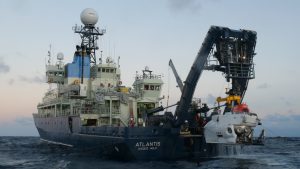
The Royal Canadian Geographical Society, in partnership with WHOI, will undertake “once-in-a-generation” expedition to survey Sir Ernest Shackleton’s Quest and Captain Robert Falcon Scott’s Terra Nova
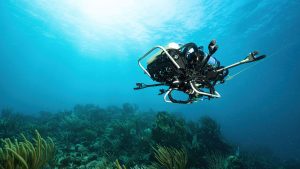
New underwater robot opens new possibilities in coral reef conservation by autonomously identifying biodiversity “hotspots”
News & Insights
NSF program fosters collaboration between indigenous communities and traditional scientists, allowing WHOI’s autonomous vehicles to shed light on a changing Arctic
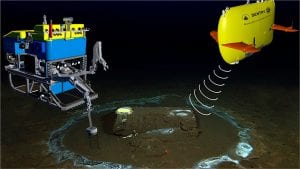
An investigative report this week in the LA Times features the work of WHOI’s marine geochemistry lab in identifying the discarded barrels and analyzing samples from the discovery.