
Research Highlights
Oceanus Magazine
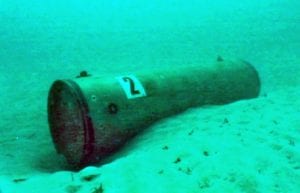
Eternally and incessantly, waves and currents stir up sand from the seafloor near the coast. Sediments get suspended in the ocean, carried onshore and off, and deposited elsewhere. In the process, objects on the seafloor—natural and unnatural—can get buried and uncovered.
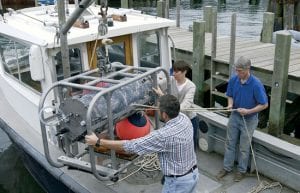
Estuaries are the borderlands between salt and freshwater environments, and they are incredibly diverse both biologically and physically. The diversity and the high energy of the ecosystem make estuaries remarkably resilient. With a better understanding of these systems, we can reverse
their decline and restore the ecological richness of these valuable, albeit muddy, environments.
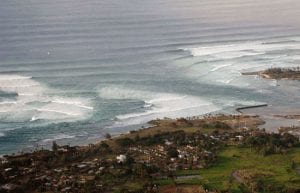
For years, scientists who study the shoreline have wondered at the apparent fickleness of storms, which can devastate one part of a coastline, yet leave an adjacent part untouched. How can this be? The answer lies in the physics of the nearshore region?the stretch of sand, rock, and water between the dry land behind the beach and the beginning of deep water far from shore.
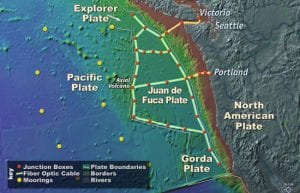
Scientists extend their reach into the deep with pioneering undersea cable networks
H2O (Hawaii-2 Observatory) – In 1998, scientists used the remotely operated vehicles (ROV) Jason and Medea to create the pioneering long-term seafloor observatory called H2O (Hawaii-2 Observatory). They spliced an abandoned submarine telephone cable into a termination frame. The frame relays power and communications to a junction box, which serves as an electrical outlet for scientific instruments.
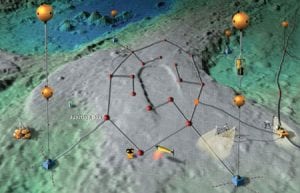
NEPTUNE is a proposed system of high-speed fiber- optic submarine cables linking a series of seafloor nodes supporting thousands of assorted measuring instruments, video equipment, and robotic vehicles that could upload power and download data at undersea docks. Unlike conventional telephone cables, which supply power from shore in a straight line, end to end, NEPTUNE would operate like a power grid, distributing power simultaneously and as needed throughout the network. Working much like a campus data network (with nodes analogous to buildings and each instrument like a workstation), NEPTUNE would provide real-time transmission of data and two-way communications.
News Releases
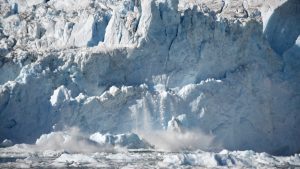
WHOI researchers use more than 15,000 satellite observations of ice cliffs to reduce uncertainty in future sea level rise projections
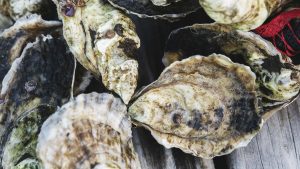
High-speed imaging reveals how oyster larvae’s dense shell helps them feed—and may offer clues to why ocean acidification threatens their survival
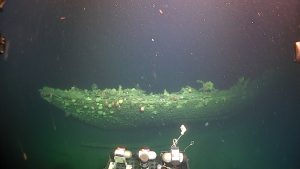
The Heroic Age Expedition, led by the Royal Canadian Geographical Society in partnership with Woods Hole Oceanographic Institution, reveals the famed Antarctic explorer’s last ship, Terra Nova in stunning detail
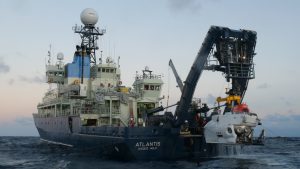
The Royal Canadian Geographical Society, in partnership with WHOI, will undertake “once-in-a-generation” expedition to survey Sir Ernest Shackleton’s Quest and Captain Robert Falcon Scott’s Terra Nova
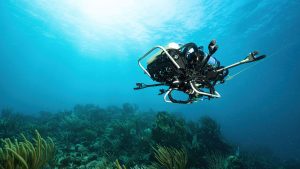
New underwater robot opens new possibilities in coral reef conservation by autonomously identifying biodiversity “hotspots”
News & Insights
NSF program fosters collaboration between indigenous communities and traditional scientists, allowing WHOI’s autonomous vehicles to shed light on a changing Arctic
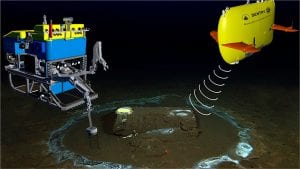
An investigative report this week in the LA Times features the work of WHOI’s marine geochemistry lab in identifying the discarded barrels and analyzing samples from the discovery.