
Research Highlights
Oceanus Magazine
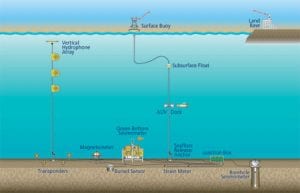
The next great leap in our understanding of the earth-ocean system will require us to put our “eyes” and “ears” in the ocean to observe the dynamic processes going on there as they are happening, in real time.
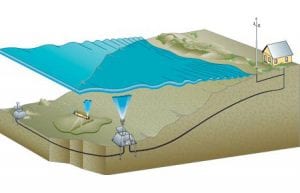
The Martha’s Vineyard Observatory will have sensors mounted on two seafloor nodes, at depths of about 5 and 15 meters, respectively, connected to a shore station via a buried cable. Instruments mounted on the nodes will continually monitor mean sea and wave heights, current strengths, seawater turbulence, subsurface sediment movement, sunlight intensity, and the temperature, salinity, and carbon dioxide levels of the ocean?s waters.
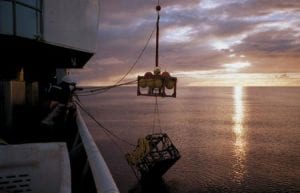
A major obstacle impeding our ability to understand many of the earth’s fundamental, ongoing dynamics–quite frankly–has been a dearth of electrical outlets and phone jacks on the seafloor.
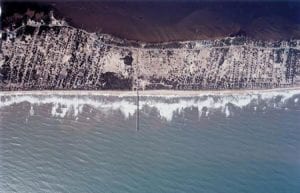
The gentle lapping of waves on the beach is a metaphor for enduring tranquility. However, the thin zone where the surf meets the turf is one of the most turbulent, complex, fast-moving, constantly changing places on Earth.
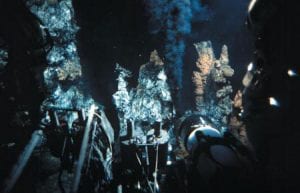
In 1985, Cindy Van Dover, then a graduate student in biology in the MIT/WHOI Joint Program, discovered a novel light-sensing organ on a unique species of shrimp that lives at high-temperature, black smoker chimneys on the Mid-Atlantic Ridge. If this photoreceptor were indeed some sort of primitive “eye,” the question instantly arose: At depths of some 3,600 meters, where sunlight cannot penetrate, what are these shrimp looking at? The search for a source of light in deep-sea hydrothermal environments began.
News Releases
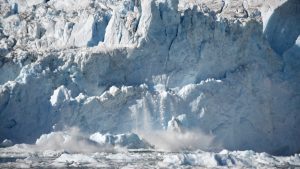
WHOI researchers use more than 15,000 satellite observations of ice cliffs to reduce uncertainty in future sea level rise projections
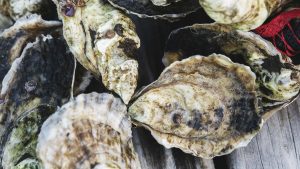
High-speed imaging reveals how oyster larvae’s dense shell helps them feed—and may offer clues to why ocean acidification threatens their survival
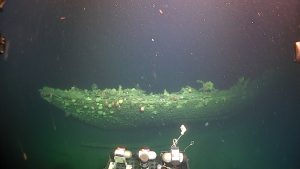
The Heroic Age Expedition, led by the Royal Canadian Geographical Society in partnership with Woods Hole Oceanographic Institution, reveals the famed Antarctic explorer’s last ship, Terra Nova in stunning detail
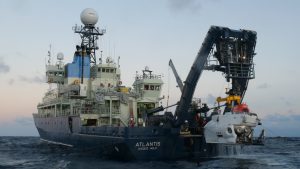
The Royal Canadian Geographical Society, in partnership with WHOI, will undertake “once-in-a-generation” expedition to survey Sir Ernest Shackleton’s Quest and Captain Robert Falcon Scott’s Terra Nova
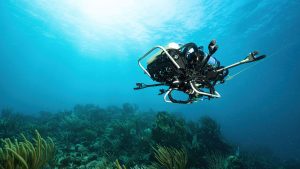
New underwater robot opens new possibilities in coral reef conservation by autonomously identifying biodiversity “hotspots”
News & Insights
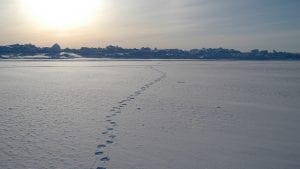
NSF program fosters collaboration between indigenous communities and traditional scientists, allowing WHOI’s autonomous vehicles to shed light on a changing Arctic
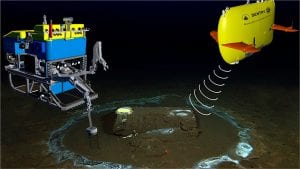
An investigative report this week in the LA Times features the work of WHOI’s marine geochemistry lab in identifying the discarded barrels and analyzing samples from the discovery.