
Research Highlights
Oceanus Magazine

Researchers find fluffy anemones spreading south via shipwrecks, revealing how artificial reefs and ocean currents connect marine habitats
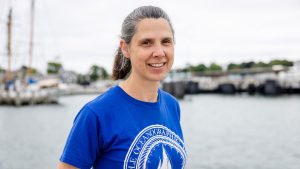
Three questions with marine research technician Emily Peacock
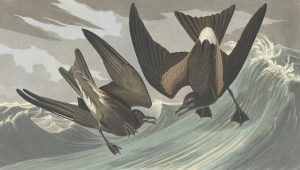
New GPS tracking on petrels reveals a surprising survival strategy hidden in the eye of the storm
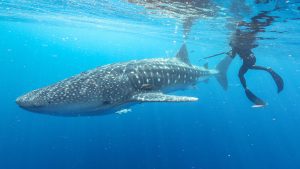
Marine biologist Camrin Braun explains why the world’s largest fish visit waters off Cape Cod—and what their epic migrations reveal about a changing ocean
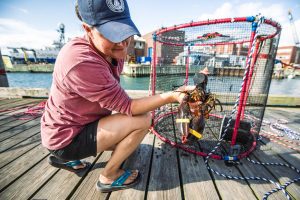
WHOI’s Sensory Ecology Lab investigates whether an industrialized soundscape impacts the health of a New England icon
News Releases
Enduring two typhoons over a three-week period in August, Woods Hole Oceanographic Institution (WHOI) researchers, working in partnership with the Okinawa Institute of Science and Technology Graduate University (OIST), have successfully deployed an OceanCube Observatory System in waters off Motobu…
Acidifying oceans could dramatically impact the world’s squid species, according to a new study led by Woods Hole Oceanographic Institution (WHOI) researchers and just published online in the journal PLOS ONE. Because squid are both ecologically and commercially important, that…
Using a “patient monitoring” device attached to a whale entangled in fishing gear, scientists showed for the first time how fishing lines changed a whale’s diving and swimming behavior. The monitoring revealed how fishing gear hinders whales’ ability to eat…
A new robotic sensor deployed by Woods Hole Oceanographic Institution (WHOI) in Gulf of Maine coastal waters may transform the way red tides or harmful algal blooms (HABs) are monitored and managed in New England. The instrument was launched at…
A group of oceanographic experts is calling for the establishment of a national network to monitor the diversity of marine life, a key bellwether of ocean and human health. Their work is described in the April 11 issue of BioScience. Lead…
News & Insights

WHOI’s Dennis McGillicuddy on why ocean life matters deeply to the Sunshine State
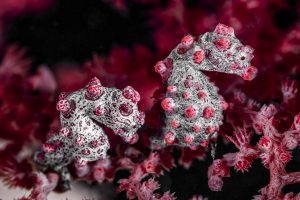
Are you an ocean lover? Go a little deeper with these courtship tips from beneath the waves!
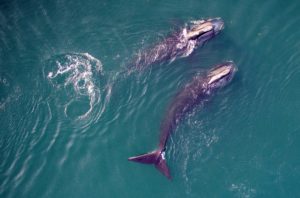
April 24 marks the first-ever Right Whale Day in Massachusetts. WHOI biologist and veterinarian Michael Moore recently met with the resident who brought this special recognition about– and explains why it’s important to raise awareness about the critically endangered North Atlantic right whale.
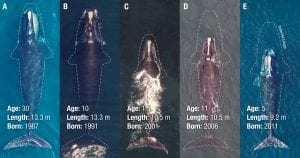
A report out this week in Current Biology reveal that critically endangered North Atlantic right whales are up to three feet shorter than 40 years ago. This startling conclusion reinforces what scientists have suspected: even when entanglements do not lead directly to the death of North Atlantic right whales, they can have lasting effects on the imperiled population that may now number less than 400 animals. Further, females that are entangled while nursing produce smaller calves.
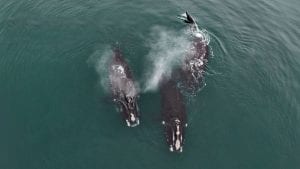
May 10, 2021 During a joint research trip on February 28 in Cape Cod Bay, Mass., WHOI whale trauma specialist Michael Moore, National Geographic photographer Brian Skerry, and scientists from New England Aquarium, witnessed a remarkable biological event: North…