
Research Highlights
Oceanus Magazine
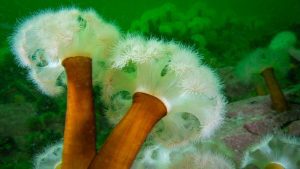
Researchers find fluffy anemones spreading south via shipwrecks, revealing how artificial reefs and ocean currents connect marine habitats
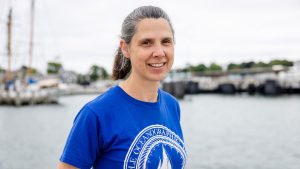
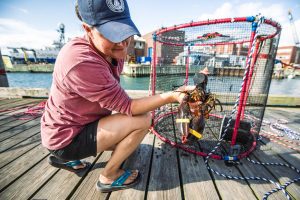
Three questions with marine research technician Emily Peacock
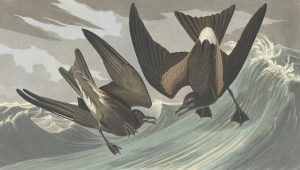
New GPS tracking on petrels reveals a surprising survival strategy hidden in the eye of the storm
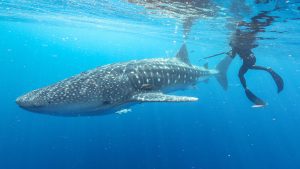
Marine biologist Camrin Braun explains why the world’s largest fish visit waters off Cape Cod—and what their epic migrations reveal about a changing ocean
WHOI’s Sensory Ecology Lab investigates whether an industrialized soundscape impacts the health of a New England icon
News Releases
The ability of deep-sea corals to harbor a broad array of marine life, including commercially important fish species, make these habitat-forming organisms of immediate interest to conservationists, managers, and scientists. Understanding and protecting corals requires knowledge of the historical processes…
Woods Hole Oceanographic Institution (WHOI) researchers have partnered with two companies to build and market undersea technology developed at WHOI: the Imaging FlowCytobot, an automated underwater microscope, and BlueComm, an underwater communications system that uses light to provide wireless transmission of data, including video imagery, in real or near-real time.
Right now, it looks a little like one of those plastic containers you might fill with gasoline when your car has run dry. But Scott Gallager is not headed to the nearest Mobil station. The Woods Hole Oceanographic Institution (WHOI) biologist has other, grander plans for his revolutionary Swimming Behavioral Spectrophotometer (SBS), which employs one-celled protozoa to detect toxins in water sources.
Simon Thorrold, a fish ecologist from WHOI, has received a new research grant from the David and Lucile Packard Foundation to use harmless chemical tags to track the dispersal of the larvae of coral reef fishes in the western Pacific Ocean.
Researchers will probe the Gakkel Ridge during expedition that begins on July 1.
News & Insights
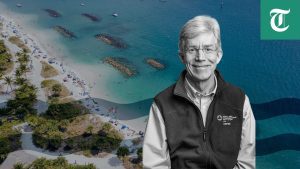
WHOI’s Dennis McGillicuddy on why ocean life matters deeply to the Sunshine State
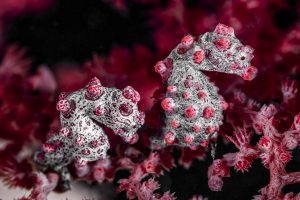
Are you an ocean lover? Go a little deeper with these courtship tips from beneath the waves!
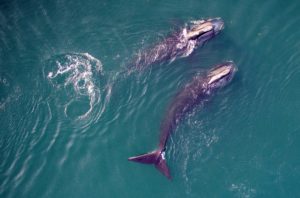
April 24 marks the first-ever Right Whale Day in Massachusetts. WHOI biologist and veterinarian Michael Moore recently met with the resident who brought this special recognition about– and explains why it’s important to raise awareness about the critically endangered North Atlantic right whale.
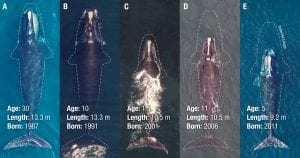
A report out this week in Current Biology reveal that critically endangered North Atlantic right whales are up to three feet shorter than 40 years ago. This startling conclusion reinforces what scientists have suspected: even when entanglements do not lead directly to the death of North Atlantic right whales, they can have lasting effects on the imperiled population that may now number less than 400 animals. Further, females that are entangled while nursing produce smaller calves.
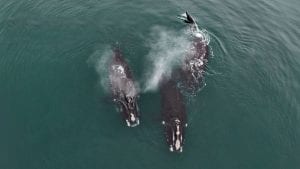
May 10, 2021 During a joint research trip on February 28 in Cape Cod Bay, Mass., WHOI whale trauma specialist Michael Moore, National Geographic photographer Brian Skerry, and scientists from New England Aquarium, witnessed a remarkable biological event: North…