How shipwrecks helped a cold-water anemone move south
Researchers find fluffy anemones spreading south via shipwrecks, revealing hidden connections between marine habitats
Estimated reading time: 3 minutes
“Something’s out of place.”
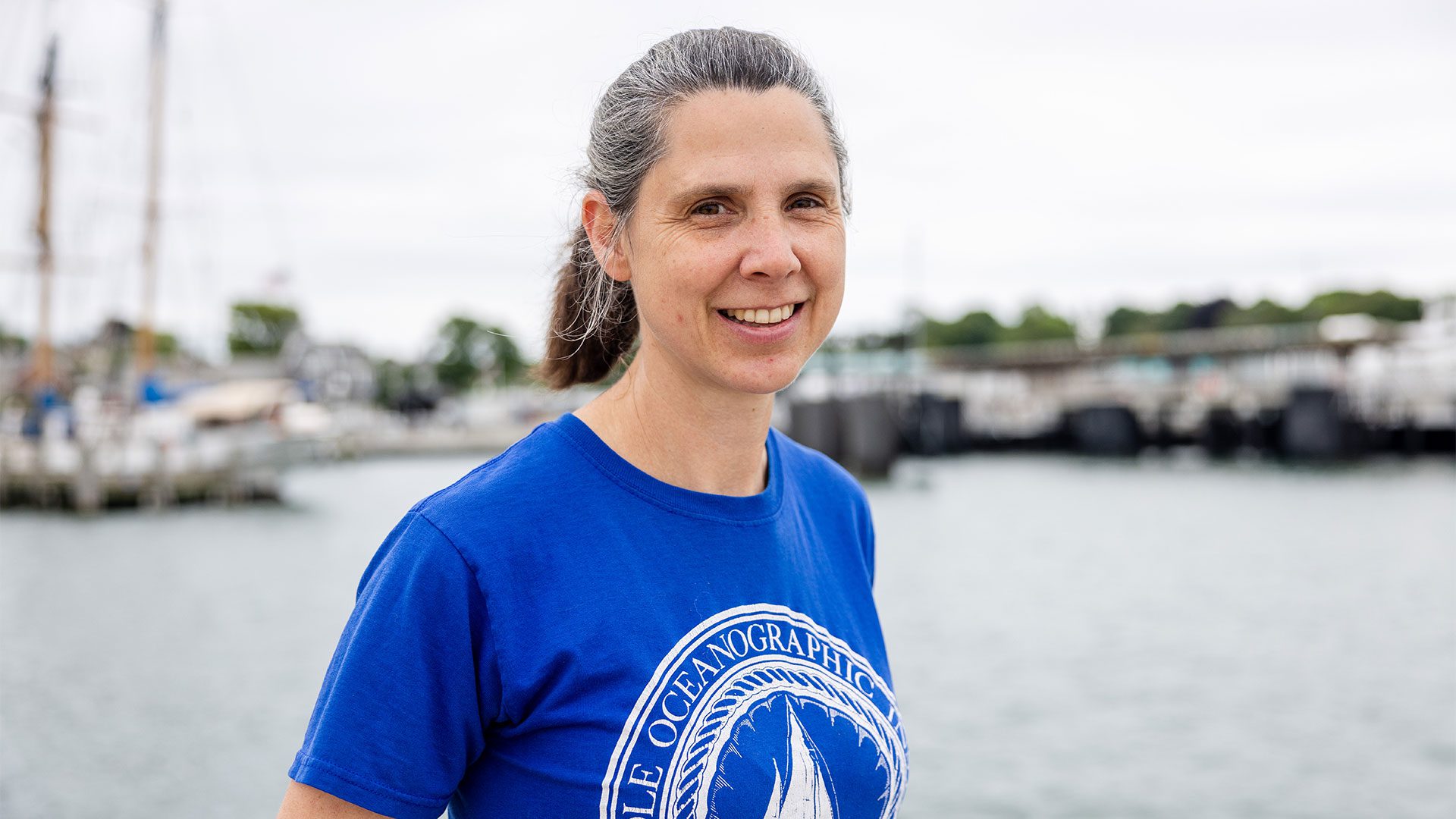
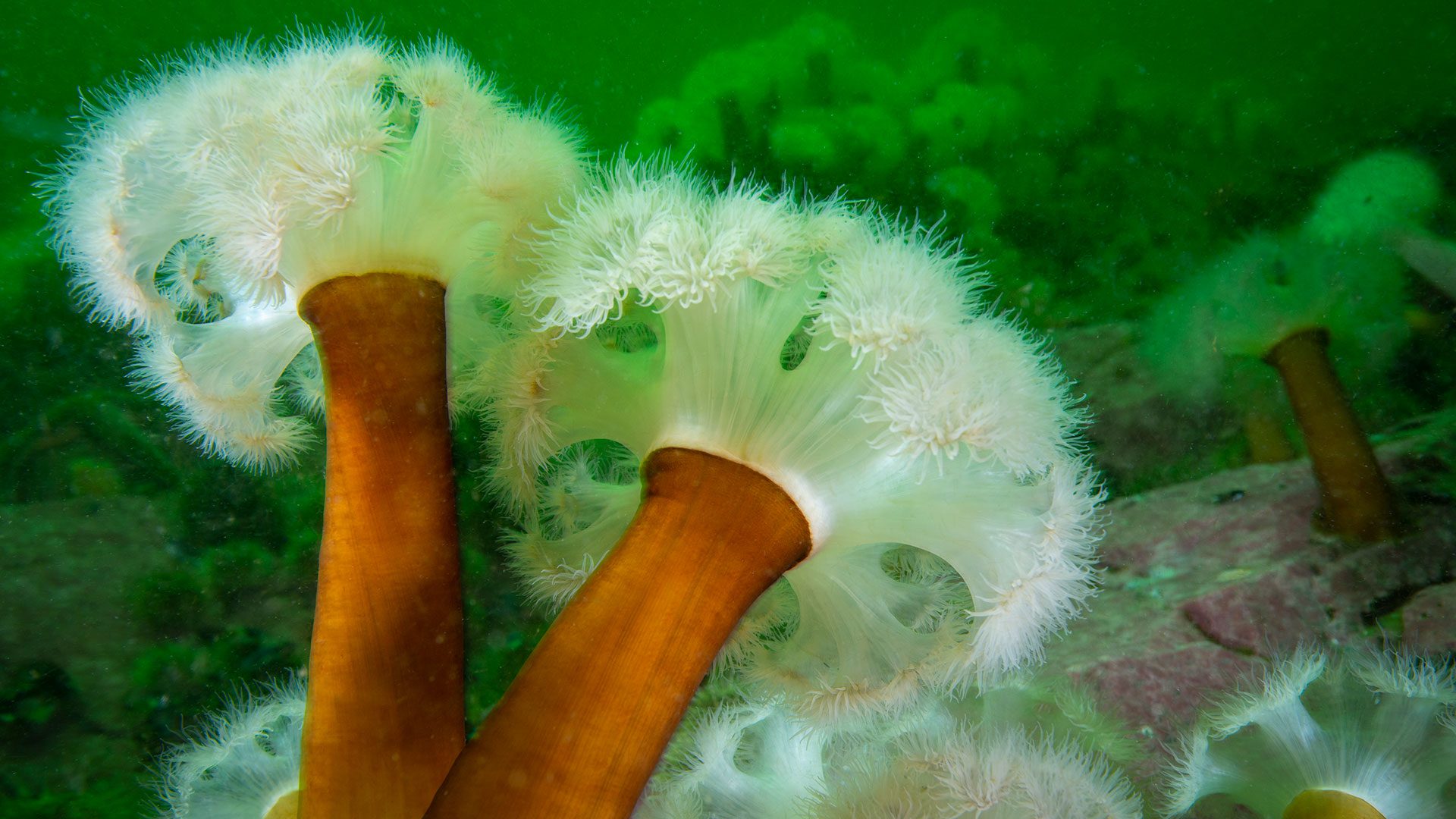
That was Kirstin Meyer-Kaiser’s first thought when she learned that colonies of Metridium senile, also known as the fluffy anemone, were living in the Mid-Atlantic Bight off the coast of North Carolina — a whopping 750 miles south of Cape Cod, which is as far south as she had ever seen them before.
“It was mind boggling,” said Meyer-Kaiser, an associate scientist at Woods Hole Oceanographic Institution. “These anemones were way out in the middle of nowhere in a place I would not expect them to be able to reach.”
The invertebrates, which look like furry underwater mushrooms, like it cold—somewhere between 0 and 15 degrees Celsius (32 – 59 degrees Farenheit). They live on hard, submerged surfaces like dock pilings, harbor walls and rocks in shallow coastal waters from the High Arctic to Cape Cod. Any further south, the surface water temperature exceeds their thermal tolerance limit. That is, unless they go deeper to live in near-bottom waters where the temperatures are cooler.
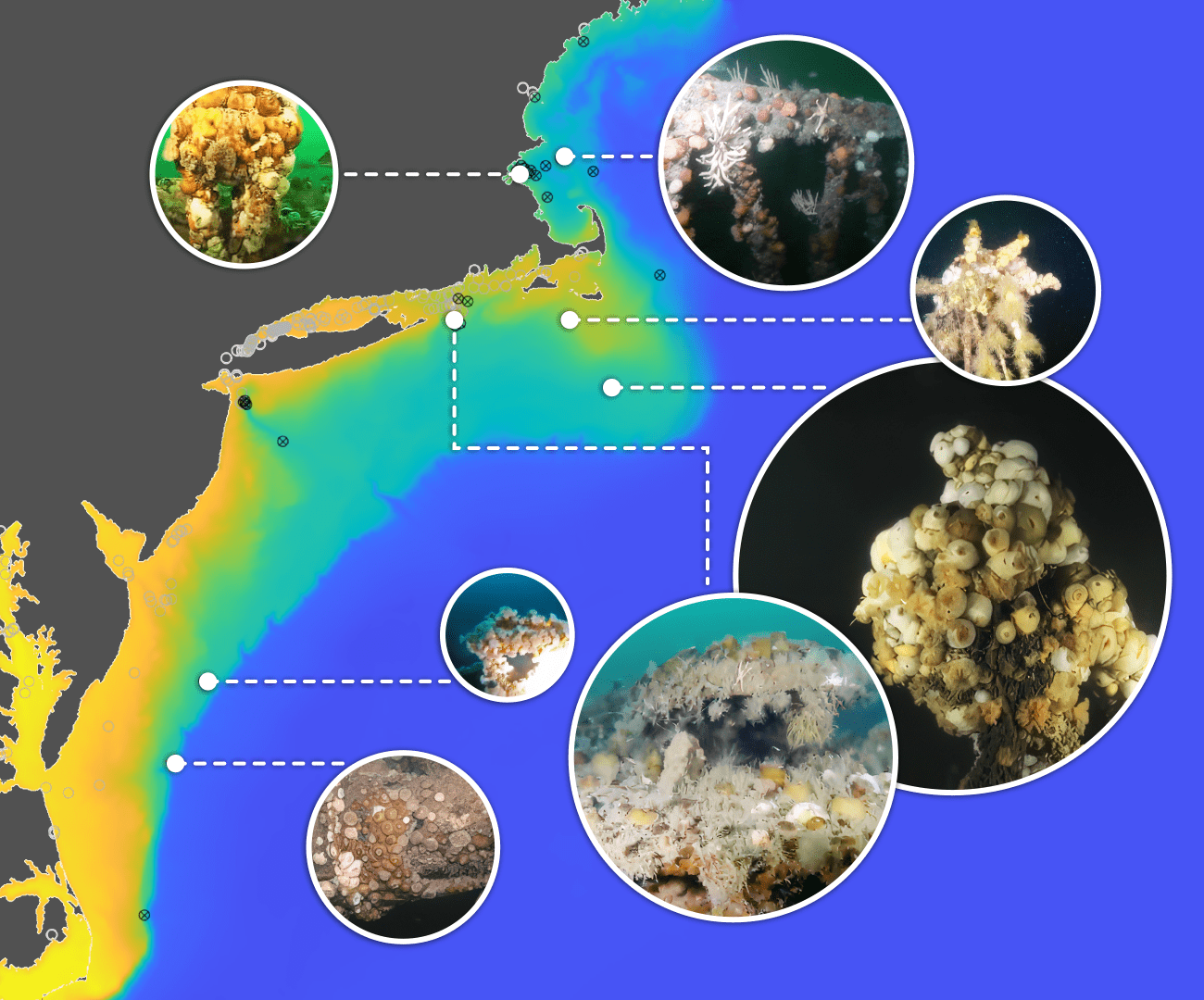
But in a region where the seafloor is mostly blanketed with sand, there’s not a whole lot for these hard-bottom animals to settle on. That’s where shipwrecks come in. Sunken ships provide both the hard surfaces that the anemone larvae need and the cold temperatures that come with deep water. It’s chilly enough, in fact, for Metridium populations to expand from the north.
Meyer-Kaiser first saw evidence of the anemones on various shipwrecks in the Mid-Atlantic Bight on YouTube. As an expert in shipwreck ecology, she watches wreck-diving videos as a key source of “data mining” when she can’t be in the field. “I’ve always been fascinated by Metridium and just wanted to know where these anemones were living,” she said. “But I don’t have the money to go out and take a vehicle and survey every one of these wrecks.”
It turned out the anemones had not just settled on one wreck, but rather an entire fleet of submerged ships offshore of Chesapeake Bay known as the Billy Mitchell Fleet. The fleet’s nine ships sank in the Mid-Atlantic Bight in the early 1920s during bombing experiments led by U.S. Army General Billy Mitchell. They lie on the ocean floor at depths between 100-120 meters (350-400 feet).
But how did Metridium larvae make it all the way from Cape Cod to wrecks as far south as Chesapeake Bay? That’s a puzzle that Meyer-Kaiser is currently trying to work through with WHOI physical oceanographer Irina Rypina, who models the movement of everything from tuna larvae to microplastics below the ocean surface.
“I’m taking a three-dimensional ocean circulation model and combining that with physical and biological characteristics of Metridium larvae that Kirstin has provided from lab experiments conducted August through October 2024,” said Rypina. “This includes data on how big or small the larvae are, where and when they spawn, what their buoyancy is like and their swimming ability.”
By incorporating the data into a model, Rypina will be able to simulate the movement of the larvae and figure out how far south of Cape Cod these tiny, 50-micron-long animals can travel in the slow-moving deep currents. The model will shed light on how many generations it has taken for this population to spread across a chain of wrecks in the Mid-Atlantic Bight in order to reach the Billy Mitchell Fleet. Meyer-Kaiser and Rypina plan to publish a paper with their results later in 2026.
“As humans put more stuff in the ocean, it’s important for us to understand how those things impact the connectivity of environments,” said Meyer-Kaiser. “Shipwrecks are a great example of how human history can really impact where things can live in the ocean.”
This work was supported by the WHOI Interdisciplinary Study program.