
Research Highlights
Oceanus Magazine
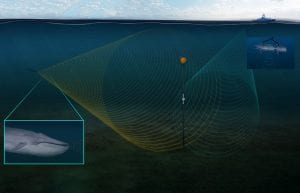
WHOI scientists warp sound–the primary means of transmitting information in the ocean–to “see” what’s happening below the surface.
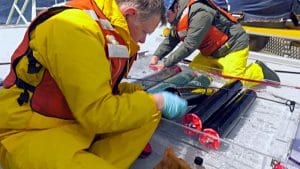
What makes the shelf break front such a productive and diverse part of the Northwest Atlantic Ocean? A group of scientists on the research vessel Neil Armstrong spent two weeks at sea in 2018 as part of a three-year, NSF-funded project to find out.
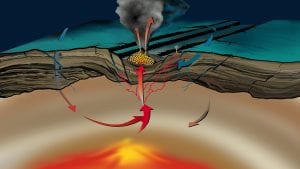
In 1977, WHOI scientists made a discovery that revolutionized our understanding of how and where life could exist on Earth and other planetary bodies.
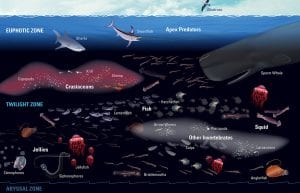
The twilight zone is a part of the ocean 660 to 3,300 feet below the surface, where little sunlight can reach. It is deep and dark and cold, and the pressures there are enormous. Despite these challenging conditions, the twilight zone teems with life that helps support the ocean’s food web and is intertwined with Earth’s climate. Some countries are gearing up to exploit twilight zone fisheries, with unknown impacts for marine ecosystems and global climate. Scientists and engineers at Woods Hole Oceanographic Institution are poised to explore and investigate this hidden frontier.
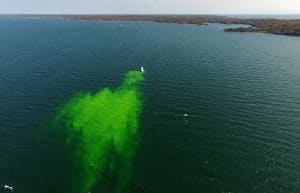
WHOI scientists are helping to develop a robotic underwater vehicle that can track oil spills and help responders mitigate damage in remote or ice-covered areas such as the Arctic Ocean and the Great Lakes.
News Releases
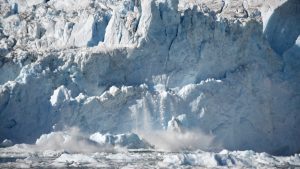
WHOI researchers use more than 15,000 satellite observations of ice cliffs to reduce uncertainty in future sea level rise projections
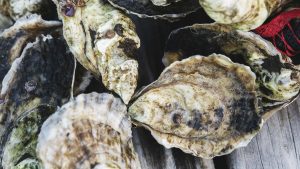
High-speed imaging reveals how oyster larvae’s dense shell helps them feed—and may offer clues to why ocean acidification threatens their survival
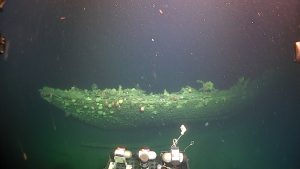
The Heroic Age Expedition, led by the Royal Canadian Geographical Society in partnership with Woods Hole Oceanographic Institution, reveals the famed Antarctic explorer’s last ship, Terra Nova in stunning detail
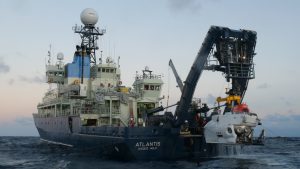
The Royal Canadian Geographical Society, in partnership with WHOI, will undertake “once-in-a-generation” expedition to survey Sir Ernest Shackleton’s Quest and Captain Robert Falcon Scott’s Terra Nova
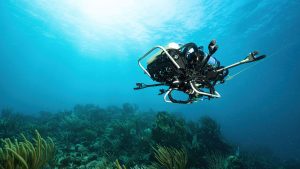
New underwater robot opens new possibilities in coral reef conservation by autonomously identifying biodiversity “hotspots”
News & Insights
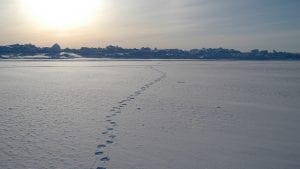
NSF program fosters collaboration between indigenous communities and traditional scientists, allowing WHOI’s autonomous vehicles to shed light on a changing Arctic
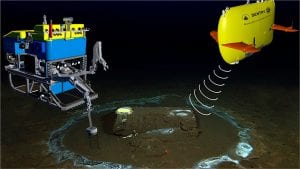
An investigative report this week in the LA Times features the work of WHOI’s marine geochemistry lab in identifying the discarded barrels and analyzing samples from the discovery.