
Research Highlights
Oceanus Magazine
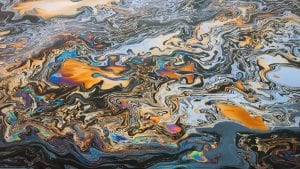
As sea ice continues to melt in the Arctic and oil exploration expands in the region, the possibility of an oil spill occurring under ice is higher than ever. To help first responders cope with oil trapped under ice, ocean engineers are developing undersea vehicles that can map oil spills to improve situational awareness and decision making during an emergency.
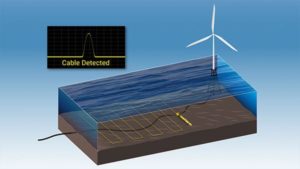
Eager to share best practices and technical know-how with the offshore wind sector, WHOI researchers test out an autonomous underwater vehicle (AUVs)—a staple of oceanographic research—to see if it can perform subsea cable surveys faster and more economically than using large and expensive ships.
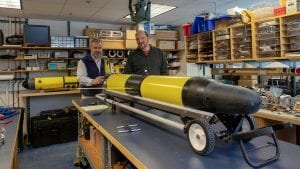
New, fully autonomous glider will collect critical-but-scarce ice thickness measurements from below the surface of the Arctic ocean.
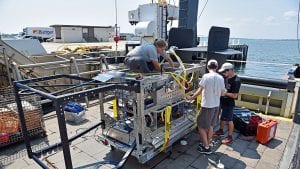
Decades of research from many WHOI scientists and engineers have culminated in a multifaceted vehicle to explore deep-sea marine life.
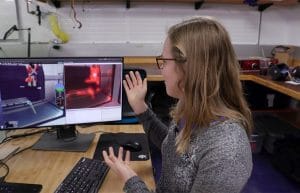
The ocean is an extreme environment that is hard for humans to explore. One solution is building deep-sea robots that can autonomously make decisions on what to look for and where.
News Releases
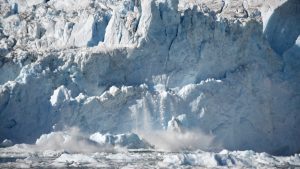
WHOI researchers use more than 15,000 satellite observations of ice cliffs to reduce uncertainty in future sea level rise projections
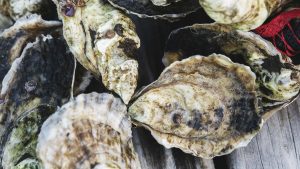
High-speed imaging reveals how oyster larvae’s dense shell helps them feed—and may offer clues to why ocean acidification threatens their survival
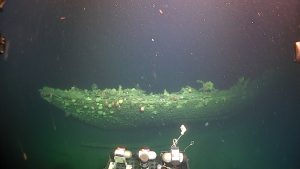
The Heroic Age Expedition, led by the Royal Canadian Geographical Society in partnership with Woods Hole Oceanographic Institution, reveals the famed Antarctic explorer’s last ship, Terra Nova in stunning detail
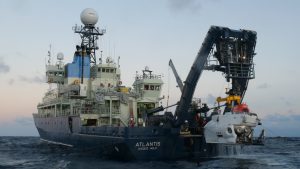
The Royal Canadian Geographical Society, in partnership with WHOI, will undertake “once-in-a-generation” expedition to survey Sir Ernest Shackleton’s Quest and Captain Robert Falcon Scott’s Terra Nova
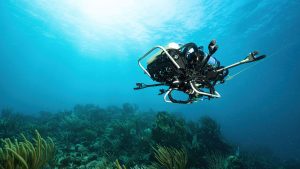
New underwater robot opens new possibilities in coral reef conservation by autonomously identifying biodiversity “hotspots”
News & Insights
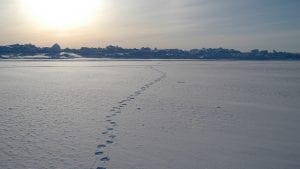
NSF program fosters collaboration between indigenous communities and traditional scientists, allowing WHOI’s autonomous vehicles to shed light on a changing Arctic
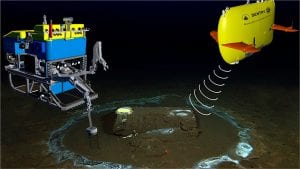
An investigative report this week in the LA Times features the work of WHOI’s marine geochemistry lab in identifying the discarded barrels and analyzing samples from the discovery.