
Research Highlights
Oceanus Magazine
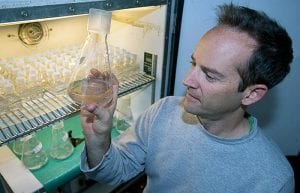
Microbes that grow in the ocean could one day help doctors combat the deadly disease cystic fibrosis (CF), said Tracy Mincer, a microbiologist at Woods Hole Oceanographic Institution. Mincer studies the small chemicals marine microbes make to do specific jobs…
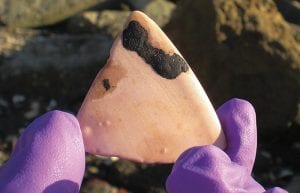
I don’t do San Francisco like most people. I skip the cable cars, Lombard Street, Alcatraz, and the fine restaurants and museums. Soon after my flight arrives, I drive my rental car north over the Golden Gate Bridge and hike…
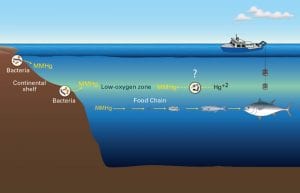
I returned from Hawai’i in mid-December with 700 bottles of seawater. The bottles hold what I hope are solutions to an abiding mystery. In the middle of the ocean, waters at depths ranging from 100 to 1,000 meters contain high…
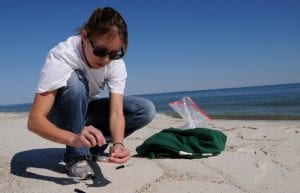
Right after the Deepwater Horizon oil rig exploded April 20, 2010, marine scientist Monty Graham from the Dauphin Island Sea Lab in Alabama began exploring Gulf of Mexico waters to document the unfolding consequences of the unprecedented oil spill. “Following…
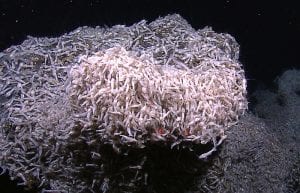
Smaller than a fingernail, like bits of downy red feathers, baby tubeworms cling to a vertical wall towering alongside the submersible Alvin 2,500 meters beneath the sea in 2006. Repaved with fresh rock during an eruption at the East Pacific…
News Releases
A new National Academies report lays out a research strategy for studying the ocean’s ability to sequester carbon
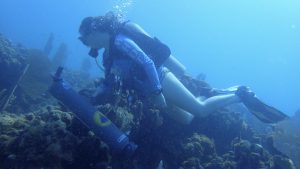
An interdisciplinary approach reveals how chemistry, microbes, and ocean circulation work together to shape reef ecosystems
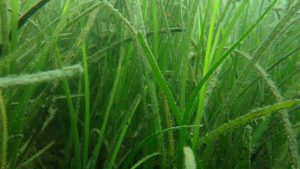
The Massachusetts Department of Environmental Protection is supporting a two-year study to quantify carbon storage in both natural and restored eelgrass meadows in coastal waters.
Researchers have identified a diverse set of molecules released by marine phytoplankton that fuel microbial life and help drive Earth’s carbon cycle
A new paper argues that larger, longer studies with rigorous monitoring and clear safeguards are needed to accurately assess OIF as a potential long-term CO2 storage solution.
News & Insights
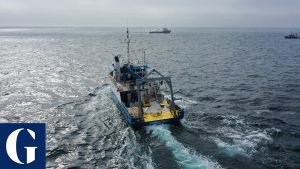
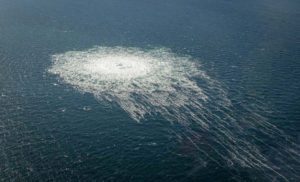
WHOI marine chemist Chris Reddy weighs in on a methane leak in the Baltic Sea
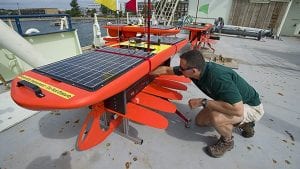
WHOI geochemist Chris German pairs an autonomous surface vehicle (ASV) called a Wave Glider with other vehicles to expand research here and on other Ocean Worlds
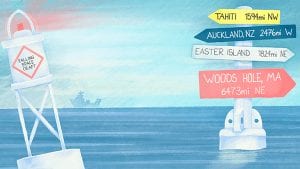
Researchers investigate dust from the ocean’s farthest point from land to reconstruct the climactic history of the Southern Hemisphere, and understand how micronutrients have influenced biological productivity in this oceanic desert.
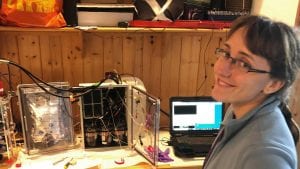
WHOI-MIT joint program student outfits her basement to do vital work on a marine carbon sensor