
Research Highlights
Oceanus Magazine
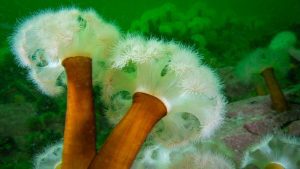
Researchers find fluffy anemones spreading south via shipwrecks, revealing how artificial reefs and ocean currents connect marine habitats
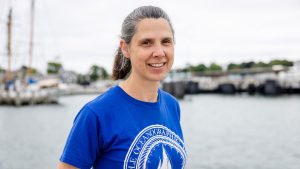
Three questions with marine research technician Emily Peacock
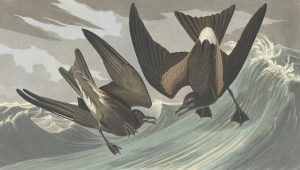
New GPS tracking on petrels reveals a surprising survival strategy hidden in the eye of the storm
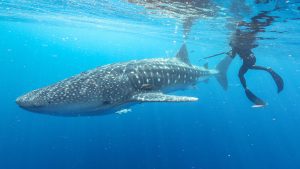
Marine biologist Camrin Braun explains why the world’s largest fish visit waters off Cape Cod—and what their epic migrations reveal about a changing ocean
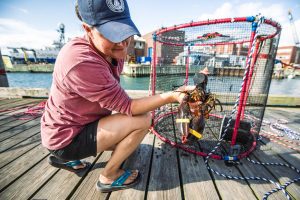
WHOI’s Sensory Ecology Lab investigates whether an industrialized soundscape impacts the health of a New England icon
News Releases
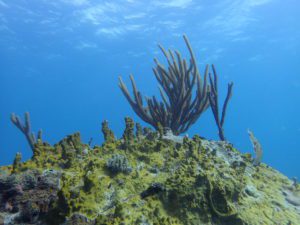
The study found that the organic chemical compounds produced through metabolism —known as metabolites or exudates—vary significantly by coral species and that the compounds impact the abundances and compositions of reef microorganisms differently.
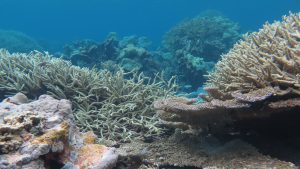
The National Science Foundation (NSF) has awarded Woods Hole Oceanographic Institution (WHOI) $5 million to participate in NSF’s ground breaking Convergence Accelerator Program. The project, led by WHOI scientist Anne Cohen, builds the world’s first Coral Reef Digital Twin, a 4-dimensional virtual replica of a living coral reef powered by state-of-the art data and models.

A new paper by WHOI researchers demonstrates a connection between personality and divorce in albatross
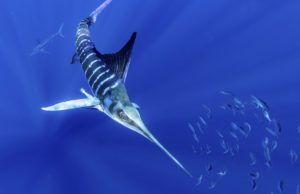
A new study led by scientists at Woods Hole Oceanographic Institution (WHOI) and University of Washington Applied Physics Laboratory (UW APL) finds that marine predators, such as tunas, billfishes and sharks, aggregate in anticyclonic, clockwise-rotating ocean eddies (mobile, coherent bodies of water). As these anticyclonic eddies move throughout the open ocean, the study suggests that the predators are also moving with them, foraging on the high deep-ocean biomass contained within.
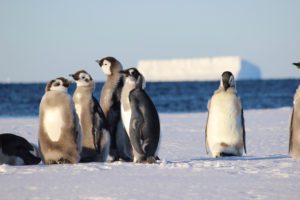
Scientists at the Woods Hole Oceanographic Institution (WHOI) and European research institutions are calling for better protections for juvenile emperor penguins, as the U.S. Fish and Wildlife Service considers listing the species under the Endangered Species Act and the Commission for the Conservation of Antarctic Marine Living Resources (CCAMLR) considers expanding the network of Marine Protected Areas (MPAs) in the Southern Ocean.
News & Insights

WHOI’s Dennis McGillicuddy on why ocean life matters deeply to the Sunshine State
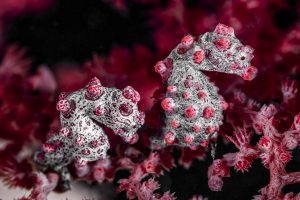
Are you an ocean lover? Go a little deeper with these courtship tips from beneath the waves!
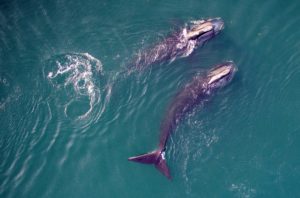
April 24 marks the first-ever Right Whale Day in Massachusetts. WHOI biologist and veterinarian Michael Moore recently met with the resident who brought this special recognition about– and explains why it’s important to raise awareness about the critically endangered North Atlantic right whale.
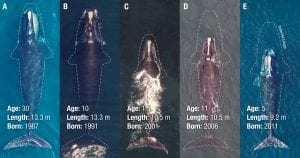
A report out this week in Current Biology reveal that critically endangered North Atlantic right whales are up to three feet shorter than 40 years ago. This startling conclusion reinforces what scientists have suspected: even when entanglements do not lead directly to the death of North Atlantic right whales, they can have lasting effects on the imperiled population that may now number less than 400 animals. Further, females that are entangled while nursing produce smaller calves.
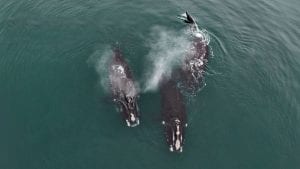
May 10, 2021 During a joint research trip on February 28 in Cape Cod Bay, Mass., WHOI whale trauma specialist Michael Moore, National Geographic photographer Brian Skerry, and scientists from New England Aquarium, witnessed a remarkable biological event: North…