Skip to content

Research Highlights

Oceanus Magazine

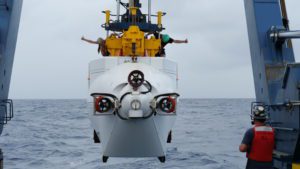
Alvin and the swordfish

Alvin vs. the swordfish

May 16, 2026

During a 1967 dive off Florida, a startled swordfish rammed the famed submersible Alvin—lodging its sword in the hull and forcing the crew to abort the mission

Luxury cruises with a side of climate science

April 9, 2026

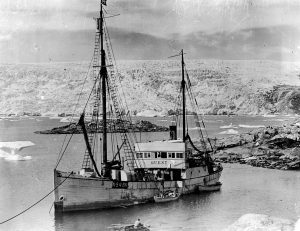
A new partnership gives scientists rare access to remote Antarctic glaciers—and a new way to engage the public

Overhead view of ROV Jason working at an underwater volcano site. (© Woods Hole Oceanographic Institution)

Three ocean robots that plunge into active volcanoes

March 18, 2026

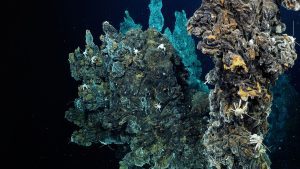
Jason, Mesobot, and Nereid Under Ice are transforming our understanding of underwater volcanoes and the life they support.

A new underwater robot could help preserve New England’s historic shipwrecks

December 1, 2025

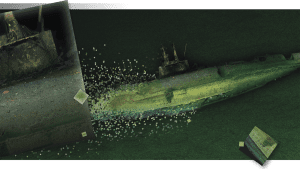
WHOI’s ResQ ROV to clean up debris in prominent marine heritage sites

Carl Hartsfield

Three questions with Carl Hartsfield

November 6, 2025

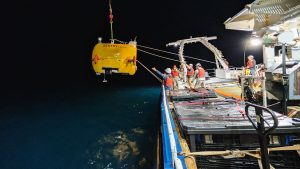
Captain Hartsfield, USN retired, discusses the role ocean science plays in our national defense

News Releases

Human-occupied submersible Alvin makes historic dive

July 21, 2022

World’s most successful research submersible reaches 6,453 meters, its deepest dive ever Woods Hole, MA – Today, the human-occupied submersible Alvin made history when it successfully reached a depth of 6,453 meters (nearly 4 miles) in the Puerto Rico Trench,…

Arc volcanoes are wetter than previously thought, with scientific and economic implications

May 26, 2022

This increased amount of water has broad implications for understanding how Earth’s lower crust forms, how magma erupts through the crust, and how economically important mineral ore deposits form, according to a new paper led by authors from the Woods Hole Oceanographic Institution (WHOI).

Deepest sediment core collected in the Atlantic Ocean

April 21, 2022

A team of scientists, engineers, and ship’s crew on the research vessel Neil Armstrong operated by the Woods Hole Oceanographic Institution (WHOI) recently collected a 38-foot-long cylindrical sediment sample from the deepest part of the Puerto Rico Trench, nearly 5 miles below the surface.

Scientists report complete collapse of East Antarctica’s Conger Ice Shelf

March 25, 2022

Satellite data has confirmed that an ice shelf about the size of Manhattan has completely collapsed in East Antarctica within days of record high temperatures. The Conger ice shelf, which had an approximate surface area of 1,200 sq km, collapsed around 15 March, scientists confirmed today.

Woods Hole Oceanographic Institution co-produces Emmy award-winning program

February 3, 2022

Woods Hole Oceanographic Institution has been awarded an Emmy as a co-producer, along with South Florida PBS (WPBT & WXEL) for Changing Seas: “Alvin: Pioneer of the Deep” . The 2021 Suncoast Chapter of the National Academy of Television Arts & Sciences Emmy Awards announced the honor in December, for the category “Environment/Science – Long Form Content.”

News & Insights

WHOI builds bridges with Arctic Indigenous communities

February 10, 2021

NSF program fosters collaboration between indigenous communities and traditional scientists, allowing WHOI’s autonomous vehicles to shed light on a changing Arctic
WHOI-assisted study finds ocean dumping of DDT waste was “sloppy”

October 29, 2020

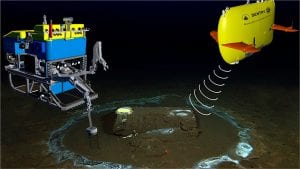
An investigative report this week in the LA Times features the work of WHOI’s marine geochemistry lab in identifying the discarded barrels and analyzing samples from the discovery.

Scroll To Top