Research Highlights
Oceanus Magazine

Jordan Kennedy combines Indigenous knowledge, engineering, and observation to rethink how coastal landscapes are studied and restored. Her work on clam gardens and autonomous mapping systems explores how revitalizing these ancient systems can also reclaim knowledge and relationships between people, place, and practice.
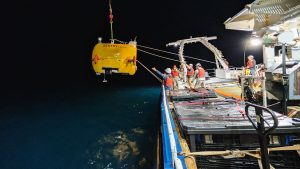
AUV Sentry leads the way in mapping and monitoring methane bubbling from the seafloor
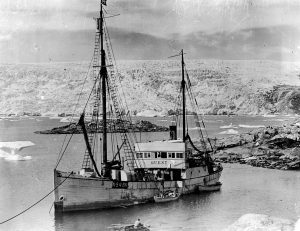
40 years after helping reveal the Titanic, Alvin returns to the North Atlantic to document two other legendary shipwrecks
News Releases
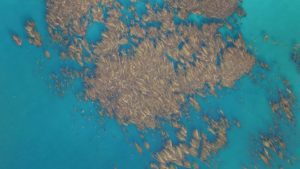
The macroalga giant kelp, which is an iconic and important ecosystem-structuring species found off the coast of California and many other coastlines, can grow 100-feet long within 1-2 years. Now, researchers using novel remote sensing observations have found that different factors may bear on the spatial growth dynamics of the Macrocystis pyrifera kelp, which is the largest species of algae in the world.
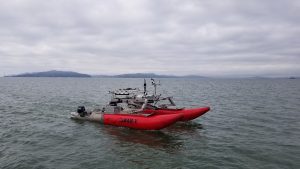
Woods Hole, MA – The Woods Hole Oceanographic Institution (WHOI) has received $750,000 in funding from the U.S. Department of Energy (DOE) to develop next‐generation autonomous robotic technology for environmental monitoring of marine organisms and the seafloor at potential wind…
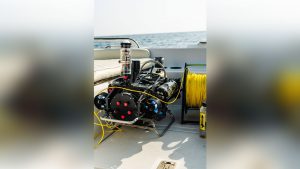
A prototype of an autonomous underwater vehicle capable of navigating complex underwater environments and of collecting data adaptively over long periods of time. Daniel Hentz / ©Woods Hole Oceanographic Institution Woods Hole, MA – A grant by the National Science…
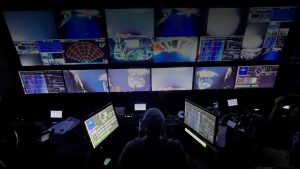
On September 2, the remotely operated vehicle (ROV) Jason aided in the recovery of two underwater vehicles, ROV Hercules and Argus, that were stranded on the seafloor near British Columbia
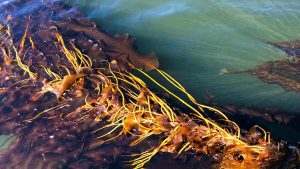
A leader in ocean science, Woods Hole Oceanographic Institution (WHOI) is embarking on a study of how new seaweed strains could further enhance the burgeoning seaweed industry and offer solutions to some of the world’s pressing challenges. This research is funded in part by World Wildlife Fund (WWF) with support from the Bezos Earth Fund.
News & Insights
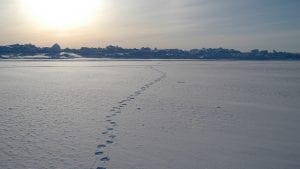
NSF program fosters collaboration between indigenous communities and traditional scientists, allowing WHOI’s autonomous vehicles to shed light on a changing Arctic
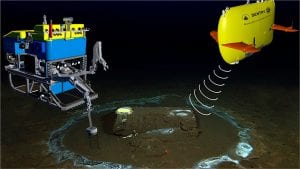
An investigative report this week in the LA Times features the work of WHOI’s marine geochemistry lab in identifying the discarded barrels and analyzing samples from the discovery.