Alvin vs. the swordfish
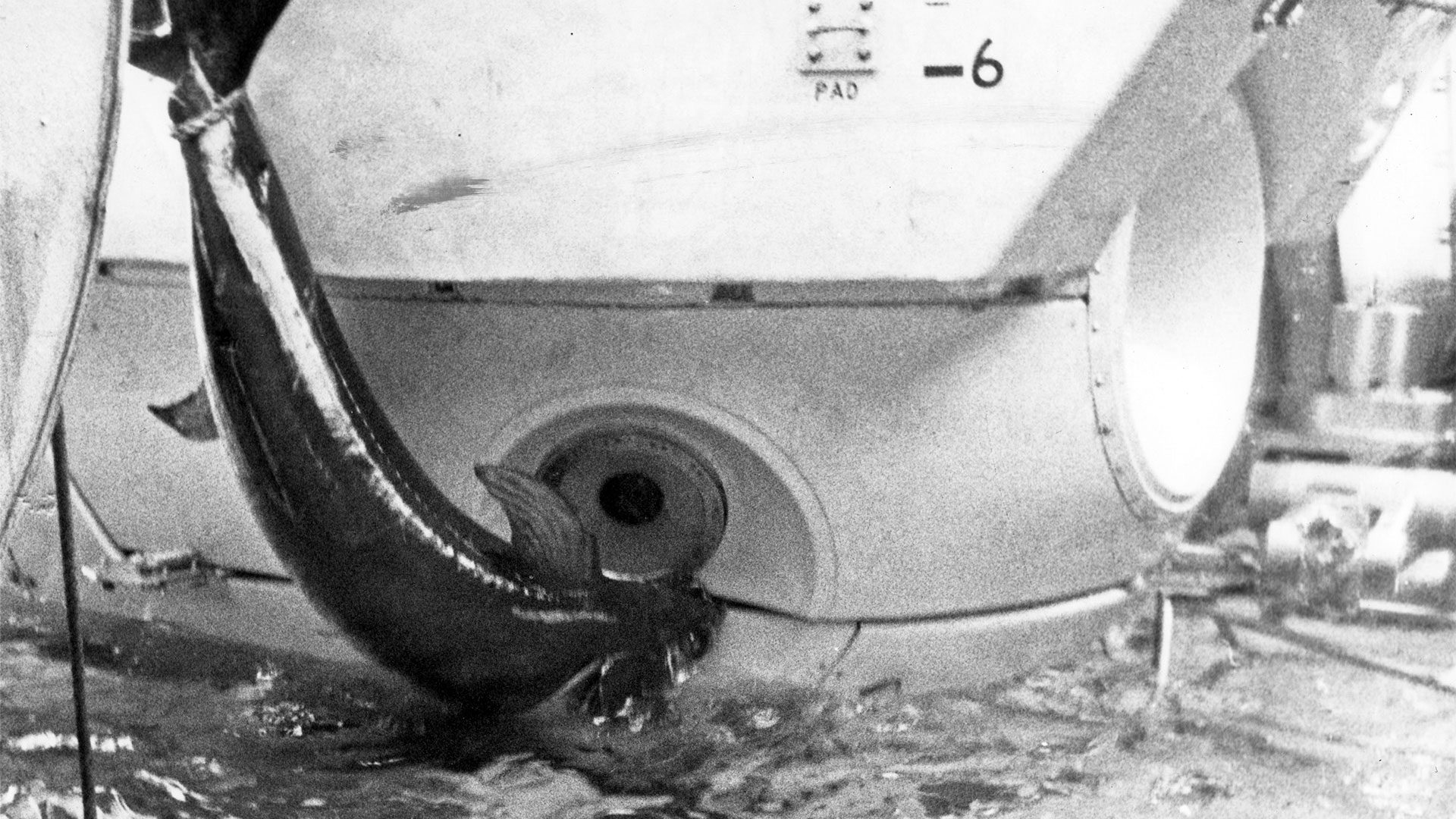
During a 1967 dive off Florida, a startled swordfish rammed the famed submersible Alvin—lodging its sword in the hull and forcing the crew to abort the mission
By Evan Lubofsky | March 20, 2026
“WE HAVE BEEN HIT BY A FISH!”
Co-pilot Valentine Wilson’s eyes bulged as he shouted the alert to his crewmates from inside the human-occupied vehicle (HOV) Alvin. It was July 6, 1967—just a few weeks before U.S. Vice President Hubert Humphrey visited WHOI—and Wilson, along with pilot Marvin McCamis and research assistant Edward F.K. Zaruski, had descended 2,000 feet (609 meters) to the bottom of Blake Plateau off Florida’s east coast for what was supposed to be a 6-hour geophysical survey.
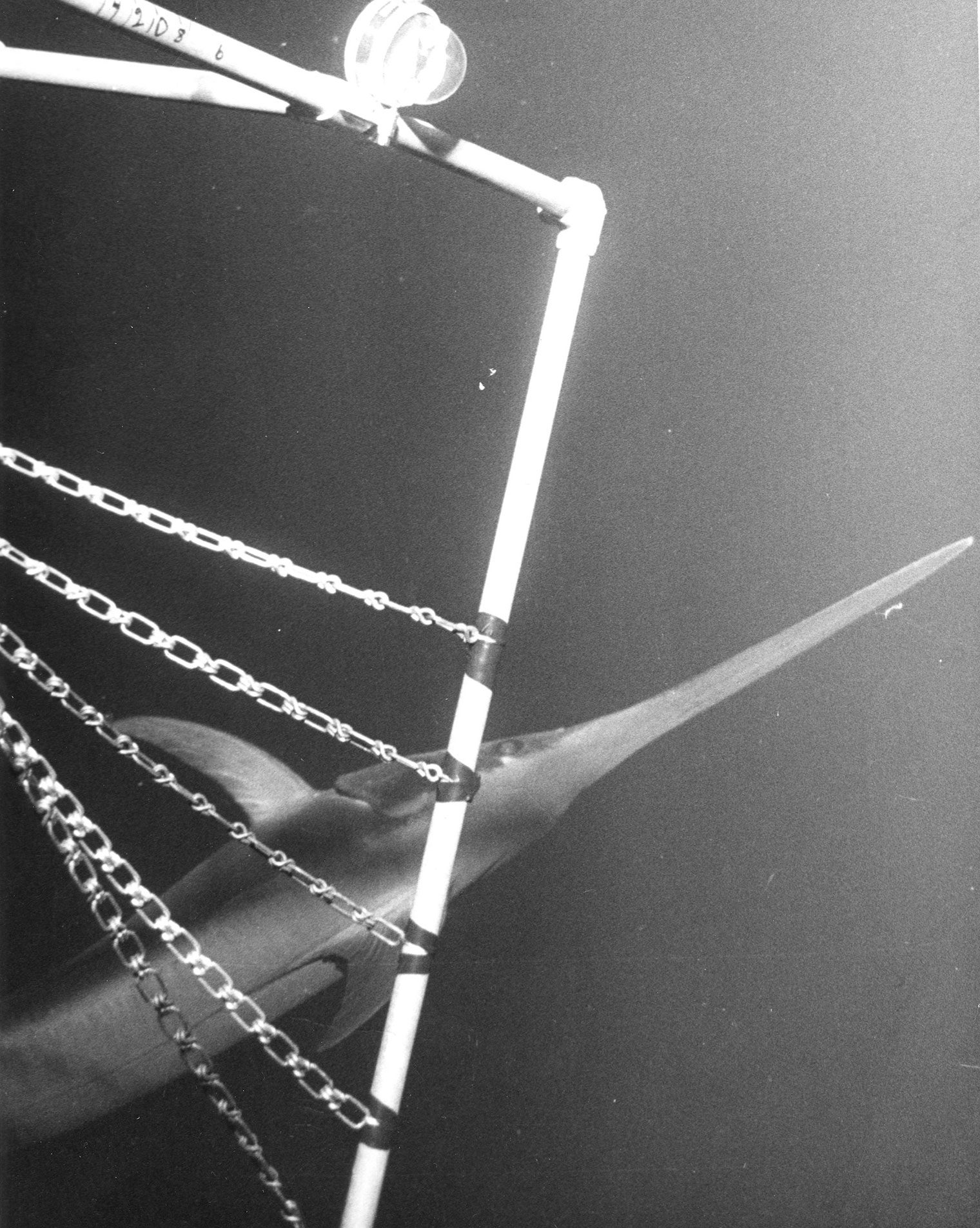
The swordfish lurking near Alvin before the attack. (Photo courtesy of WHOI Archives, © Woods Hole Oceanographic Institution)
About an hour into Dive 202, the crew maneuvered the sub roughly 10 feet forward so Zaruski could get photos of a deep-sea coral. In doing so, the 16,000-pound submersible kicked up a plume of sediment from the bottom, getting the attention of a lone swordfish lurking nearby.
"I was taking a picture with the hand camera through the bow porthole when I heard a scraping sound on the hull,” Zaruski later wrote. He thought it was Alvin drifting across the seafloor. Then he looked down. The sub hadn’t moved.
Suddenly, the 8-foot, 200-pound swordfish rose from the bottom “and turned onto Alvin,” according to Zaruski. He watched it bump and thrash the sub from outside one of the portholes. The fish swam away briefly, but only to pick up enough speed to ram full force into the sub. In doing so, its sword caught in a crevice between two modules of Alvin's syntactic foam buoyancy.
The three-man crew had no playbook for dealing with an attack by an angry swordfish, let alone one wedged into the vessel’s exterior. As the fish thrashed about trying to break free, a leak indicator in the vessel signaled trouble in one of the external electrical connection boxes. The crew wasn’t taking any chances; they quickly huddled and made a unanimous decision to abort the dive and surface.
On their way up, McCamis used the sub’s underwater telephone to call the crew aboard Alvin’s tender ship, Lulu, to have a few divers ready to assist when they surfaced. Once the sub was out of the water, the divers threw a noose around the fish’s tail and secured it to Alvin. The fish struggled to disengage from the sub and ultimately broke off its sword, which remained stuck in the foam gap. Today, remnants of the sword are stored at the WHOI Data Library and Archives.
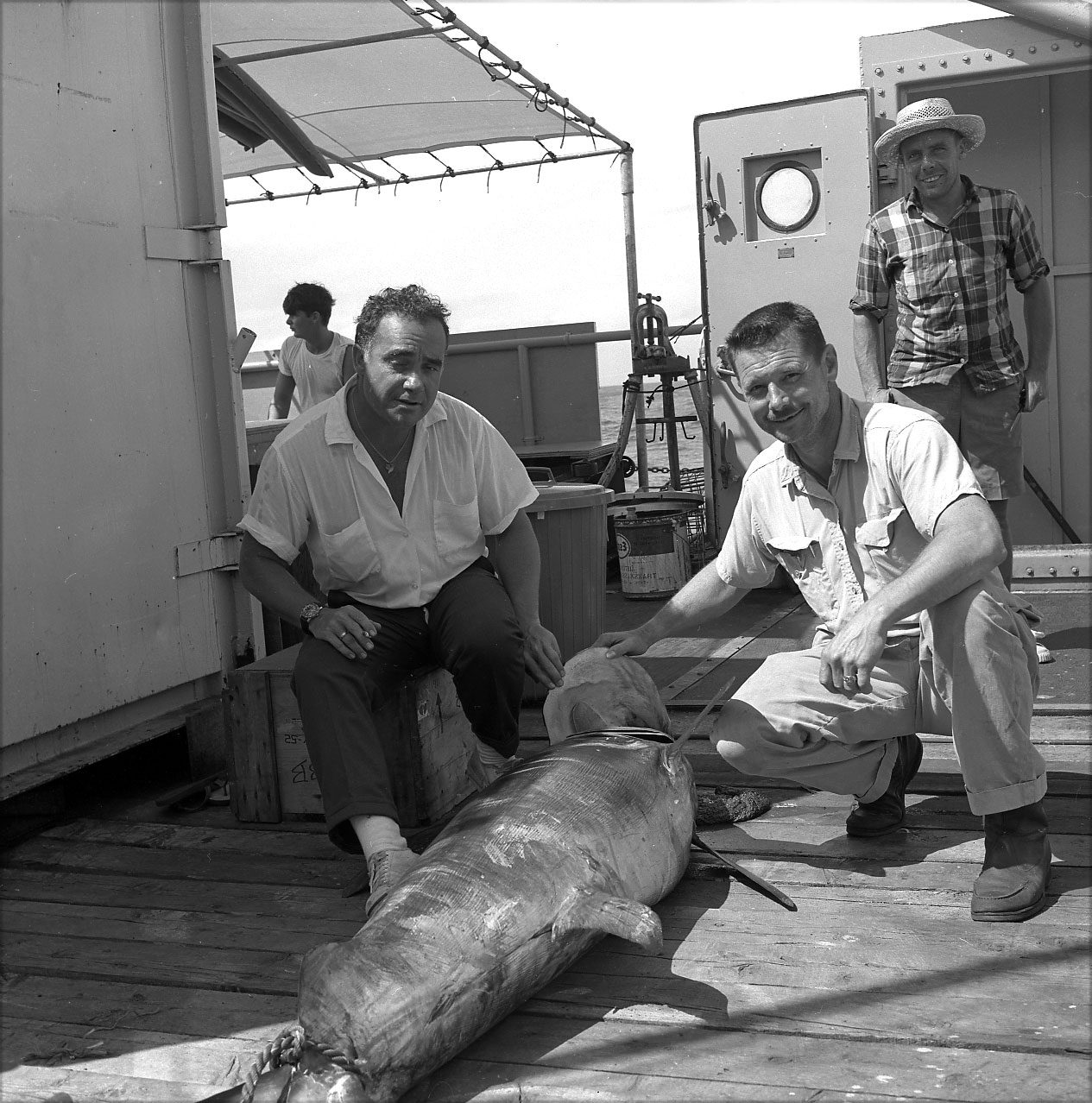
Left to right: Wilson, McCamis, and Zarudski with the swordfish after it was dislodged from the sub. (Photo courtesy of WHOI Archives, © Woods Hole Oceanographic Institution)
Eventually, an internal memo at WHOI surfaced with the subject line “The Problem of Swordfish Attack on ALVIN.” In it, WHOI Research Specialist J.W. Mavor, Jr. wrote, “Today, we are faced with the hazard of swordfish attack in which the attacker chooses the time and place and attacks without effective warning.” The primary concern, should another swordfish choose to go after Alvin, was ensuring that nothing would happen to its acrylic windows. The memo detailed a window stress testing program that Mavor and McCamis designed to simulate and analyze the impacts that a fast-moving swordfish would have on windows of various shapes and sizes.
“They were doing their due diligence and reassuring themselves that the sub was as safe as it could be,” said Rick Chandler, submersible engineering and operations group administrator for the Alvin group at WHOI.
He noted that while many things about Alvin have changed since 1967, its window material hasn’t. “The sub’s windows have always been acrylic plastic,” said Chandler. “There really are no alternatives – glass is too brittle and anything more exotic is too expensive. Acrylic is the ideal material for this purpose because it is slightly flexible and returns to its original shape if deformed.”
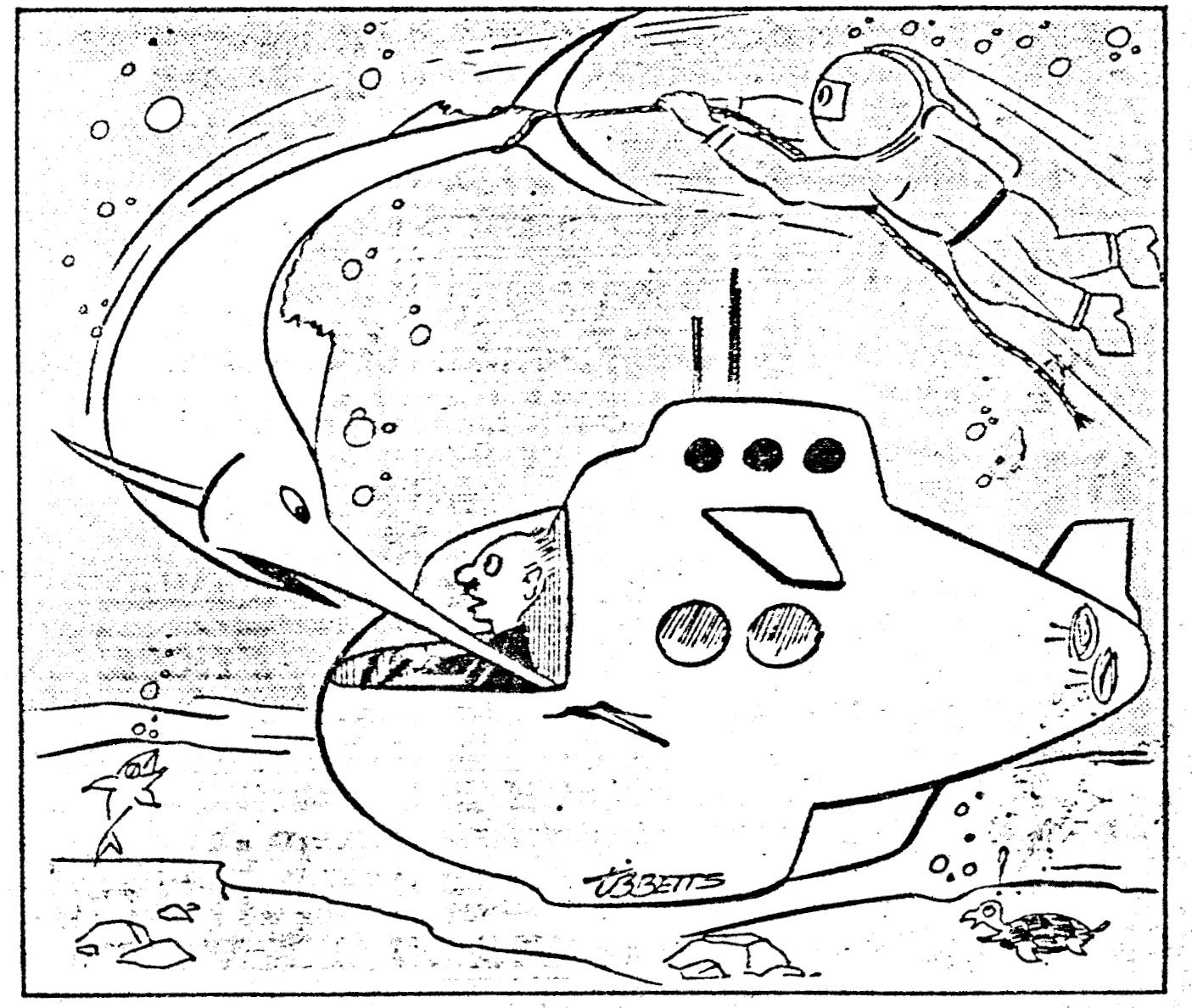
A cartoon from the Boston Herald, July 30, 1967. (Photo courtesy of WHOI Archives, © Woods Hole Oceanographic Institution)
But why would a swordfish attack an ocean vehicle in the first place? Camrin Braun, a marine ecologist who leads WHOI’s Marine Predators Group, said swordfish are known to make defensive strikes on surface and underwater vessels. “They have highly adapted, sensitive vision for seeing in the dark of the deep ocean and they can readily detect vibration and movement,” said Braun. “In this case, the swordfish would have certainly detected Alvin’s presence and saw the sub as a perceived threat.”
In the decades since the clash on the seafloor, Alvin has had “close encounters” with other curious ocean animals, including fish and octopuses that have played with the sub’s samplers and manipulators. And, other swordfish. According to Bruce Strickrott, group manager and pilot of Alvin, there’s been an ongoing history of interactions between the sub and billfish, so much so that new Alvin pilots and swimmers are trained on what to do when run-ins occur.
“It's not uncommon to see large billfish on the surface near the sub,” he said. “Nothing as remarkable as the large fish that ended up on Lulu in the 1960's, but it’s more common than you might think.”
This story was updated on 5/24/26 to indicate that there have been other instances of interactions between swordfish and Alvin since the 1967 incident.