
Research Highlights
Oceanus Magazine

It was an experiment they hoped would never happen. But when it did, they were poised to respond. In 2008, a multi-institutional team of researchers launched a long-term study to explore the lush but little-known communities of corals, anemones, crabs,…
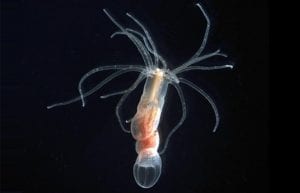
Ann Tarrant has a soft spot for a tiny, tentacled creature. So what if starlet anemones (Nematostella vectensis) are spineless invertebrates that burrow in mud in stagnant brackish tidal marshes? To live there, they have to be remarkably adaptable to…
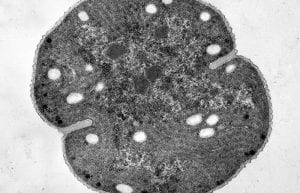
In the vast ocean where an essential nutrient—iron—is scarce, a marine bacterium that launches the ocean food web survives by using a remarkable biochemical trick: It recycles iron. By day, it uses iron in enzymes for photosynthesis to make carbohydrates;…
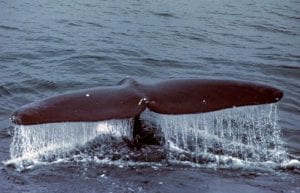
When we’re talking with friends and a truck rumbles by or someone cranks up the radio, we talk louder. Now scientists have found that North Atlantic right whales do the same thing in their increasingly noisy underwater world. Marine biologist…

<!– –> It’s two in the morning, and I’m watching a remotely operated vehicle, or ROV, explore previously unseen areas of the seafloor off Indonesia. In real time, I watch a brittle star, arms wrapped around a bubblegum coral, exploiting…
News Releases
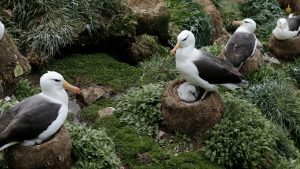
New WHOI-led study of black-browed albatrosses finds that climate mitigation may matter more than evolution for population persistence
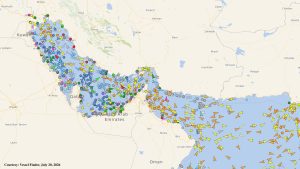
New analysis says thousands of stranded vessels may unintentionally spread invasive marine life worldwide
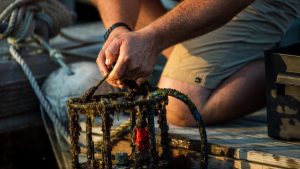
The Seafood Engine will initially receive an award of $15 million over two years, with the potential to grow up to $160 million over ten years as it works to build an internationally competitive technology and innovation cluster.
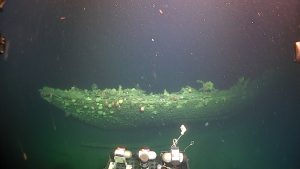
The Heroic Age Expedition, led by the Royal Canadian Geographical Society in partnership with Woods Hole Oceanographic Institution, reveals the famed Antarctic explorer’s last ship, Terra Nova in stunning detail
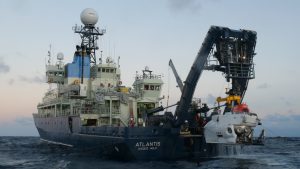
The Royal Canadian Geographical Society, in partnership with WHOI, will undertake “once-in-a-generation” expedition to survey Sir Ernest Shackleton’s Quest and Captain Robert Falcon Scott’s Terra Nova
News & Insights

WHOI’s Dennis McGillicuddy on why ocean life matters deeply to the Sunshine State

Are you an ocean lover? Go a little deeper with these courtship tips from beneath the waves!
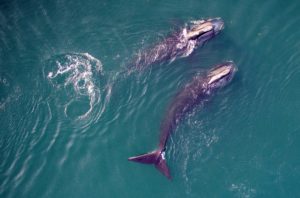
April 24 marks the first-ever Right Whale Day in Massachusetts. WHOI biologist and veterinarian Michael Moore recently met with the resident who brought this special recognition about– and explains why it’s important to raise awareness about the critically endangered North Atlantic right whale.
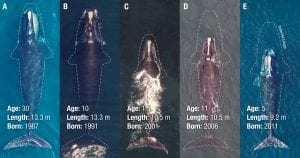
A report out this week in Current Biology reveal that critically endangered North Atlantic right whales are up to three feet shorter than 40 years ago. This startling conclusion reinforces what scientists have suspected: even when entanglements do not lead directly to the death of North Atlantic right whales, they can have lasting effects on the imperiled population that may now number less than 400 animals. Further, females that are entangled while nursing produce smaller calves.
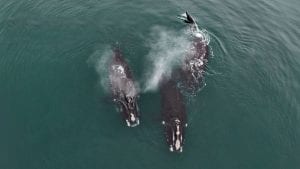
May 10, 2021 During a joint research trip on February 28 in Cape Cod Bay, Mass., WHOI whale trauma specialist Michael Moore, National Geographic photographer Brian Skerry, and scientists from New England Aquarium, witnessed a remarkable biological event: North…