
Research Highlights
Oceanus Magazine
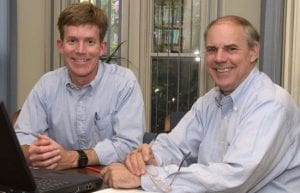
Researchers from Woods Hole Oceanographic Institution, the Marine Biological Laboratory (MBL), and the Massachusetts Institute of Technology (MIT) have embarked on a novel collaboration to investigate harmful algal blooms, ocean-borne pathogens, and potential pharmaceuticals from marine sources.
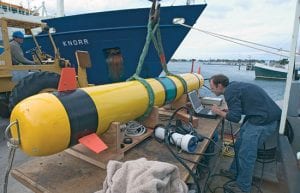
In the mid-1990s, the Navy began funding research for small, robotic vehicles to perform unmanned reconnaissance in coastal waters. At WHOI, that helped spark the development of REMUS (Remote Environmental Monitoring UnitS), designed and built by Chris von Alt, Ben Allen, and colleagues in the Oceanographic Systems Laboratory.
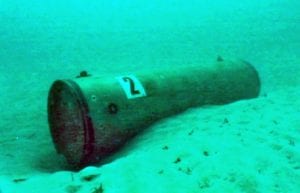
Eternally and incessantly, waves and currents stir up sand from the seafloor near the coast. Sediments get suspended in the ocean, carried onshore and off, and deposited elsewhere. In the process, objects on the seafloor—natural and unnatural—can get buried and uncovered.
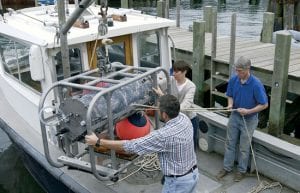
Estuaries are the borderlands between salt and freshwater environments, and they are incredibly diverse both biologically and physically. The diversity and the high energy of the ecosystem make estuaries remarkably resilient. With a better understanding of these systems, we can reverse
their decline and restore the ecological richness of these valuable, albeit muddy, environments.
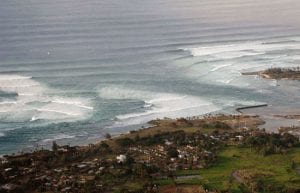
For years, scientists who study the shoreline have wondered at the apparent fickleness of storms, which can devastate one part of a coastline, yet leave an adjacent part untouched. How can this be? The answer lies in the physics of the nearshore region?the stretch of sand, rock, and water between the dry land behind the beach and the beginning of deep water far from shore.
News Releases
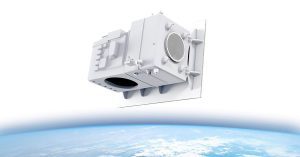
Satellite measuring land, polar, and coastal regions could launch by 2030
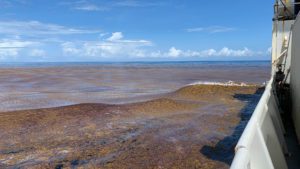
The findings point to warming ocean temperatures, shifting nutrient regimes, and changing circulation patterns as likely contributors to this emerging basin-scale redistribution of Sargassum.
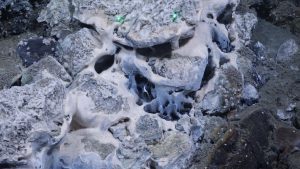
A distinctive oceanic core complex releasing hot fluids has been identified at a depth of 2,700 meters on the Arctic Ocean’s floor.
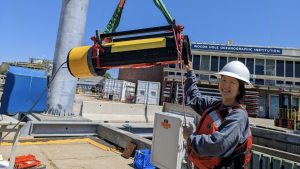
Research Associate will complete a project at the National Fisheries and Marine Research Institute in Angola.
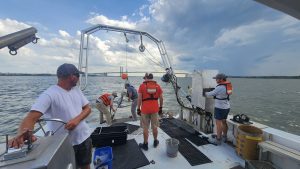
Researchers make urgent call for convergent interdisciplinary research to combat worsening crisis
News & Insights
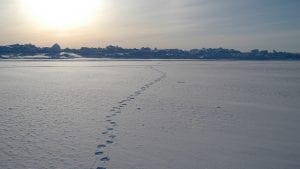
NSF program fosters collaboration between indigenous communities and traditional scientists, allowing WHOI’s autonomous vehicles to shed light on a changing Arctic
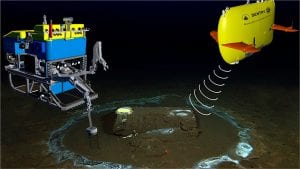
An investigative report this week in the LA Times features the work of WHOI’s marine geochemistry lab in identifying the discarded barrels and analyzing samples from the discovery.