
Research Highlights
Oceanus Magazine
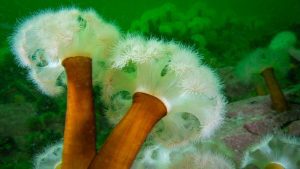
Researchers find fluffy anemones spreading south via shipwrecks, revealing how artificial reefs and ocean currents connect marine habitats
Three questions with marine research technician Emily Peacock
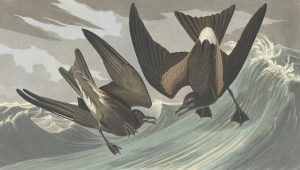
New GPS tracking on petrels reveals a surprising survival strategy hidden in the eye of the storm
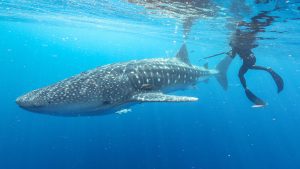
Marine biologist Camrin Braun explains why the world’s largest fish visit waters off Cape Cod—and what their epic migrations reveal about a changing ocean
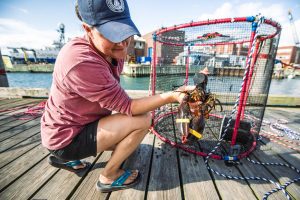
WHOI’s Sensory Ecology Lab investigates whether an industrialized soundscape impacts the health of a New England icon
News Releases
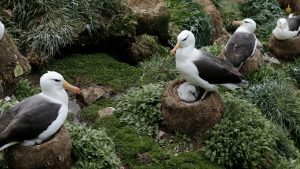
New WHOI-led study of black-browed albatrosses finds that climate mitigation may matter more than evolution for population persistence
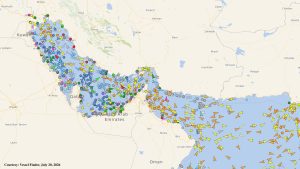
New analysis says thousands of stranded vessels may unintentionally spread invasive marine life worldwide
The Seafood Engine will initially receive an award of $15 million over two years, with the potential to grow up to $160 million over ten years as it works to build an internationally competitive technology and innovation cluster.
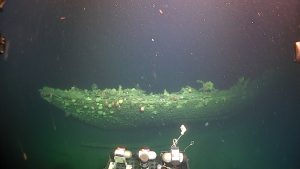
The Heroic Age Expedition, led by the Royal Canadian Geographical Society in partnership with Woods Hole Oceanographic Institution, reveals the famed Antarctic explorer’s last ship, Terra Nova in stunning detail
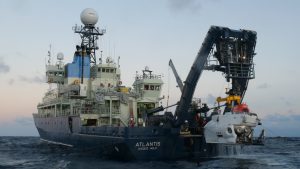
The Royal Canadian Geographical Society, in partnership with WHOI, will undertake “once-in-a-generation” expedition to survey Sir Ernest Shackleton’s Quest and Captain Robert Falcon Scott’s Terra Nova
News & Insights
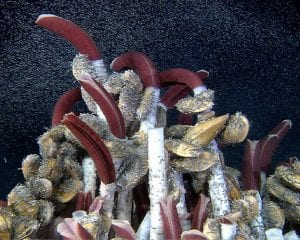
“When hydrothermal vents were discovered in 1977, it very much flipped biology on its end,” says Julie Huber, an oceanographer who studies life in and below the seafloor at Woods Hole Oceanographic Institution (WHOI) on Cape Cod. “People knew that organisms could live off of chemical energy, but they didn’t imagine they could support animal ecosystems.”
Scientists like Dr. Huber have continued to study those chemical-munching microbes. And it turns out, she says, a diverse set of microbes can be really good at making a living where the sun doesn’t shine. They make use of the chemicals available to them, even at some of the harshest vents, known as black smokers.
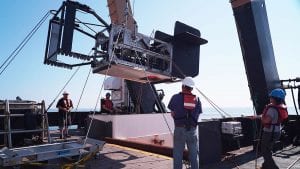
On July 25, scientists embarked on the 2019 Ocean Twilight Zone expedition aboard NOAA Ship Henry B. Bigelow. A team made up of WHOI and NOAA Fisheries researchers departed Newport, R.I., Thursday morning and headed south towards the edge of the continental shelf. This will be the first full scientific mission into the ocean twilight zone for the towed underwater vehicle, Deep-See.
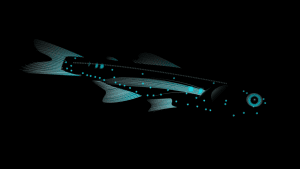
Down in the dark and shadowy ocean twilight zone, countless species—bristlemouths, lanternfishes, jellies, and others—rely on bioluminescence for a variety of important functions, including finding their next meal, outsmarting predators, and looking for mates.
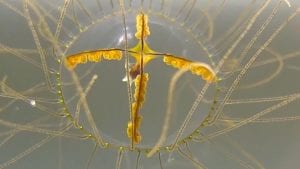
New invasions reported in New England and Sweden, prompting researchers to look at a variety of potential causes including transportation, warmer ocean temperatures, and a resurgence of eelgrass.
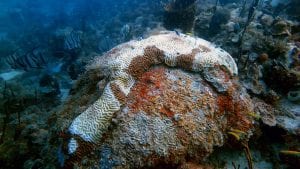
A coral disease outbreak that wiped out nearly 80% of stony corals between Florida’s Key Biscayne and Key West during the past two years appears to have spread to the U.S. Virgin Islands (U.S.V.I.), where reefs that were once vibrant and teeming with life are now left skeleton white in the disease’s wake.