
Research Highlights
Oceanus Magazine

Jordan Kennedy combines Indigenous knowledge, engineering, and observation to rethink how coastal landscapes are studied and restored. Her work on clam gardens and autonomous mapping systems explores how revitalizing these ancient systems can also reclaim knowledge and relationships between people, place, and practice.
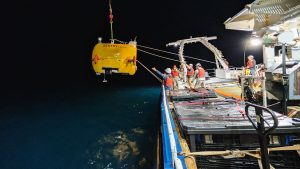
AUV Sentry leads the way in mapping and monitoring methane bubbling from the seafloor
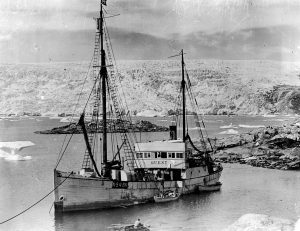
40 years after helping reveal the Titanic, Alvin returns to the North Atlantic to document two other legendary shipwrecks
News Releases
Schmidt Ocean Institute (SOI) has begun working with the Deep Submergence Laboratory at the Woods Hole Oceanographic Institution (WHOI) to design and build the world’s most advanced robotic undersea research vehicle for use on SOI’s ship Falkor. The new vehicle will be capable of operating in the deepest known trenches on the planet, including the nearly 11,000-meter-deep Challenger Deep in the Mariana Trench. The design will capitalize on lessons learned from past WHOI vehicle designs, as well as advanced technologies developed for DEEPSEA CHALLENGER, the submersible and science platform that explorer and director James Cameron piloted to Challenger Deep in 2012 and donated to WHOI in 2013.
Combined research efforts by scientists involved in the Gulf of Maine Toxicity (GOMTOX) project, funded by NOAA’s Ecology and Oceanography of Harmful Algal Blooms (ECOHAB) program, and administered by the National Centers for Coastal Ocean Science (NCCOS), have led to…
Two robots equipped with instruments designed to “listen” for the calls of baleen whales detected nine endangered North Atlantic right whales in the Gulf of Maine last month. The robots reported the detections to shore-based researchers within hours of hearing…
Woods Hole Oceanographic Institution (WHOI) researchers have partnered with two companies to build and market undersea technology developed at WHOI: the Imaging FlowCytobot, an automated underwater microscope, and BlueComm, an underwater communications system that uses light to provide wireless transmission of data, including video imagery, in real or near-real time.
Scientists and engineers from WHOI and the University of Washington have successfully completed the first scientific mission with Sentry, a newly developed robot capable of diving as deep as 5,000 meters into the ocean. The vehicle surveyed and helped pinpoint several proposed deep-water sites for seafloor instruments that will be deployed in the Ocean Observatories Initiative.
News & Insights
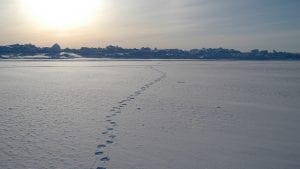
NSF program fosters collaboration between indigenous communities and traditional scientists, allowing WHOI’s autonomous vehicles to shed light on a changing Arctic
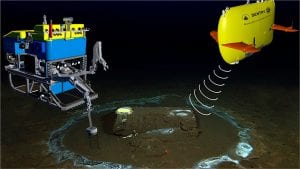
An investigative report this week in the LA Times features the work of WHOI’s marine geochemistry lab in identifying the discarded barrels and analyzing samples from the discovery.