Alvin FAQs |
|||||||||||||||||||||||||||||||||||||||||||||||||||||||||||||||||||||||||
|
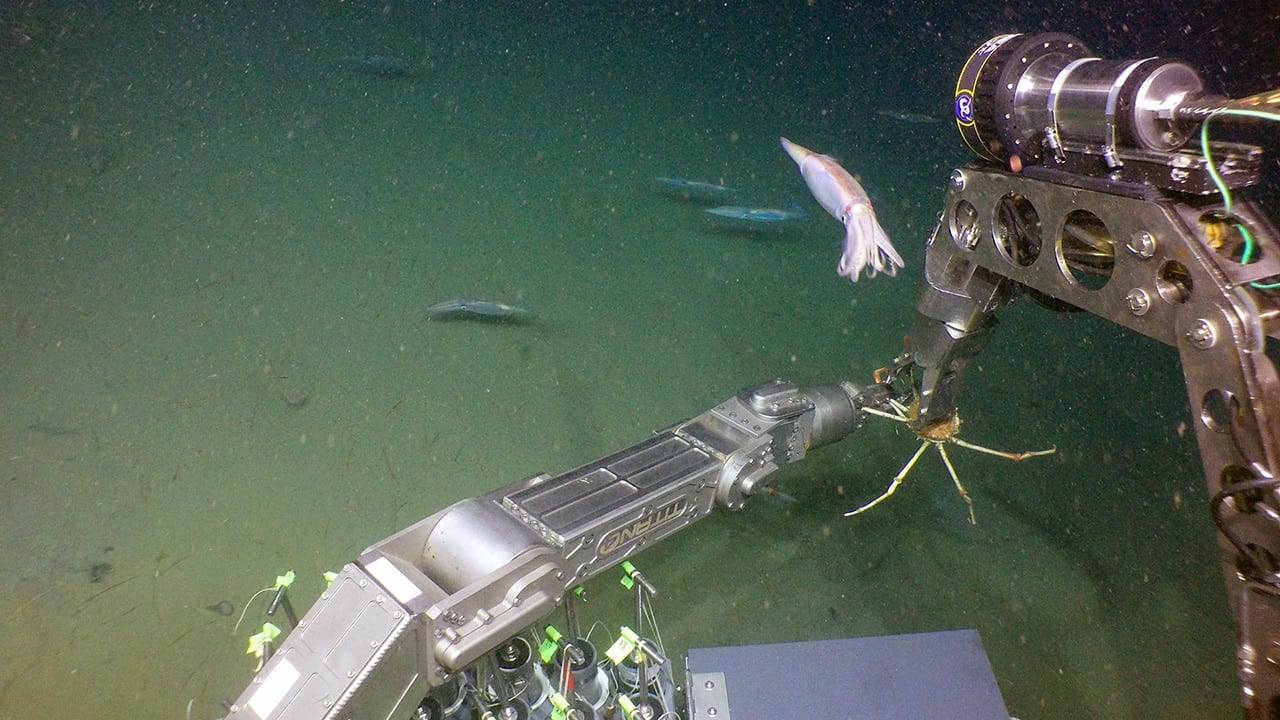
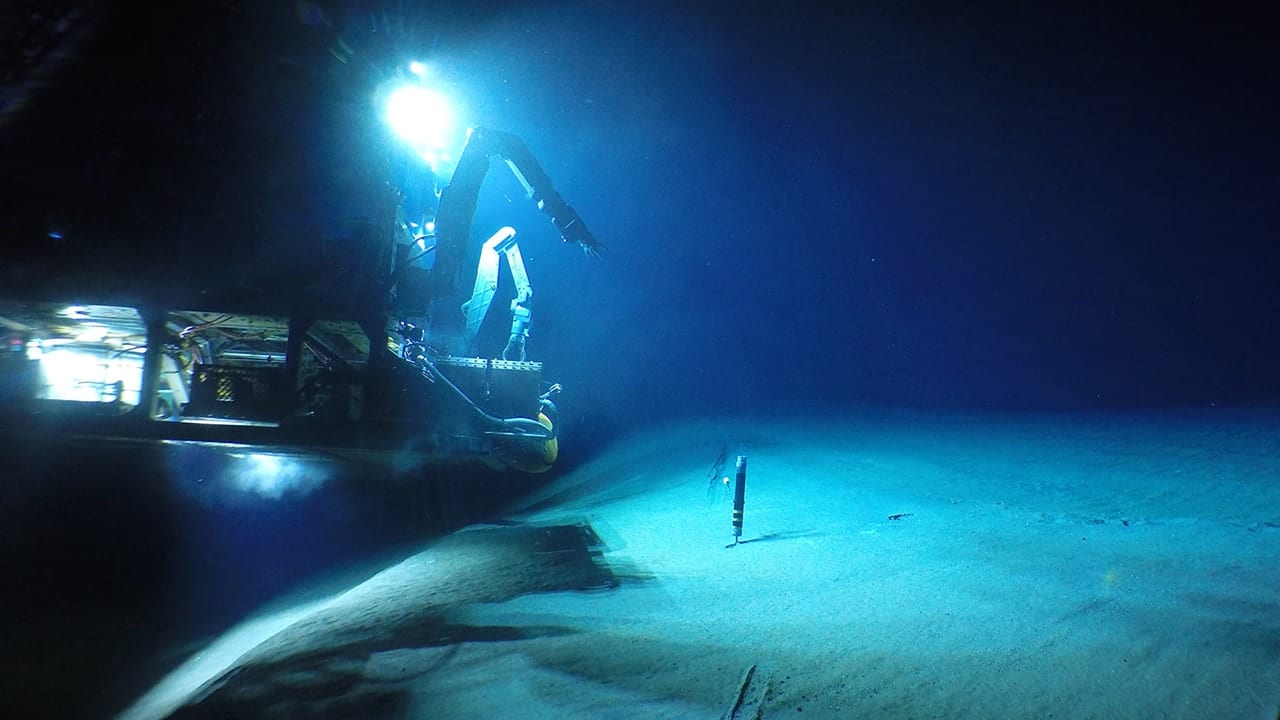
Alvin is a 3-person research submersible that takes scientists deep into the ocean. Since its launch in 1964, Alvin has taken more than 13,000 scientists, engineers and observers to visit the floor of the deep sea. Alvin can dive as deep as 4,500 m (almost 3 miles), giving it access to some 63% of the entire ocean floor. Alvin is the only deep-diving research submarine that can seat two science observers in addition to the pilot. Visiting the deep ocean in person means the scientists get to see details of the seafloor and its processes with their own eyes. They can also use Alvin’s equipment to sample rocks, sediment, fluids and sea life. The sub is named after Allyn Vine, a WHOI engineer and geophysicist who helped pave the way for deep submergence research and technology. What have we learned using Alvin? Alvin has made more than 4,300 dives over the last four decades. The submersible has made headlines for locating a misplaced hydrogen bomb in the Mediterranean Sea in 1966, discovering deep-sea hydrothermal vents in the late 1970s and exploring the sunken ocean liner Titanic in 1986. When not on high-profile assignments such as these, Alvin has been present during literally thousands of discoveries made by scientists on routine research expeditions to the seafloor. See what a deep-diving scientist sees on an Alvin dive with the Framegrabber web tool. How does it work? Alvin moves around using six reversible thrusters: three that move the submersible backward and forward, two for up and down movement, and one for turning. The combination lets Alvin's skilled pilots fly the sub through the rugged topography of the seafloor, hover above it, or come to rest on the bottom. Diving to the sea bottom is done by manipulating the Alvin's ballast, rather than by using the thrusters. The pilots start and stop diving by regulating the amount of water and air in the ballast tanks, and by jettisoning expendable steel weights (like sandbags in a hot-air balloon). Because there is no light in the deep sea, the submersible carries 12 metal halide and LED lights to illuminate the bottom. Two hydraulic, robotic arms manipulate equipment and collect samples. A sample basket mounted on the front of the submersible can carry up to 1,000 pounds of equipment including sediment corers, temperature probes, water samplers, biological suction samplers ("slurp samplers") and insulated storage chambers. It takes about two hours for Alvin to dive to its maximum depth and another two to return to the surface. That leaves four or five hours for work on the bottom - time that scientists cram full of photography, observations, sampling, and experiments. » Alvin Interactive Guide What are Alvin's specifications? Alvin is 7.1 m long, 3.7 m tall and 2.6 m wide (23.3 x 12.0 x 8.5 feet), and weighs 17 metric tons (35,200 lbs). Full speed ahead is 3.4 km/hr (2 knots), but Alvin usually cruises at 0.8 km/hr (0.5 knot). Dives usually last less than 10 hours, but the sub carries enough oxygen to let a 3-person crew breathe for three days. Operating costs, including support from R/V Atlantis, are about $40,000 per day. The submersible’s cockpit is a titanium sphere 208 cm (82 inches) in diameter. The walls are 4.9 cm (1.9 inches) thick, with three small portholes: one for the pilot looking forward, and one on each side for each scientist. Around the sphere is a shell made of fiberglass and syntactic foam that provides flotation and houses Alvin’s thrusters, hydraulic controls, electronics and batteries. » More specifications » Alvin User Manual What platforms are needed? To reach its far-off study sites, Alvin rides aboard the R/V Atlantis, a 64-m (210-foot) research ship that supplies scientists with multiple onboard labs and state of the art computer facilities and accommodations. Maintaining and operating Alvin takes an at-sea crew of engineers and pilots who are supported on shore by engineering, technical and logistics staff. Every morning and evening the submersible’s systems are rigorously checked for operational readiness. With such careful attention, Alvin routinely makes 98% of its scheduled dives; missed dives usually happen because of bad weather rather than mechanical failure. Advantages When scientists dive in Alvin they get to see directly, with their own eyes, the seafloor terrain, its sea life and ongoing chemical, biological and geological processes. This is an enormous advantage when trying to make sense of complex interactions between deep-sea animals and their rock or sediment environments. Another important advantage is the ability to bring samples of animals, rocks, sediment or fluids from the seafloor back to the surface. Disadvantages The incredible opportunity to visit the sea floor on Alvin comes with the cost of limited time and few amenities. An Alvin dive usually gives scientists about four hours of working time. Remotely operated vehicles (ROVs) that don’t carry passengers can stay submerged for days at a time. Alvin also requires the unique support of R/V Atlantis, whereas ROVs can be used on a wide range of research ships. Alvin's basic design has been subtly modified in the 40 years since its launch, but some of its design features are too basic to change. The views provided by the three portholes don't overlap, meaning that the pilot can never be sure of the view that the scientists are getting. Alvin's replacement, now under construction and scheduled to launch in 2010, will include a larger, more comfortable crew sphere and larger portholes with overlapping views. The crew sphere gets cold (50 degF) as Alvin prowls the ocean bottom. To make matters even chillier, fire safety regulations prohibit wearing synthetic materials like fleece, so divers have to dress in layer upon layer of cotton and wool. And then there's the final limitation: no toilet. » Animated tour of Alvin's replacement Sources Dan Fornari, Director, Deep Ocean Exploration Institute, WHOI Rick Chandler, Submersible Operations Coordinator, NDSF, WHOI. Alvin homepage, maintained by WHOI NDSF | ||||||||||||||||||||||||||||||||||||||||||||||||||||||||||||||||||||||||