
Research Highlights
Oceanus Magazine
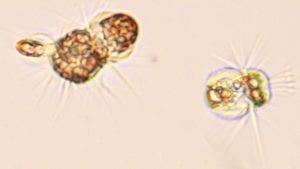
There are autotrophs, such as plants, that can make their own food. There are heterotrophs, such as animals, that consume other organisms. And then there are curious organisms called mixotrophs, which can do both, switching how they get food depending on the conditions in their environment.
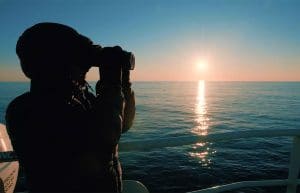
The continental shelfbreak in the waters off New England is an area where a spectacular abundance and diversity of marine life aggregate year-round. The Pioneer Array, a part of the NSF-funded Ocean Observatories Initiative, was placed there to help scientists explore the processes that make the shelfbreak so productive.
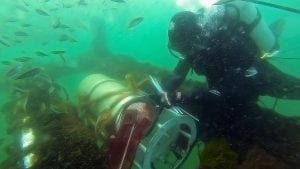
Warmer oceans are triggering phytoplankton to start their annual blooms up to four weeks earlier than usual—a signal of how climate change can have far-reaching impacts on marine ecosystems. From 2003 to 2016, scientists at Woods Hole Oceanographic Institution monitored…
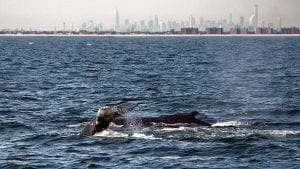
WHOI scientist Mark Baumgartner has installed a mooring in New York waters that listens for whales and sends back alerts. The prototype advance-warning system could one day help reduce shipping collisions with whales.
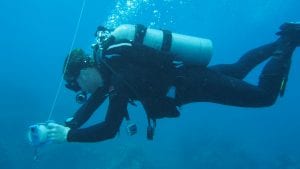
It’s still a mystery: How do the tiny larvae of marine animals that hatch in the open ocean find their way to coral reefs where they settle as adults? One theory is that they home in on suitable coral neighborhoods…
News Releases
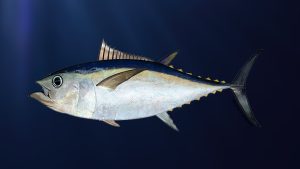
The study shows that large-scale harvesting of mesopelagic fish that live hundreds of meters below the surface could reduce the food available to bigeye tuna
CMA CGM, which has long been committed to preserving biodiversity through multiple initiatives in the U.S. and worldwide, will support two key WHOI projects
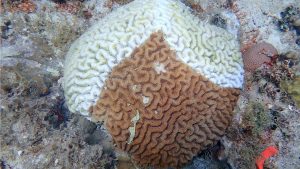
Coral reefs support more than 25 percent of all marine life and underpin the livelihoods of roughly one billion people globally.
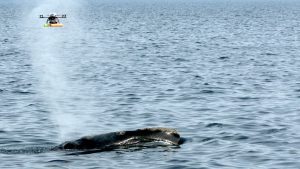
A first of its kind study links drone-collected respiratory microbes with health assessments, offering hope for protecting vulnerable populations
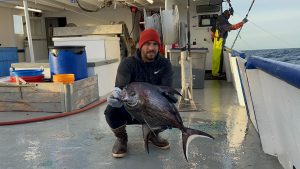
WHOI scientists delve into the elusive fish’s role in the food web
News & Insights
WHOI’s Dennis McGillicuddy on why ocean life matters deeply to the Sunshine State
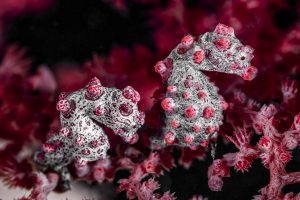
Are you an ocean lover? Go a little deeper with these courtship tips from beneath the waves!
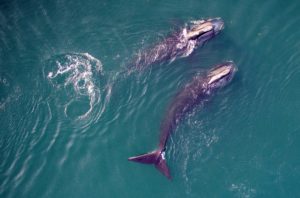
April 24 marks the first-ever Right Whale Day in Massachusetts. WHOI biologist and veterinarian Michael Moore recently met with the resident who brought this special recognition about– and explains why it’s important to raise awareness about the critically endangered North Atlantic right whale.
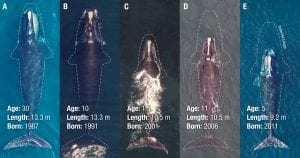
A report out this week in Current Biology reveal that critically endangered North Atlantic right whales are up to three feet shorter than 40 years ago. This startling conclusion reinforces what scientists have suspected: even when entanglements do not lead directly to the death of North Atlantic right whales, they can have lasting effects on the imperiled population that may now number less than 400 animals. Further, females that are entangled while nursing produce smaller calves.
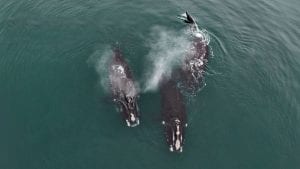
May 10, 2021 During a joint research trip on February 28 in Cape Cod Bay, Mass., WHOI whale trauma specialist Michael Moore, National Geographic photographer Brian Skerry, and scientists from New England Aquarium, witnessed a remarkable biological event: North…