
Research Highlights
Oceanus Magazine
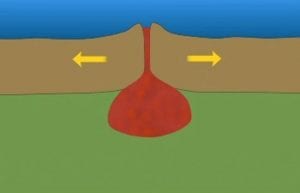
Deborah Smith first heard the strange rumbling from the seafloor in 2001 and was eager to get to the bottom of it. The ocean commotion was detected by underwater hydrophones near the Mid-Atlantic Ridge, part of the 40,000-mile undersea volcanic…
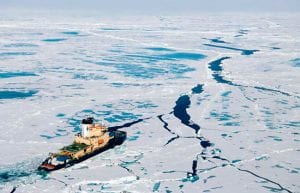
This month, an international team of scientists and engineers are exploring the seafloor of the Arctic Ocean while cruising aboard the Swedish icebreaker Oden. The science team is sending three experimental vehicles beneath the ice cap to search the Gakkel…
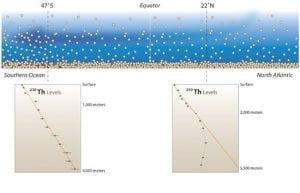
The ocean’s circulation is thought to play an important role in our climate by transporting heat from tropical regions toward Earth’s poles. Of particular interest is the circulation in the Atlantic Ocean, where warm, shallow waters from the tropics flow…
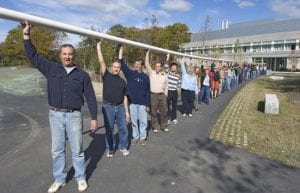
Since the early part of the 20th century, scientists have been going to sea on ships equipped with long, hollow pipes called corers. These corers are used to collect seafloor sediments, plunging into the ocean bottom and capturing long stratified…
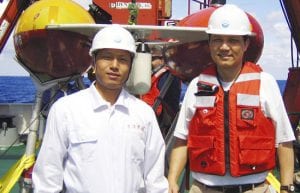
Ever since scientists first discovered vents gushing hot, mineral-rich fluids from the seafloor in the Pacific Ocean 30 years ago, they have found them in various places along the Mid-Ocean Ridge-the 40,000-mile-long seafloor mountain chain where Earth’s giant tectonic plates…
News Releases
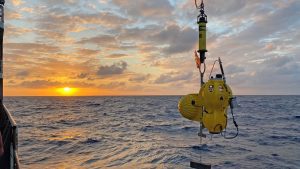
Study of Gofar transform fault on the Pacific seafloor points to mitigating effects of “barrier zones” that keep ruptures from spreading.
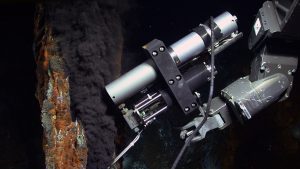
A new study suggests Jupiter’s icy moon lacks geophysical activity, changing how scientists think about life there
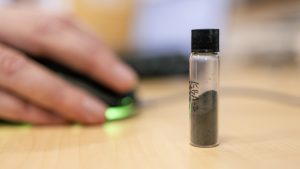
Researchers use vanadium isotopes to track the rise of oxygen in ancient seas
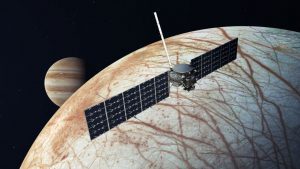
The Investigating Ocean Worlds project will seek to improve the analysis of data related to carbon-rich molecules that could be an indicator of biological activity.
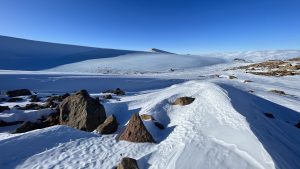
This is the most significant discovery to date for COLDEX, an NSF Science and Technology Center funded in 2021 to explore the Antarctic ice sheet, which is the largest ice mass on the planet.
News & Insights
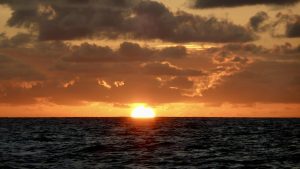
First-of-its-kind research expedition studies massive freshwater aquifer under the ocean floor off Cape Cod

This week, NASA’s Perseverance Rover lands on Mars to continue the search for life on the Red Planet. At the same time, WHOI scientists and engineers are applying their experience exploring the deepest parts of planet Earth to the quest…
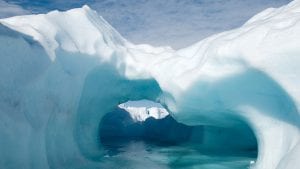
As glaciers melt at unprecedented rates, WHOI’s Simon Pendleton is looking back to historical records to predict whether this new cool runoff will slow ocean circulation and cool the northern hemisphere––findings which could mean adjustments to some climate predictions.

WHOI looks back at the legacy of co-founder of MIT-WHOI Joint Program, former Director of Research and Provost at WHOI, Art Maxwell

As I reached the end of April, I realized that too much of my time was getting consumed by zoom calls and email in a bid to over-compensate for not being able to interact with people on-site at WHOI. So…