
Research Highlights
Oceanus Magazine

Researchers find fluffy anemones spreading south via shipwrecks, revealing how artificial reefs and ocean currents connect marine habitats
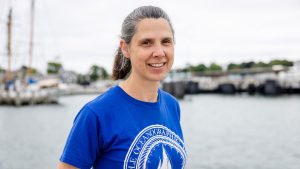
Three questions with marine research technician Emily Peacock
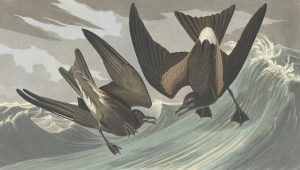
New GPS tracking on petrels reveals a surprising survival strategy hidden in the eye of the storm
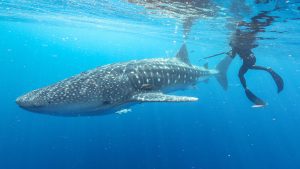
Marine biologist Camrin Braun explains why the world’s largest fish visit waters off Cape Cod—and what their epic migrations reveal about a changing ocean
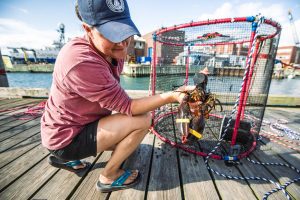
WHOI’s Sensory Ecology Lab investigates whether an industrialized soundscape impacts the health of a New England icon
News Releases

The Population Association of America (PAA) selected biologist Hal Caswell of the Woods Hole Oceanographic Institution (WHOI) to receive the 2014 Mindel C. Sheps Award for his contributions to mathematical demography. The PAA is the major professional society devoted to the study of human populations. The prestigious honor is awarded to one scientist biennially on the basis of important contributions to knowledge either in the form of a single piece of work or a continuing record of high achievement.
The ocean is an increasingly industrialized space. Shipping, fishing, and recreational vessels, oil and gas exploration and other human activities all increase noise levels in the ocean and make it more difficult for marine mammals to hear and potentially diminish…
Scientists from the Woods Hole Oceanographic Institution (WHOI) are kicking off an innovative NOAA-funded pilot program using robotic instruments and computer modeling analysis to shed light on changing ocean conditions in the Gulf of Maine as they relate to the harmful algal bloom (HAB) phenomenon commonly known as the New England red tide.
Great white sharks—top predators throughout the world’s ocean—grow much slower and live significantly longer than previously thought, according to a new study led by the Woods Hole Oceanographic Institution (WHOI). In the first successful radiocarbon age validation study for adult white sharks, researchers analyzed vertebrae from four females and four males from the northwestern Atlantic Ocean. Age estimates were up to 73 years old for the largest male and 40 years old for the largest female.
For scientists studying marine mammals in the wild, data-logging tags are invaluable tools that allow them to observe animals’ movements and behaviors that are otherwise hidden beneath the waves much of the time. The tags, which temporarily attach to animals…
News & Insights

WHOI’s Dennis McGillicuddy on why ocean life matters deeply to the Sunshine State

Are you an ocean lover? Go a little deeper with these courtship tips from beneath the waves!
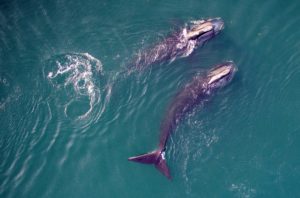
April 24 marks the first-ever Right Whale Day in Massachusetts. WHOI biologist and veterinarian Michael Moore recently met with the resident who brought this special recognition about– and explains why it’s important to raise awareness about the critically endangered North Atlantic right whale.
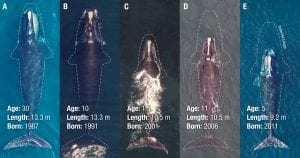
A report out this week in Current Biology reveal that critically endangered North Atlantic right whales are up to three feet shorter than 40 years ago. This startling conclusion reinforces what scientists have suspected: even when entanglements do not lead directly to the death of North Atlantic right whales, they can have lasting effects on the imperiled population that may now number less than 400 animals. Further, females that are entangled while nursing produce smaller calves.
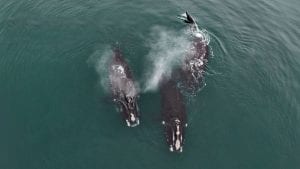
May 10, 2021 During a joint research trip on February 28 in Cape Cod Bay, Mass., WHOI whale trauma specialist Michael Moore, National Geographic photographer Brian Skerry, and scientists from New England Aquarium, witnessed a remarkable biological event: North…