
Human-occupied submersible Alvin certified to return to service
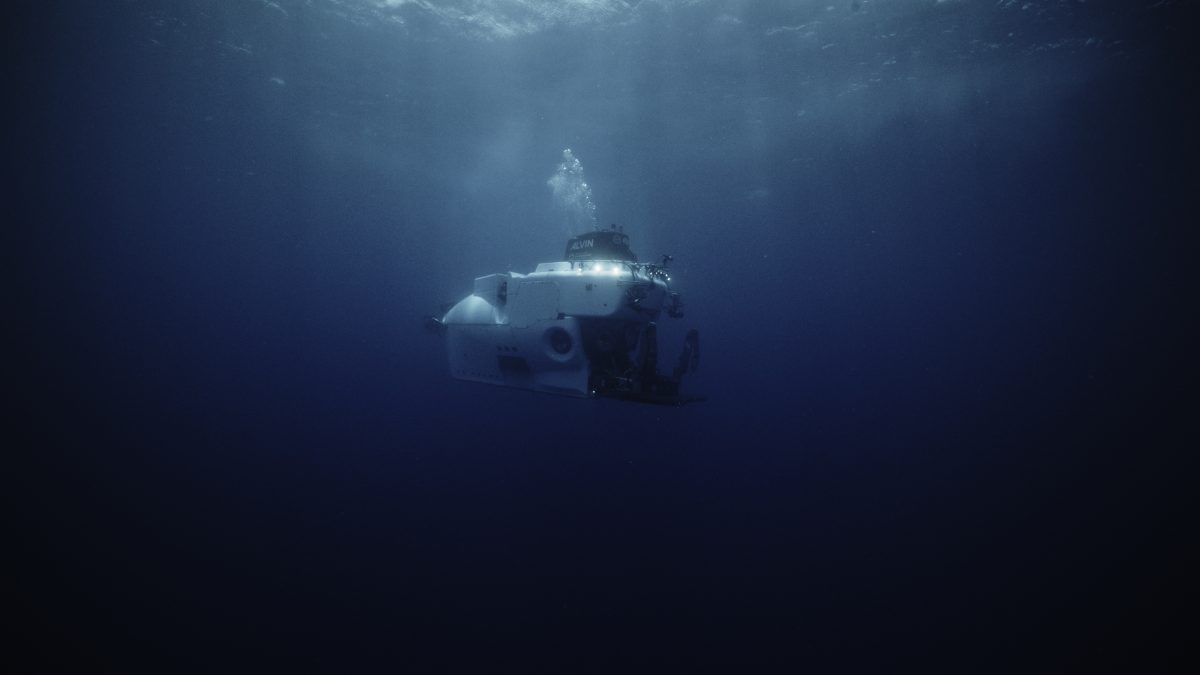 As part of its post-overhaul sea trials, Alvin successfully completed a deep dive to 6,374 meters, reaffirming its ability to safely transport researchers and engineers to Earth’s most extreme environments. (Photo by Luis Lamar, ©Woods Hole Oceanographic Institution)
 July 1, 2026
U.S. Navy certification permits the sub to resume operations to 6,500 meters after a routine overhaul
Photos, captions, and credits are available here
Woods Hole, Mass. (July 1, 2026) — The Woods Hole Oceanographic Institution (WHOI) today announced that the human-occupied submersible Alvin has been officially certified to return to service following the successful completion of its recent, routine overhaul and testing program. The certification, granted by the U.S. Navy’s Director, Submarine Programs (DSP), confirms that Alvin meets rigorous safety and operational standards for deep-sea exploration and authorizes the vehicle to dive to depths of 6500 meters (more than four miles).
DSP’s Deep Submergence Systems (DSS) Program, P9290, provides certification standards, technical oversight, and lifecycle management for U.S. Navy systems that support manned operations in the undersea environment. The program ensures the safety, reliability, and operational readiness of specialized platforms and equipment used for submarine rescue, diving, undersea research, and other deep-ocean missions.
Owned by the U.S. Navy and operated by WHOI as part of the U.S. National Science Foundation-funded National Deep Submergence Facility (NDSF), Alvin is one of the world’s most renowned deep-diving research submersibles. The certification follows an extensive overhaul process conducted roughly every five years, during which the vehicle is fully disassembled, inspected, upgraded as needed, and reassembled before undergoing a comprehensive series of dockside and at-sea tests.
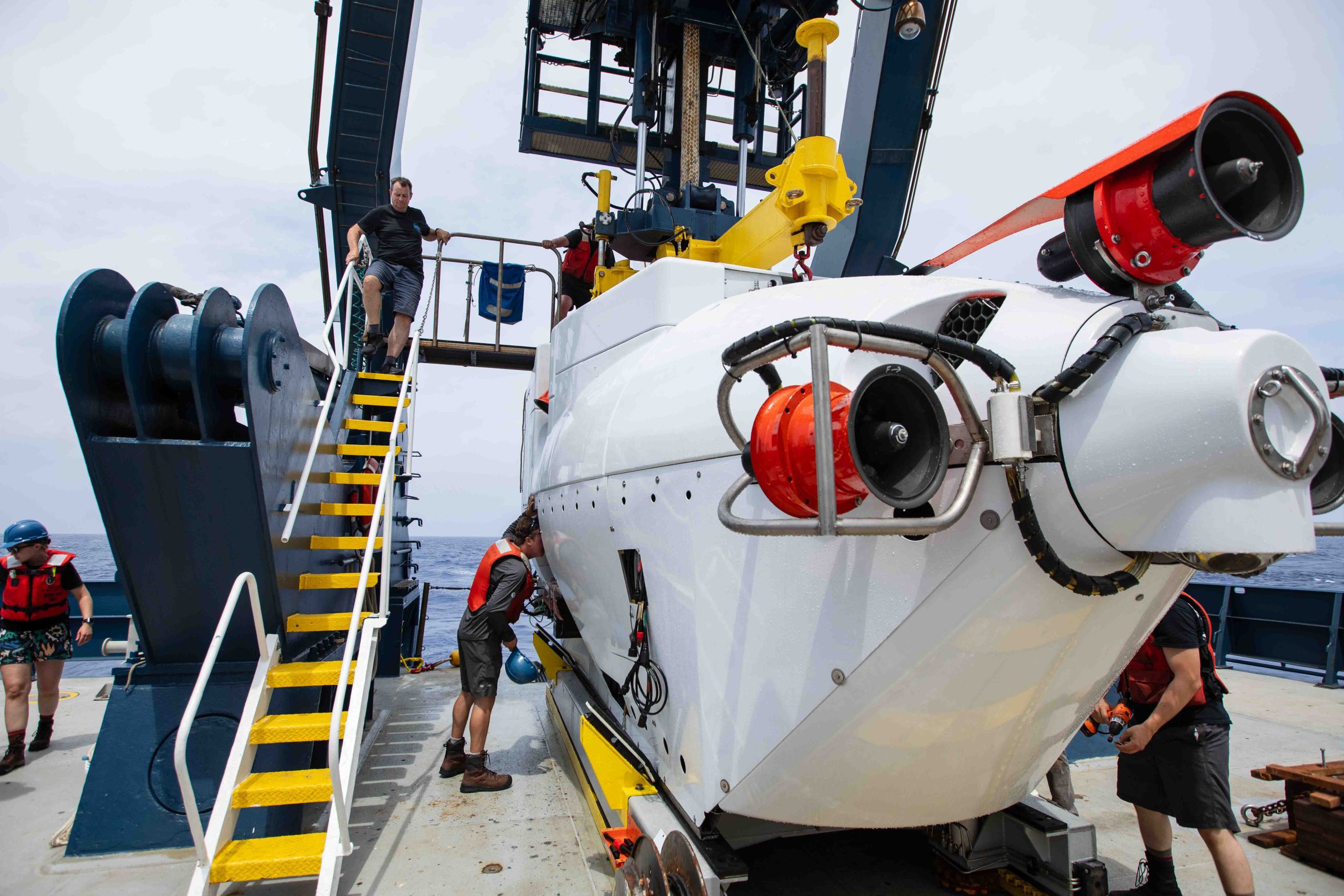
Owned by the U.S. Navy and operated by WHOI, Alvin is one of the world’s most renowned deep-diving research submersibles. (Photo by Daniel Cojanu, ©Woods Hole Oceanographic Institution)
A three-person team consisting of Alvin Team manager and lead pilot Bruce Strickrott, DSP general engineer Brandon Yasin, and WHOI senior engineer Kaitlyn Tradd completed the seven-hour certification dive on June 20. Formal certification from DSP came on June 24, 2026.
“Alvin permits one of the most fundamental aspects of scientific research and exploration: direct human observation of the places ocean scientists study in order to expand our knowledge of our planet,” said NDSF chief scientist Anna Michel. “Doing so with the utmost safety and reliability is the first and most important priority in our mission to support exploration of the deep ocean. The Alvin Team’s record over the past 63 years is a shining example of what can be accomplished through meticulous attention to detail.”
As part of its post-overhaul sea trials, Alvin successfully completed a deep dive to 6,374 meters, reaffirming its ability to safely transport a pilot and two observers to some of the most extreme environments on Earth.
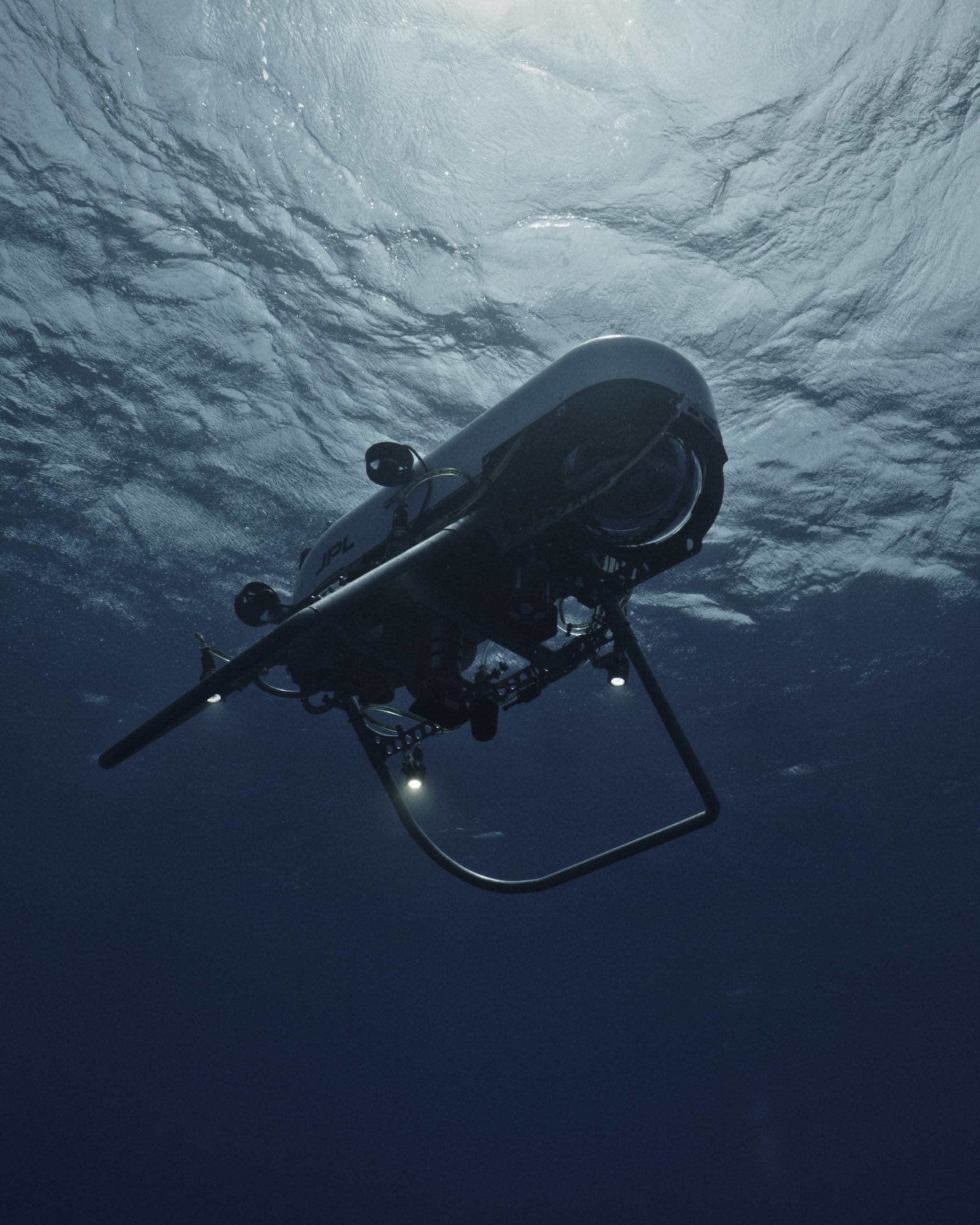
Deep Venture is the latest evolution of a new class of autonomous underwater vehicles (AUVs) designed to significantly expand deep-sea exploration. (Photo by Luis Lamar, ©Woods Hole Oceanographic Institution)
During the same expedition, engineering and ship teams also tested a small autonomous underwater vehicle (AUV) known as Deep Venture, designed to complement Alvin operations. Deep Venture is capable of scouting locations in advance of Alvin dives, collecting high-resolution images and environmental data that help scientists pinpoint areas of interest and pilots develop detailed operational plans. By identifying promising targets ahead of time, the system enhances the efficiency and effectiveness of Alvin’s limited time on the seafloor, enabling more focused observations and targeted sampling during crewed dives.
Alvin’s successful certification reflects the close collaboration of the U.S. Navy and engineering and shipboard teams at WHOI responsible for ensuring Alvin’s continued operational excellence. DSP, which oversees the Navy’s Submarine Safety (SUBSAFE) and Deep Submergence Systems (DSS) programs, is responsible for verifying that all safety and certification requirements are met before authorizing crewed operations of naval assets.
“Ensuring the safety of our submarines, whether they be military or civilian, is of paramount importance,” said Rear Adm. Todd Weeks, Director, In-Service Submarines and Industrial Base for Director, Submarine Programs. “We want the occupants to have confidence in their platform so they can concentrate on their important science endeavors.”
Over its decades-long history, Alvin has completed more than 5,300 dives, enabling groundbreaking discoveries, from exploring hydrothermal vents and uncovering new forms of life to documenting historic shipwrecks, including the Titanic. Its renewed certification ensures that the submersible will continue to serve the oceanographic research community by providing scientists with direct access to the deep ocean—now reaching more than 99% of the ocean floor.
“NSF is proud to fund Alvin's continued operation, covering the full cost of this overhaul and more than 90% of its science and operations annually,” said Brian Midson, Program Director for Ship and Submersible Support in NSF’s Office of Research Infrastructure. “Our partnership with WHOI and the U.S. Navy ensures this irreplaceable research platform keeps delivering discoveries about the deep ocean—knowledge that strengthens American science, security, and economic competitiveness.”
With the overhaul complete and certification secured, Alvin is now ready to resume its scientific expeditions, supporting researchers from around the world in advancing knowledge of the deep ocean, Earth’s least explored frontier.
“Certification is a signal to scientists and engineers that Alvin is ready for them,” said Strickrott. “We look forward to supporting the community’s vision for exploration in the deep ocean, wherever it may lead.”
###
About Woods Hole Oceanographic Institution
Woods Hole Oceanographic Institution (WHOI) is a private, non-profit organization dedicated to marine research, engineering, and higher education. Founded in 1930 and based on Cape Cod, Massachusetts, WHOI’s mission is to understand the ocean and its interaction with the Earth system, and to communicate the ocean’s vital role in the global environment.