What is the hadal zone?
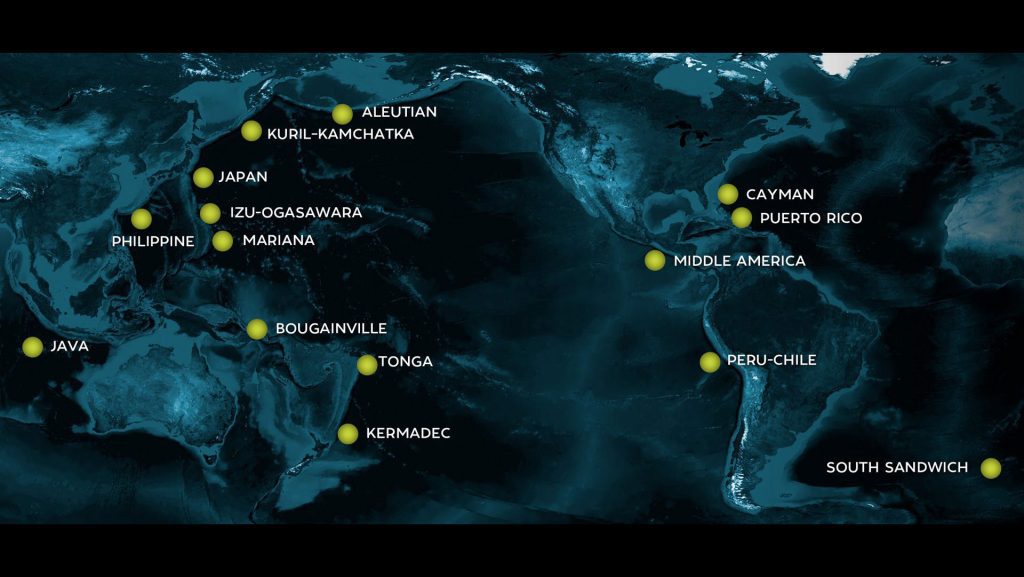
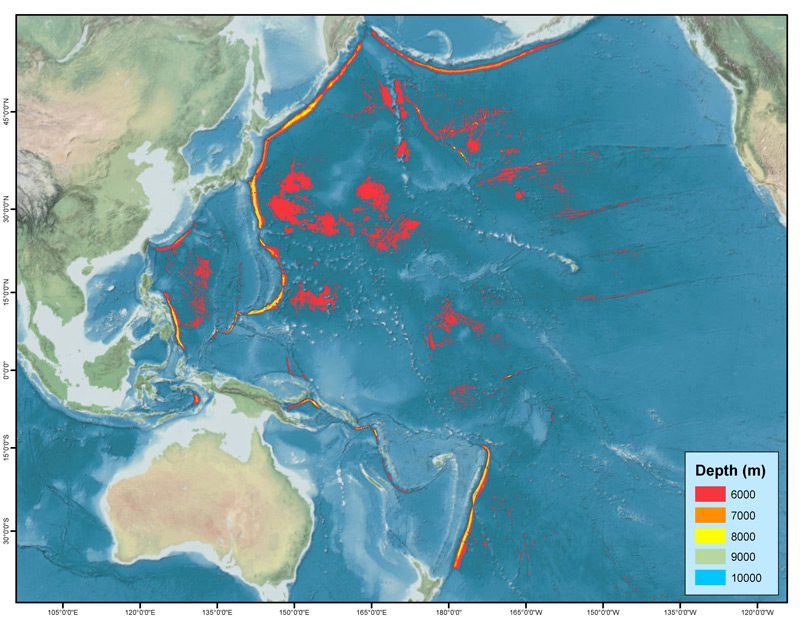
In most areas, the ocean floor lies 4,000 to 6,000 meters (13,000 to 20,000 feet) below the surface, but deep ocean trenches can extend this depth to 11,000 meters (36,000 feet). The region extending from 6,000 to 11,000 meters is called the hadal, or hadalpelagic, zone after Hades, the Greek god of the underworld. This zone occurs only in trenches; combined across all oceans, they make up an area about the size of Australia. The hadal zone is characterized by extreme depth and pressure, temperatures that hover just above freezing, and complete darkness—at least in terms of light from the sun. Bioluminescence allows organisms in the ocean depths to communicate. Walls of trenches are steep and descend through a gradient of depths and pressures, creating a variety of habitats along the slope.
Why is it important?
Trenches most often occur where one tectonic plate is subducted under another, creating long, narrow submarine canyons. Movement of one plate over another can cause earthquakes and tsumanis that affect people on land, and understanding tectonic motion is essential for warning people who might be affected. More often, however, Earth's hadal seafloor is found mid-plate in regions that have never been explored.
The steep walls leading to hadal regions are home to life forms found nowhere else on Earth. Studying these organisms can help us better understand adaptation to extreme environments. Some of these organisms rely on chemical energy from hydrothermal seeps along the ocean floor. Others depend on carbon-based matter that falls from upper layers of the ocean. Accumulation of carbon along the base of the trenches may play a key role in the carbon cycle and climate regulation. Exploring the hadal zone will advance knowledge that can be used when exploring oceans beyond Earth, such as those on the moons of Jupiter and Saturn.
What are ocean scientists doing to better understand the hadal zone?
Researchers are actively working to investigate trenches and the waters within them. To do so, WHOI is collaborating with NASA’s Jet Propulsion Laboratory to develop technology that allows exploration of the hadal zone. This effort is not without challenges, given the remote location and extreme topography and pressures found in ocean trenches.
Together, WHOI and NASA have developed Orpheus autonomous underwater vehicles (AUVs). These small AUVs can withstand pressure greater than 1,000 times that at the ocean’s surface (as occurs at the deepest points), and they can navigate narrow, rocky sections of trenches. Orpheus AUVs can work independently or in a “swarm” to explore, map, and analyze the water, seafloor, and organisms in the hadal zone. One of their primary benefits is their ability to reconfigure their mission on the fly if they encounter unexpected issues.
References
WHOI Ocean Topic: Ocean Trenches
More topics like this

Sunlit zone
The upper layer of the ocean is known as the sunlit, or euphotic, zone. Because water strongly absorbs light, sunlight penetrates only to depths of about 200 meters (656 feet).
Twilight zone
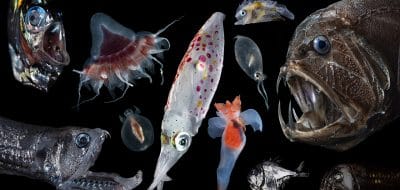
The ocean twilight zone is a layer of water that stretches around the globe. It lies 200 to 1,000 meters below the ocean surface, just beyond the reach of sunlight.
Midnight zone
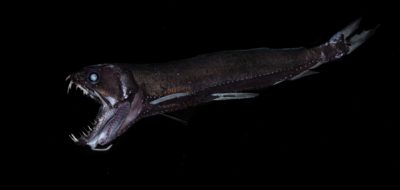
The midnight zone, or bathypelagic, extends to about 4,000 meters (about 13,100 feet), which reaches the ocean floor in many places is in perpetual darkness.

Abyssal zone
The abyssal zone, or the abyss, is the seafloor and water column from 3,000 to 6,500 meters (9,842 to 21,325 feet) depth, where sunlight doesn't penetrate.
Oceanus magazine
[ ALL ]In-depth research on Hadal zone

A hadal zone mystery solved

Deep-sea amphipod name inspired by literary masterpiece

A new way to discover life in the ocean’s hadal zone

An immersive twilight zone exhibit

Can the twilight zone be fished responsibly?
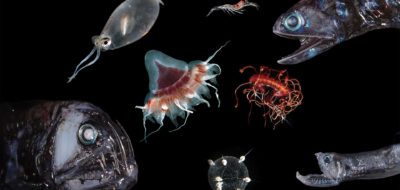
Five big discoveries from WHOI’s Ocean Twilight Zone Project

Our eyes on the seafloor

Experts gather to discuss the ocean’s super-powered carbon pump
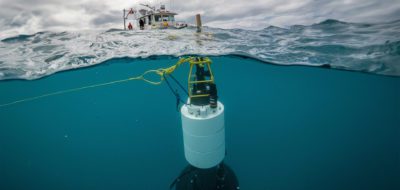
A new way to track marine snow ‘blizzards’
AI in the Ocean Twilight Zone

Edie Widder: A light in the darkness

How to speak “Ocean”




WHOI News Room
[ ALL ]Press releases
Endangered basking sharks rely on the ocean twilight zone during long-distance migrations
New WHOI study cautions that deep-sea fishing could undermine valuable tuna fisheries
Bigscale pomfret are an ocean enigma
Get the ocean in your inbox
Fresh discoveries, research, and stories from WHOI — free, every week.