In this section
Ocean Topics
- Climate & Weather
- How the Ocean Works
- Ocean & Human Lives
- Ocean Life
- Sustainable Ocean
- Ocean Tech

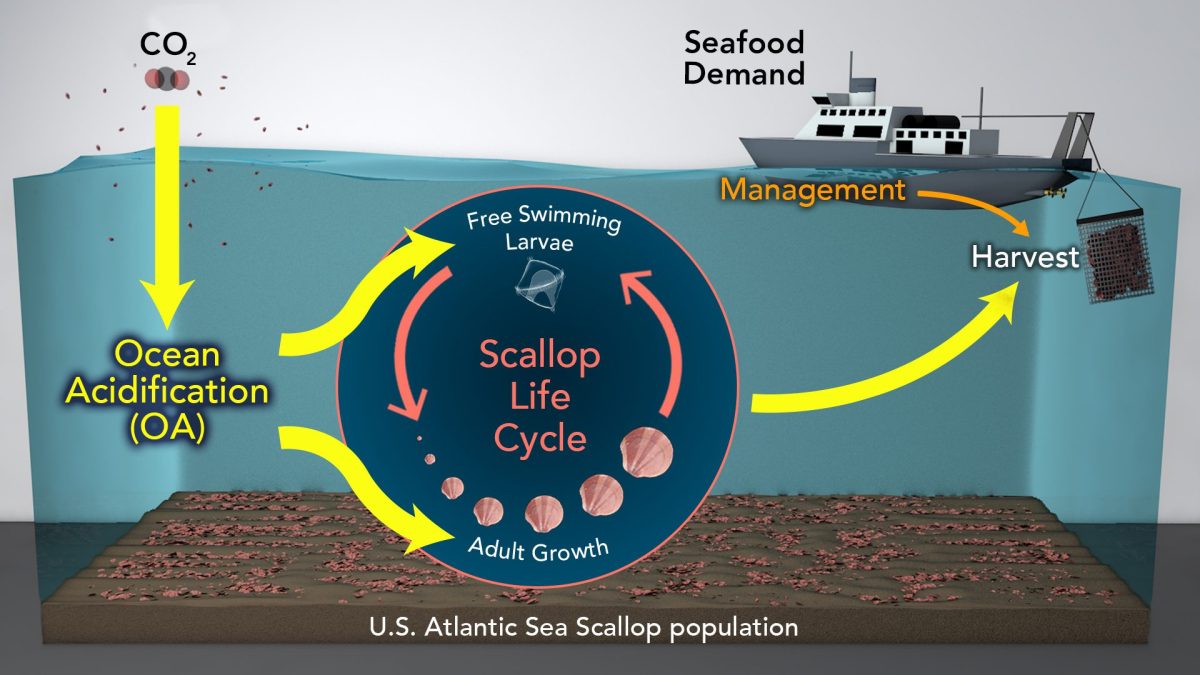
Vibrio parahaemolyticus is a bacterium in the same family as those that cause cholera. It lives in brackish saltwater, and causes gastrointestinal illness in humans. V. parahaemolyticus is a halophilic, or salt-requiring organism, naturally inhabiting coastal waters in the United States and Canada, and is present in higher concentrations during summer. When ingested, V. parahaemolyticus causes watery diarrhea often with abdominal cramping, nausea, vomiting fever and chills, usually within 24 hours of ingestion. (CDC/ Janice Carr)
(Adapted from the Centers for Disease Control and Prevention)
Vibrio parahaemolyticus (V. parahaemolyticus or Vibrio p.) is a bacterium in the same family as those that cause cholera and causes gastrointestinal illness in humans. V. parahaemolyticus is a halophilic, or salt-loving organism that inhabits brackish coastal waters in the U.S. and Canada and is present in higher concentrations during summer.
Vibrio is commonly found in waters where oysters are cultivated. When the appropriate conditions occur with regard to salt content and temperature, V. parahaemolyticus thrives. Most people become infected by eating raw or undercooked shellfish, particularly oysters. Less commonly, this organism can cause an infection in the skin when an open wound is exposed to warm seawater.
When ingested, V. parahaemolyticus causes watery diarrhea often with abdominal cramping, nausea, vomiting, fever and chills. Usually these symptoms occur within 24 hours of ingestion. Illness is usually self-limited and lasts 3 days. Severe disease is rare and occurs more commonly in persons with weakened immune systems.
An estimated 4500 cases of V. parahaemolyticus infection occur each year in the U.S. However, the number of cases may be much higher due to underreporting. In addition, laboratories rarely use the selective medium that is necessary to identify this organism, and it is likely that many more cases go undetected.
Treatment is not necessary in most cases of V. parahaemolyticus infection. There is no evidence that antibiotic treatment decreases the severity or the length of the illness. Patients should drink plenty of liquids to replace fluids lost through diarrhea. In severe or prolonged illnesses, antibiotics such as tetracycline or ciprofloxicin can be prescribed.
Most infections caused by V. parahaemolyticus in the U.S. can be prevented by thoroughly cooking seafood, especially oysters. Wound infections can be prevented by avoiding exposure of open wounds to warm seawater. When an outbreak is traced to an oyster bed, health officials recommend closing the oyster bed until conditions are less favorable to V. parahaemolyticus.
More information is available through the CDC website or your local health department. Information about problems associated with raw seafood consumption can be obtained from the FDA’s Center for Food Safety and Applied Nutrition (800-332-4010).

Vibrio parahaemolyticus is a bacterium in the same family as those that cause cholera. It lives in brackish saltwater, and causes gastrointestinal illness in humans. V. parahaemolyticus is a halophilic, or salt-requiring organism, naturally inhabiting coastal waters in the United States and Canada, and is present in higher concentrations during summer. When ingested, V. parahaemolyticus causes watery diarrhea often with abdominal cramping, nausea, vomiting fever and chills, usually within 24 hours of ingestion. (CDC/ Janice Carr)
Articles Related to Vibrio parahaemolyticus
From Oceanus Magazine
Puzzling over a mollusk mystery
Invasive tunicates have shellfish farmers crying “foul”
Microplastics in the Ocean – Separating Fact from Fiction
New Techniques Open Window into Anatomy of Mollusks
Do Microplastics in the Ocean Affect Scallops?
Junk Food
Crabs Swarm on the Seafloor
On the Trail of an Invader
Scallops Under Stress
Tiny. Ubiquitous. Vital. Delicate. Vulnerable.
Sassy Scallops
Barnacles and Biofilms
A Torrent of Crabs Running to the Sea
Ocean Acidification: A Risky Shell Game
News Releases
Flipping the “genetic paradox of invasions”
Study Shows that Lobsters Can Detect Sound
Warming oceans are getting louder
Feeling the Heat in the NW Atlantic
Swarming Red Crabs Documented on Video
News & Insights
Valentine’s Day Courtship Tips from the Ocean
Recognizing Massachusetts Right Whale Day
What happens to natural gas in the ocean?
WHOI working to address ocean acidification; protect region’s vital shellfish industry
Unicorns of the Arctic face a new potential threat
For Mark Baumgartner, Whale Safe is the natural evolution of WHOI’s work with passive acoustics
Listening to fish with passive acoustics
Deciphering the Impacts of a Changing Ocean on Scallop Fisheries
Specialized camera system gives unprecedented view of ocean life
Jellyfish larger than blue whales?
Teaming up for right whales
WHOI in the News
Invasive crab population keeps booming in Washington
Maine’s having a lobster boom. A bust may be coming.
‘The Blob’: Low-oxygen water killing lobsters, fish in Cape Cod Bay.
145 invasive European green crabs caught in Drayton Harbor
Snapping Shrimp Pump Up the Volume in Warmer Water
Cracking the secret of green crabs
Animal Sex: How Lobsters Do It
Ocean Acidification Bill Gains Traction At State House
Waterways Remain Closed To Shellfishing
Uncovering a Deep-Sea Swarm of Zombie Crabs
Features
Seagrass meadows are plants adapted to live a completely submerged life in the salty shallows.
Environmental DNA (eDNA) is essentially DNA collected from the environment. As animals swim through the ocean, they're constantly releasing DNA…
Northern right whales are large baleen whales known for their distinctive callosities and slow-moving nature. Read our FAQ about this…
Seabirds have adapted to life in an ocean environment. There are many species of seabirds, and they vary greatly in…
Ocean plants are critical to marine life—they are an important food source, they provide oxygen to surrounding marine life, and…
Benthic animals live on the sea floor and are typically invertebrates, such as sea anemones, sponges, corals, sea stars, sea…
A healthy reef protects coastlines from wave damage, plays a critical role in providing food, boosts the economy, and provides…
Stressors can affect organisms living on the reef or they can affect the corals, themselves. When corals die, other organisms…
Fish that inhabit a coral reef play essential roles in the reef ecosystem, and reefs without fish struggle to recover…
Ocean ecosystems are found in polar regions, coastal waters, coral reefs, hydrothermal vents, the abyssal plain, and at the bottom…
The emperor penguin is the largest living penguin species standing around 115 centimeters tall. Once they have found a partner,…
The North Atlantic right whale (Eubalaena glacialis) is one of the most endangered whales in the world—approximately 340 remain—due to…
Coral is a useful tool for scientists who want to understand changes in past climate, but recalling that history presents…
By human standards, they are extreme environments. Yet life not only persists in the poles...it thrives.
Fish serve important ecological and economic functions. Ecologically, they are both predator and prey, providing food for other animals, and…