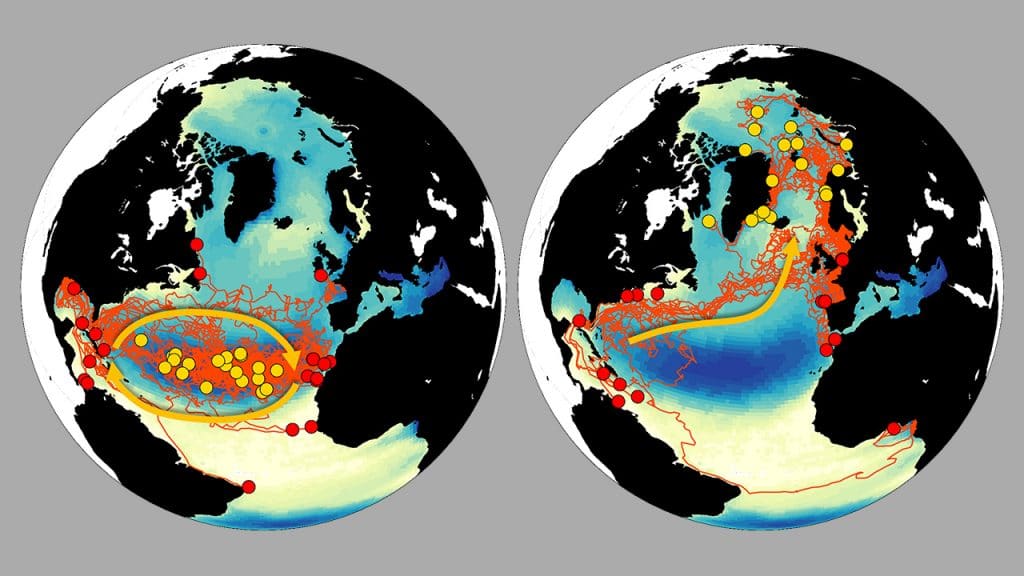
The ocean is vast, dynamic, and often inaccessible. Through modeling, scientists can simulate its behavior and better understand its role in Earth's systems. Ocean modeling uses a range of tools - from computer simulations to lab-based "ocean-in-a-box" experiments - to replicate and predict ocean processes. These models help researchers study circulation, track climate signals, and test hypotheses that would be difficult or impossible to observe directly in the real ocean.
Oceanographers use models to explore everything from the Southern Ocean's turbulent currents to long-term climate trends and their connections to human activity. Modeling enables scientists to understand how heat, carbon, and nutrients circulate through the ocean and how changes in one part of the system propagate to others. Even physical cables on the ocean floor are being explored as sensors to transmit real-time data into models.
By refining these tools and techniques, scientists can offer forecasts and insights that are valuable to climate science, weather prediction, marine policy, and ocean management. Modeling transforms scattered data into a coherent picture of how the ocean functions and how it is changing.
More topics like this
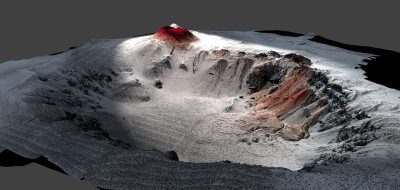
Acoustics
A strong understanding of how sound behaves in different conditions in the ocean helps scientists answer fundamental questions about the planet, the ocean, and marine life.
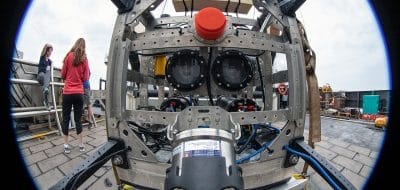
Imaging
Underwater imaging continues to advance in technology, allowing research to be conducted in the pressure-filled, extreme environments of the ocean.
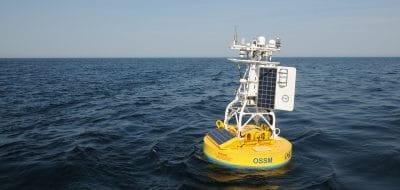
Moorings & buoys
An oceanographic mooring consists of a long cable with an anchor at one end, a float at the other, and instruments attached to the line in between or to a float.
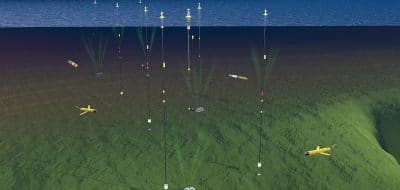
Ocean observatories
Ocean observatories have suites of instruments and sensors with long-term power supplies and permanent communications links that feed data in real-time.
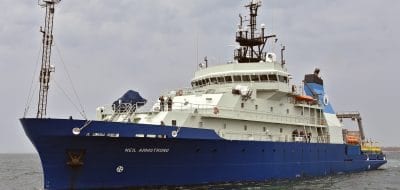
Ships
Oceanographers rely on sophisticated ships to get a firsthand look at the ocean environment and to carry their tools and instruments into it.
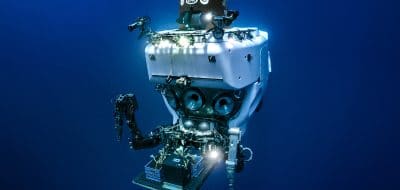
Underwater vehicles
Oceanographic observing tools has grown to include human-occupied submersibles, remote-controlled vehicles, and autonomous robots.
Oceanus magazine
[ ALL ]In-depth research on Ocean modeling



WHOI News Room
[ ALL ]Press releases
Tiny oyster larvae rely on gravity to feed
Get the ocean in your inbox
Fresh discoveries, research, and stories from WHOI — free, every week.