
In this section
Ocean Topics
- Climate & Weather
- How the Ocean Works
- Ocean & Human Lives
- Ocean Life
- Sustainable Ocean
- Ocean Tech

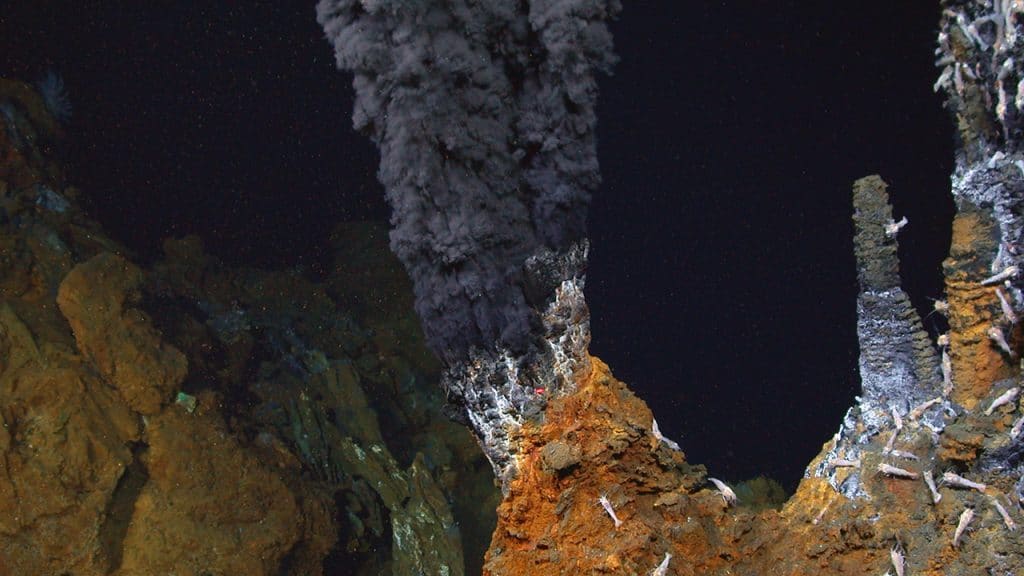
(Woods Hole Oceanographic Institution)
What are Hydrothermal Vents?
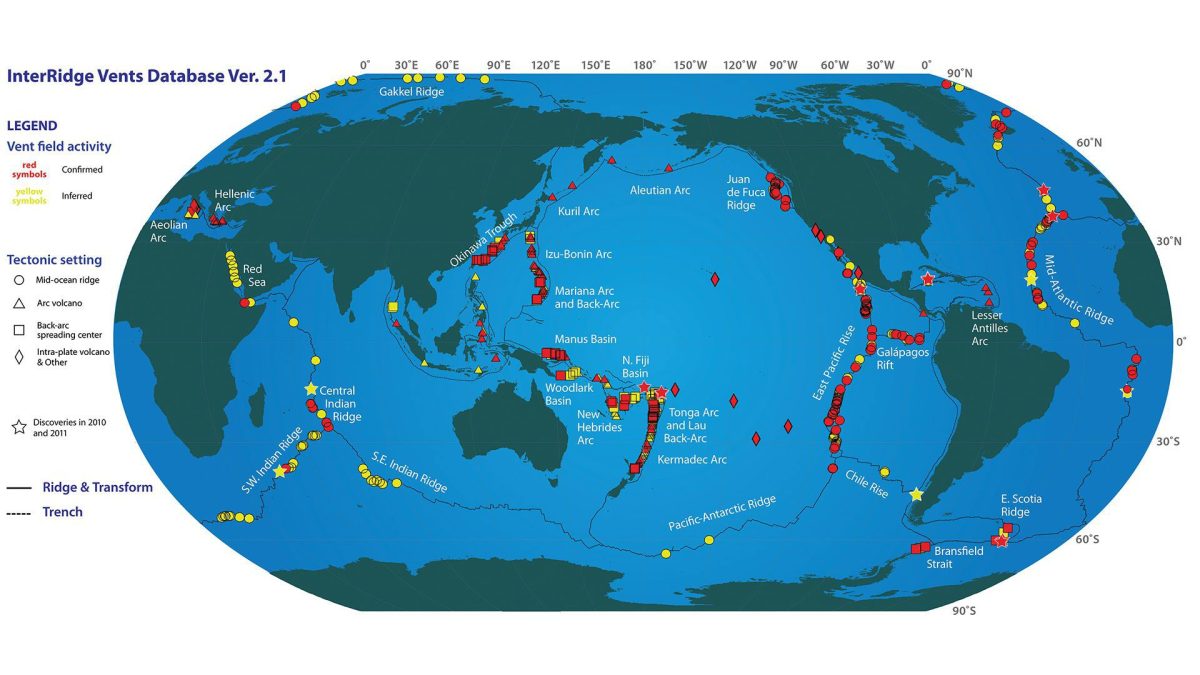
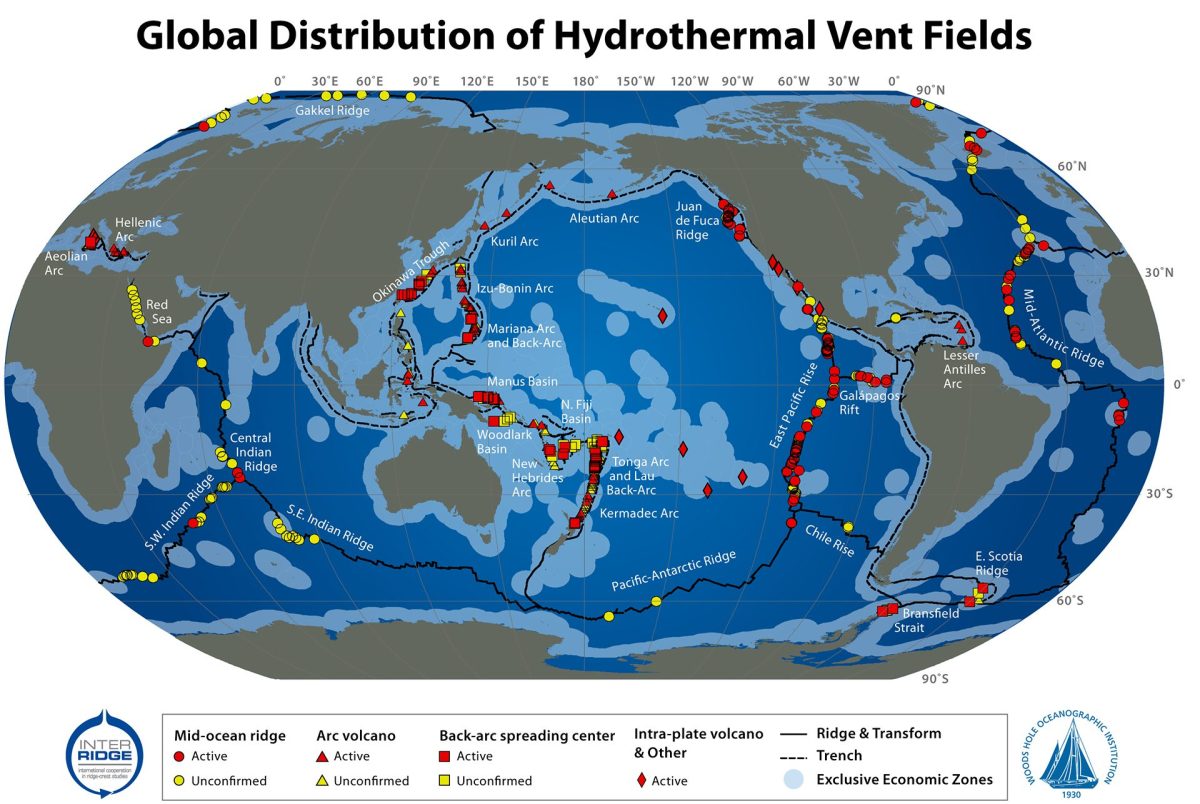
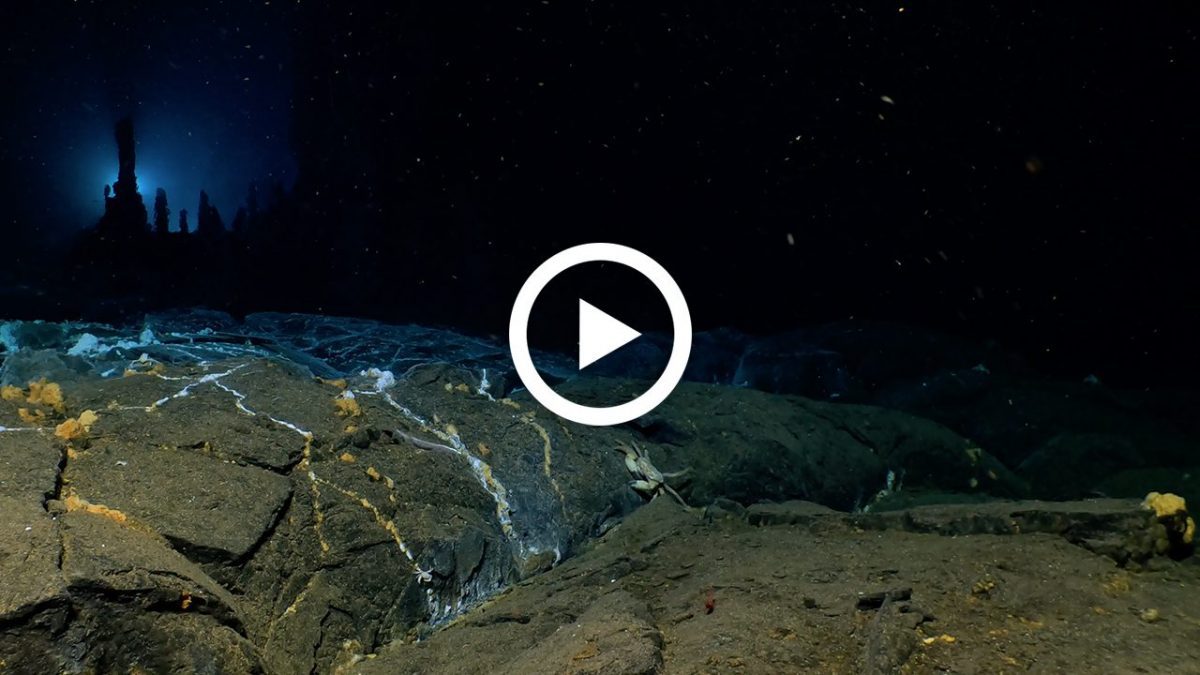
In 1977, scientists exploring an oceanic spreading ridge near the Galápagos Islands made a stunning discovery: openings in the Pacific Ocean seafloor with warm, chemical-rich fluids flowing out. Later trips revealed previously unknown organisms and entire ecosystems around the vents, thriving in the absence of sunlight–a phenomenon that scientists didn’t think was possible. These discoveries fundamentally changed our understanding of life on Earth.
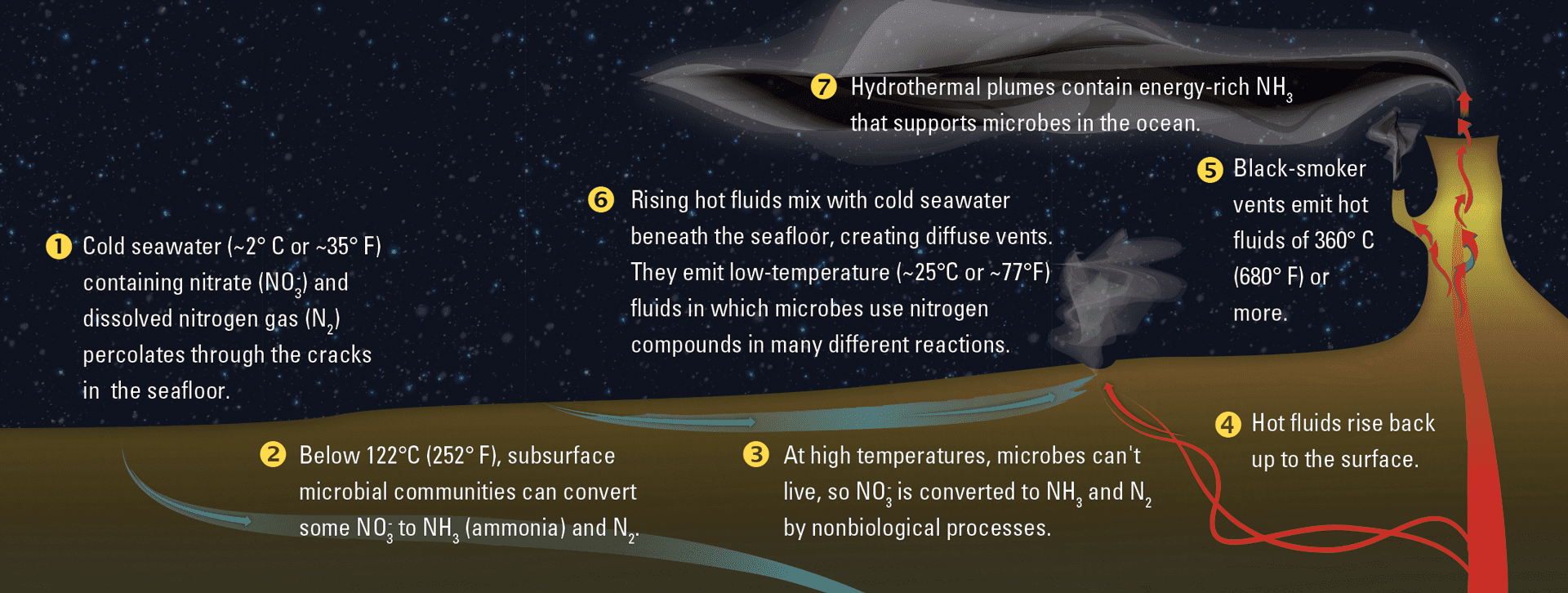
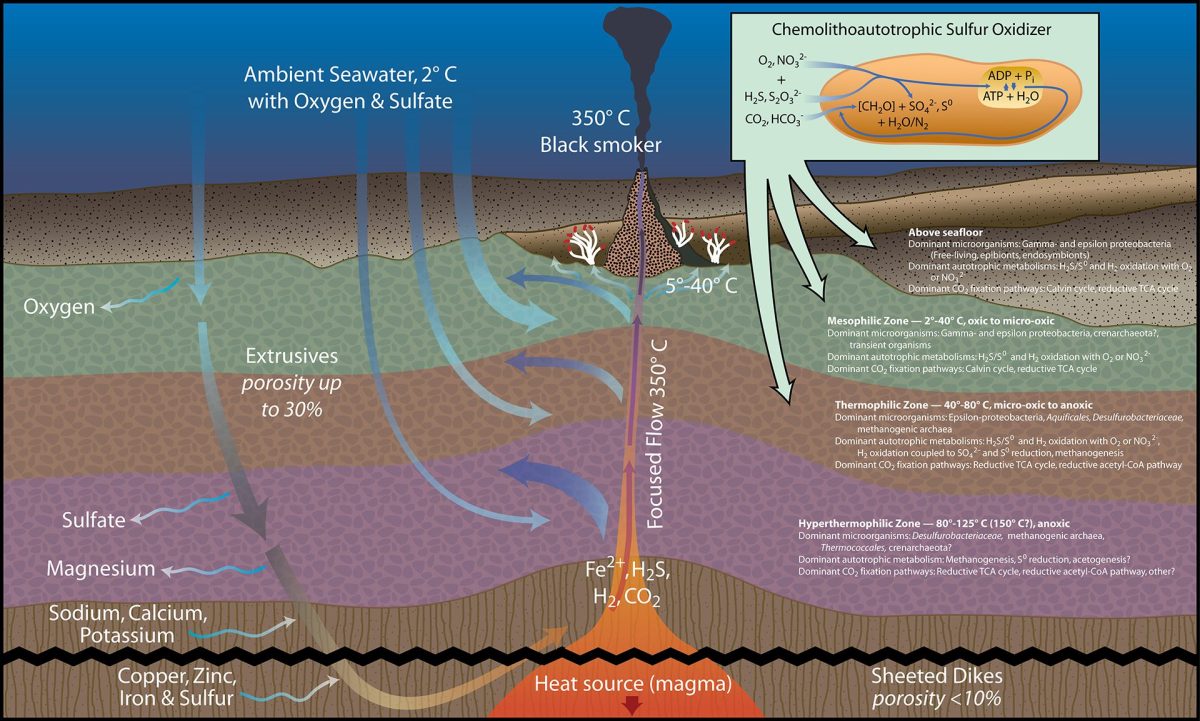
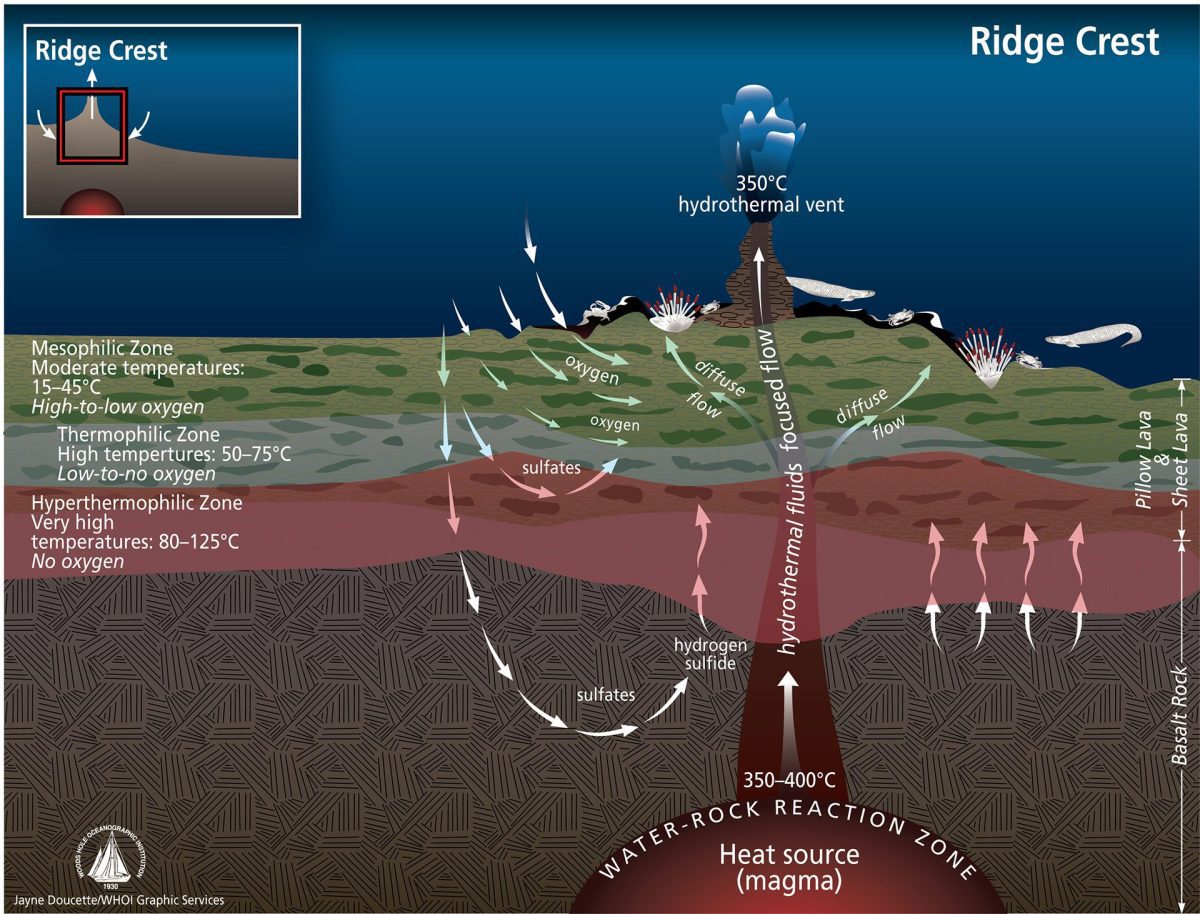
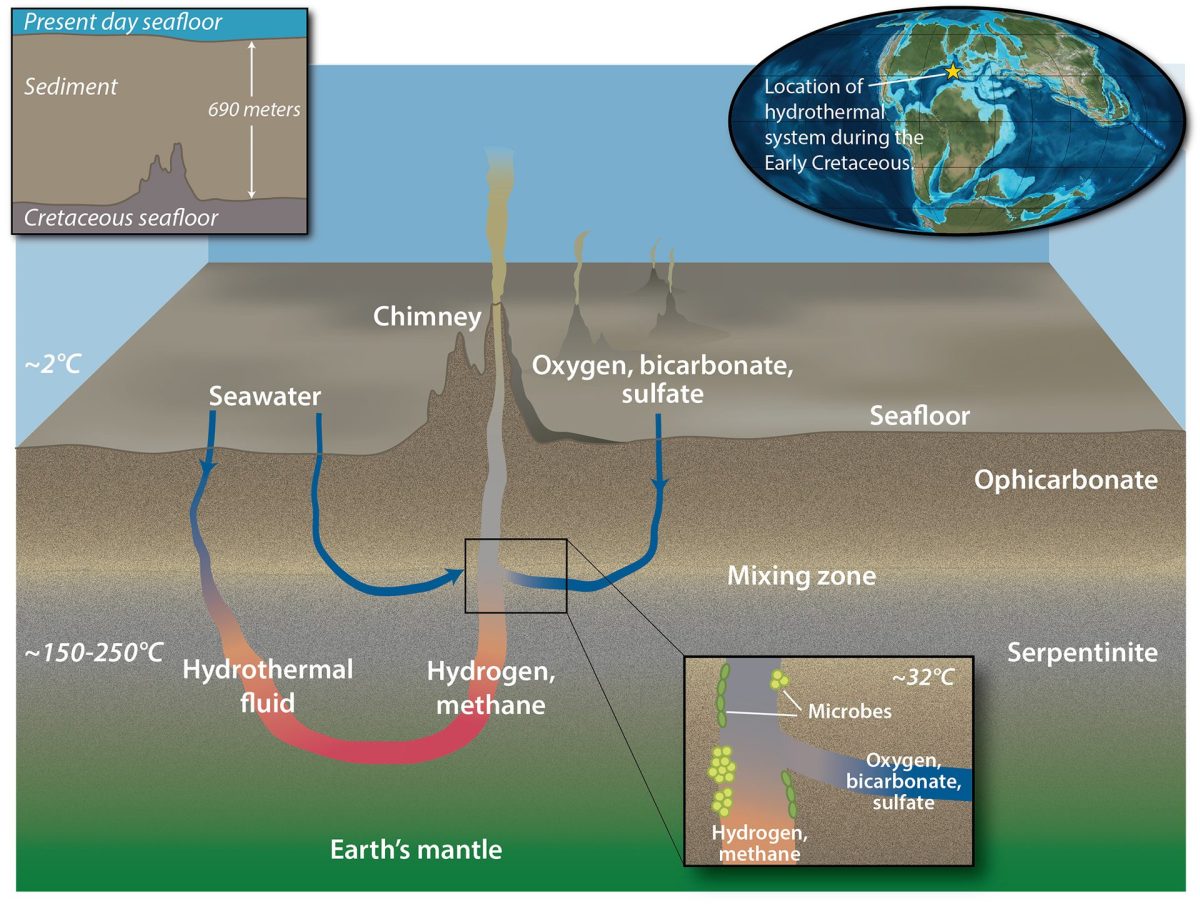
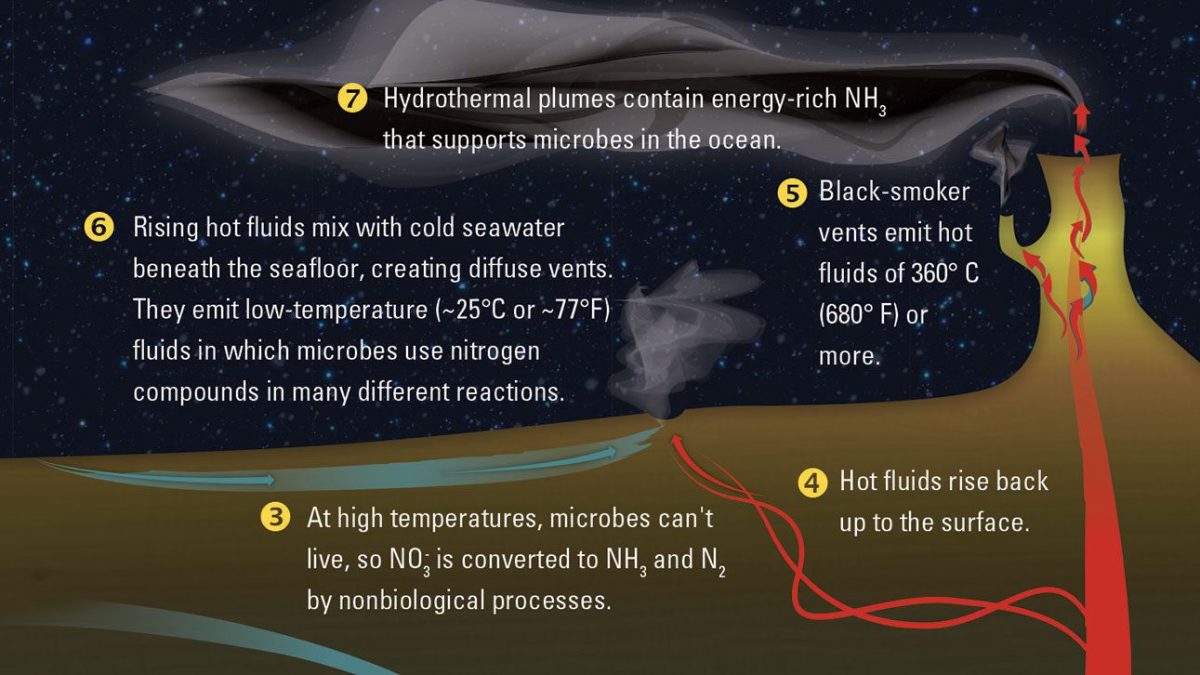
Like hot springs and geysers on land, hydrothermal vents form in volcanically active areas—often on mid-ocean ridges, where Earth’s tectonic plates are spreading apart. In these areas, magma wells up to the surface or just below the seafloor. As ocean water percolates down through cracks and porous rocks, the super-hot magma causes chemical reactions that remove oxygen, magnesium, sulfates, and other chemicals from the water. In the process, the fluids become hotter and more acidic, causing them to leach metals such as iron, zinc, copper, lead, and cobalt from the surrounding rocks. The heated fluids rise back to the surface through openings in the seafloor, known as hydrothermal vents. The fluid temperatures can reach 400°C (750°F) or more, but they do not boil under the extreme pressure of the deep ocean.
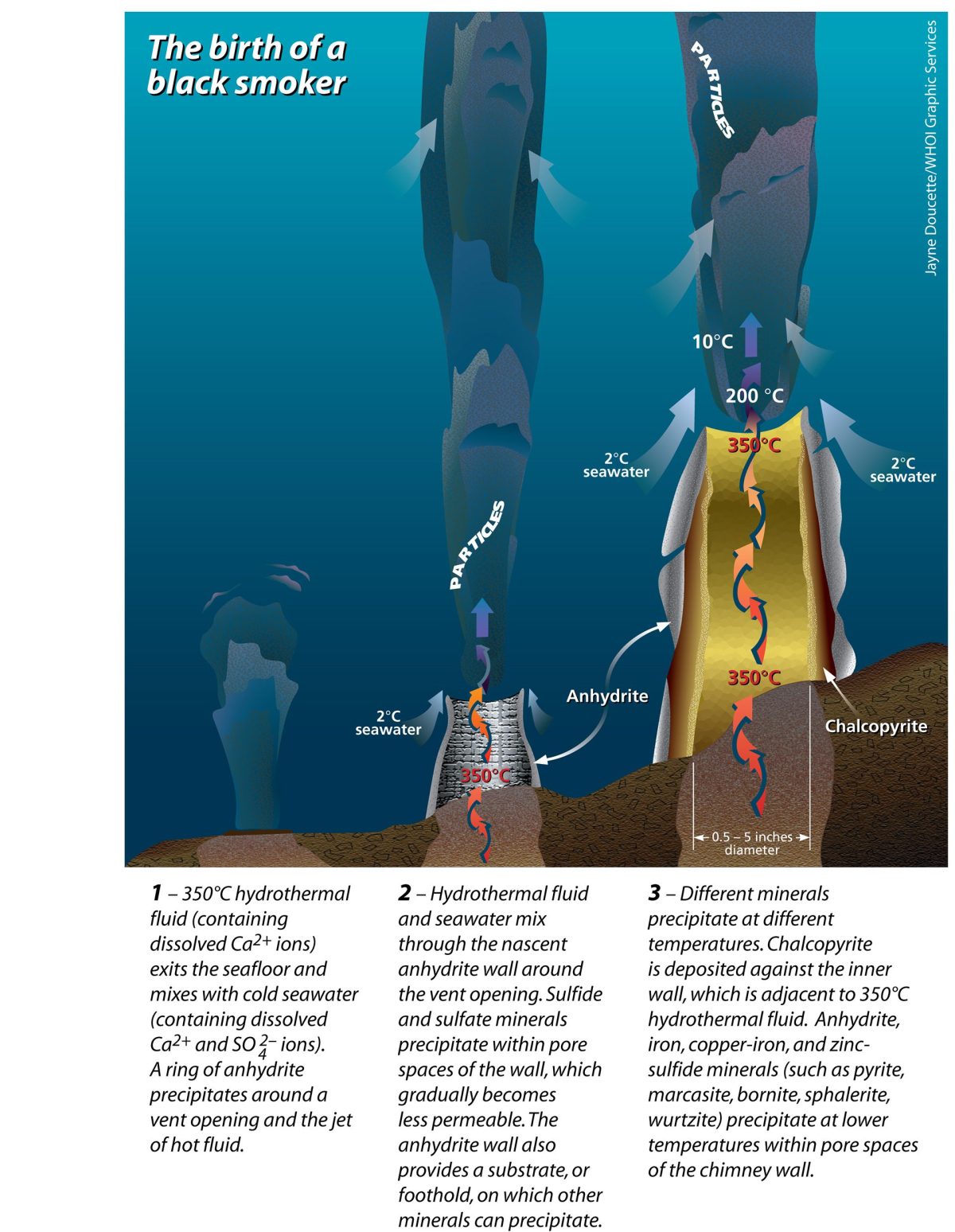
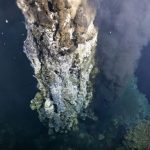
As they pour out of a vent, the fluids encounter cold, oxygenated seawater, causing another, more rapid series of chemical reactions to occur. Sulfur and other solids precipitate–or come out of solution–to form metal-rich towers and deposits of minerals on the seafloor–some reaching over 30 feet (10 meters) tall! These minerals sometimes are visible in the gushing fluid, which is why some hydrothermal vents are called white or black “smokers.”
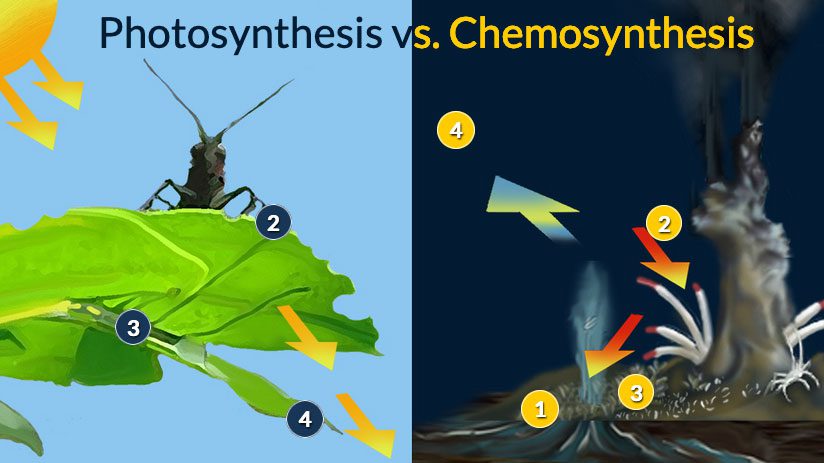
The hard structure of the vents and the chemicals in the vent fluid support a unique food web that survives without sunlight. In many hydrothermal vent communities, the ecosystem is based on bacteria that convert hydrogen sulfide and other chemicals in the vent fluids into sugar for energy. These “chemosynthetic” bacteria provide food for larger organisms such as tubeworms, shrimp, and mussels.
Why Do They Matter?
Hydrothermal vents act as natural plumbing systems that transport heat and chemicals from the interior of the Earth and help regulate global ocean chemistry. In the process, they accumulate vast amounts of potentially valuable minerals on the seafloor. So far, the difficulty of mining in deep water near fragile ecosystems and the relatively small size of ocean bottom deposits compared to those on land have prevented seafloor mining from becoming commercially viable.
Vents also support complex ecosystems that have developed unique biochemical adaptations to high temperatures and environmental conditions we would consider toxic. Learning about these organisms can teach us about the evolution of life on Earth–and the possibility of life elsewhere in the solar system and the universe. Many previously unknown metabolic processes and compounds found in vent organisms could also have applications in pharmaceuticals and treatments for diseases such as Alzheimer’s.
All Topics on Hydrothermal Vents
Godzilla, Sasquatch, & Homer Simpson
Many deep-sea features are named for their distinct shapes and formidable sizes. Other features are named for research vessels, and others to honor pioneering scientists.
Articles Related to Hydrothermal Vents
From Oceanus Magazine
Our eyes on the seafloor
3 memorable Jason Dives
Life at Rock Bottom
Falling in love with deep-sea parasites
Five extreme places to do ocean research
Racing an undersea volcano
Finding answers in the ocean
Journey to the Bottom of the Sea
The Hot Spot Below Yellowstone Park
Bringing a Lab to the Seafloor
Big Questions About Tiny Bacteria
Deep-sea Vents Yield New Species
Searching for Life on the Seafloor
Once More Unto the Rift
A Hunt for Unusual Seafloor Animals and Vents
News Releases
International research team discovers a potential source of abiotic methane in the Arctic Ocean
Scientists uncover a new way to forecast eruptions at mid-ocean ridges through hydrothermal vent temperatures
Newly published study reveals diversity of novel hydrothermal vent styles on the Arctic Ocean floor
Building Blocks of Life on the Atlantis Massif
Origin of Massive Methane Reservoir Identified
Panel to Discuss Deep-Sea Mining at AAAS Meeting
Carbon Dioxide Pools Discovered in Aegean Sea
Newly discovered ocean plume could be major source of iron
News & Insights
HOV Alvin temporarily halts engineering test dives
Wave Glider provides gateway to remote exploration
Finding medical answers in the ocean
Spock versus the volcano
The Rise of Orpheus
WHOI in the News
Woods Hole scientists explore new deep-sea phenomenon
Unexpected new species discovered in a deep-sea hydrothermal vent provides a deeper understanding of bacterial evolution
Scientists discover a labyrinth of life hidden in the deep
Under a hellish ocean habitat, bizarre animals are lurking
The secret life of deep-sea vents
Explorer Robert Ballard’s memoir finds shipwrecks and strange life forms in the ocean’s darkest reaches
Move Over, Mars: The Search for Life on Saturn’s Largest Moon
A New Ship’s Mission: Let the Deep Sea Be Seen
If alien life exists in our solar system, it may look like this
Where do you park when you dive thousands of feet into the ocean?
Features
Ocean trenches are steep depressions exceeding 6,000 meters in depth, where old ocean crust from one tectonic plate is pushed…
As much as one half of the oil that enters the coastal environment comes from natural seeps of oil and…
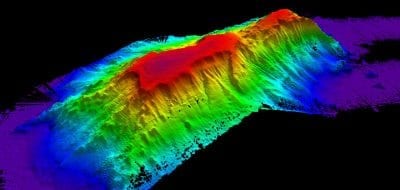
Mountains rising from the ocean seafloor that do not reach to the water's surface.
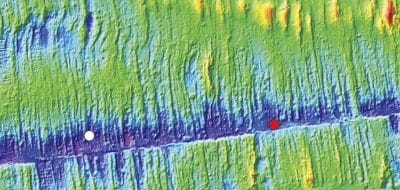
The mid-ocean ridge occurs along boundaries where plates are spreading apart.
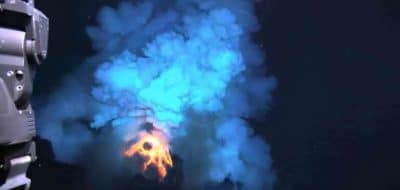
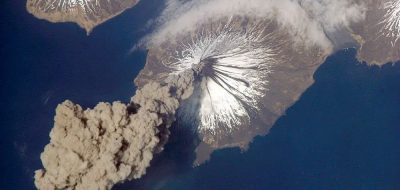
These eruptions of molten rock and ash can be destructive to human settlements, but vitally creative for the rest of…
Many deep-sea features are named for their distinct shapes and formidable sizes. Other features are named for research vessels, and…
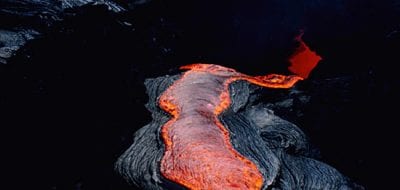
When a volcano erupts, the molten rock that comes out of the Earth is called lava. Lava is so hot,…
One of the most common questions that scientists and nature lovers ask when they see an interesting rock is: how…
Related Links
Deeper Discovery: Hydrothermal Vents
From Dive and Discover
Dive & Discover: Dark Life at Deep-sea Vents
In the winter of 2014, Expedition 15 ventured into the Pacific Ocean to examine life in some of the most extreme environments on Earth—deep-sea hydrothermal vents.
OASES 2012: Return to the Cayman Rise
January 6 to 27, 2012
Join researchers as they study the biology, geology, and chemistry of some of the deepest hydrothermal vents on Earth.
Vent Larvae Cruises
A blog following the Mullineaux Lab’s research cruises to study larvae at deep-sea hydrothermal vents.
Oases for Life on the Mid-Cayman Rise
October 7 to November 6, 2009
Follow researchers as they explore one of the deepest points in the Caribbean Sea, searching for life in extreme seafloor environments.
Dive and Discover: Return to Galápagos Rift
May 20 to June 3, 2005
Dive and Discover: Juan de Fuca Ridge
May 24 to June 10, 2004
Dive and Discover: Galápagos Rift
May 24 to June 4, 2002
Dive and Discover: Indian Ocean
March 27 to May 1, 2001
Dive and Discover: East Pacific Rise 2
March 24 to May 10, 2000
Dive and Discover: East Pacific Rise
January 27 to February 28, 2000
Dive and Discover: Guaymas Basin
January 12 to 22, 2000
Molecular Ecology & Evolution Lab
January 12 to 22, 2000
Mullineaux Lab
January 12 to 22, 2000
Sievert Lab for Microbial Ecology & Physiology
January 12 to 22, 2000
Life without Sunlight at Deep-sea Hot Springs
Sunday, August 27, 2017 • 6 to 8 p.m.
Precious Metals from Deep-Sea Vents
April 2, 2009
Deep-Sea Mining of Seafloor Massive Sulfides: A Reality for Science and Society in the 21st Century. The 5th Elisabeth and Henry Morss Jr. Colloquium.
 Godzilla, Sasquatch, & Homer Simpson