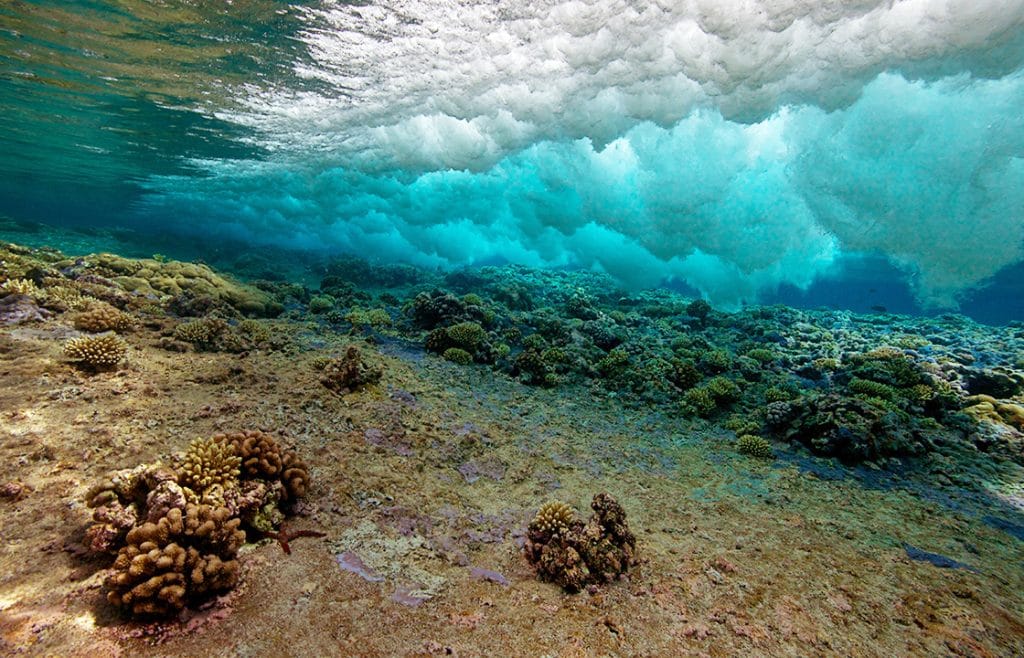
What is the sunlit zone?
The ocean environment is largely determined by abiotic factors, such as sunlight, temperature, and salinity. These vary from one location to another, with sunlight driving temperature changes both geographically and vertically within the water column. Surface temperatures are warmer near the equator and much colder near the poles. Surface waters are also warmer than the deeper waters of the open ocean, thanks to heat from sunlight.
Because water strongly absorbs light, sunlight penetrates only to depths of about 200 meters (656 feet), This upper layer of the ocean is known as the sunlit, or euphotic, zone. Along the continental shelf the sunlit zone includes all water down to the seafloor, but this zone is restricted to the uppermost layer of the water column once out in the open ocean. Since ocean depths can reach 4,000 meters or more, this represents a thin layer across the top of the open ocean.
Why is it important?
Although it is only 2 to 3 percent of the entire ocean, the sunlit zone is home to a massive number of organisms. The surface layer is where phytoplankton, such as diatoms and photosynthetic bacteria live; there is insufficient light to power photosynthesis deeper in the ocean. Phytoplankton produce about half of the oxygen we breathe and are the base of the ocean food web. Through photosynthesis, phytoplankton also play a key role in removing carbon dioxide from the atmosphere and are therefore essential for fighting climate change.
Zooplankton feed on phytoplankton—and each other—their small size allowing them to stay suspended in the warm waters of the sunlit zone. Zooplankton in turn feed larger organisms, ranging from small fish to massive blue whales. Large numbers of fishes spend most of their time in the sunlit zone, making this part of the ocean essential for fisheries.
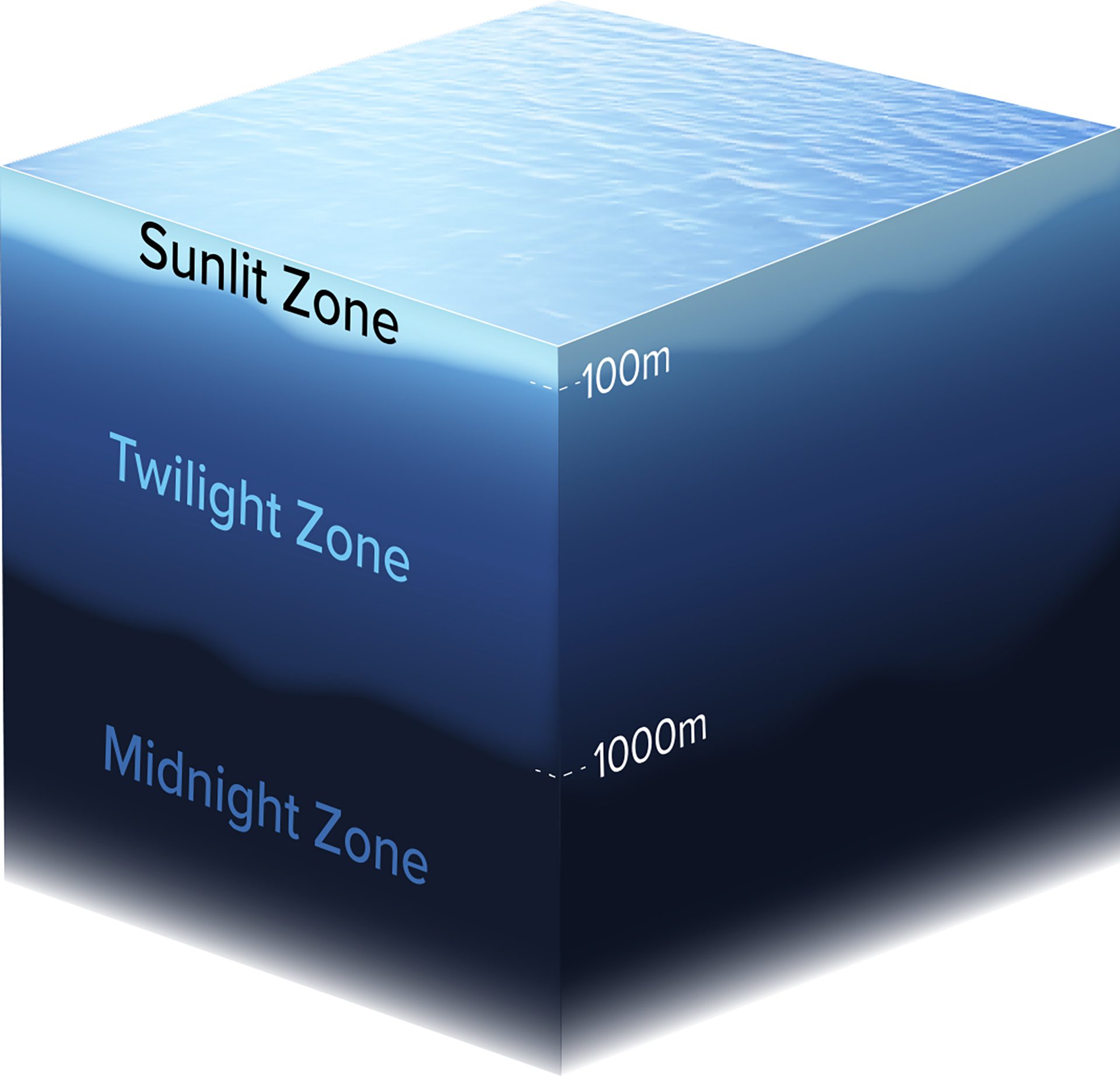
Sunlit, Twilight, and Midnight Zones in a cube
The ocean’s mesopelagic zone, also known as the ocean twilight zone, is located roughly 100 to 1000 meters below the surface. It begins just beneath the sunlit waters of the upper ocean and ends at the permanently dark waters of the midnight zone. (Illustration by Natalie Renier, © Woods Hole Oceanographic Institution)
What are ocean scientists doing to better understand the sunlit zone?
Researchers are trying to understand the physical and chemical factors that cause phytoplankton to grow. This is a particularly important relationship to understand, because photosynthesis removes carbon dioxide from the atmosphere and phytoplankton growth can contribute to our fight against climate change. Some animals, such as deep-diving whales, bring nutrients up from the depths and release them at the surface, thereby fertilizing phytoplankton. Sea otters and other predators in shallow waters control grazing animals that eat photosynthetic kelp and sea grass. Protecting these larger species can, in turn, boost photosynthesis and carbon capture.
Scientists have also taken samples of ocean water from around the world, analyzing them for previously undetected microscopic organisms. Through this endeavor, they have discovered tens of thousands of viruses, bacteria, and other single-celled organisms that make up the base of the ocean ecosystem. These research efforts also expanded on existing databases of larger plankton found in the sunlit zone. Researchers are working to understand the relationships among these various organisms. This is particularly important because climate change is already impacting the oceans, and we don’t yet know how those changes will affect these interactions.
References
Project Ocean, University of South Florida. Animal Adaptations and Distributions I. https://www.marine.usf.edu/pjocean/packets/f98/f98u3le2.pdf
Roman, J. & J.J. McCarthy. The whale pump: Marine mammals enhance primary productivity in a coastal basin. PLoS One, vol. 5. 2010. doi: 10.1371/journal.pone.0013255.
Sosik, H.M. & S. Johnsen. Shedding Light on Light in the Ocean. Oceanus. October 15, 2004. https://www.whoi.edu/oceanus/feature/shedding-light-on-light-in-the-ocean/
Strong, A.L., et al. Ocean Fertilization: Science, Policy, and Commerce. Oceanography. October 2, 2015. doi: 10.5670/oceanog.2009.83.
Sunagawa, S., et al. Tara Oceans: towards global ocean ecosystems biology. Nature Reviews Microbiology, vol. 18. May 12, 2020. doi: 10.1038/s41579-020-0364-5.
Wilmers, C.C. et al. Do trophic cascades affect the storage and flux of atmospheric carbon? An analysis of sea otters and kelp forests. Frontiers in Ecology and the Environment, vol. 10. 2012. doi: 10.1890/110176.
More topics like this
Twilight zone
The ocean twilight zone is a layer of water that stretches around the globe. It lies 200 to 1,000 meters below the ocean surface, just beyond the reach of sunlight.
Midnight zone
The midnight zone, or bathypelagic, extends to about 4,000 meters (about 13,100 feet), which reaches the ocean floor in many places is in perpetual darkness.

Abyssal zone
The abyssal zone, or the abyss, is the seafloor and water column from 3,000 to 6,500 meters (9,842 to 21,325 feet) depth, where sunlight doesn't penetrate.
Hadal zone
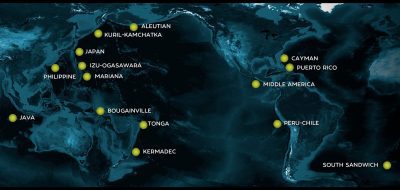
The region extending from 6,000 to 11,000 meters is called the hadal, or hadalpelagic, zone after Hades, the Greek god of the underworld. They occur only in trenches across the world.
Oceanus magazine
[ ALL ]In-depth research on Sunlit zone

A hadal zone mystery solved

Deep-sea amphipod name inspired by literary masterpiece

An immersive twilight zone exhibit

Can the twilight zone be fished responsibly?
Five big discoveries from WHOI’s Ocean Twilight Zone Project

A new way to discover life in the ocean’s hadal zone

Our eyes on the seafloor

Experts gather to discuss the ocean’s super-powered carbon pump
A new way to track marine snow ‘blizzards’
AI in the Ocean Twilight Zone

Edie Widder: A light in the darkness

How to speak “Ocean”





WHOI News Room
[ ALL ]Press releases
Endangered basking sharks rely on the ocean twilight zone during long-distance migrations
New WHOI study cautions that deep-sea fishing could undermine valuable tuna fisheries
Bigscale pomfret are an ocean enigma
Get the ocean in your inbox
Fresh discoveries, research, and stories from WHOI — free, every week.