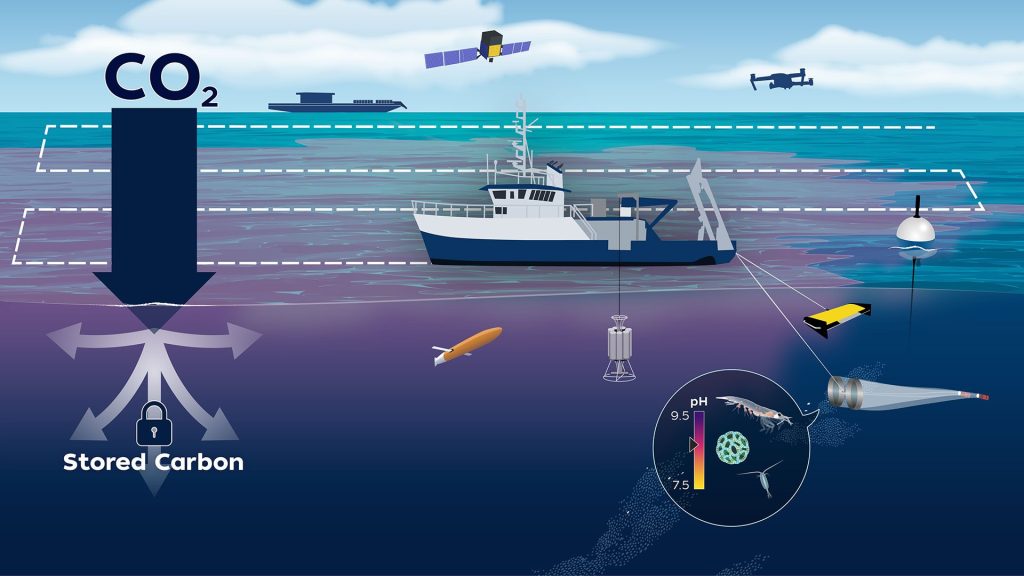
Over the last century, the ocean has absorbed nearly a third of the carbon dioxide that humans have pumped into the atmosphere through the burning of fossil fuels. But even with all the carbon the ocean removes from the atmosphere, our planet is on track to exceed a global 1.5°C temperature increase within the next 20 years unless we take immediate measures to reverse this trend, according to the 2021 report from the Intergovernmental Panel on Climate Change.
At this point, cutting our reliance on fossil fuels is not enough. Scientists are studying ways to remove and store the excess carbon dioxide already produced. The ocean, which covers more than 70% of our planet, is a promising place to start.
Coastal ecosystems—including seagrass beds, mangroves, and salt marshes—store an immense amount of "blue carbon." As many of these environments continue to decline worldwide, protecting existing habitats and restoring damaged ones could significantly increase the ocean's ability to capture and store atmospheric carbon.
Researchers are also exploring new approaches to enhance the ocean's natural carbon storage. One technique, known as ocean iron fertilization, adds small amounts of iron to the ocean's surface to stimulate phytoplankton blooms that remove carbon dioxide from the atmosphere. Another approach involves increasing the ocean's alkalinity, which may both counter ocean acidification and improve the ocean's capacity to store carbon.
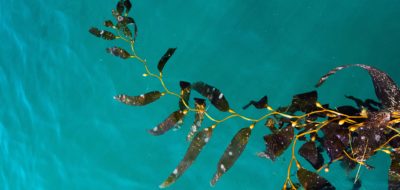
Fast-growing seaweeds also absorb substantial amounts of carbon dioxide, making seaweed cultivation a promising aquaculture-based climate solution.
Transitioning away from fossil fuels while removing excess carbon from the atmosphere will require a diverse portfolio of solutions, some of which may rely on storing carbon in the ocean. WHOI scientists are evaluating the potential benefits—and risks—of these ocean-based approaches.
More topics like this
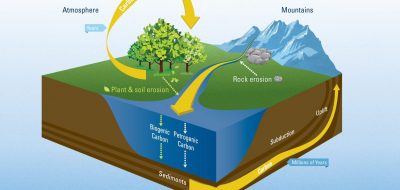
Coastal restoration & blue carbon
Blue carbon refers to atmospheric carbon captured and stored by the ocean, which mitigates the effects of climate change by storing carbon for long periods of time.
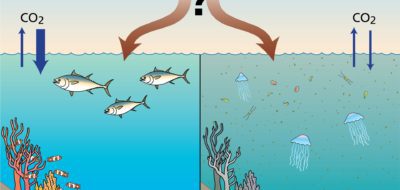
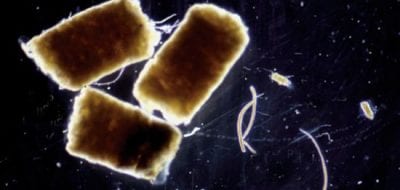
Iron fertilization
Iron fertilization is a technique that would artificially add iron to the ocean's surface, triggering massive blooms of phytoplankton that could remove substantial amounts of carbon dioxide from the atmosphere.

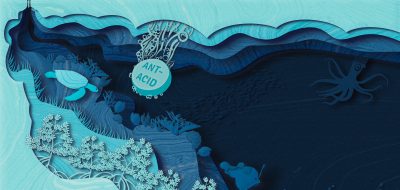
Ocean alkalinity
When alkalinity reacts with carbon dioxide in the ocean, it converts it to a form that can't readily return to the atmosphere as carbon dioxide gas.
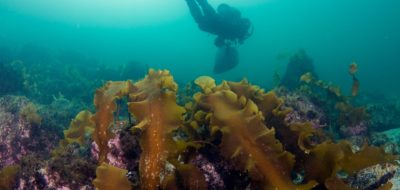
Seaweed culture
When seaweed removes carbon dioxide from seawater, it alters the balance of carbon dioxide between water and air, causing the gas to move from the atmosphere into the ocean.
Oceanus magazine
[ ALL ]In-depth research on Ocean-based climate solutions

Ships in the Strait of Hormuz are becoming invasive species breeding grounds

Campaign for Our Ocean Planet

Harnessing the ocean to power transportation

Ancient seas, future insights

Rising tides, resilient spirits

We can’t do this alone

Solving climate challenges, one innovation at a time

Massachusetts Governor Maura Healey visits WHOI

Looking to the Mighty Mississippi for climate solutions

Sargassum serendipity

An introduction to marsh bothering

Elizabeth Kolbert on ocean-based carbon removal



WHOI News Room
[ ALL ]Press releases
New international coalition establishes shared principles for responsible research into ocean iron-based carbon removal
Marine carbon dioxide removal is advancing, but questions remain about viability, says new digital report
Get the ocean in your inbox
Fresh discoveries, research, and stories from WHOI — free, every week.