What are barnacles?
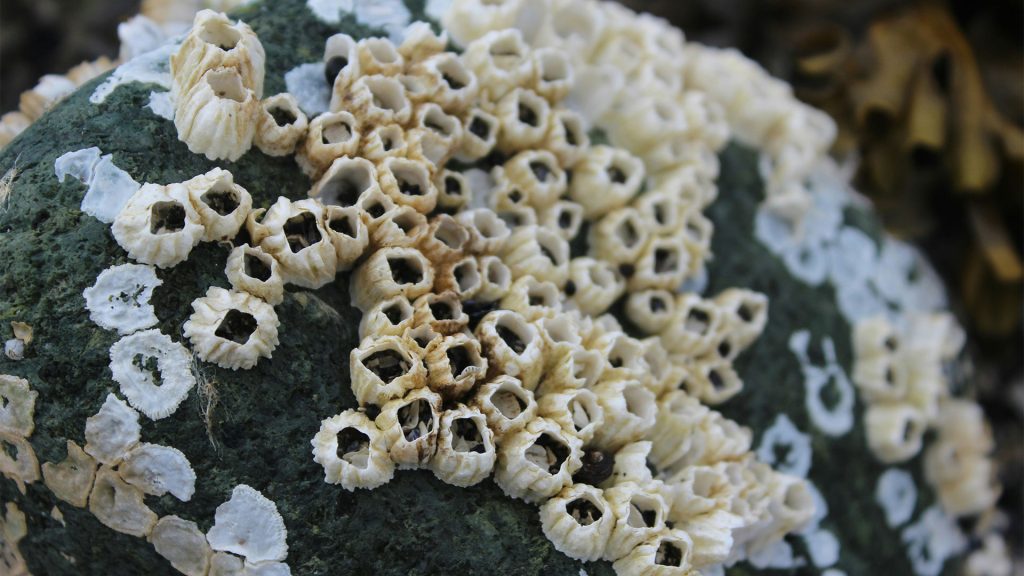
Barnacles are tiny, upside-down-living crustaceans that are relatives of crabs, lobsters, and shrimp. They spend most of their adult lives glued head-first to a surface. As larvae, they drift through the ocean as part of zooplankton, looking for the perfect place to settle. Once they commit, they cement themselves in place with a strong natural adhesive and build a cone-shaped shell of calcium plates around their bodies. When the tide comes in, they open their operculum, which functions like a tiny trapdoor, and sweep the water with feathery legs, called cirri, to catch plankton for food. When the tide goes out, they shut tight to avoid drying out.
What do barnacles do, and why are they important?
Barnacles may be small, but they punch above their weight in coastal ecosystems. By filtering plankton from the water, they help keep nearshore waters clearer and recycle nutrients. They are also a key part of the food web, serving as prey for animals like whelks and influencing competition with species like mussels. Equally important, barnacles help define the structure of the intertidal zone, the strip of shoreline alternately covered and uncovered by tides. Their presence creates microhabitats for other organisms and signals how life adapts to harsh, changing conditions. According to the National Oceanic Atmospheric Administration and National Marine Fisheries Service, organisms like barnacles are essential indicators of ecosystem health because they respond quickly to environmental changes such as temperature shifts, pollution, and ocean acidification.
What are scientists doing to understand barnacles?
Marine biologists study barnacles to understand broader environmental trends. Because barnacles are sensitive to changes in temperature, salinity, and ocean chemistry, tracking their growth and distribution helps scientists monitor climate change impacts on coastal ecosystems. Other researchers investigate how barnacles choose where to settle, which has implications for managing invasive species and preventing biofouling, which occurs when barnacles clog ship hulls and infrastructure. There is even ongoing research into how barnacles grow their shells without leaving them, essentially remodeling their homes from the inside out. It is a slow construction project that scientists are still trying to fully explain.
References
National Oceanic and Atmospheric Administration (NOAA). (n.d.). What is the intertidal zone?
https://oceanservice.noaa.gov/facts/intertidal-zone.html
National Oceanic and Atmospheric Administration (NOAA). (n.d.). What are zooplankton?
https://oceanservice.noaa.gov/facts/zooplankton.html
National Marine Fisheries Service (NMFS). (n.d.). Ecosystem-based fisheries management.
https://www.fisheries.noaa.gov/insight/ecosystem-based-fisheries-management
Seattle Aquarium. (n.d.). Barnacles and other intertidal invertebrates.
https://www.seattleaquarium.org/animals/barnacles
University of California Museum of Paleontology. (n.d.). Introduction to the Cirripedia (barnacles).
https://ucmp.berkeley.edu/arthropoda/crustacea/cirripedia.html
Articles related to barnacles
Woods Hole Oceanographic Institution (WHOI). (n.d.). Barnacles and biofilms.
https://www.whoi.edu/oceanus/feature/barnacles-and-biofilms/
Woods Hole Oceanographic Institution (WHOI). (n.d.). A barnacle’s life.
https://www.whoi.edu/ocean-learning-hub/multimedia/a-barnacles-life/
Woods Hole Oceanographic Institution (WHOI). (n.d.). Barnacles in bulk.
https://www.whoi.edu/ocean-learning-hub/multimedia/barnacles-in-bulk/
Woods Hole Oceanographic Institution (WHOI). (n.d.). Barnacle build-up.
https://www.whoi.edu/ocean-learning-hub/multimedia/barnacle-build-up/
More topics like this
Seagrass meadows
Seagrass meadows are plants adapted to live a completely submerged life in the salty shallows.
Environmental DNA (eDNA)
Environmental DNA (eDNA) is essentially DNA collected from the environment. As animals swim through the ocean, they're constantly releasing DNA as they shed skin or scales into the water column.
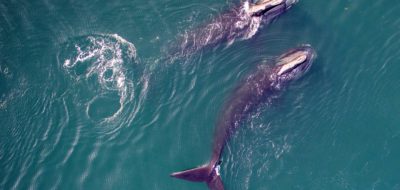
Right whale FAQs
Northern right whales are large baleen whales known for their distinctive callosities and slow-moving nature. Read our FAQ about this endangered whale.
Oceanus Magazine
[ ALL ]Best in-depth research on Barnacles
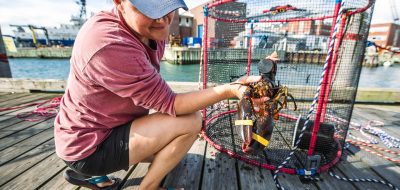
Is underwater noise from construction affecting the American Lobster?
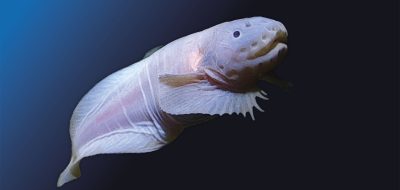
Squishy survivor
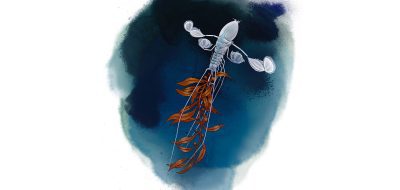
A hadal zone mystery solved
A mother seal dives
The world’s most abundant fish once thrived in an extreme climate
How a cargo ship is tracking hidden ocean life in the Atlantic
Tiny drifters, massive impact
From ruin to reef
One researcher, 15,000 whistles: Inside the effort to decode dolphin communication

As the ocean warms, a science writer looks for coral solutions
How an MIT-WHOI student used Google Earth to uncover a river–coral reef connection