The world’s most abundant fish once thrived in an extreme climate
Fossilized teeth show bristlemouth fish evolved during one of the ocean's hottest periods
Estimated reading time: 4 minutes
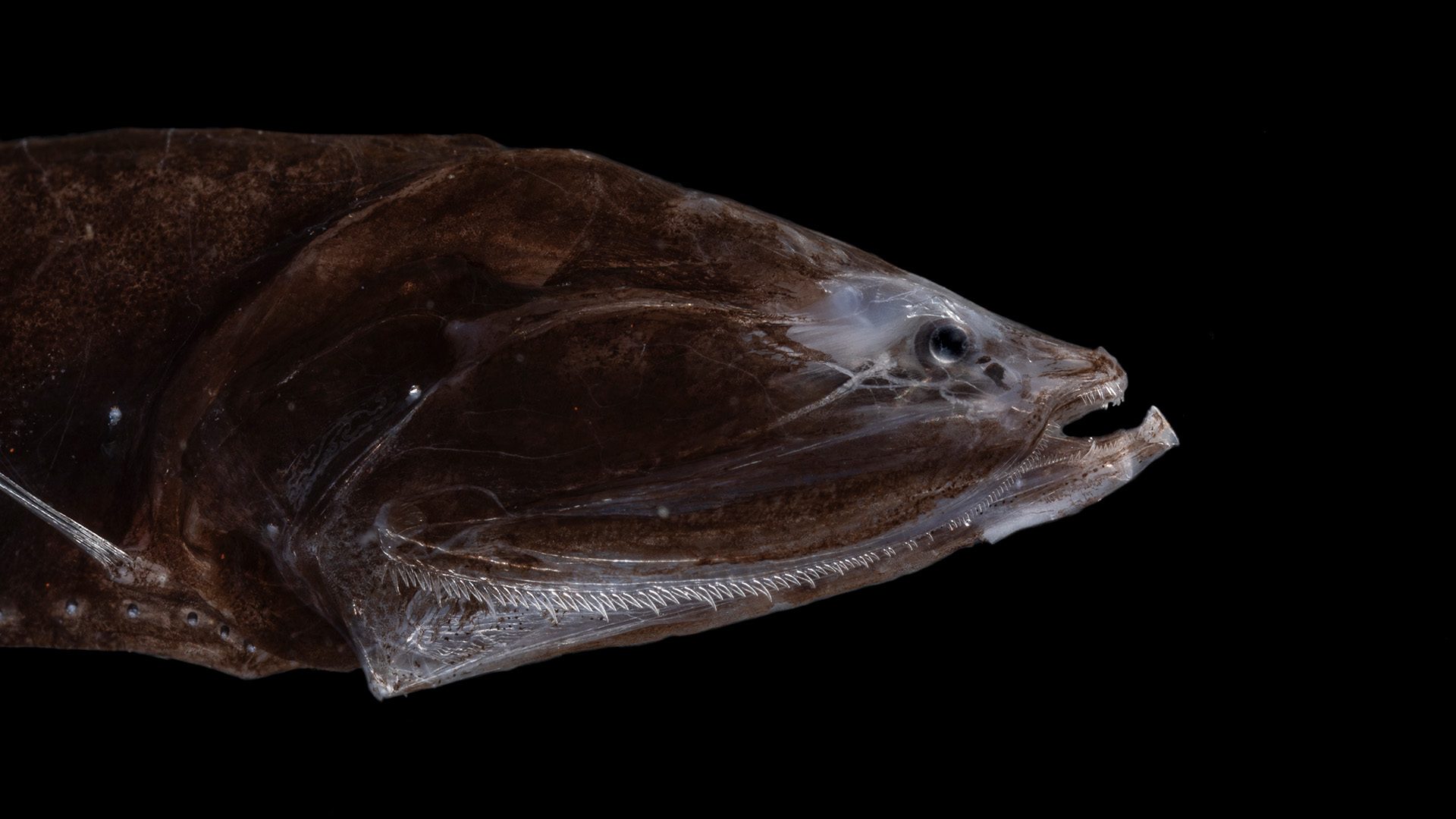
The most abundant fish in the sea is not a mackerel, a trout, or even an anchovy. That title belongs to a group of more fearsome pelagic predators—fish with gnashing teeth and an inky black stare. Granted, most of these fish are only a few inches long. Meet Cyclothone (pronounced sike-lo-tho-nee), a genus more commonly known as bristlemouths.
Where myctophids (lanternfish) represent the most abundant kind of fish in the ocean by weight, or biomass, bristlemouths win out by sheer population size—think trees compared with blades of grass. Data from trawl net surveys estimate roughly a quadrillion of these fish live in the ocean today (yes, with a quad!).
Like lanternfish, bristlemouths play an outsized role in the ocean’s biological carbon pump—the marine food web responsible for moving planet-warming carbon dioxide from the sea surface into the deep, thus regulating Earth’s temperature. By understanding when these fishes evolved, scientists can assess their resilience to the growing threat of warming ocean temperatures, and with that, the stability of a major cog in the ocean’s carbon sink.
Previously, experts thought these fish evolved during the middle Miocene period, roughly 16 million years ago. In a new study, however, paleoceanographers show evidence that bristlemouths came on the scene nearly 40 million years earlier than thought, thanks to research identifying their unique tooth shape in the fossil record.
“What we found is that these fish were around and thriving in a much warmer time,” said WHOI paleoceanographer Elizabeth Sibert, a senior author on the study. “To me, this suggests these fish are potentially more resilient to changes in climate.”
Sibert studies microfossilized fish teeth excavated from seafloor sediments to learn about the composition of prehistoric marine ecosystems.
She was at the Hull Lab at Yale University, carefully exhuming microscopic teeth from sediments under a microscope, when she came across a tooth she hadn’t seen before—a specimen with distinct spiral grooves, similar to an inverted soft-serve twist.
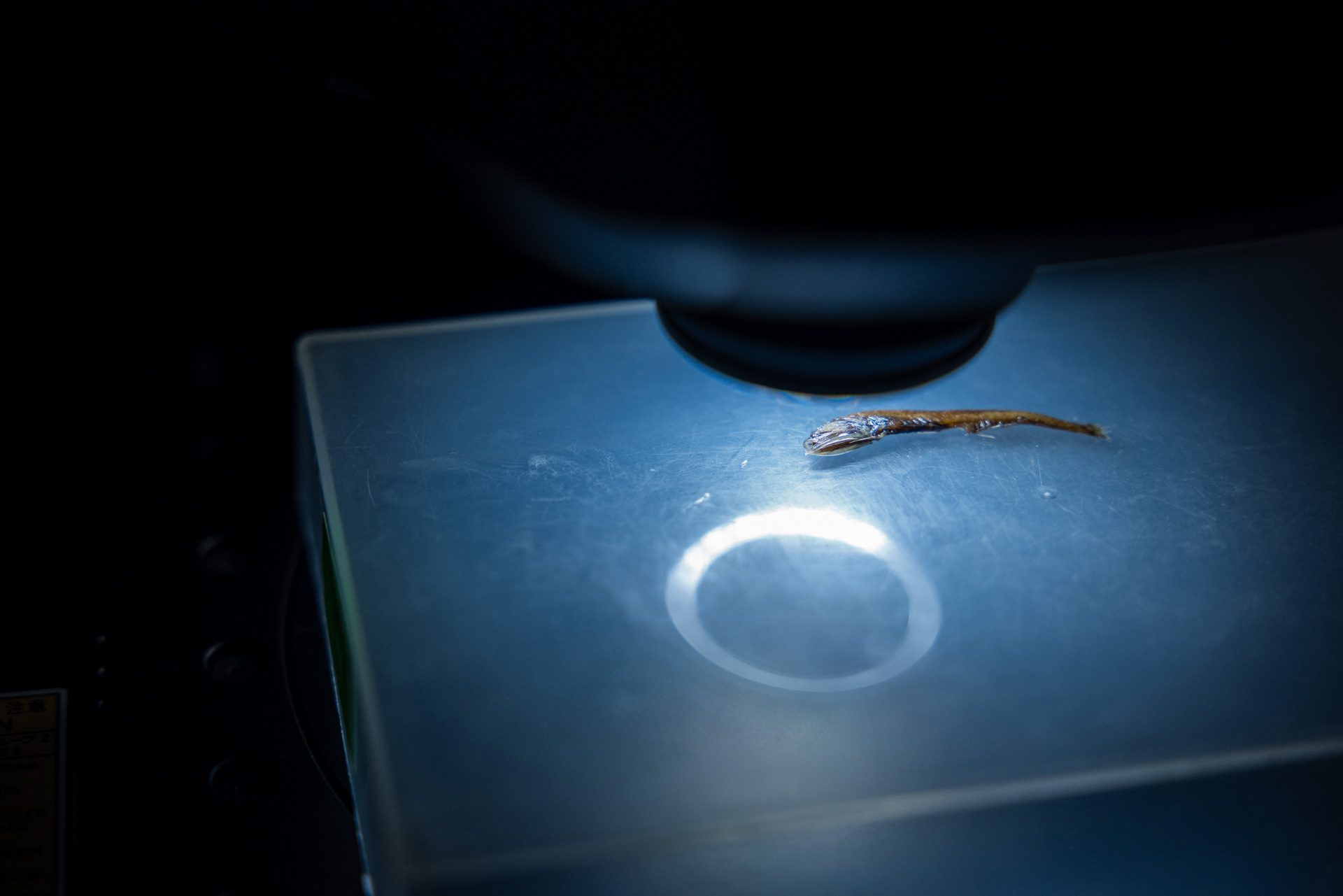
After consulting Karly Cohen, a postdoctoral scholar at the University of Washington, Sibert discovered the sample bore a striking resemblance to teeth found in a jarred specimen of modern bristlemouth held in the university’s natural history collection. Her interest was piqued.
“A hypothesis was born—maybe the spiraling teeth that neither of us had seen in any other group is unique to Cyclothone,” she said.
To confirm her hunch, Sibert and her team had to rule out other branches on the fish tree of life. Cyclothone, for example, is a genus comprising about 14 species of bristlemouths alone. Zooming further out on the tree are the Stomiiformes (pronounced stow-me-uh-forms), an order of fish that includes bristlemouths, viperfish, and hatchetfish, to name a few.
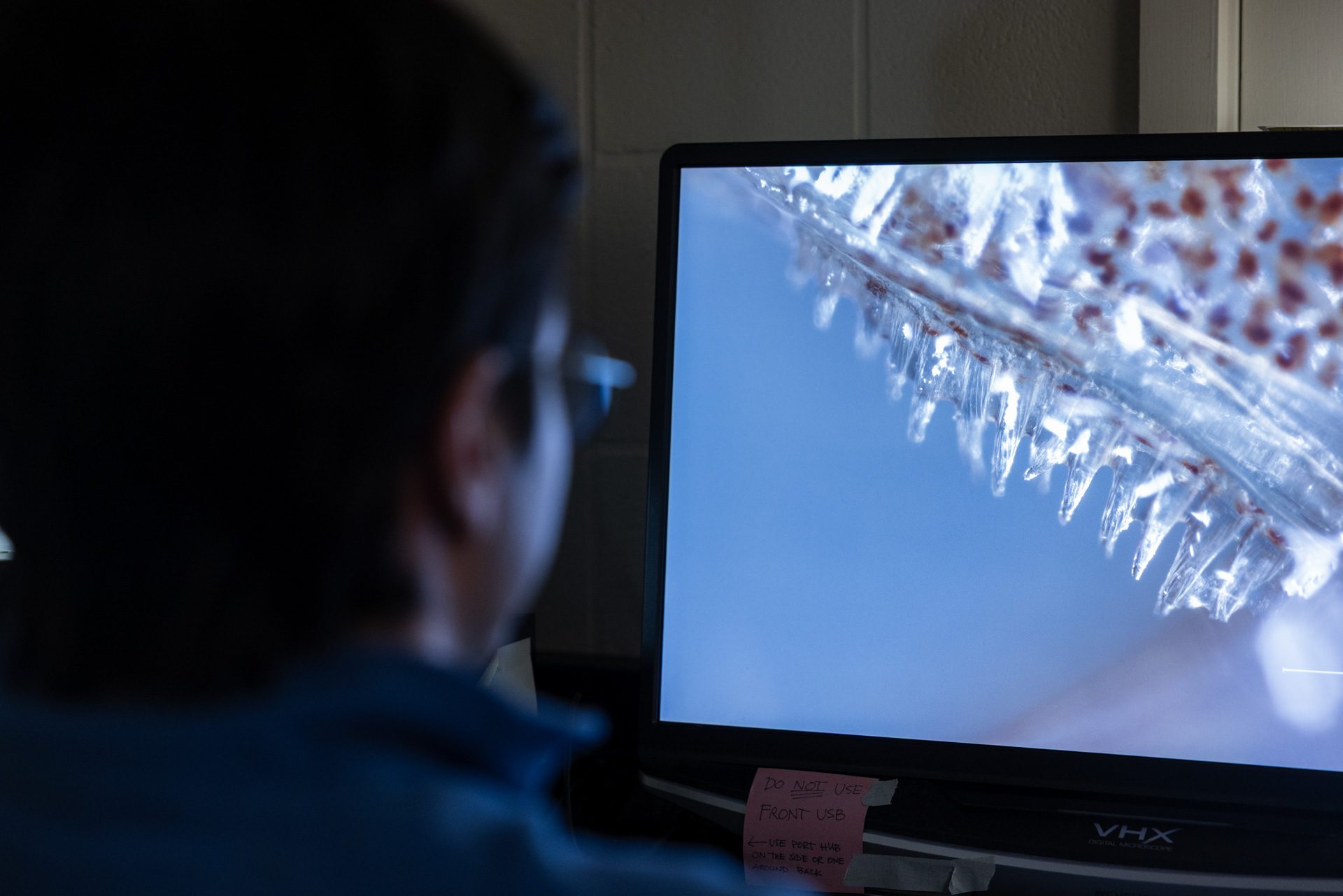
Using a high-powered digital microscope, Sibert’s team compared their mysterious microfossil with the teeth of over 40 stomiiform specimens borrowed from three natural history collections between the Yale Peabody Museum, the Harvard Museum of Comparative Zoology, and the University of Washington, as well as a dataset of over 200 species of fish that Sibert had compiled in previous years. Karinne Tennenbaum, a Yale undergraduate student and lead author on the study, assisted in imaging the stomiiform teeth and organizing their differences into a shared catalog.
“We wound up finding some really interesting patterns across the tree,” said Tennenbaum. “We were basically making the texture guide [for fish teeth].”
By process of elimination, Sibert’s team confirmed that the spiral shape was shared only among species of bristlemouths.
Microfossilized teeth give Sibert a unique advantage in identifying prehistoric lineages. In the open sea, pelagic fish are often consumed by predators before their remains can completely descend to the seafloor, making preservation of a whole-body fossil nearly impossible. Teeth, however, are among the few structures that survive digestion, making them far more prevalent in the fossil record. The study, which was published on April 29 in the journal Proceedings of the Royal Society B, is the first to use the morphology of fish teeth to identify an entire group of fish in the fossil record.
“Once you see how powerful these microfossils can be, you’re like, ‘Oh, we’re always going to have this tool in the toolkit,’” said Tennenbaum. “It’s great proof of concept.”
Before this research, fossil evidence suggested that bristlemouths emerged during the relative stability of the Miocene—a time when the world was in the middle of cooling down and modern pelagic food webs settled into what they are today.
Sibert’s findings upend this narrative, moving the emergence of the fish earlier to one of the hottest periods in Earth’s climate history, roughly 55.6 million years ago.
During the early Eocene, average global temperatures were at least 11°F (6°C) warmer than they are now; the polar regions were iceless and the seas roiled. The average bottom temperature on the seafloor was an oppressive 15°C (60°F). For reference, today’s average seafloor temperature is a much colder 3°C (38°F).
What’s more, the findings show that bristlemouths have survived more extreme fluctuations in our climate than previously thought, including several periods of glaciation.
Today’s climate models predict we’re on track to see a planet that’s the hottest in human history—though perhaps not as hot as the Eocene—with average ocean temperatures expected to rise between 1 and 4°C (1.8 and 7.2°F) by 2100, according to the United Nations' Intergovernmental Panel on Climate Change.
To Sibert, the revised origins of bristlemouths may be an encouraging sign for how life in the ocean may handle these changes.
“This group has persisted through massive climate swings between then and now,” said Sibert. “It shows there is resilience in our ocean ecosystems, and that gives me hope that this group may survive the current climate crisis.”