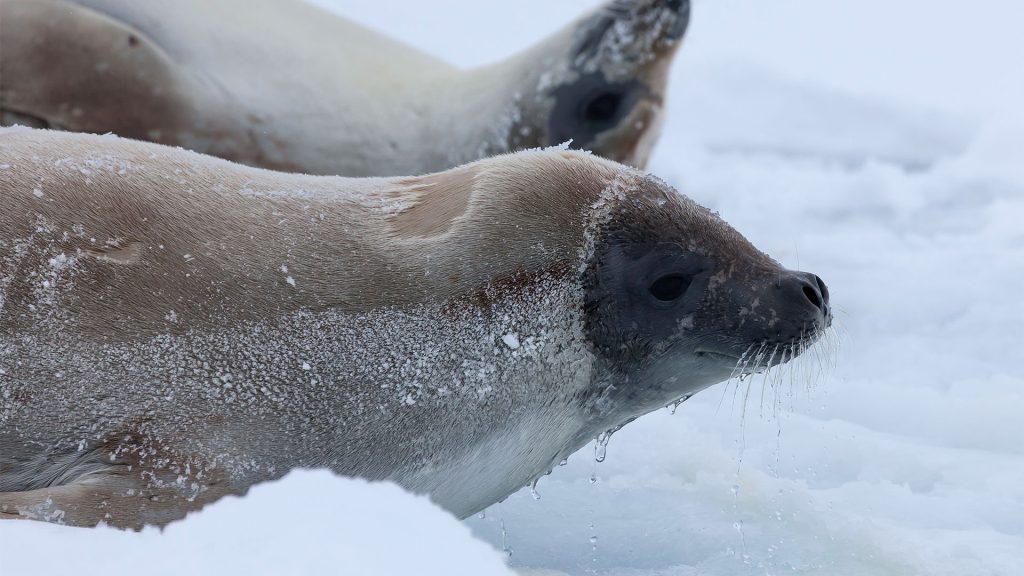
What are they?
Seals are pinnipeds, a group of animals with three separate families—phocidae (non-eared seals) also referred to as the crawling or true seals, otaridae (eared seals) also referred to as walking seals, and odobenidae (walruses).
Where do they come from?
Evidence suggests that pinnipeds evolved from a bear-like land animal that hunted in the water for food.
How many are there?
There are more than 30 species of seals worldwide.
What do they eat?
Seals are carnivorous and dive underwater to hunt for fish, crustaceans, seabirds, and other marine animals. Whales, sharks, and even other seals are the primary non-human predators of seals.
How deep can they dive?
Elephant seals are champion divers—they have been known to reach depths of almost 2,400 meters (more than 7,800 feet) and to remain submerged for 100 minutes.
How do they survive underwater?
Seals are protected from the cold by a thick layer of blubber; a clear membrane covers their eyes and their nostrils close and blood circulation to most of their organs is reduced while diving. They also have sensitive whiskers that help them detect prey in murky water.
Seals can sleep underwater and can even surface to breathe without waking.
How often do they give birth?
A female seal, called a cow, gives birth to one pup about once a year on land. The pups are nursed anywhere between four days and one month. Exceptions include some pinnipeds such as the Steller sea lion that nurse their pups much longer with cases to around 3 years. California and Galapagos sea lions can also nurse out to a year or longer depending on the individual and in the case of the latter environmental factors. Walruses consistently have probably the longest period of maternal care that regularly lasts two years.
How often do they molt?
Seals molt, or shed their fur, about once a year (except their first), a process that can take as long as six weeks.
Are they in danger?
The Caribbean monk seal was declared extinct in 2008. Other species have been hunted to near-extinction.
 Image
Image
A Delicate Balance
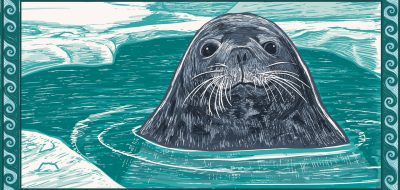
Ringed seals, like the one pictured here, are the smallest and most common seals found in the Arctic. Their diets consist mainly of shrimp, krill and other small crustaceans and they are the main food for polar bears. Learn more about the Arctic ecosystem on Polar Discovery, a project to document science in action from...
 Image
Image
Curious ribbons
Researchers aboard the U.S. Coast Guard icebreaker Healy spotted these two ribbon seals — a mother and her fat pup — during an April 2009 cruise to study how climate change is affecting the delicately balanced ecosystem in the Bering Sea. Ribbon seals are often seen closer to Russia, which is on the western edge...
 Image
Image
Ribbons and beaus (and pups)
Seeing ribbon seals up close was a special treat for researchers aboard the U.S. Coast Guard icebreaker Healy during a April 2009 cruise in the Bering Sea. Ribbon seals are often seen closer to Russia, which is on the western edge of the Bering Sea. The adults’ striking pattern sets them apart. One afternoon as...
 Image
Image
Arctic inchworm
Photographer Chris Linder and writer Helen Fields accompanied scientists studying the Bering Sea ecosystem in April and May 2009. Together they chronicled the cruise aboard U.S. Coast Guard icebreaker Healy, for the online expedition feature Polar Discovery, highlighting WHOI polar research. Fields wrote, “This bearded seal pup’s mother slipped into the water when we came...
 Image
Image
A Closer Look
2007 Summer Student Fellow Carolina Gutierrez assists Tom Siemens (Marine Animal Rehabilitation Center of the University of New England) with a necropsy on a seal. Dozens of animals, most often seals and dolphins, are examined each year in WHOI’s necropsy suite. (Photo by Tom Kleindinst, Woods Hole Oceanographic Institution)
Facts about Gray Seals
- Worldwide, gray seals number about 300,000 and are found on both sides of the Atlantic in three distinct populations: Western Atlantic (150,000), Eastern Atlantic (130,000 – 140,000), and Baltic (7,500).
- Western Atlantic gray seal bulls can reach 2.5–3.3 meters (8.2–11 feet) in length and weigh as much as 400 kilograms (880 pounds); cows are much smaller, typically 1.6–2.0 meters (5.2–6.6 feet) long and 250 kilograms (550 pounds).
- Gray seals are gregarious animals—they gather in large groups on shore to breed, give birth, and molt.
- Female gray seals live up to 35 years and males about 25 years.
- Gray seals primarily hunt squid, fish, and sandeels; their main predators are humans, sharks, and orcas.
- Gray seal pups are born in autumn (September to November) in the eastern Atlantic and in winter (January to February) in the west, and are born with white fur, which molts after two to four weeks. They nurse for two to three weeks and can quadruple in size during this time because a mother's milk is up to 50 percent fat.
- One to four weeks after being weaned, the pups disperse and have been known to wander more than 1,000 kilometers (600 miles).
- The mortality rate for gray seal pups is between 30 and 55 percent, largely due to fishing bycatch, entanglement in fishing gear, pollution, boat strikes, and hunting.
More topics like this
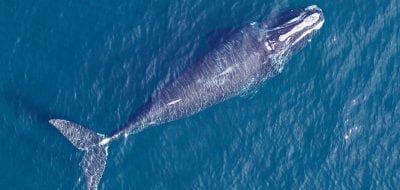
Right whales
The North Atlantic right whale is one of the ocean's most endangered large animals, with only a few hundred left. Slow-moving and often near the surface, these baleen whales are especially vulnerable to ship strikes and entanglement in fishing gear.
Benthic life
Benthic animals live on the sea floor and are typically invertebrates, such as sea anemones, sponges, corals, sea stars, sea urchins, worms, mussels, crabs, and more.
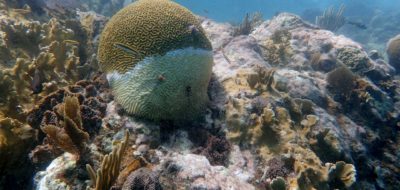
Coral stressors
Stressors can affect organisms living on the reef or they can affect the corals, themselves. When corals die, other organisms must relocate or struggle to survive.
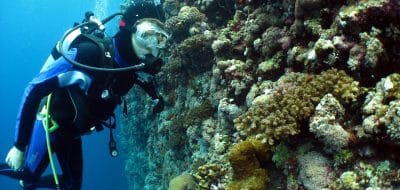
Corals
Many people think of coral as hard, rock-like formations that attract abundant, diverse marine life. In fact, corals are tiny marine animals called polyps that live together in colonies.
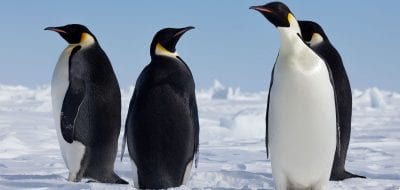
Emperor penguins
The emperor penguin is the largest living penguin species standing around 115 centimeters tall. Once they have found a partner, they work together to keep their young fed and safe.
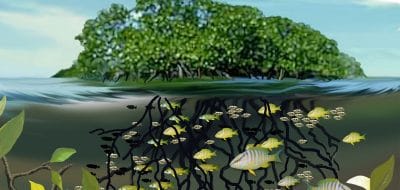
Coastal ecosystems
The narrow region where land and ocean meet includes salt marshes, mangroves, wetlands, estuaries, reefs, and bays often linked in a network of physical, chemical, and biological interchanges.
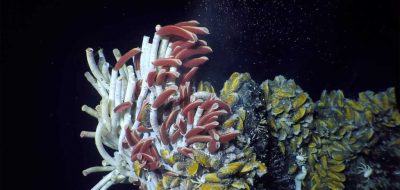
Ecosystems
Ocean ecosystems are found in polar regions, coastal waters, coral reefs, hydrothermal vents, the abyssal plain, and at the bottom of the sea.

Environmental DNA (eDNA)
Environmental DNA (eDNA) is essentially DNA collected from the environment. As animals swim through the ocean, they're constantly releasing DNA as they shed skin or scales into the water column.
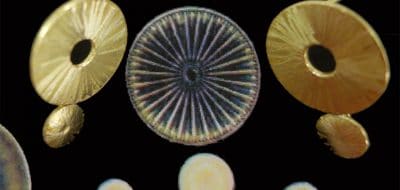
Phytoplankton
Phytoplankton are primary producers of the ocean—the organisms that form the base of the food chain. WHOI explores the microscopic, single-celled organisms.
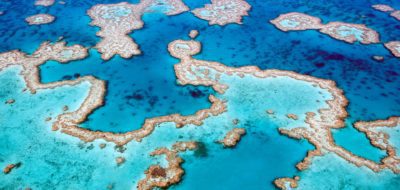
Reef ecosystems
A healthy reef protects coastlines from wave damage, plays a critical role in providing food, boosts the economy, and provides materials for pharmaceuticals.
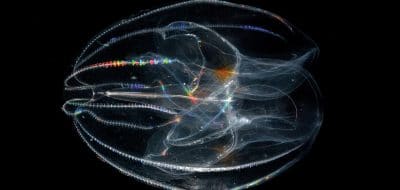
Jellyfish & other zooplankton
These animals live all or part of their life suspended and drifting in fresh or salt water, rarely come in contact with hard surfaces.
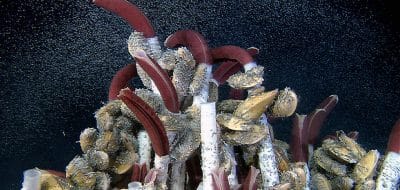
Life at vents & seeps
Hydrothermal vents and cold seeps are places where chemical-rich fluids emanate from the seafloor, often providing the energy to sustain lush communities of life in some very harsh environments.
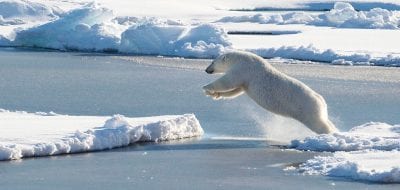
Polar life
By human standards, they are extreme environments. Yet life not only persists in the poles...it thrives.
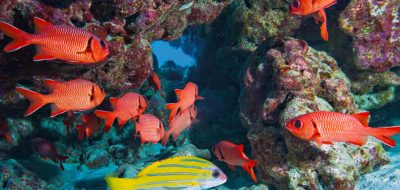
Reef fish
Fish that inhabit a coral reef play essential roles in the reef ecosystem, and reefs without fish struggle to recover from bleaching or other events that damage the coral.
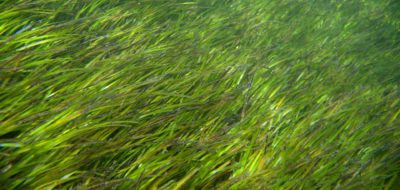
Seagrass meadows
Seagrass meadows are plants adapted to live a completely submerged life in the salty shallows.
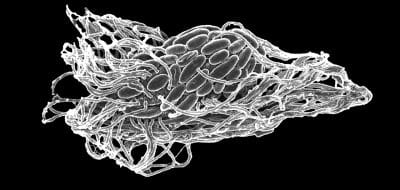
Marine microbes
Microbial life can be found throughout the ocean, from rocks and sediments beneath the seafloor, across the vast stretches of open water, to intertidal and surf zones.
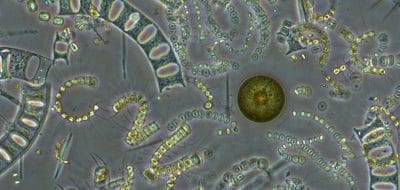
Ocean plants
Ocean plants are critical to marine life—they are an important food source, they provide oxygen to surrounding marine life, and they supply refuge and nursery grounds.
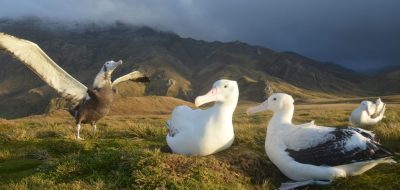
Seabirds
Seabirds have adapted to life in an ocean environment. There are many species of seabirds, and they vary greatly in behavior and physiology
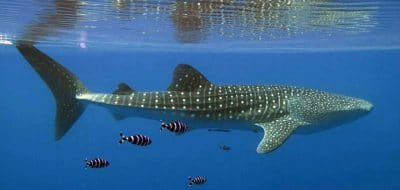
Sharks & other fish
Fish are vital to healthy ecosystems and economies, serving as predators and prey while maintaining balanced food webs and protecting habitats like coral reefs and mangroves.
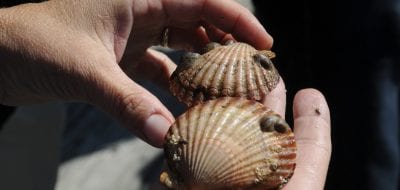
Shellfish
An aquatic animal, such as a mollusk or crustacean, that has a shell or shell-like exoskeleton.
Oceanus magazine
[ ALL ]In-depth research on Seals



WHOI News Room
[ ALL ]Press releases
Weddell seals in the Antarctic strategically time their most extreme dives to maximize foraging
Weddell seal moms sacrifice to provide for their pups
Get the ocean in your inbox
Fresh discoveries, research, and stories from WHOI — free, every week.