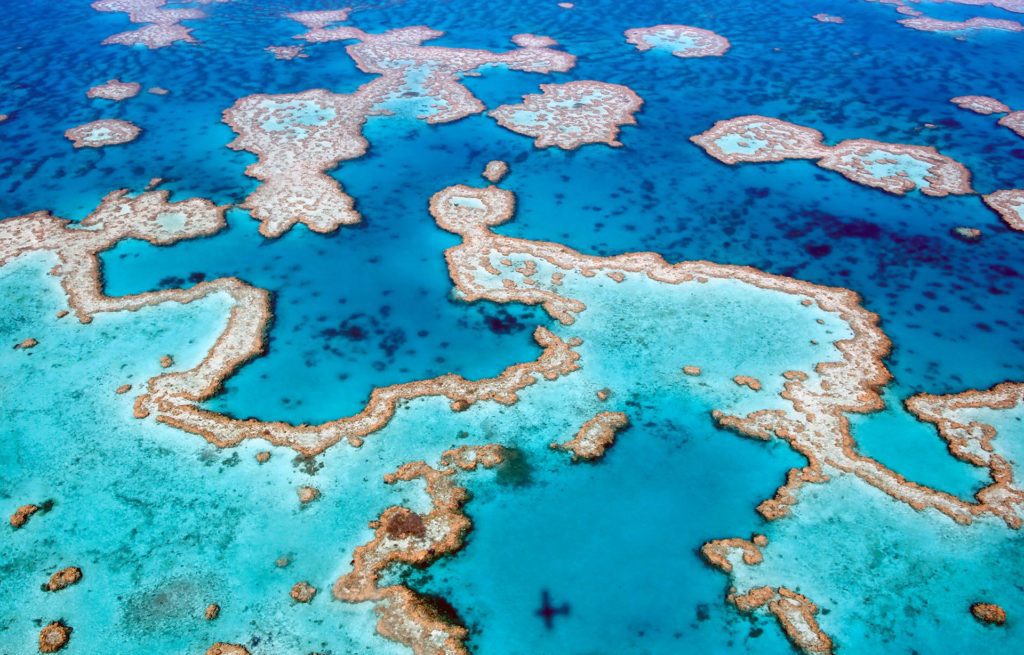
What are coral reef ecosystems?
Intact ecosystems perform a wide variety of services on which humans rely. On land, for example, forests remove carbon dioxide from the atmosphere and pump out oxygen that we need to breathe. Pollinators maintain plant stocks and are essential for our food supplies. Wetlands remove pollutants and slow the flow of water, boosting clean water resources.
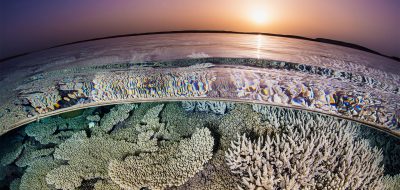
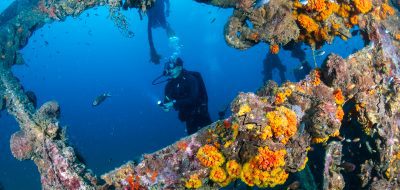
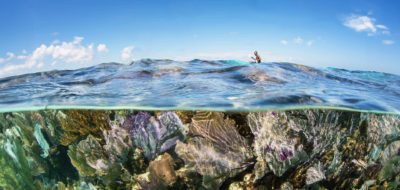
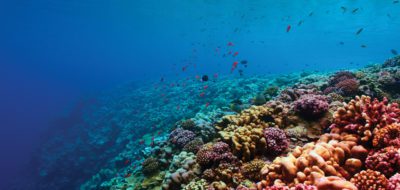
Our global ocean provides equally essential ecosystem services—including half of the oxygen we breathe—and coral reefs are among the primary sources of these services. A healthy reef protects coastlines from wave damage, plays a critical role in providing food, boosts the economy, and provides materials for pharmaceuticals. It also houses thousands of species at various stages of their life cycles, providing essential habitat for species ranging from fish to shrimp to sea slugs.
Why are reef ecosystems important?
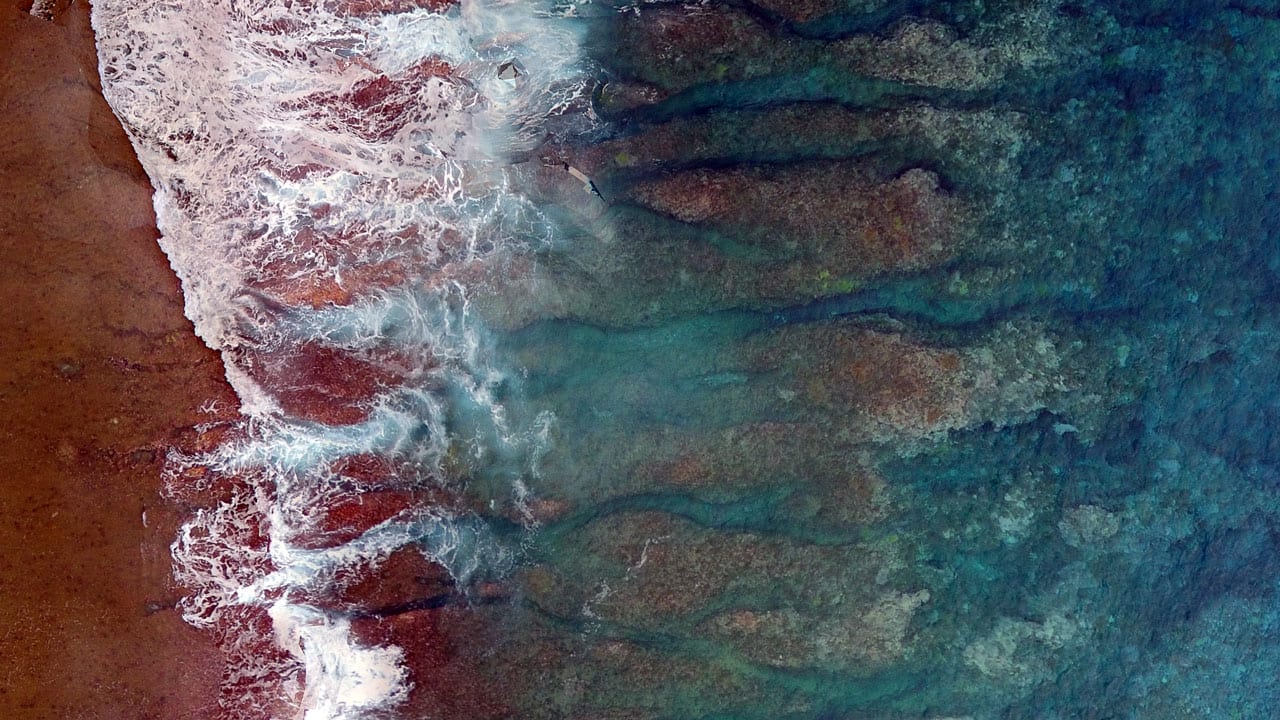
The physical structure of a coral reef creates a breakwater just offshore, slowing wave action and protecting the coast from flooding and erosion caused by storms and hurricanes. As sea levels rise, the reefs tamp down on the size of incoming waves, keeping flooding to a minimum. These services are valued at more than four billion dollars worldwide—more when large hurricanes or cyclones threaten coastal cities. Without reefs, these coastal areas would have to invest in substantial infrastructure to prevent flooding and erosion.
Such coastal regions also benefit from the fisheries generated by coral reefs. Millions of people around the world rely on fish as their primary source of protein. Some people fish along reefs, where schools of fish are abundant. Commercial fisheries typically harvest fish well away from the reefs, which can be easily damaged by boats and equipment. But as many as half of the fish netted by these operations spend some of their life cycle in the nooks and crannies of coral reefs, where they can more easily find food and are themselves protected from predators. Fish aren’t the only source of protein available on the reefs. Lobsters, shrimp, crabs, and more are also harvested for human consumption.
Fisheries linked to coral reefs are a multi-billion-dollar industry. Fishing provides a livelihood for millions of people, driving economic growth around the world. Credit: Pixabay
In addition to providing food, fisheries linked to coral reefs are a multi-billion-dollar industry. Fishing provides a livelihood for millions of people, driving economic growth around the world. Recreational fisheries, too, play a major role in this sector, adding more than $100 million dollars a year to the U.S. economy alone.
In addition to recreational fishing, coral reefs are a major attraction for tourists, which spend money on dive tours, snorkeling, hotels, restaurants, and other forms of entertainment. Australia’s Great Barrier Reef, for example, drew more than 26 million visitors in just one year, adding more than six billion Australian dollars to the economy of Queensland. Two U.S. states, Hawaii and Florida, together generate more than two billion dollars a year from tourism.
Coral reefs are also important sources of pharmaceuticals. Scientists have discovered antiviral drugs and isolated antibiotic compounds that can be used to fight antibiotic-resistant bacteria. Other drugs include those used to fight cancer or treat chronic pain. Some of these were developed from substances found in corals, others from substances found in other organisms, such as sponges and cone snails, that live on coral reefs. In addition, the bone-like skeleton of hard corals can be used to promote human bone growth and regeneration.
Because so many marine organisms spend at least some of their life on a coral reef, healthy reefs play an outsized role in maintaining marine biodiversity. Research shows that biologically diverse ecosystems function better and are more resistant to stressors, so maintaining healthy reefs is a priority for marine scientists.
What are ocean scientists doing to protect coral reefs and the services they provide?
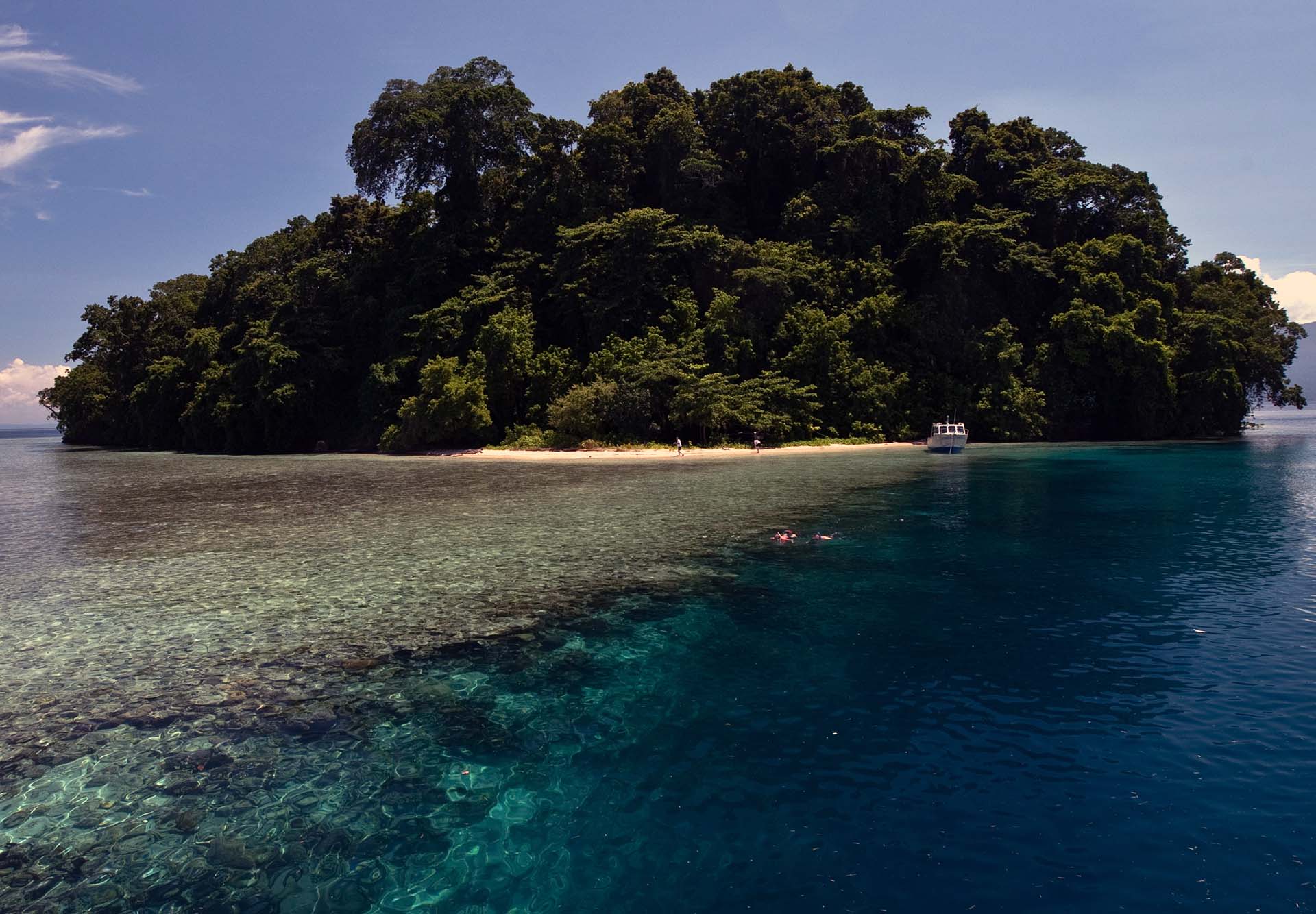
Coral reefs around the world are suffering from warming waters, ocean acidification, and localized stressors, such as pollution or overfishing. Researchers are working to understand how each of these stressors impacts coral reef ecosystems, so they can protect corals and other reef inhabitants from further harm. When corals are stressed, they may bleach, losing the symbiotic algae that provide them with most of their food. Some researchers are searching for ways to encourage algae to repopulate coral tissues, improving coral health and more quickly returning the reef to a fully functional state. Still other groups are searching for corals that have adapted to marine heat waves and are more resistant to bleaching.
Sometimes the damage is already done. In such situations, researchers may transplant coral fragments onto damaged reefs to repopulate the corals there. To help maintain genetic diversity among corals, researchers may gather masses of eggs and sperm during spawning and use them to produce millions of new corals in the lab. When these “baby” corals settle, attaching to tiles placed on the substrate, they are then transplanted onto reefs. Because bleached coral reefs can become overrun by algae, removing algae and other invasive species is also essential to helping the reef rebound.
 Video
Video
Boston/New England Regional Emmy® Award Nominations
Watch WHOI's two regional Emmy®-nominated videos: Hope for Corals In Crisis and Give Reefs a Chance!
 Video
Video
Hope for Corals in Crisis
Go behind the scenes as WHOI researchers develop cutting-edge tools to detect stressed corals early—before visible damage makes recovery harder.
 Video
Video
Give Reefs a Chance
WHOI scientists are racing to save coral reefs with real-time tools, fish sound studies, and robotics to detect stress and disease before it's too late.
 Video
Video
Can we use sound to build back reefs?
WHOI scientists study sound as a possible therapy for ailing coral reefs
References
NOAA. How do coral reefs benefit the economy? https://oceanservice.noaa.gov/facts/coral_economy.html
Rivera, H.E., et al. Coral reefs are critical for our food supply, tourism, and ocean health. We can protect them from climate change. MIT Science Policy Review, vol. 1. August 20, 2020. doi: 10.38105/spr.7vn798jnsk.
Santoro, E.P. Coral microbiome manipulation elicits metabolic and genetic restructuring to mitigate heat stress and evade mortality. Science Advances, vol. 7. 2021. doi: 10.1126/sciadv.abg3088.
USGS. Role of Reefs in Coastal Protection. https://www.usgs.gov/centers/pcmsc/science/role-reefs-coastal-protection
USGS. The Value of U.S. Coral Reefs for Risk Reduction. https://www.usgs.gov/centers/pcmsc/science/value-us-coral-reefs-risk-reduction
Weijerman, M., et al. Managing local stressors for coral reef condition and ecosystem services delivery under climate scenarios. Frontiers in Marine Science, vol. 5. 2018. doi: 10.3389/fmars.2018.00425.
WHOI. Super Reefs. https://www2.whoi.edu/site/cohenlab/super-reefs/
More topics like this
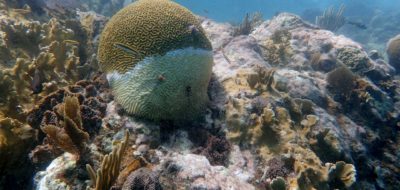
Coral stressors
Stressors can affect organisms living on the reef or they can affect the corals, themselves. When corals die, other organisms must relocate or struggle to survive.
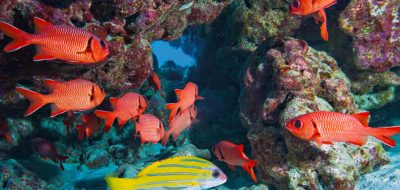
Reef fish
Fish that inhabit a coral reef play essential roles in the reef ecosystem, and reefs without fish struggle to recover from bleaching or other events that damage the coral.
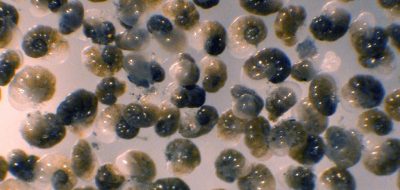
Benthic life
Benthic animals live on the sea floor and are typically invertebrates, such as sea anemones, sponges, corals, sea stars, sea urchins, worms, mussels, crabs, and more.
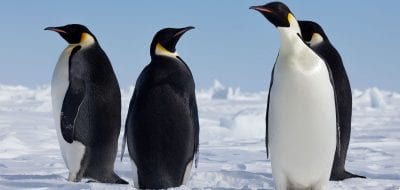
Emperor penguins
The emperor penguin is the largest living penguin species standing around 115 centimeters tall. Once they have found a partner, they work together to keep their young fed and safe.
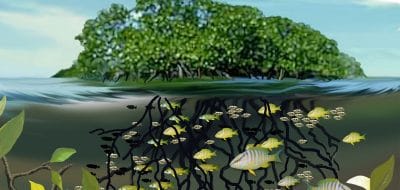
Coastal ecosystems
The narrow region where land and ocean meet includes salt marshes, mangroves, wetlands, estuaries, reefs, and bays often linked in a network of physical, chemical, and biological interchanges.
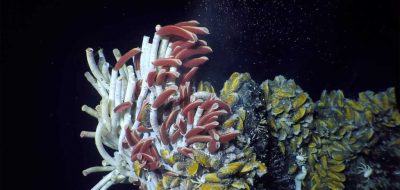
Ecosystems
Ocean ecosystems are found in polar regions, coastal waters, coral reefs, hydrothermal vents, the abyssal plain, and at the bottom of the sea.

Environmental DNA (eDNA)
Environmental DNA (eDNA) is essentially DNA collected from the environment. As animals swim through the ocean, they're constantly releasing DNA as they shed skin or scales into the water column.
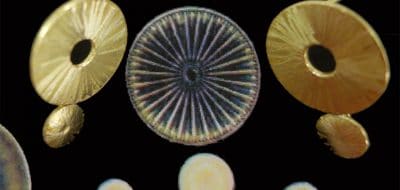
Phytoplankton
Phytoplankton are primary producers of the ocean—the organisms that form the base of the food chain. WHOI explores the microscopic, single-celled organisms.

Jellyfish & other zooplankton
These animals live all or part of their life suspended and drifting in fresh or salt water, rarely come in contact with hard surfaces.
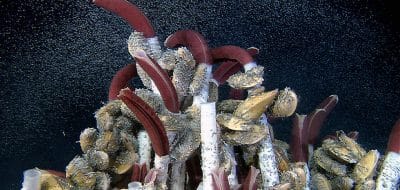
Life at vents & seeps
Hydrothermal vents and cold seeps are places where chemical-rich fluids emanate from the seafloor, often providing the energy to sustain lush communities of life in some very harsh environments.

Polar life
By human standards, they are extreme environments. Yet life not only persists in the poles...it thrives.
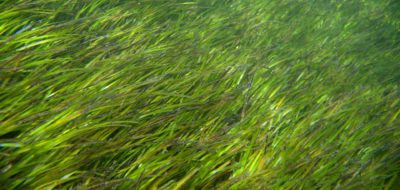
Seagrass meadows
Seagrass meadows are plants adapted to live a completely submerged life in the salty shallows.
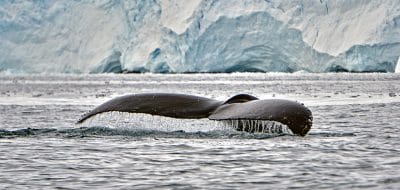
Marine mammals
Marine mammals are warm-blooded vertebrates that bear live young and nourish them with milk as land mammals do, but that spend most or all of their lives in the ocean.

Marine microbes
Microbial life can be found throughout the ocean, from rocks and sediments beneath the seafloor, across the vast stretches of open water, to intertidal and surf zones.
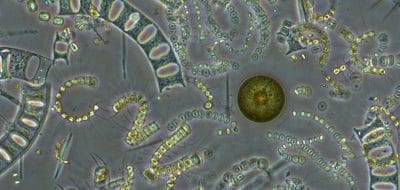
Ocean plants
Ocean plants are critical to marine life—they are an important food source, they provide oxygen to surrounding marine life, and they supply refuge and nursery grounds.
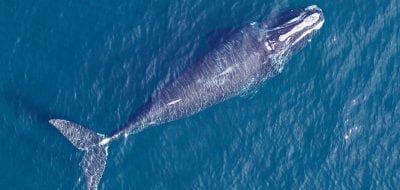
Right whales
The North Atlantic right whale is one of the ocean's most endangered large animals, with only a few hundred left. Slow-moving and often near the surface, these baleen whales are especially vulnerable to ship strikes and entanglement in fishing gear.

Seabirds
Seabirds have adapted to life in an ocean environment. There are many species of seabirds, and they vary greatly in behavior and physiology
Sharks & other fish
Fish are vital to healthy ecosystems and economies, serving as predators and prey while maintaining balanced food webs and protecting habitats like coral reefs and mangroves.
Shellfish
An aquatic animal, such as a mollusk or crustacean, that has a shell or shell-like exoskeleton.
Oceanus magazine
[ ALL ]In-depth research on Reef ecosystems

WHOI News Room
[ ALL ]Press releases
Sonic Youth: Healthy Reef Sounds Increase Coral Settlement
Get the ocean in your inbox
Fresh discoveries, research, and stories from WHOI — free, every week.