
Applied Ocean Physics & Engineering
A Robot Starts to Make Decisions on its Own
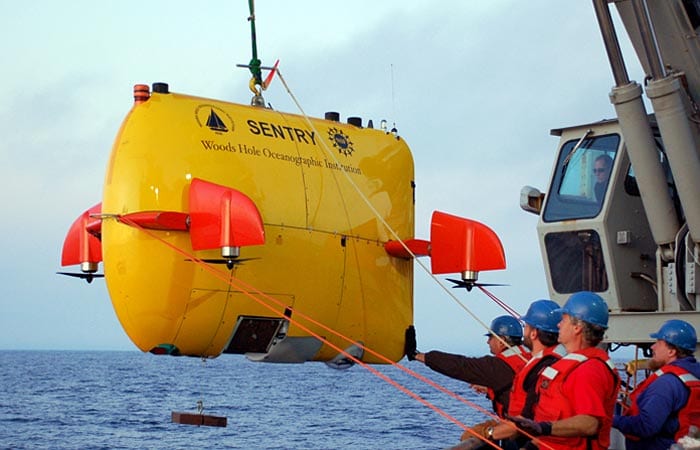
It’s a lot easier to send a bloodhound to track a criminal, or your kid to pick up groceries, than it is to get a deep-sea robot to find something…
Read MoreThe Squid, the Whale, and the Grad Student
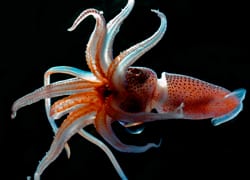
On the Serengeti Plains of Africa, lions stalk their prey mainly by sight. Scientists studying them also use their eyes to observe the hunt and indeed the entire ecosystem. They…
Read MoreThe Mysterious Movements of Deep-Sea Larvae
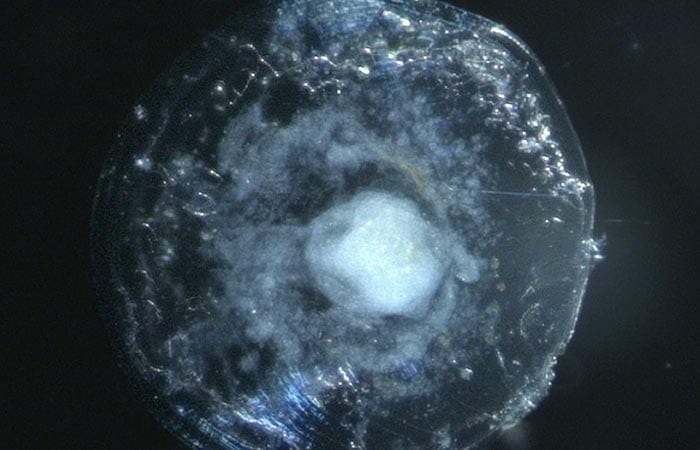
The marvelous migrations of fish and whales through the deep sea have been hard enough for us humans to follow. But what about tiny organisms—many smaller than the dot beneath…
Read MoreShipwrecks Offer Clues to Ancient Cultures
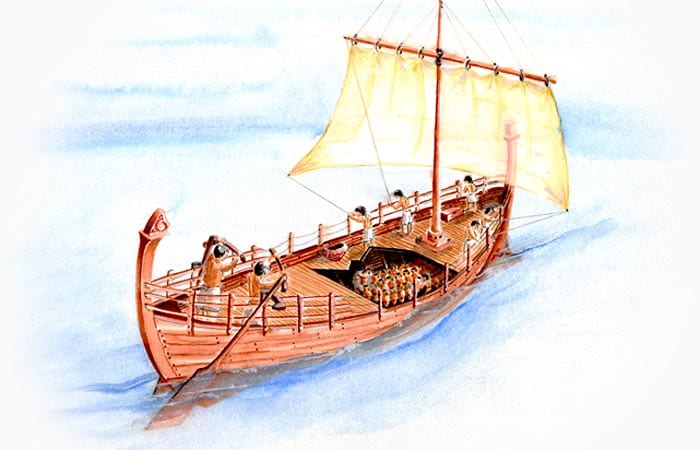
Brendan Foley hunts for shipwrecks, but he’s not searching for gold or jewels. The sunken treasure he pursues comes not in chests, but mostly in curvaceous clay jars called amphorae—the…
Read MoreBuoys Help Avert Whale-Ship Collisions
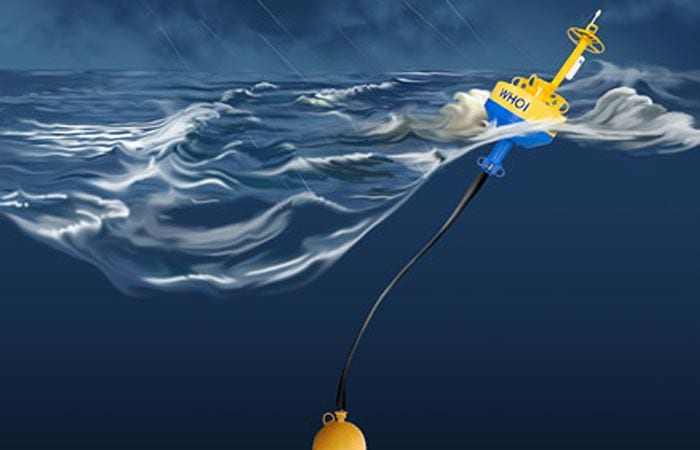
A lot of lines crisscross, run parallel, and ultimately connect in this story. The first line is a watery one hugging the East Coast between Florida and Nova Scotia, which…
Read MoreTurning a Toy into a Scientific Tool
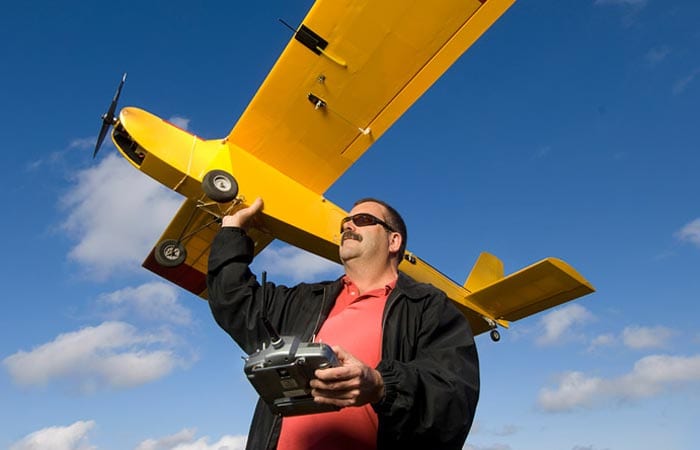
John Bailey spends most sunny weekends on a grassy field behind a movie theater on Cape Cod with a group of model airplane enthusiasts and their handmade creations. The hobbyists,…
Read MoreFloating Without Imploding
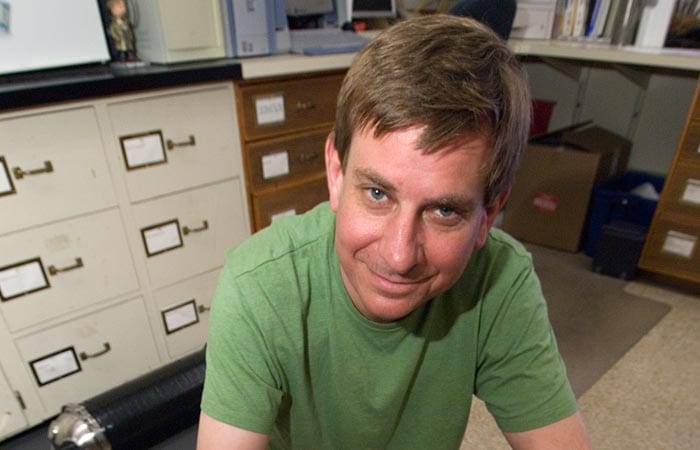
To allow a heavy vehicle to float in the deepest depths, Don Peters and other engineers at Woods Hole Oceanographic Institution used an entirely new system of ceramic spheres that…
Read MoreLet There Be Light in the Dark Depths
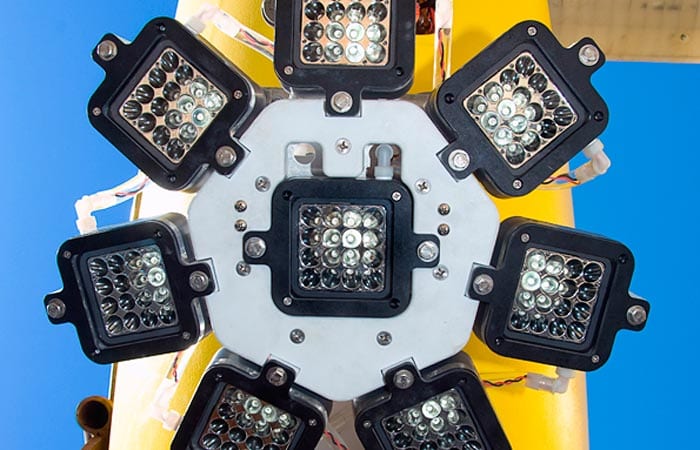
Jonathan Howland has worked as an engineer for 20 years in the Deep Submergence Lab at Woods Hole Oceanographic Institution, primarily developing systems for remotely operated vehicles. He led efforts…
Read MoreArmed and Dexterous
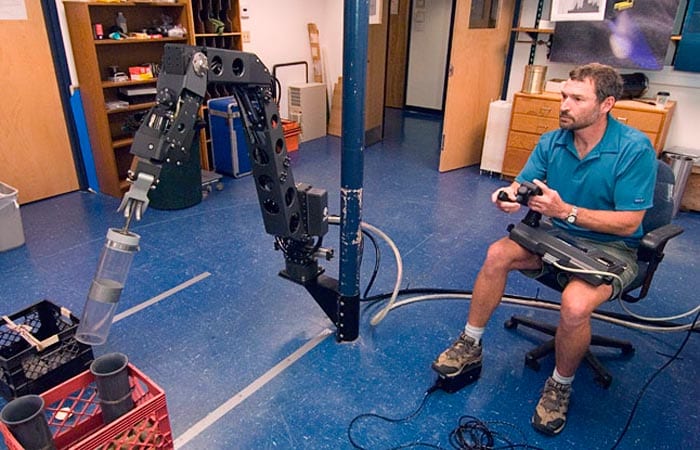
Matt Heintz is a research engineer in the Deep Submergence Lab at Woods Hole Oceanographic Institution (WHOI). He started his career at WHOI as a pilot for the human-occupied submersible…
Read More2,000 Batteries Under the Sea
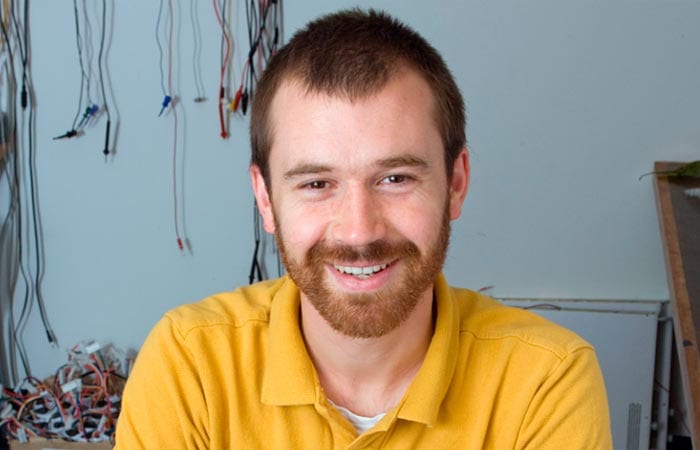
Daniel Gomez-Ibañez has been an engineer at Woods Hole Oceanographic Institution for three years. Much of that time, he has spent developing large batteries for underwater vehicles, including Nereus. [Second…
Read MoreMiles Under the Sea, Hanging on by Hair-Thin Fiber
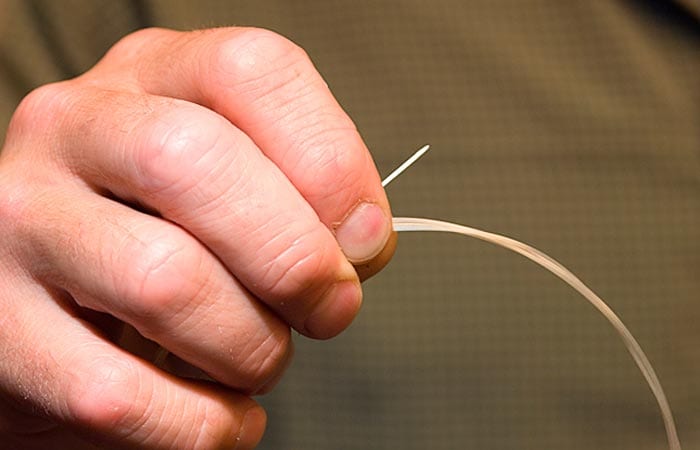
Andy Bowen has been developing robotic deep-sea technology for many years, starting his career at Woods Hole Oceanographic Institution in the 1980s by working on Jason Jr., the small tethered…
Read MoreNereus Soars to the Ocean’s Deepest Trench
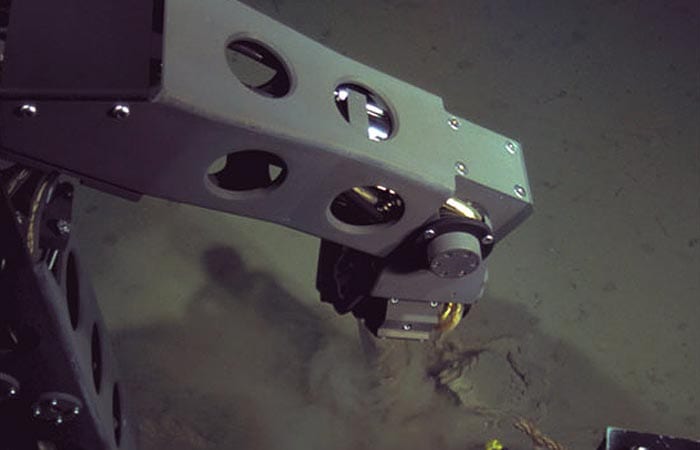
It took a village of engineers to build a completely new type of unmanned deep-sea robot that can reach the deepest part of the ocean. On May 31, 2009, a…
Read MoreJason Meets the Carnivorous Sea Squirt
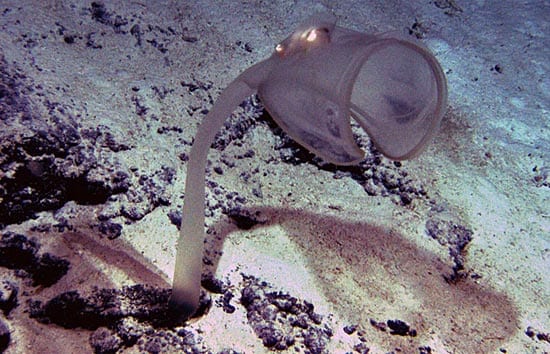
Tito Collasius, an engineer at Woods Hole Oceanographic Institution, has witnessed some of oceanography’s more celebrated moments, including the discovery of the Titanic and the eruption of undersea volcanoes. But…
Read MoreA Deep-sea Chemical-Sniffing Bloodhound
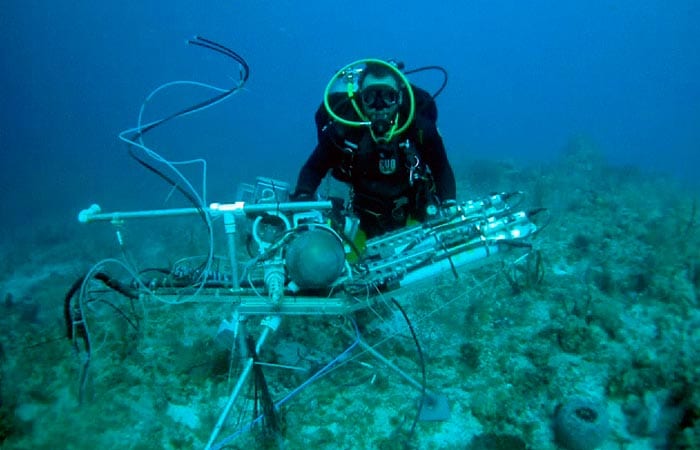
<!– –> Researchers can learn complicated things from some of the simplest animals in the ocean. Case in point: Rich Camilli’s work on sponges near Aquarius, an undersea laboratory 63…
Read MoreThe Turtle and the Robot
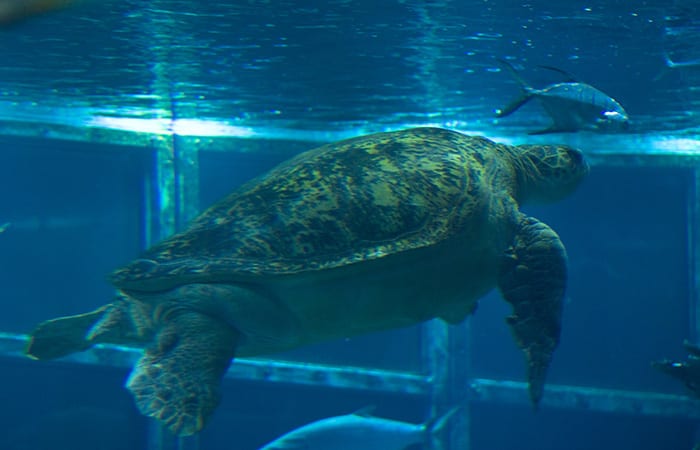
Stephen Licht built an unusual underwater robot with a curious name. With a wink toward James Joyce, he named it Finnegan, because he was particularly interested in studying the wake…
Read MoreA Tag Fit for a Porpoise
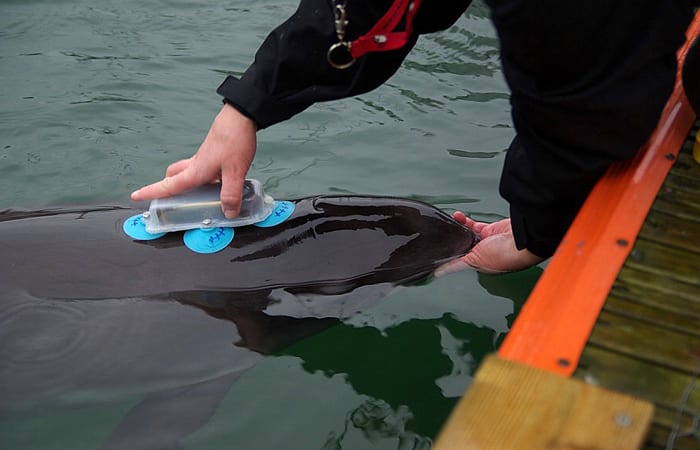
In 2003, Stacy DeRuiter arrived as a graduate student at Woods Hole Oceanographic Institution (WHOI), where a new device developed at WHOI was sparking a revolution in marine mammal research:…
Read MoreBuilding the Next-Generation Alvin Submersible
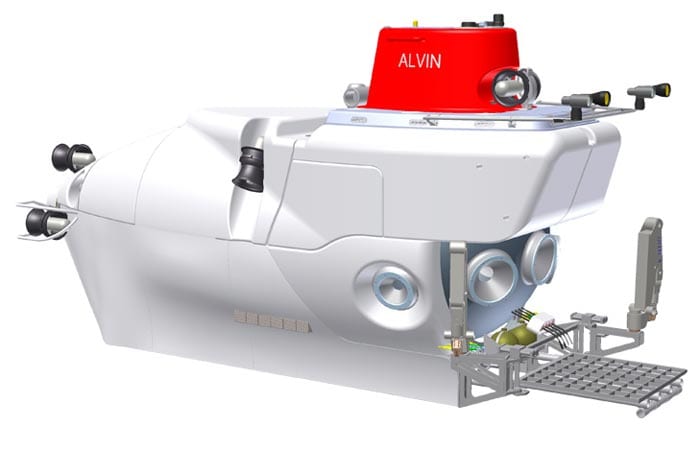
Three times geologist Adam Soule has climbed inside the deep-diving submersible Alvin and headed to the seafloor. Geochemist Susan Humphris stopped counting after 30 dives. Dan Fornari, who studies deep-sea…
Read MoreHistorical Formulas Sealed Behind a Wall
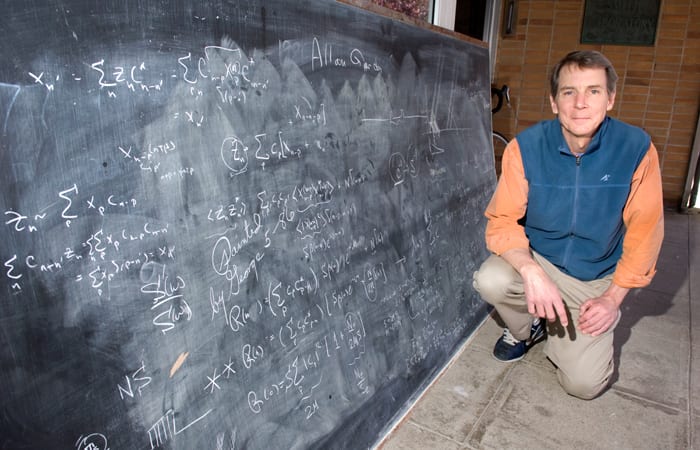
Deeply Submerged Volcanoes Blow Their Tops
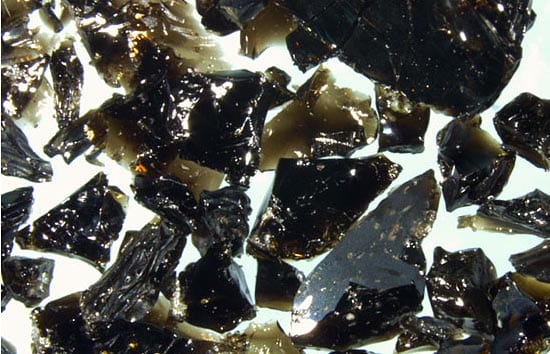
A research team led by Woods Hole Oceanographic Institution (WHOI) has uncovered evidence of explosive volcanic eruptions on the Arctic Ocean seafloor almost 2.5 miles deep. Scientists did not think…
Read MoreResearchers Successfully Forecast 2008 Red Tide
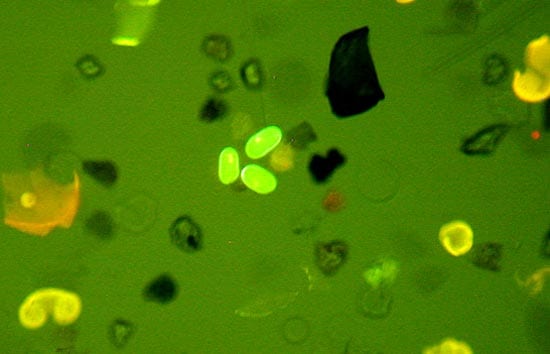
A research team led by scientists at Woods Hole Oceanographic Institution (WHOI) successfully predicted the widespread harmful algal bloom that materialized this year in New England coastal waters. The forecasting…
Read MoreNew Robot Sub Surveys the Deep off the Pacific Northwest
Scientists and engineers from WHOI and the University of Washington have successfully completed the first scientific mission with Sentry, a newly developed robot capable of diving as deep as 5,000 meters into the ocean. The vehicle surveyed and helped pinpoint several proposed deep-water sites for seafloor instruments that will be deployed in the Ocean Observatories Initiative.
Read MorePilot Whales the ‘Cheetahs of the Deep Sea’
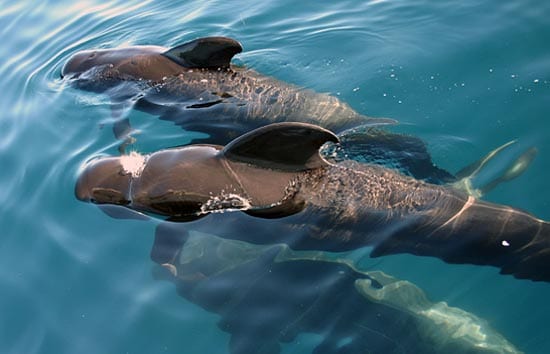
Scientists tag whales and find they sprint-dive to forage, hunting like undersea cheetahs.
Read MoreCan’t Bring Deep-sea Samples Up? Send a Lab Down.
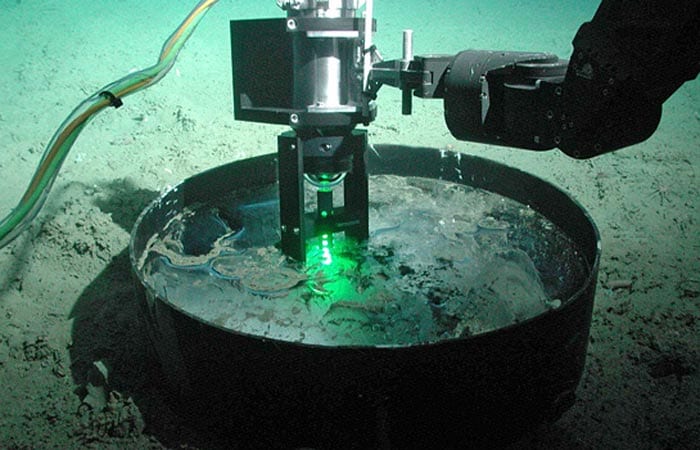
Much of what is surprising about the deep ocean results from the extraordinary conditions found there—frigid temperatures, crushing pressure, unusual chemical and biological processes, and the complete absence of sunlight.…
Read MoreIn Computer Models and Seafloor Observations, Researchers See Potential for Significant 2008 “Red Tide” Season
Researchers from WHOI and North Carolina State University are preparing for a potentially big bloom of harmful algae in New England waters this spring. A combination of abundant beds of algal seeds and excess winter precipitation have set the stage for an Alexandrium bloom similar to the historic “red tide” of 2005. Weather patterns and ocean conditions over the next few months will determine whether this year’s algal growth affects coastal shellfishing.
Read More