
Applied Ocean Physics & Engineering
SharkCam reveals secret lives of basking sharks in UK
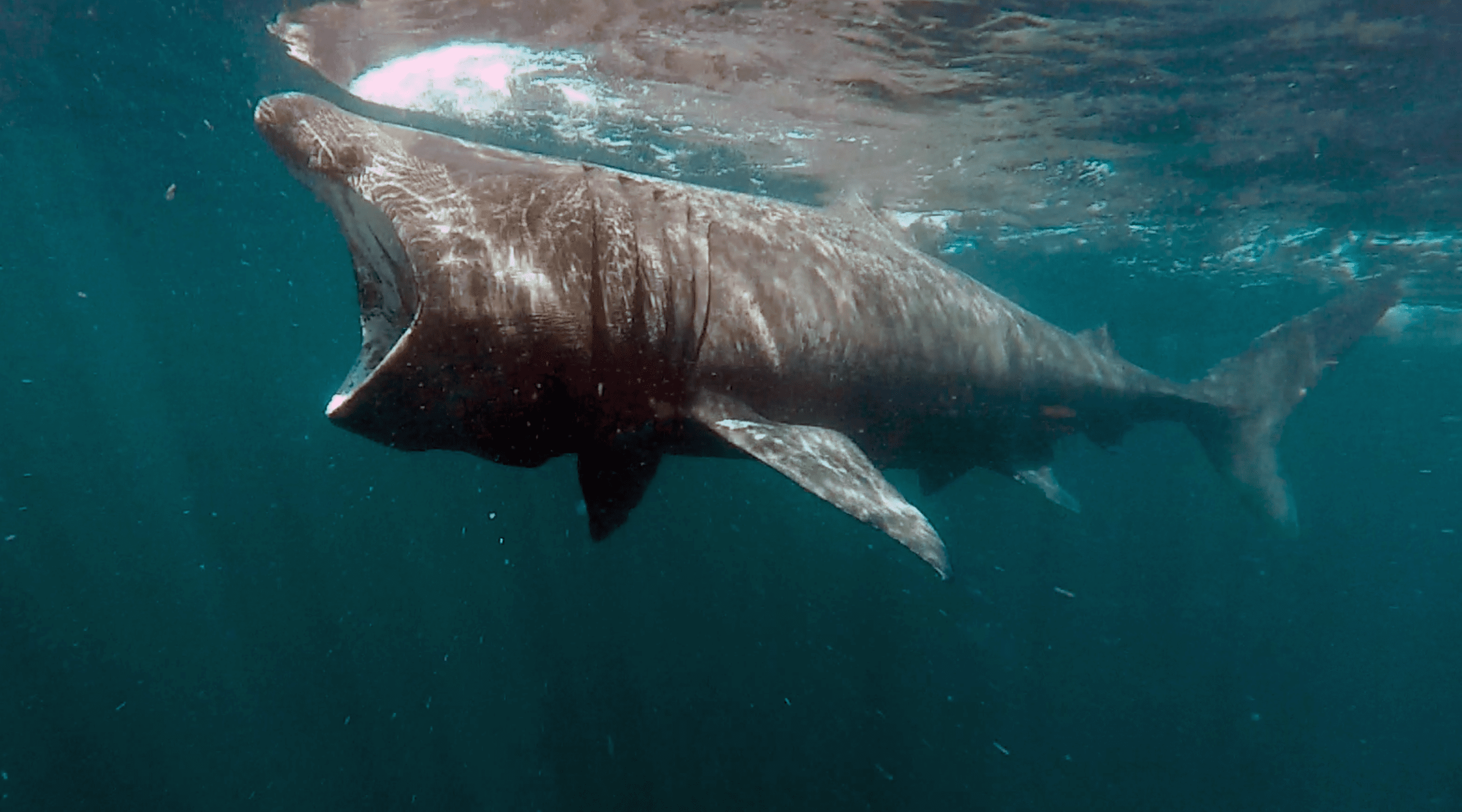
An autonomous underwater vehicle (AUV) known as the REMUS SharkCam has been used in the UK for the first time to observe the behaviour of basking sharks in the Inner Hebrides, off the west coast of Scotland.
Read MoreInfrared Cameras Could Help Ships Avoid Whales
An interview with Dan Zitterbart, a WHOI scientist who is testing a new thermal infrared imaging system to detection whales in busy waterways to prevent ship strikes.
Read MoreKing Kelp
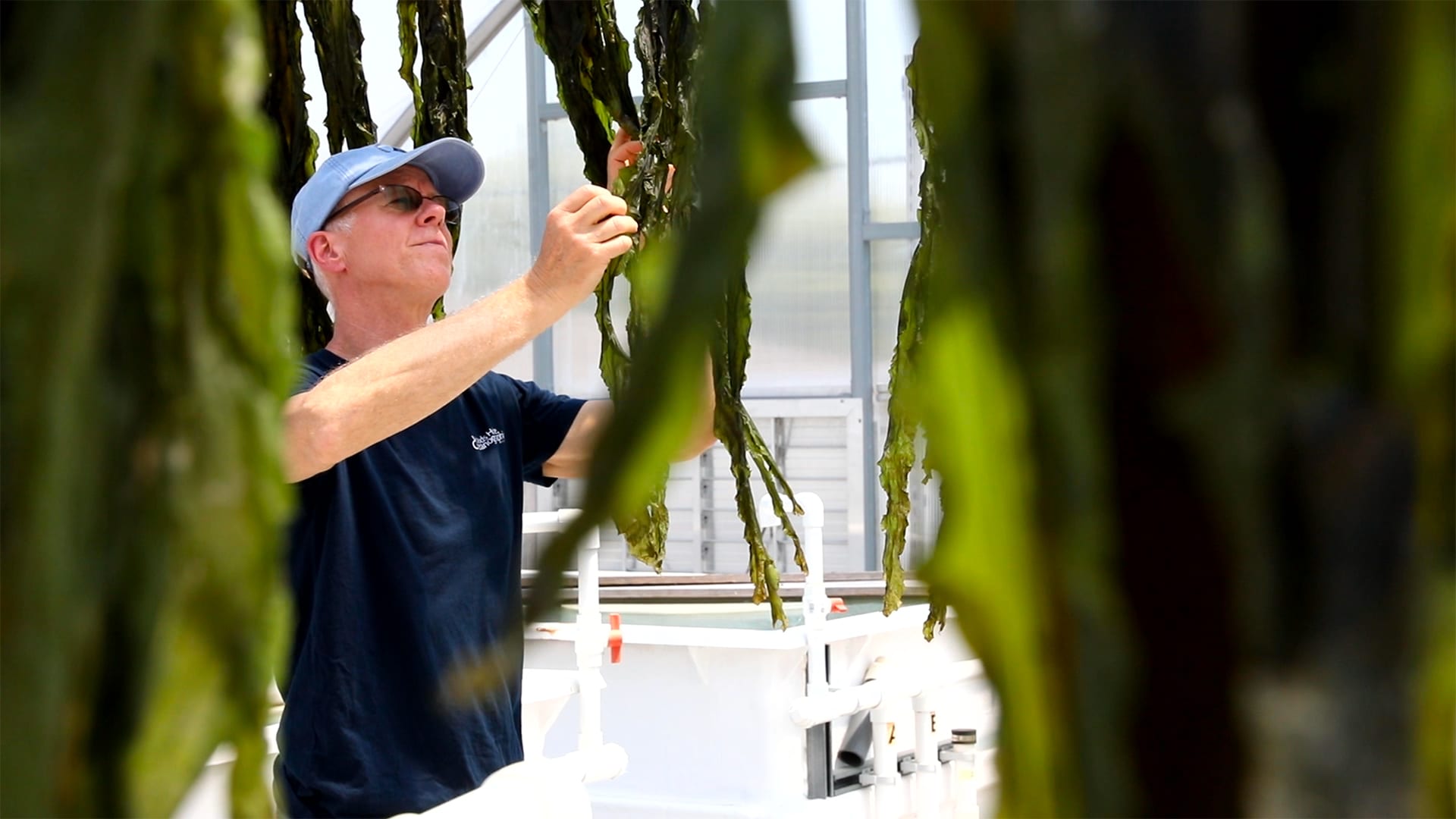
To help fuel our future energy needs, researchers are sizing up thousands of blades of sugar kelp—a promising source of biofuels—to breed strains that grow larger, heartier, and more abundantly.
Read MoreA new way of “seeing” offshore wind power cables
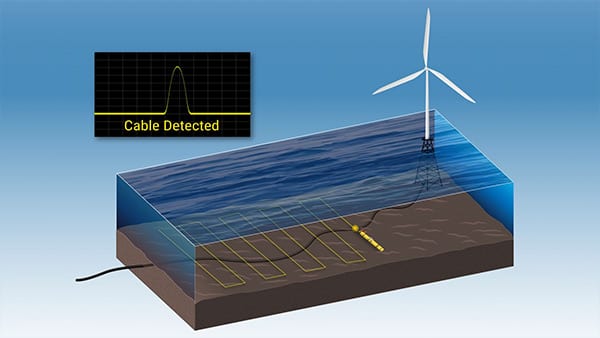
Eager to share best practices and technical know-how with the offshore wind sector, WHOI researchers test out an autonomous underwater vehicle (AUVs)—a staple of oceanographic research—to see if it can perform subsea cable surveys faster and more economically than using large and expensive ships.
Read MoreWIRED Magazine: Seafloor Maps Reveal Active Fault Lines
Imagining new vehicles for exploration
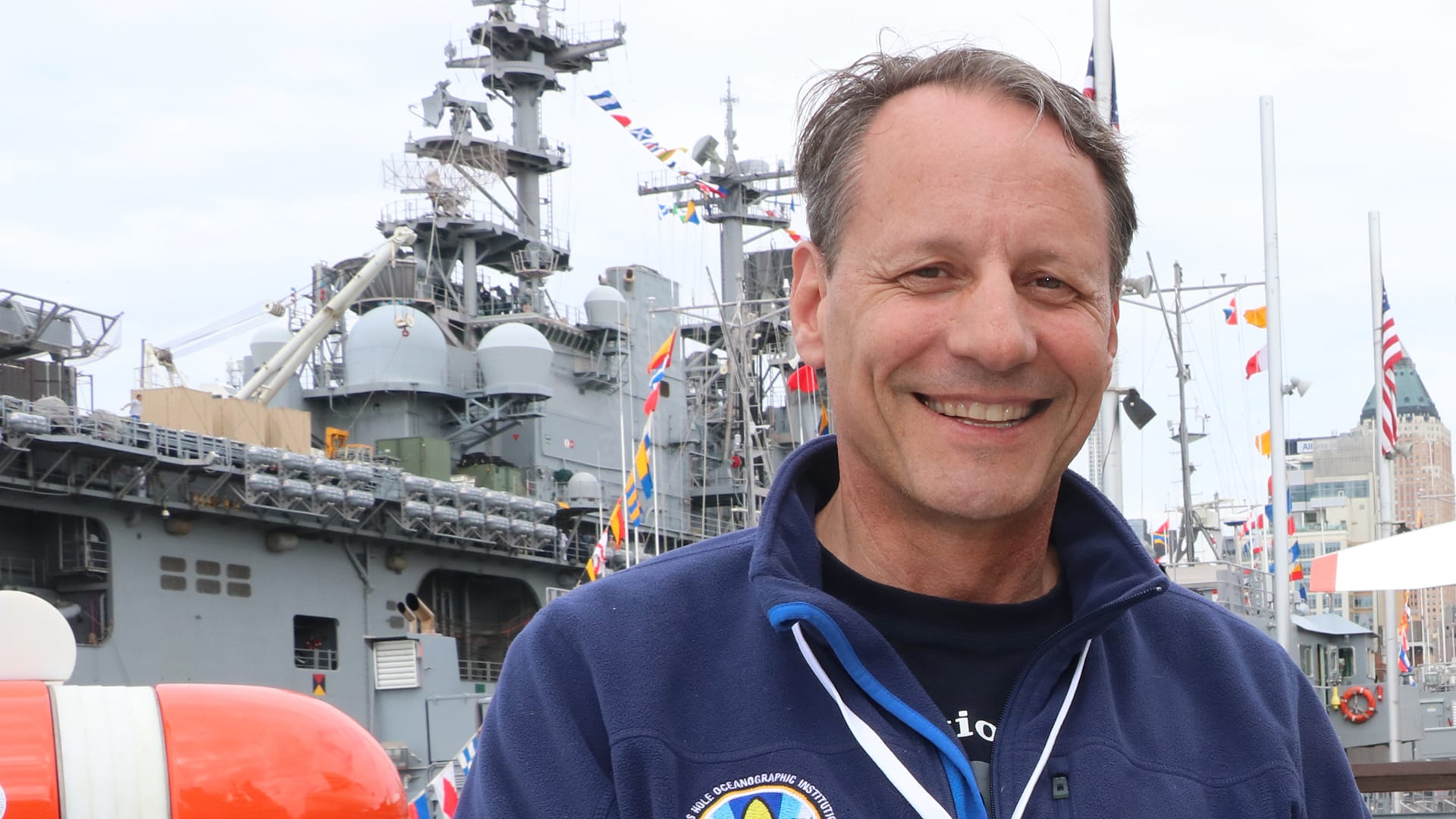
Andy Bowen is the kind of guy who wakes up in the middle of the night unable to go back to sleep, because he’s just too excited about a solution he’s just imagined for a new robotic invention.
Read MoreNavigating the Changing Arctic
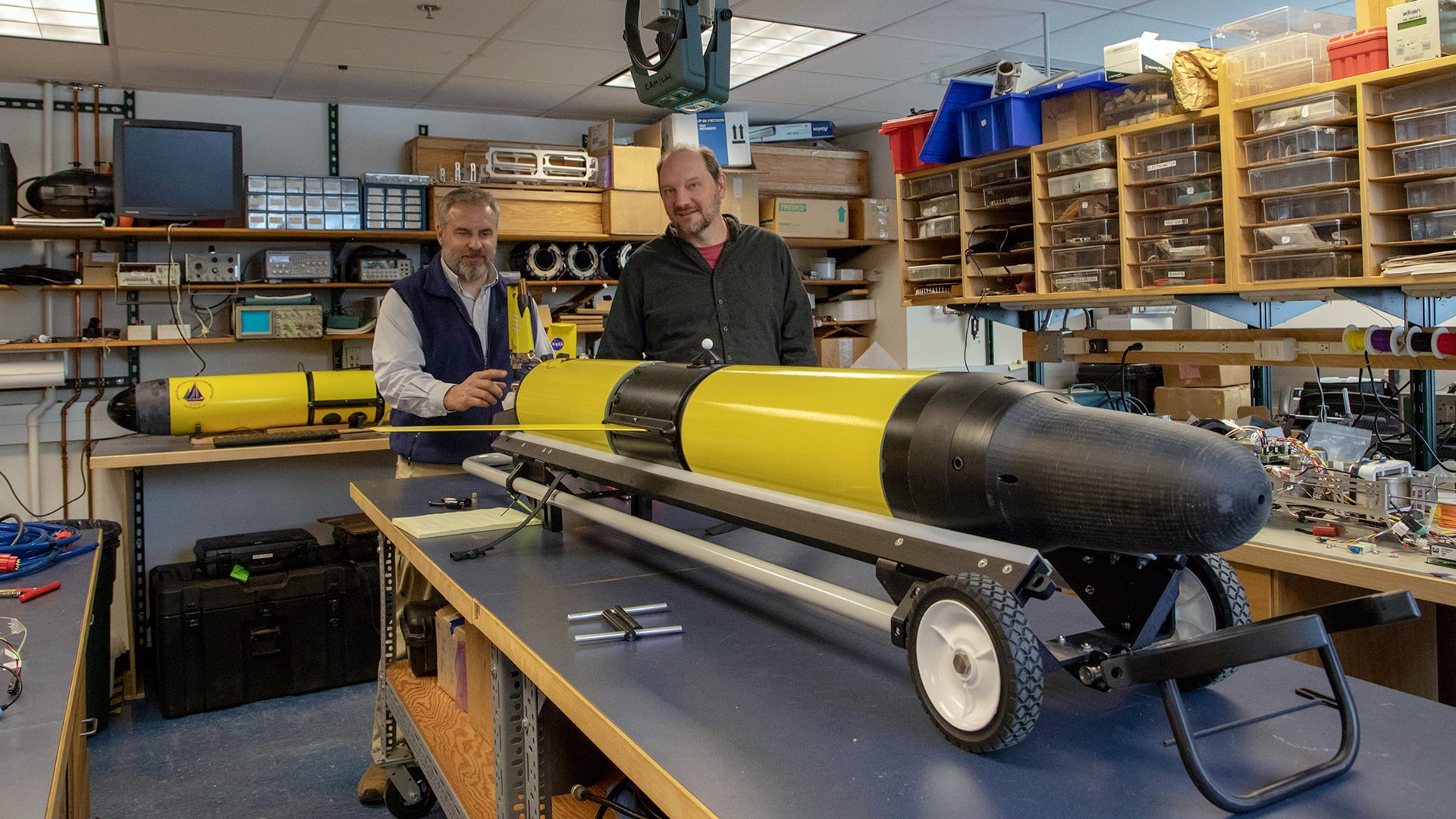
New, fully autonomous glider will collect critical-but-scarce ice thickness measurements from below the surface of the Arctic ocean.
Read MoreNavigating the Changing Arctic
New, fully autonomous glider will collect critical-but-scarce ice thickness measurements from below the surface of the Arctic ocean.
Read MoreWoods Hole Model Boat Show
How to celebrate National Robotics Week in Massachusetts
The Deep-See Peers into the Depths
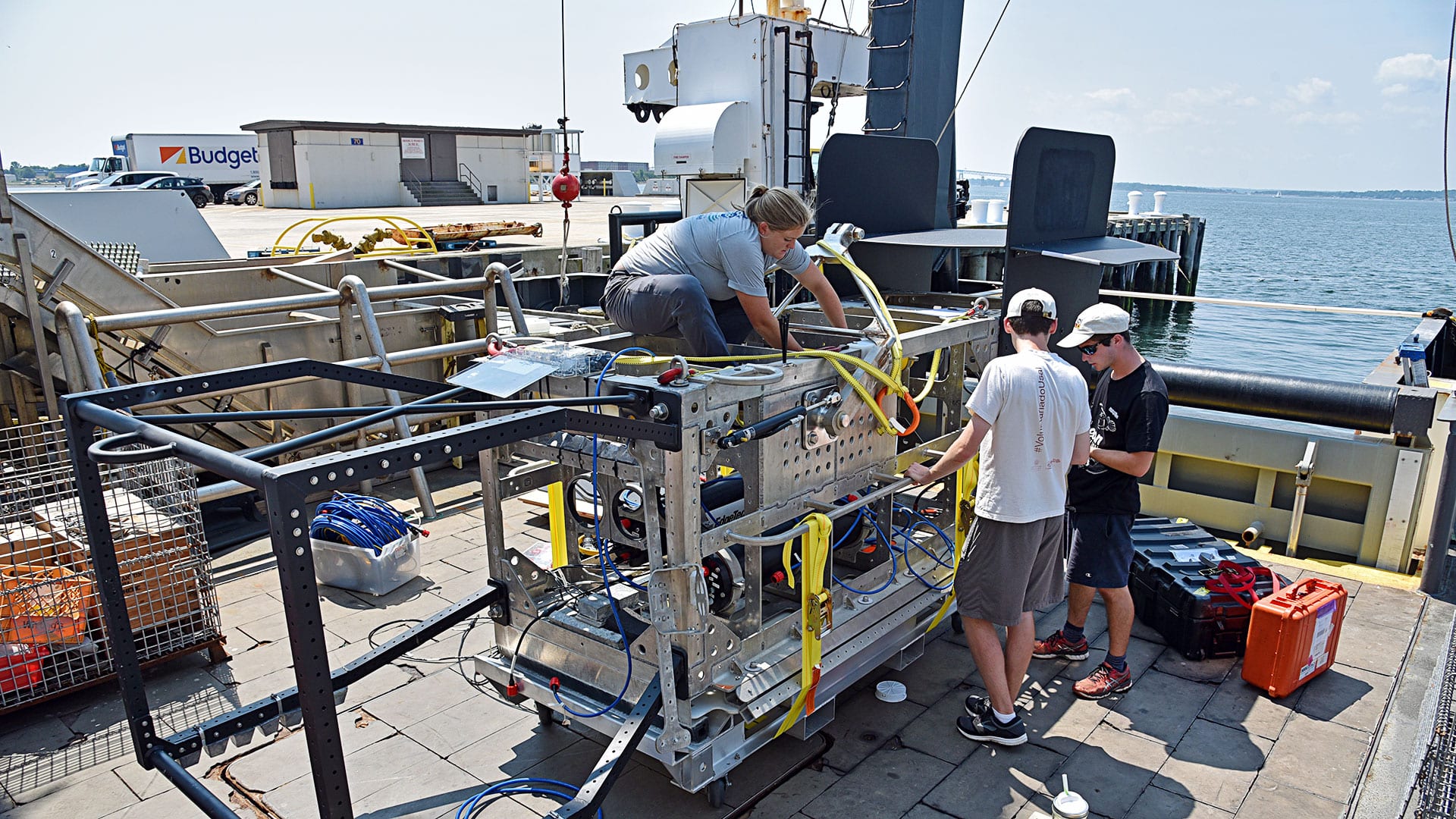
Decades of research from many WHOI scientists and engineers have culminated in a multifaceted vehicle to explore deep-sea marine life.
Read MoreCoding Curiosity
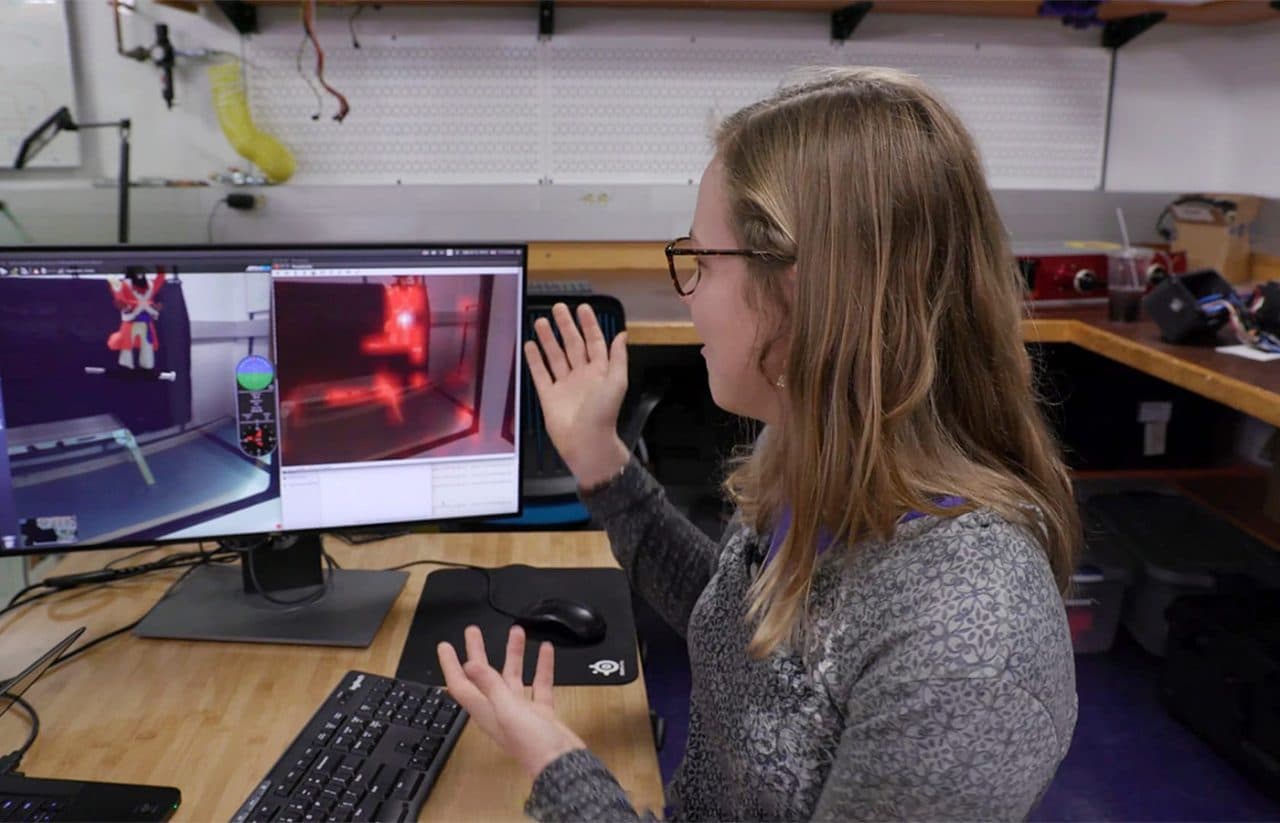
The ocean is an extreme environment that is hard for humans to explore. One solution is building deep-sea robots that can autonomously make decisions on what to look for and where.
Read MoreWarping Sound in the Ocean
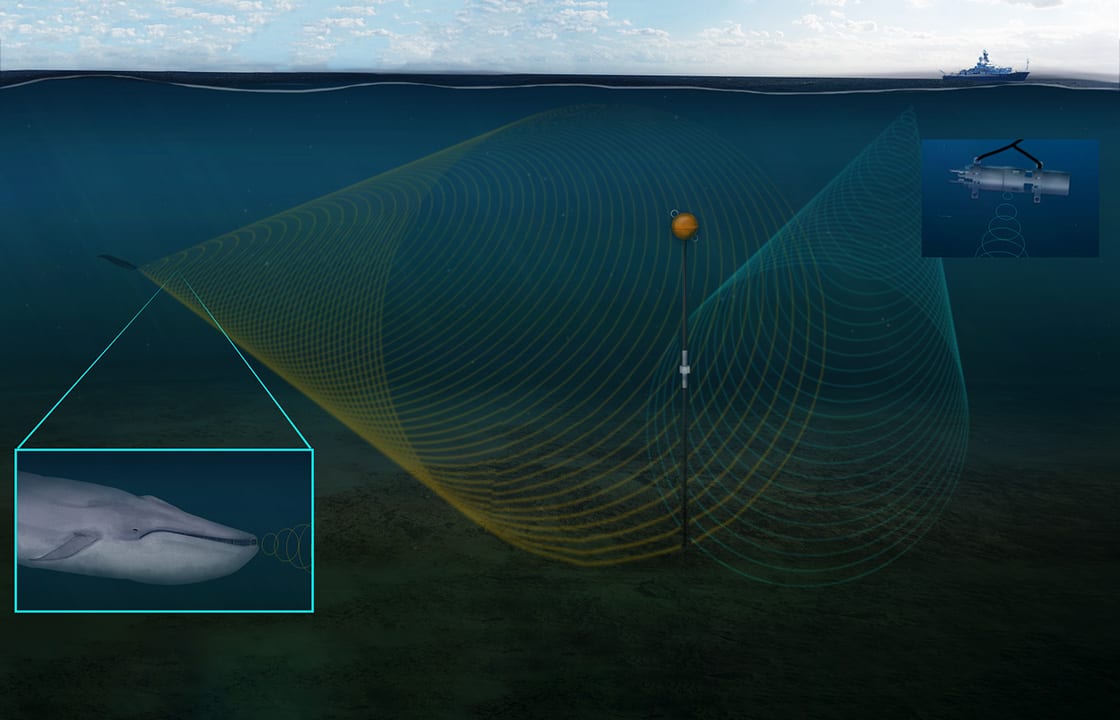
WHOI scientists warp sound–the primary means of transmitting information in the ocean–to “see” what’s happening below the surface.
Read MoreLife at the Edge
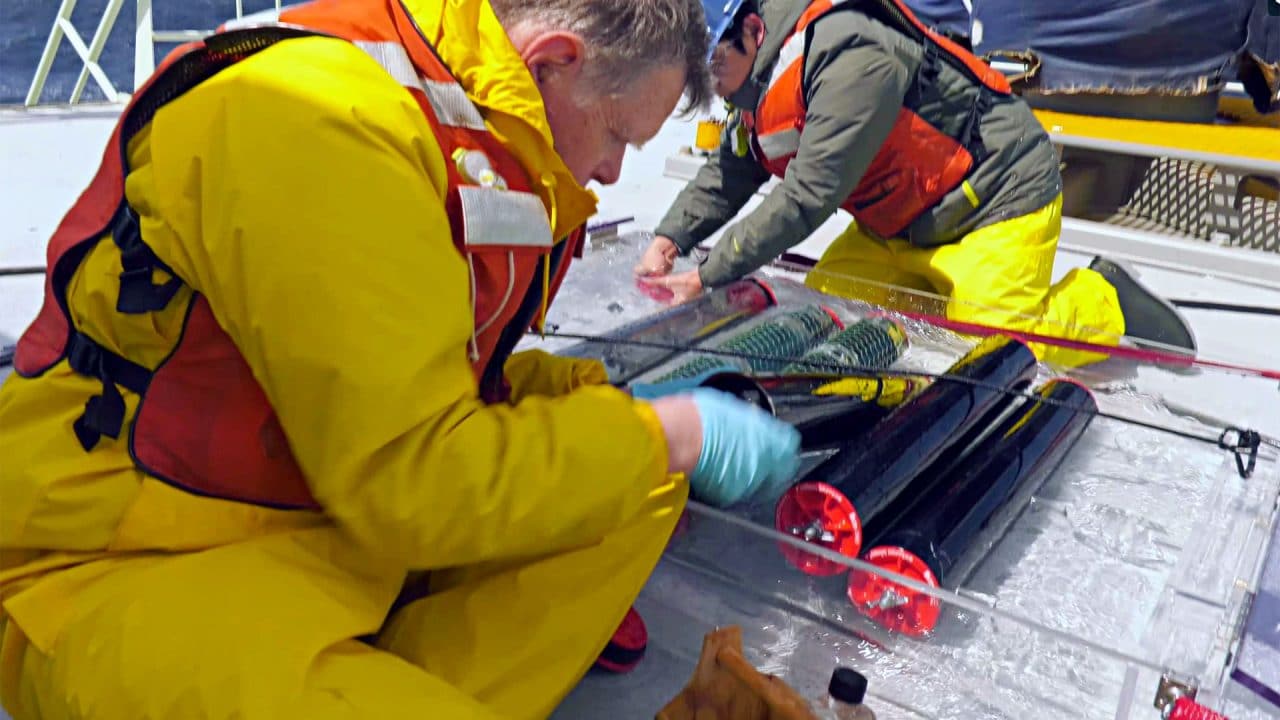
What makes the shelf break front such a productive and diverse part of the Northwest Atlantic Ocean? A group of scientists on the research vessel Neil Armstrong spent two weeks at sea in 2018 as part of a three-year, NSF-funded project to find out.
Read MoreThe Discovery of Hydrothermal Vents
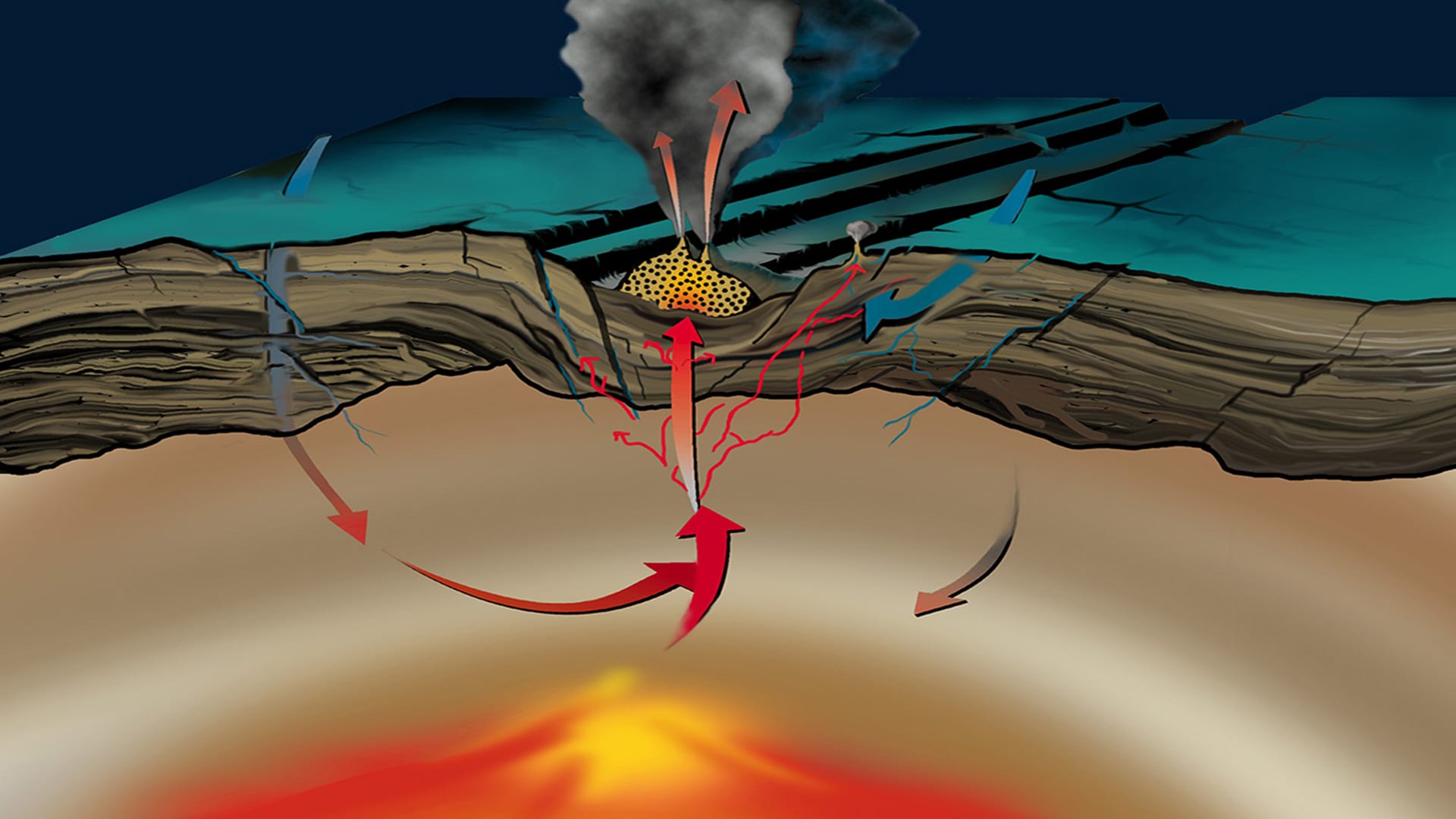
In 1977, WHOI scientists made a discovery that revolutionized our understanding of how and where life could exist on Earth and other planetary bodies.
Read MoreMission to the Ocean Twilight Zone
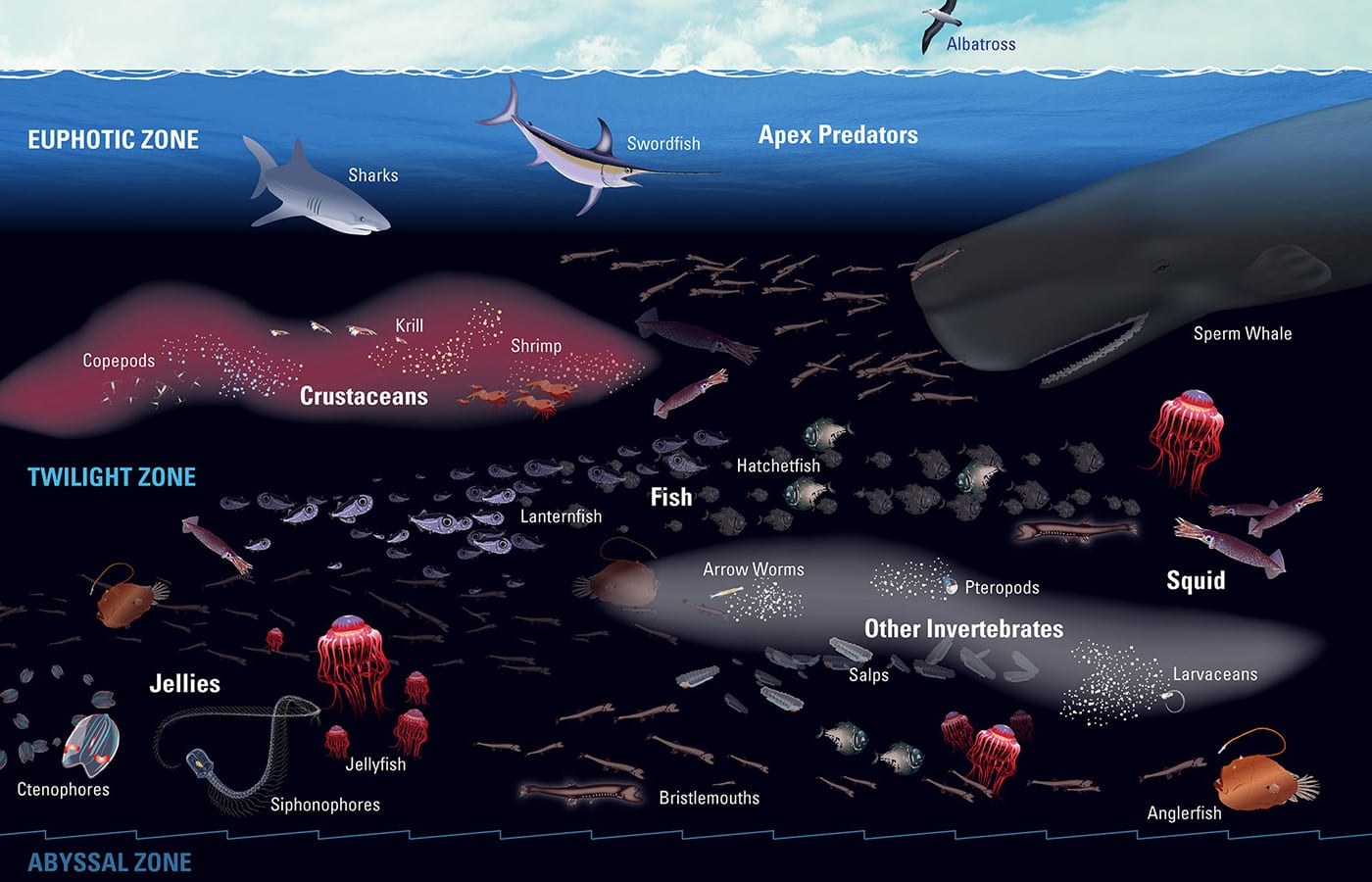
The twilight zone is a part of the ocean 660 to 3,300 feet below the surface, where little sunlight can reach. It is deep and dark and cold, and the pressures there are enormous. Despite these challenging conditions, the twilight zone teems with life that helps support the ocean’s food web and is intertwined with Earth’s climate. Some countries are gearing up to exploit twilight zone fisheries, with unknown impacts for marine ecosystems and global climate. Scientists and engineers at Woods Hole Oceanographic Institution are poised to explore and investigate this hidden frontier.
Read MoreTo Track an Oil Spill
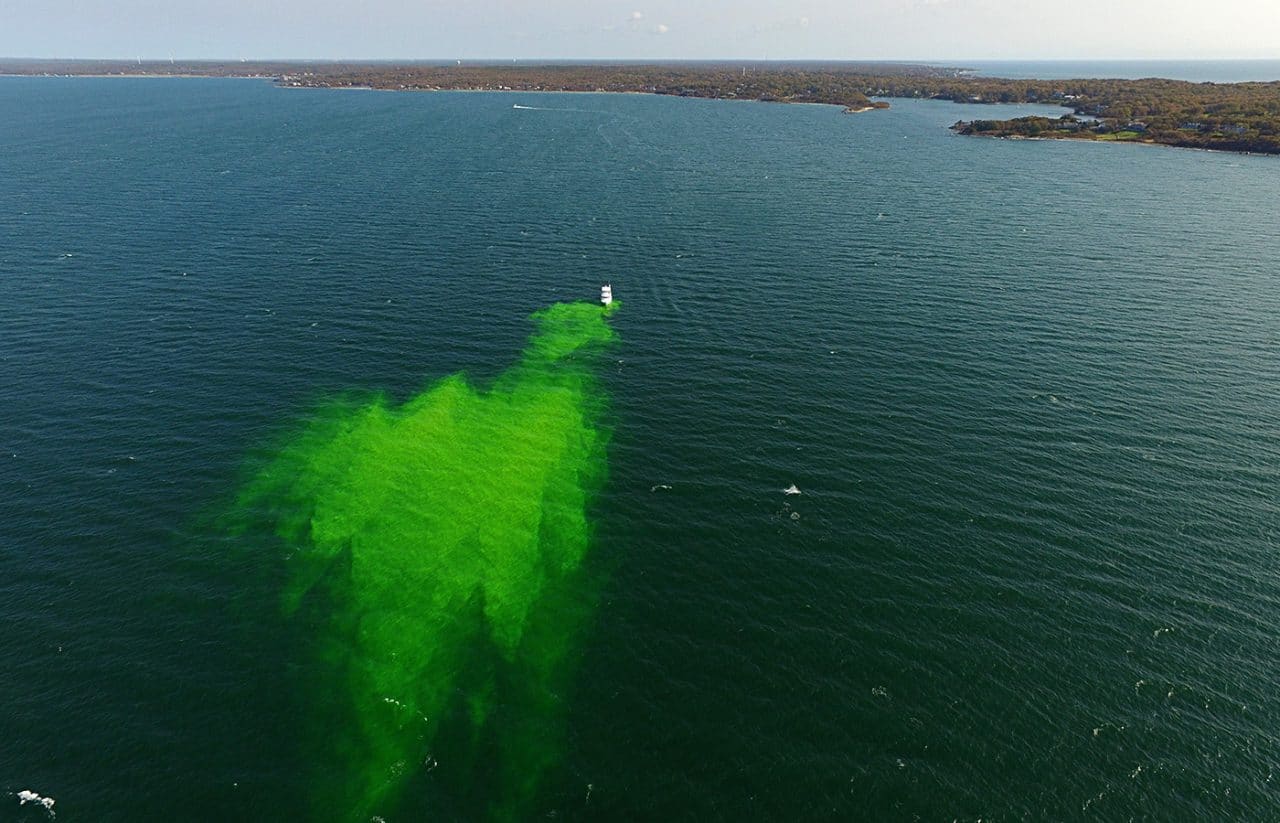
WHOI scientists are helping to develop a robotic underwater vehicle that can track oil spills and help responders mitigate damage in remote or ice-covered areas such as the Arctic Ocean and the Great Lakes.
Read MoreTracking Unexploded Munitions
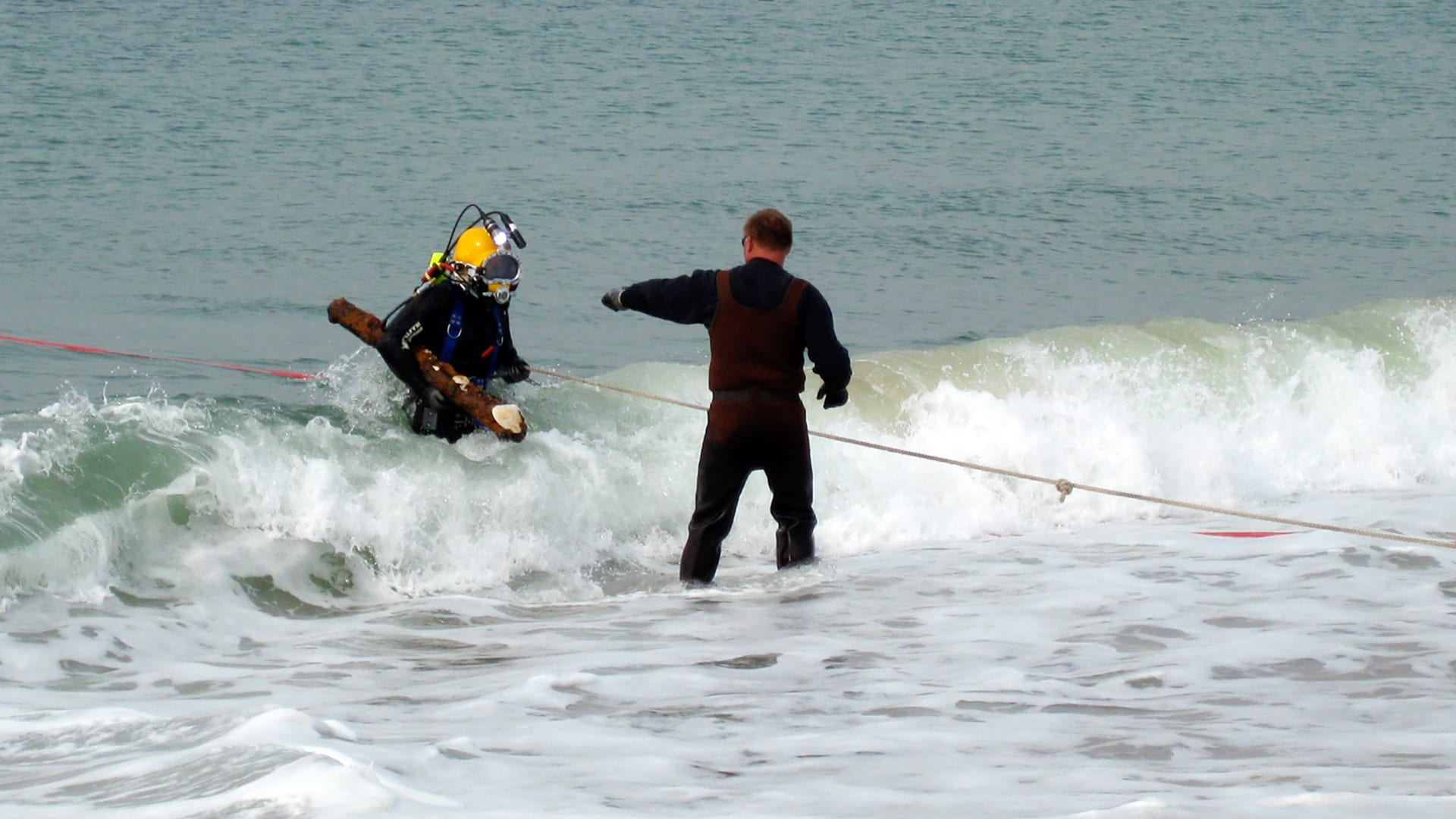
U.S. coastlines still have a lot of unexploded ordnance, or UXOs, left offshore by military exercises in the 1940s and 1950s. WHOI scientist Peter Traykovski is investigating where UXOs are and how they are moved and buried along the coast.
Read MoreRe-envisioning Underwater Imaging
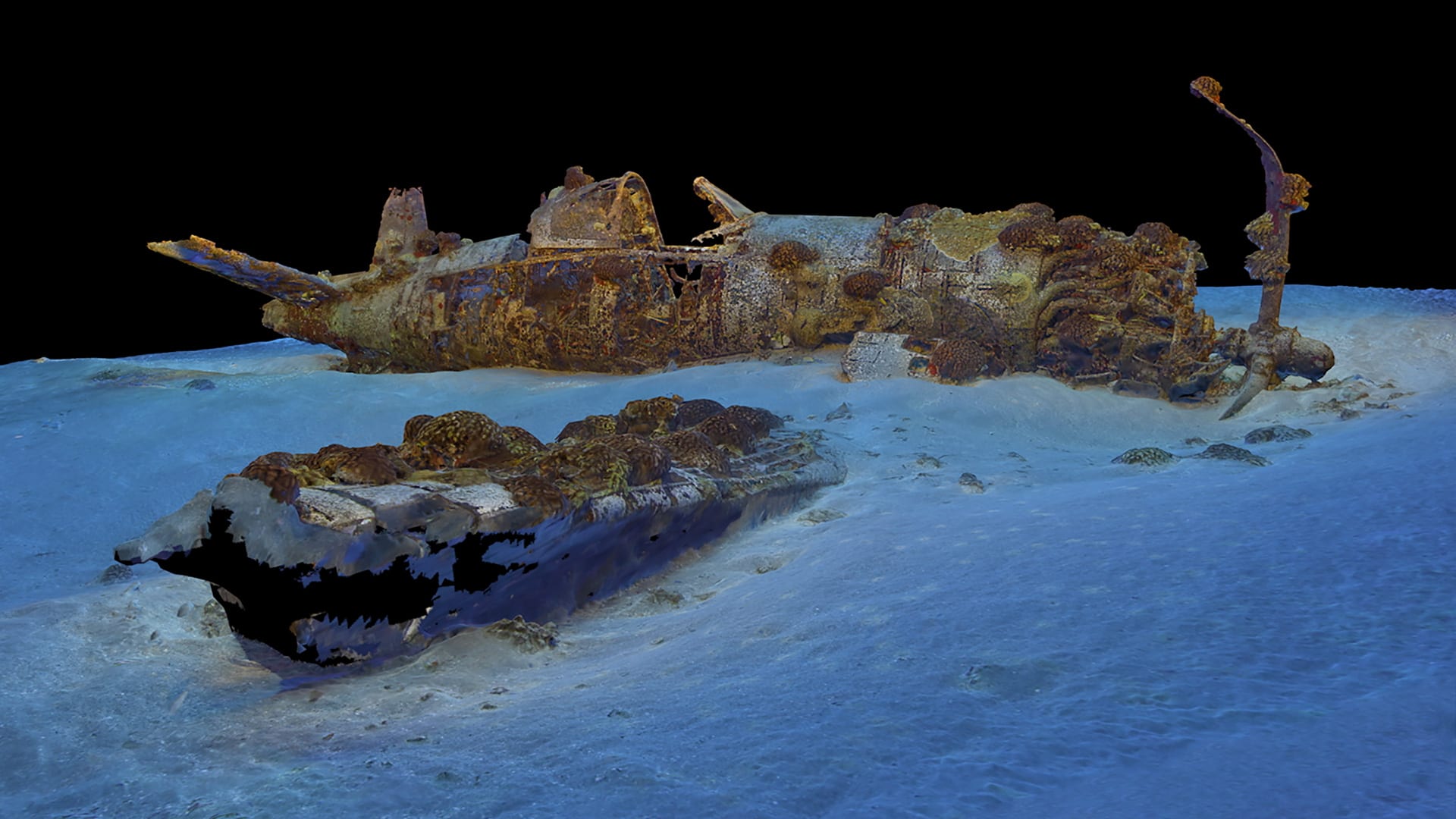
A revolutionary new underwater imaging system developed at Woods Hole Oceanographic Institution can generate ultrahigh-definition television video, 2-D mosaic images, and 3-D optical models—images that scientists can spin to view from…
Read MoreAqua Incognita
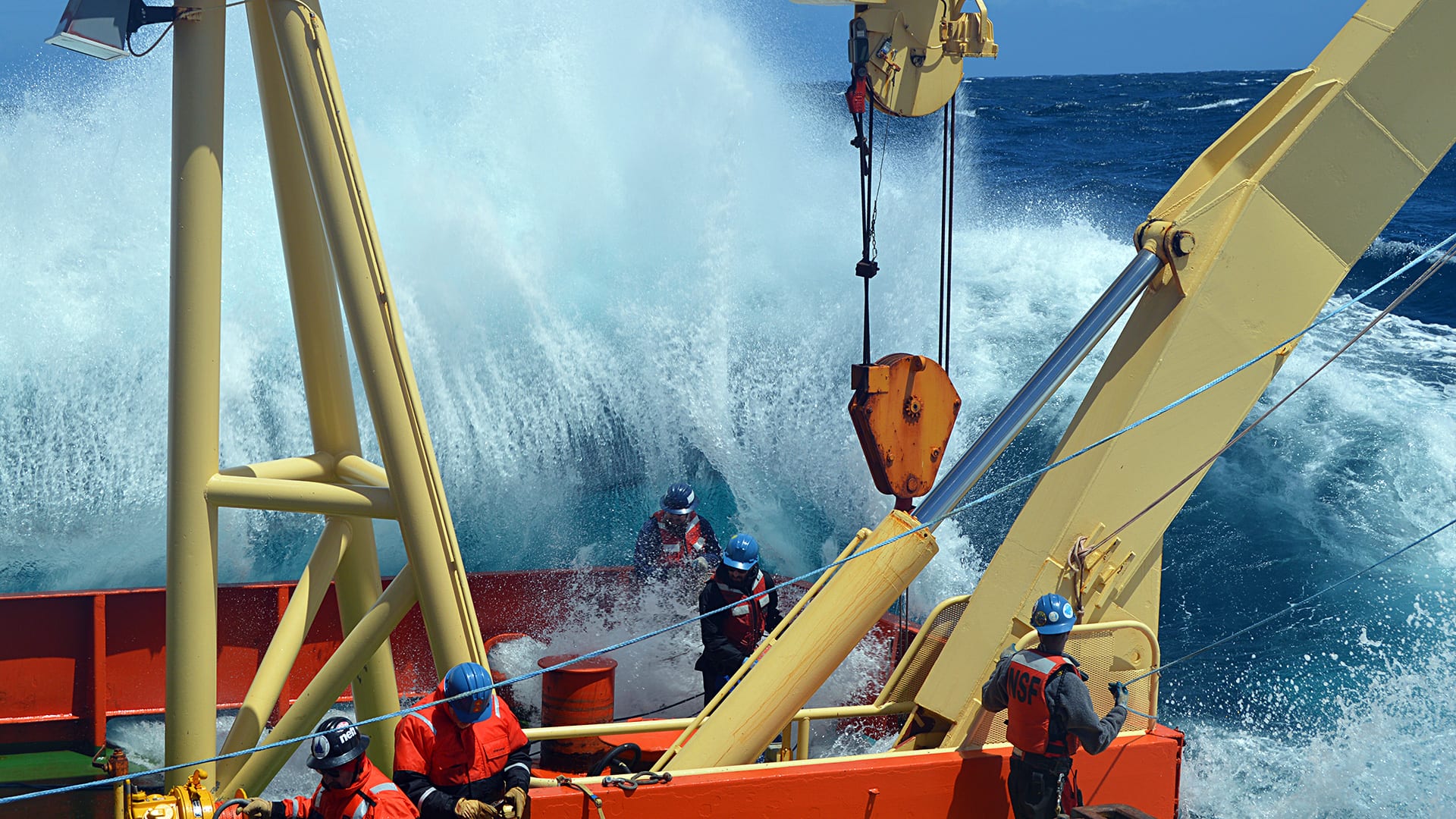
There is a jar of money in the conference room of the Mooring Operations & Engineering (MOE) team at Woods Hole Oceanographic Institution. It is a United Nations kaleidoscope of…
Read MoreThinking Global
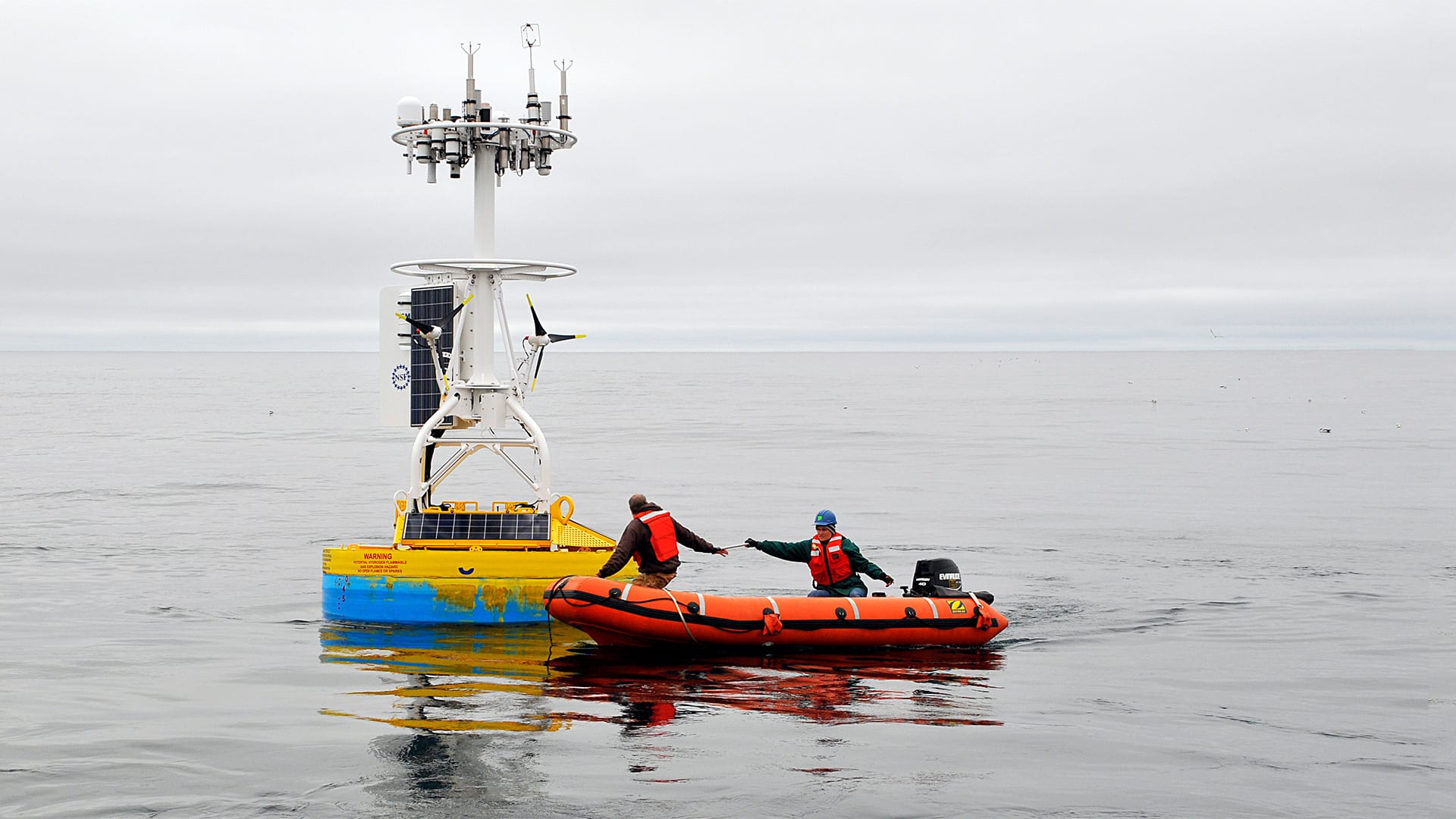
The Global Array component of the Ocean Observatories Initiative initially included four remote, high-latitude locations, selected for scientifically strategic reasons: Irminger Sea (60°N, 39°W) WHOI physical oceanographer Bob Pickart has…
Read MoreDiving for Data
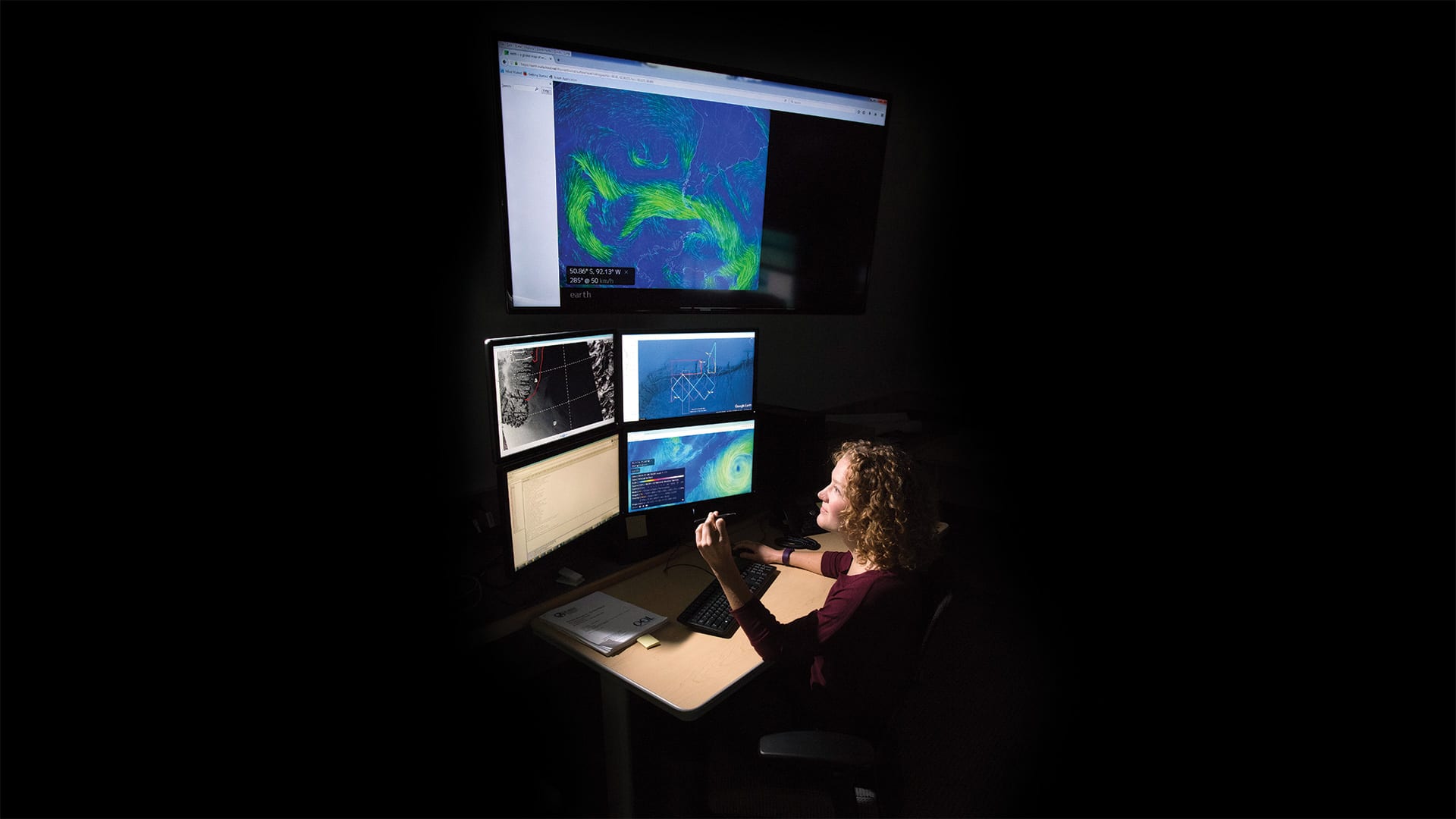
It’s the middle of the night on Cape Cod, Mass. Thousands of miles away in the South Atlantic off the coast of Argentina, a bright yellow torpedo-shaped drone floats up…
Read MoreThe Young Woman and the Sea
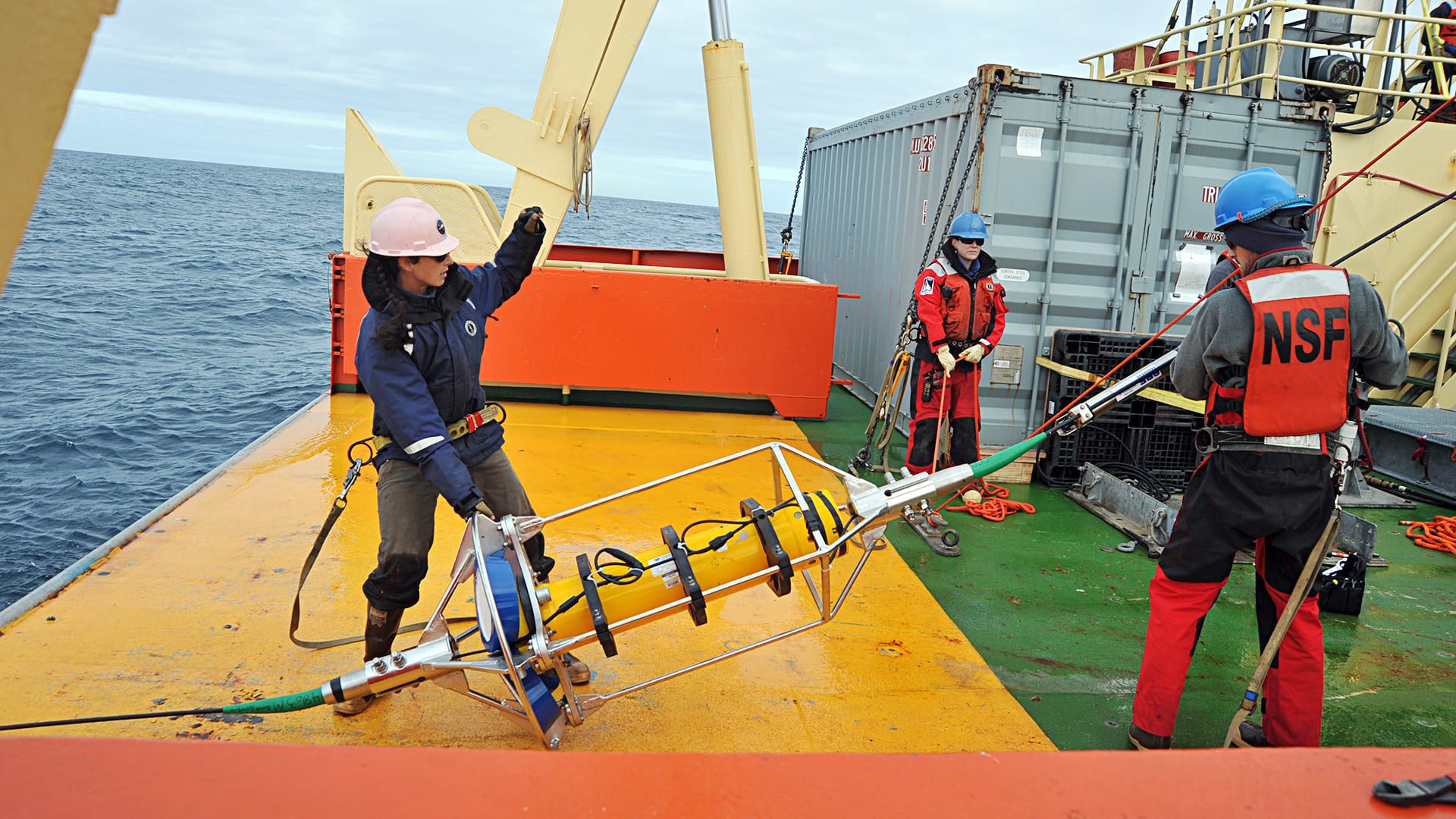
Meghan Donohue always wanted a career in oceanography. She earned an undergraduate degree in physical oceanography from the University of San Diego. Then she participated in the Sea Education Association’s…
Read MoreA Pioneering Vision
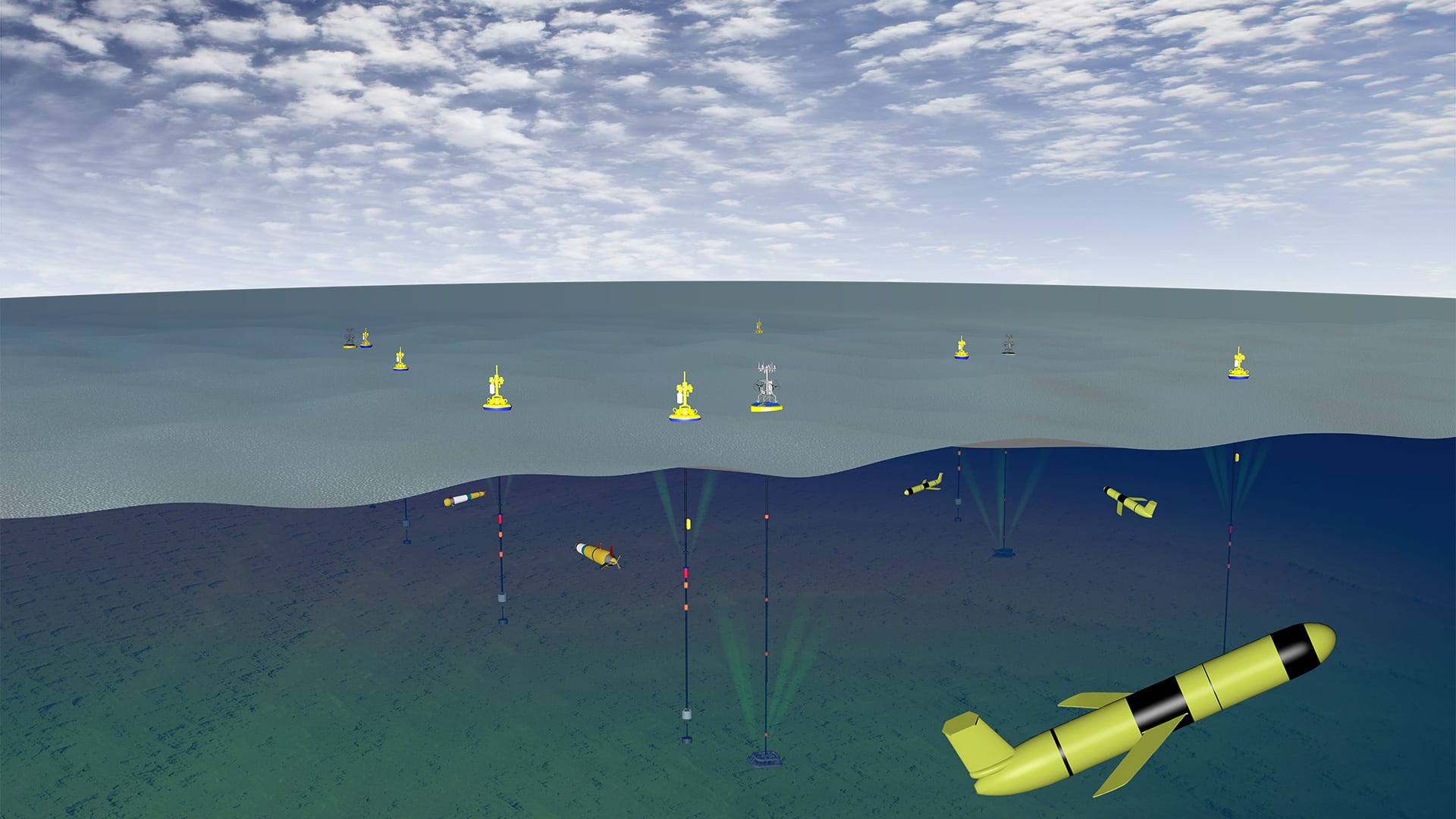
In 2005, scientists at Woods Hole Oceanographic Institution devised a revolutionary plan: They would deploy about 150 scientific instruments in coastal waters south of Martha’s Vineyard to try to understand…
Read More