
Applied Ocean Physics & Engineering
Opening our eyes to the deep: Molly Curran
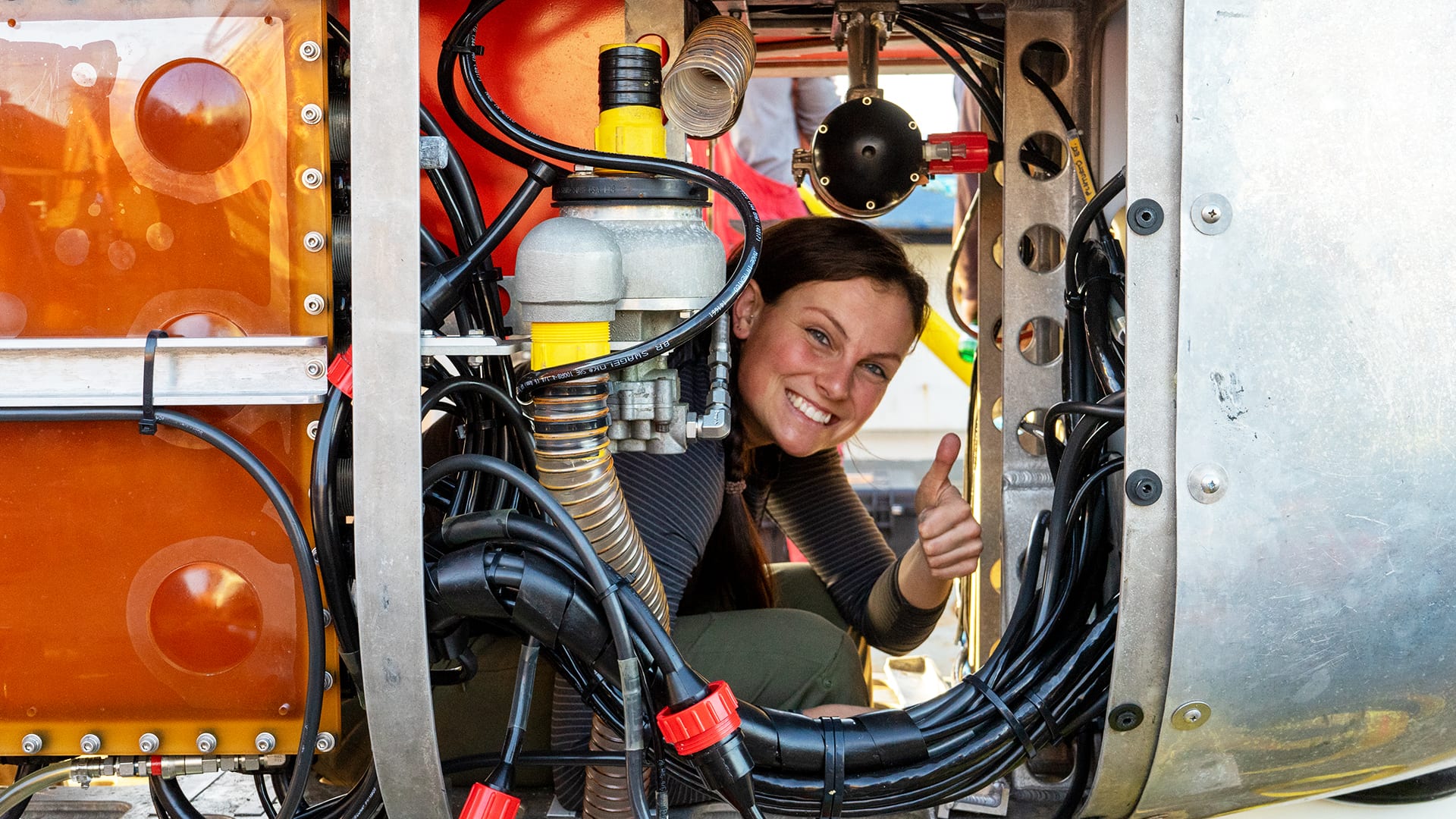
Molly Curran is a mechanical engineer in WHOI’s Deep Submergence Laboratory. She works on the design and operation of deep-sea robotic systems, including remotely operated vehicles, autonomous vehicles, and deep-sea samplers. She was the institution’s first pilot for Mesobot, WHOI’s latest autonomous robot designed to study the midwater realm known as the ocean twilight zone.
Read MoreWHOI scientist selected for industry-funded accelerator program

Anna Michel, an associate scientist and early-career researcher in WHOI’s Applied Physics and Ocean Engineering Department, has been awarded a spot in the RBR2020 cohort.
Read MoreSpock versus the volcano

Five hundred meters below the calm surface waters of the Aegean Sea off Santorini Island, Greece, lies an active submarine volcano. There, a decision-making robot equipped with artificial intelligence searches for life and danger.
Read MoreVolcano space robots are prepping for a wild mission to Jupiter
To build machines capable of plunging into the frozen oceans on Europa and Enceladus, Nasa tested out submersibles in one of Earth’s most inhospitable environments
Read MoreSeaWorld & Busch Gardens conservation fund commits $900,000 to protect critically endangered North Atlantic right whales
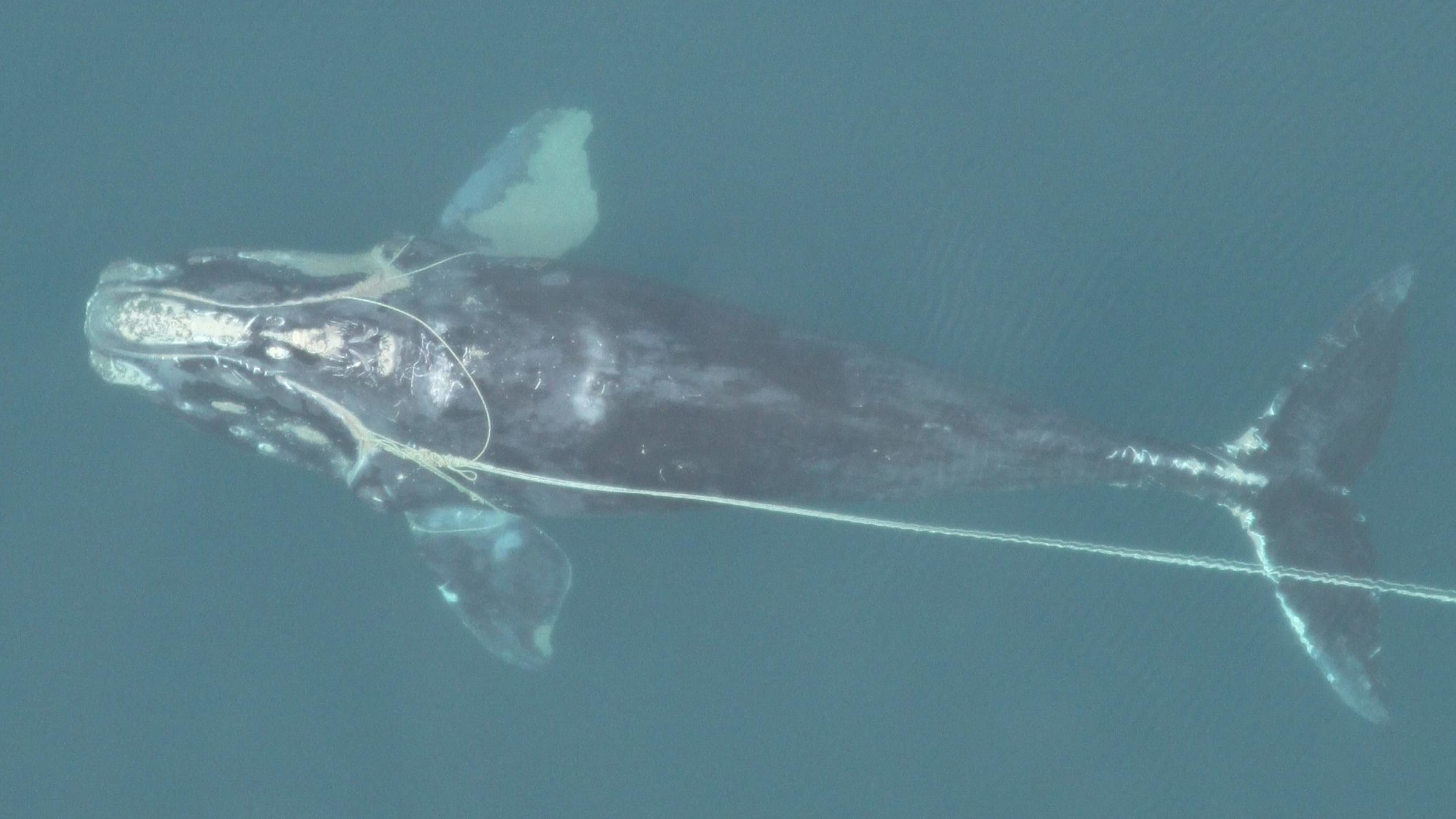
The funding provided by the SeaWorld Conservation Fund will be primarily used to test alternative non-lethal fishing gear. Whales and sea turtles commonly entangle in ropes that connect crab or lobster traps on the sea floor to buoys on the sea surface.
Read MoreExploration Enabler: Robin Littlefield
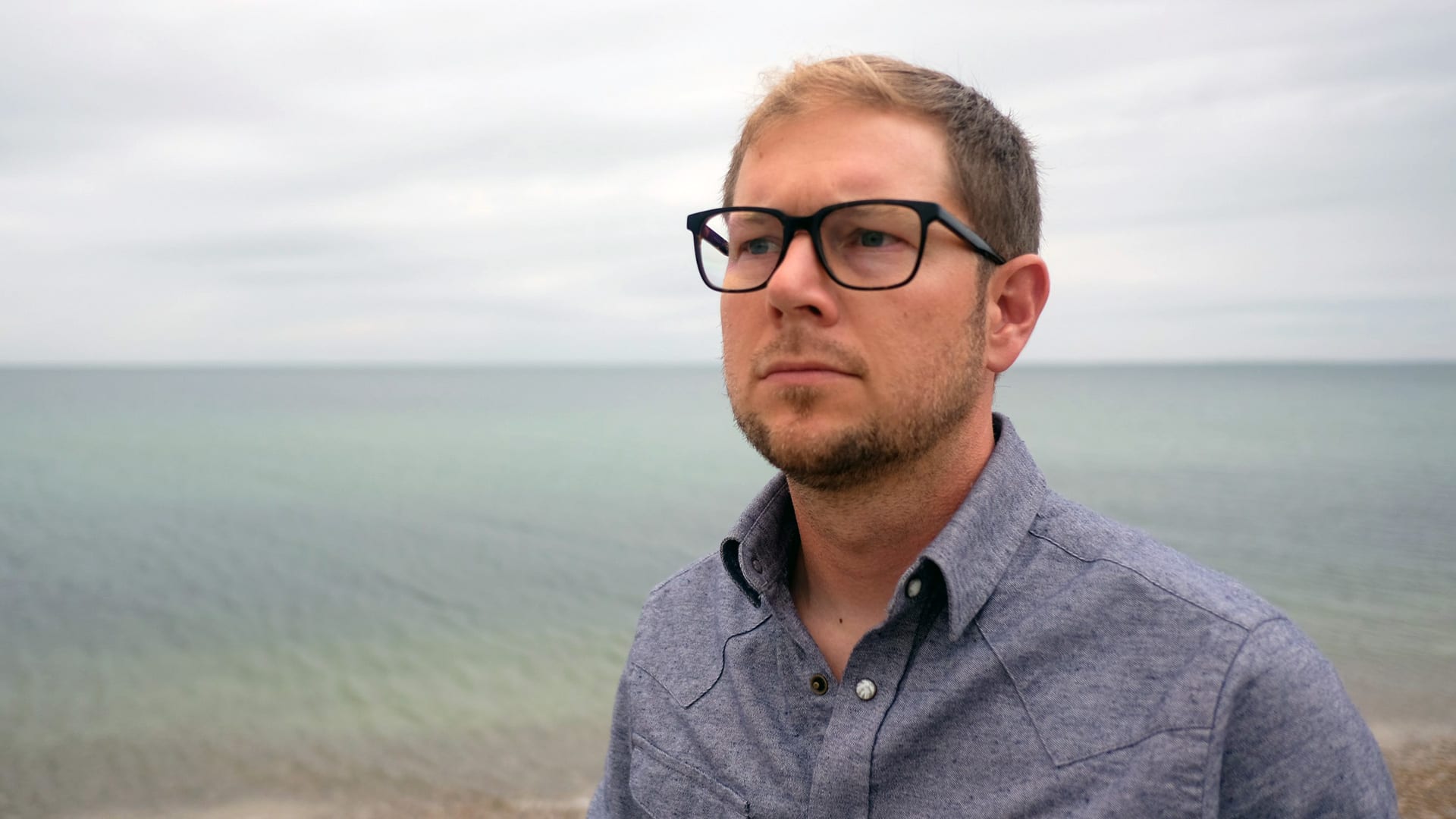
WHOI engineer Robin Littlefield is on a mission to increase the reach of science through the development and operation of autonomous underwater vehicles.
Read MoreAutonomous Robotic Boats Improve Environmental Sampling at Sea
An autonomous robotic system invented by researchers at MIT and the Woods Hole Oceanographic Institution (WHOI) efficiently sniffs out the most scientifically interesting — but hard-to-find — sampling spots in…
Read MoreHow Cheap Robots Are Transforming Ocean Exploration
For researchers, affordable tech opens up new worlds. “Your decision process is fundamentally different when you can use cheaper tools,” says Jim Bellingham, director of the Center for Marine Robotics…
Read MoreThe “sub” text of 45 years at Woods Hole Oceanographic Institution
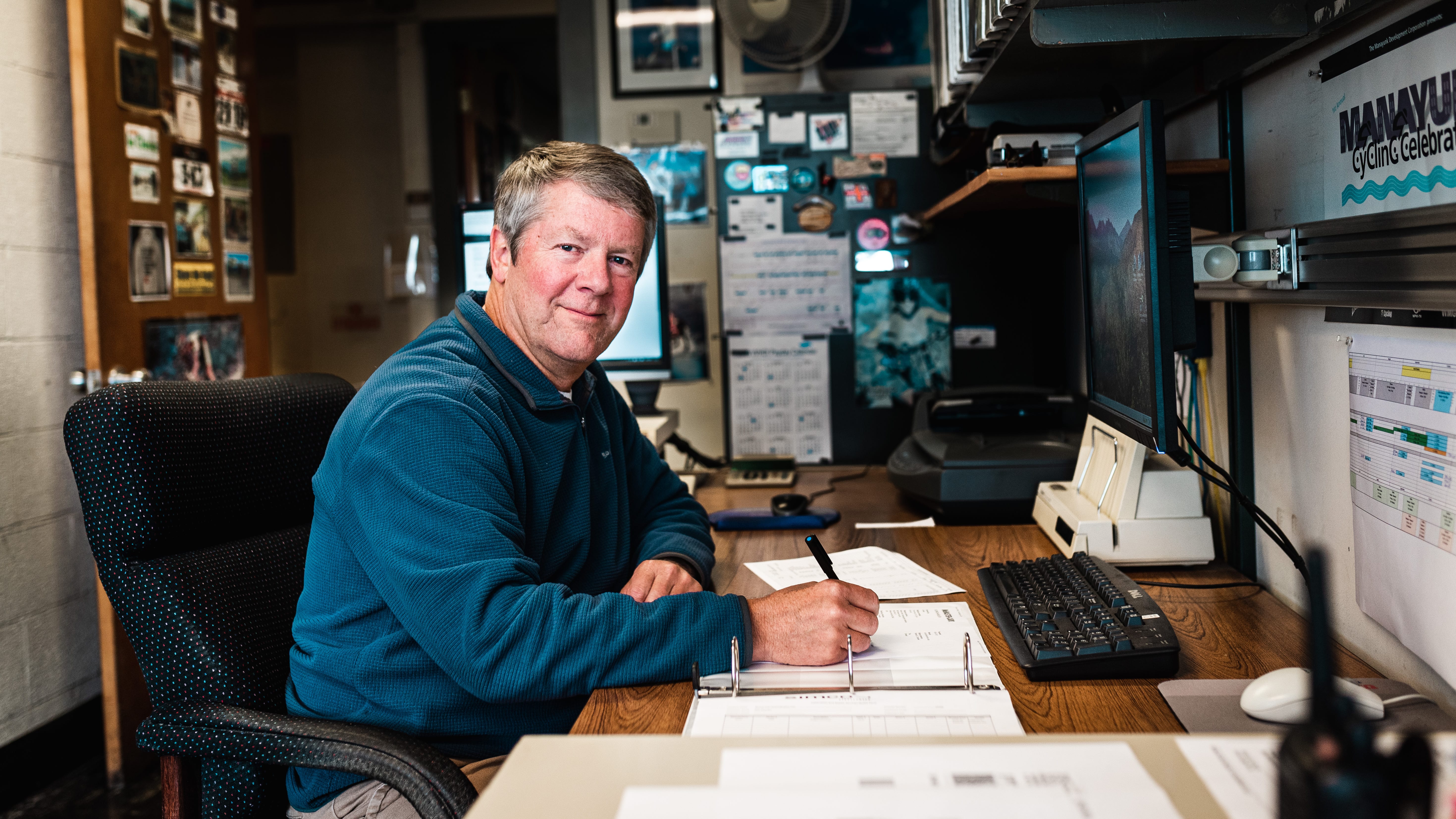
Rick Chandler is a senior submersible engineer and administrator for the Alvin Group at Woods Hole Oceanographic Institution, where he’s worked for more than 45 years.
Read MoreFlight of the underwater falcon
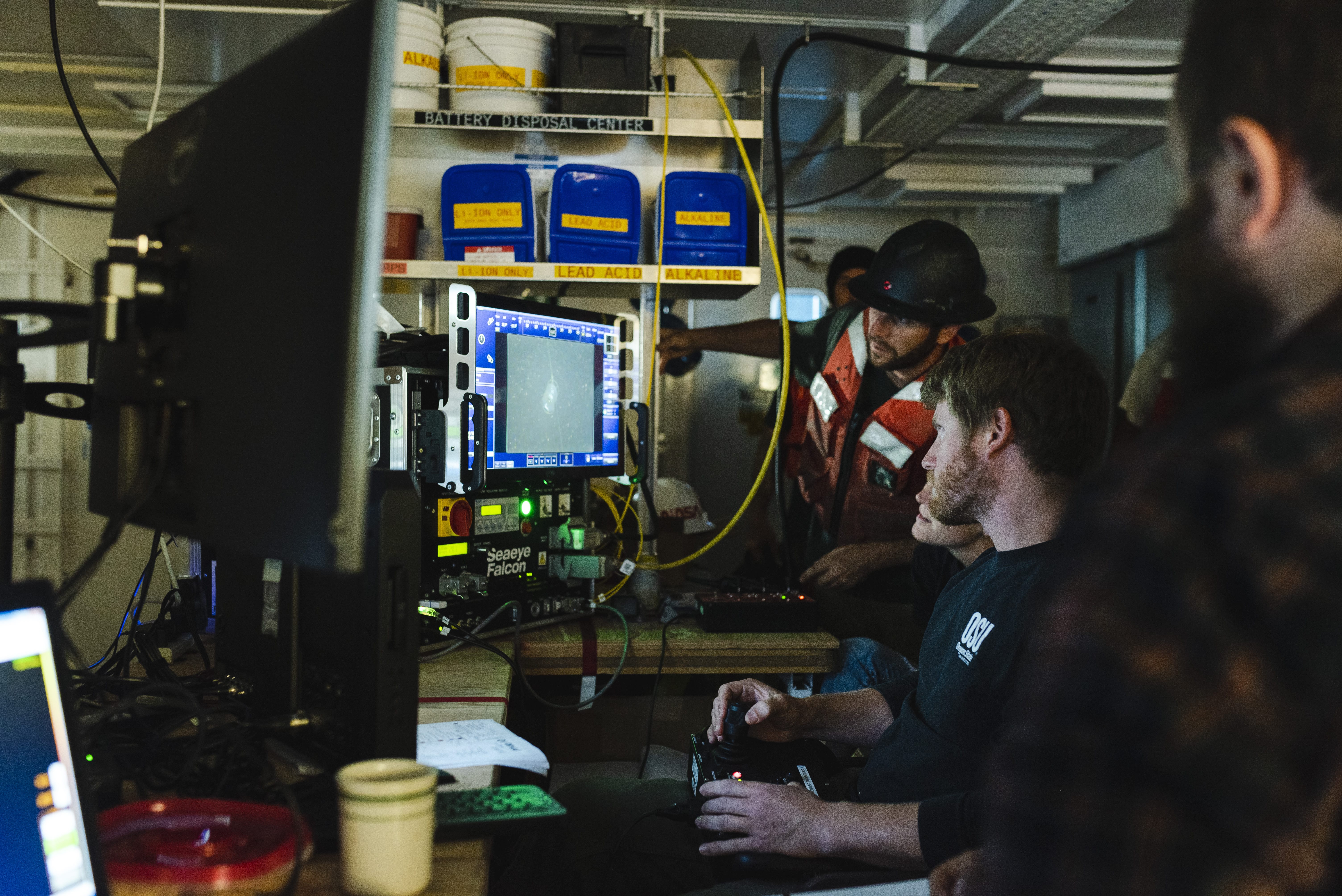
How a remotely operated vehicle made by Saab is lending a watchful eye to scientific mooring operations.
Read MoreThe hive mind behind a swarm of submersibles
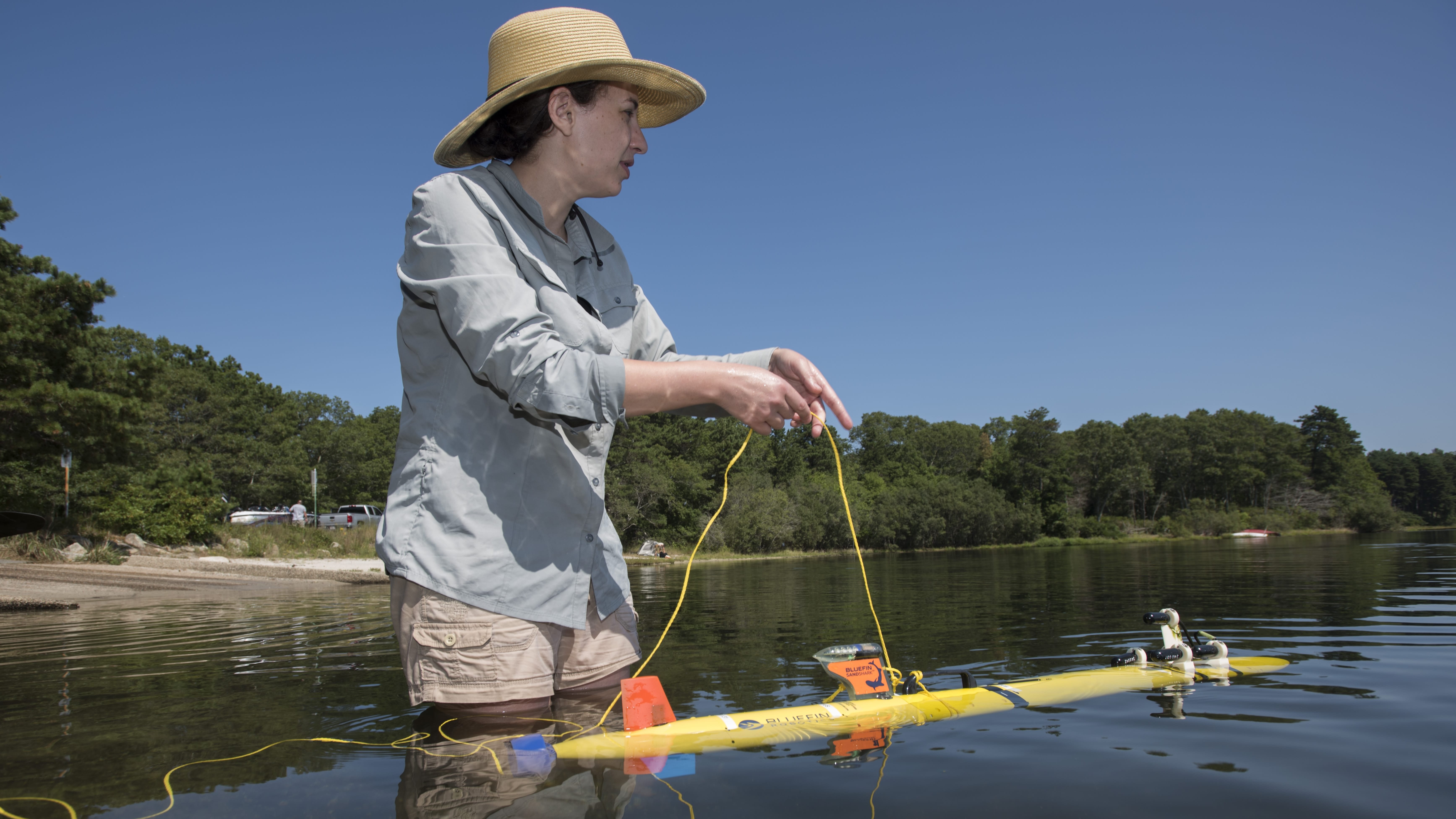
The vastness of our oceans demands extensive study methods. Erin Fischell, an assistant scientist in the Department of Applied Ocean Physics and Engineering, has been experimenting with a swarm of autonomous underwater vehicles that aim to both minimize cost and maximize the scope of scientific assessment at sea.
Read MoreThe Rise of Orpheus (Part 2)
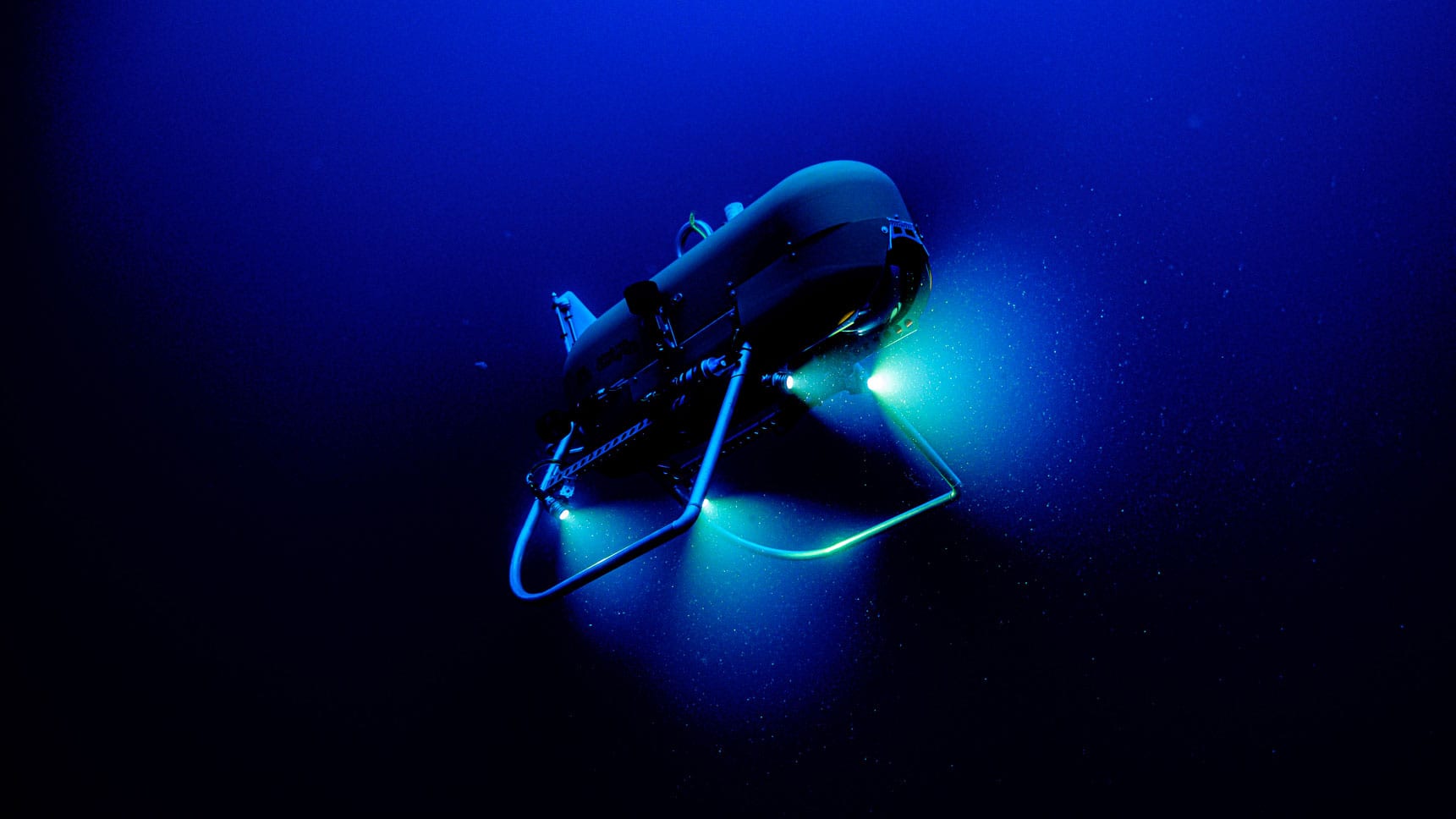
WHOI’s new deep-sea autonomous underwater vehicle moves one step closer to exploring the hadal zone—the deepest region of the ocean—to search for new clues about the limits of life on Earth, and possibly beyond.
Read MoreErin Fischell wins Moore Inventor Fellowship
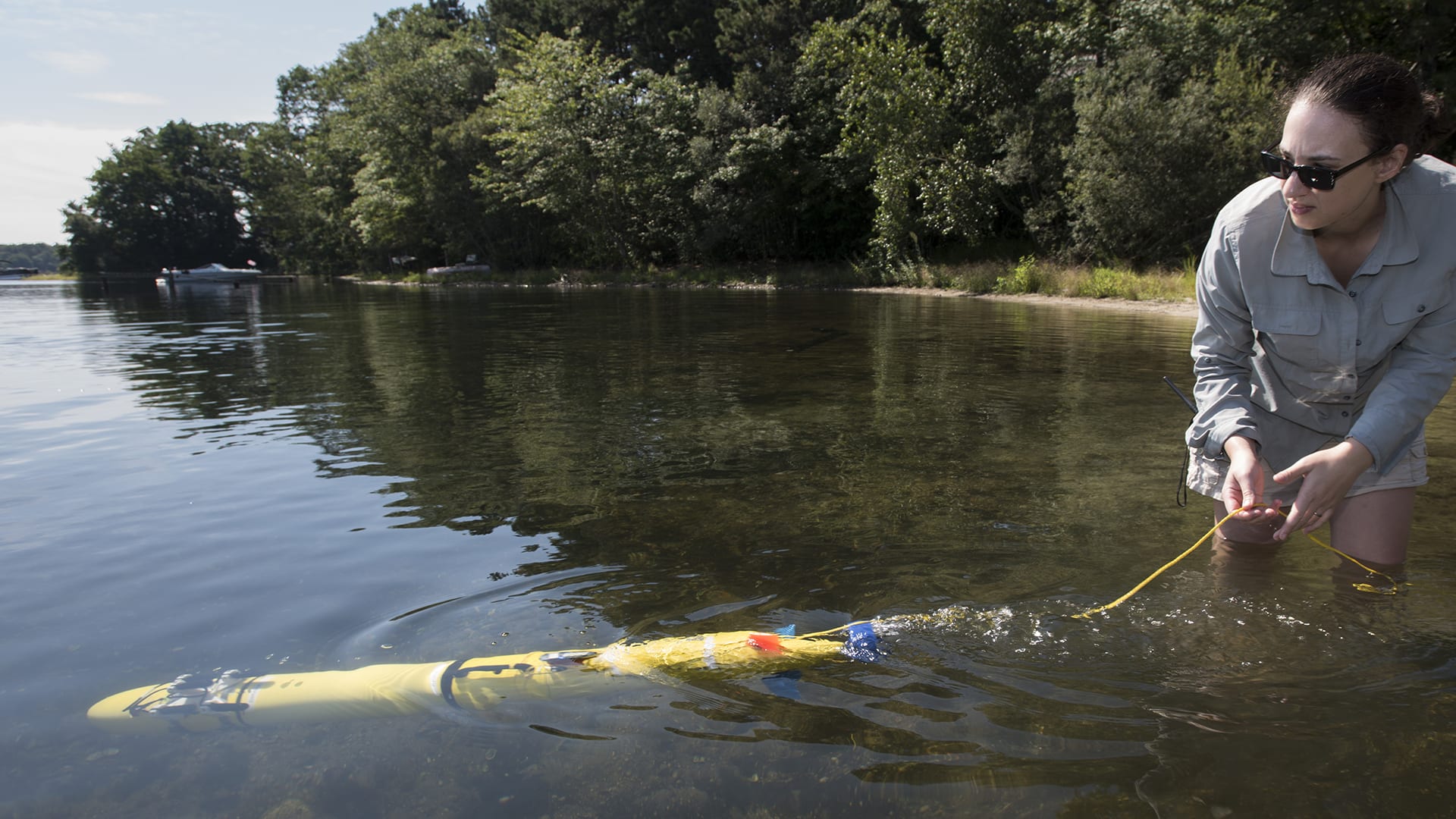
Erin Fischell, an assistant scientist in Applied Ocean Physics and Engineering at Woods Hole Oceanographic Institution, has been awarded the Moore Inventor Fellowship for her work on ocean robotics.
Read MoreBest of Constant Wonder
WHOI Research Engineer Jeff Kaeli talks about the 2017discovery of the San José, a sunken ship from 1708 loaded with treasure valued up to $17 billion. (segment begins 24:05)
Read MoreRapid Response at Sea

As sea ice continues to melt in the Arctic and oil exploration expands in the region, the possibility of an oil spill occurring under ice is higher than ever. To help first responders cope with oil trapped under ice, ocean engineers are developing undersea vehicles that can map oil spills to improve situational awareness and decision making during an emergency.
Read MoreJames Cameron challenges Victor Vescovo’s ‘record breaking’ trip to deepest part of ocean: ‘it’s flat down there, impossible to dive deeper’
Cameron and researchers with the WHOI say the difference between the depth recorded by Deepsea Challenger and Vescovo’s submersible relates to the technology used. Measuring ocean depth is not as…
Read MoreWhale populations in New York Harbor are booming—here’s why
Woods Hole Oceanographic Institution and the New York Aquarium teamed up to deploy a high-tech acoustic buoy named Melville, 22 miles south of Fire Island. Whales communicate mostly via sound,…
Read MoreMaking the planetary personal: the roots of climate science
In the 1950s, a timber cabin on the grounds of the Woods Hole Oceanographic Institution in Falmouth, Massachusetts, became a hub for annual meetings where Simpson, meteorologist Jule Charney and…
Read MoreA shipwreck worth billions off the coast of Cartagena
On 27 November 2015, the San José was “officially” discovered by a robotic submarine called the REMUS 6000, which is operated by the US-based Woods Hole Oceanographic Institution.
Read MoreRapid Response at Sea
As sea ice continues to melt in the Arctic and oil exploration expands in the region, the possibility of an oil spill occurring under ice is higher than ever. To help first responders cope with oil trapped under ice, ocean engineers are developing undersea vehicles that can map oil spills to improve situational awareness and decision making during an emergency.
Read MoreLocal fishermen assist leatherback research
After several years, Kara Dodge began to do other work with turtles, in particular a “TurtleCam” project with Woods Hole Oceanographic Institution engineer Amy Kukulya. The project involved tagging and…
Read MoreNew Technology Will Listen For Underwater Whale Traffic In An Effort To Reduce Ship Strikes
Scientists from the Benioff Ocean Initiative and Woods Hole Oceanographic Institution have deployed a a hydrophone, or underwater microphone, to listen for whale traffic in the Santa Barbara Channel. They…
Read MoreUnderwater robots swarm the ocean
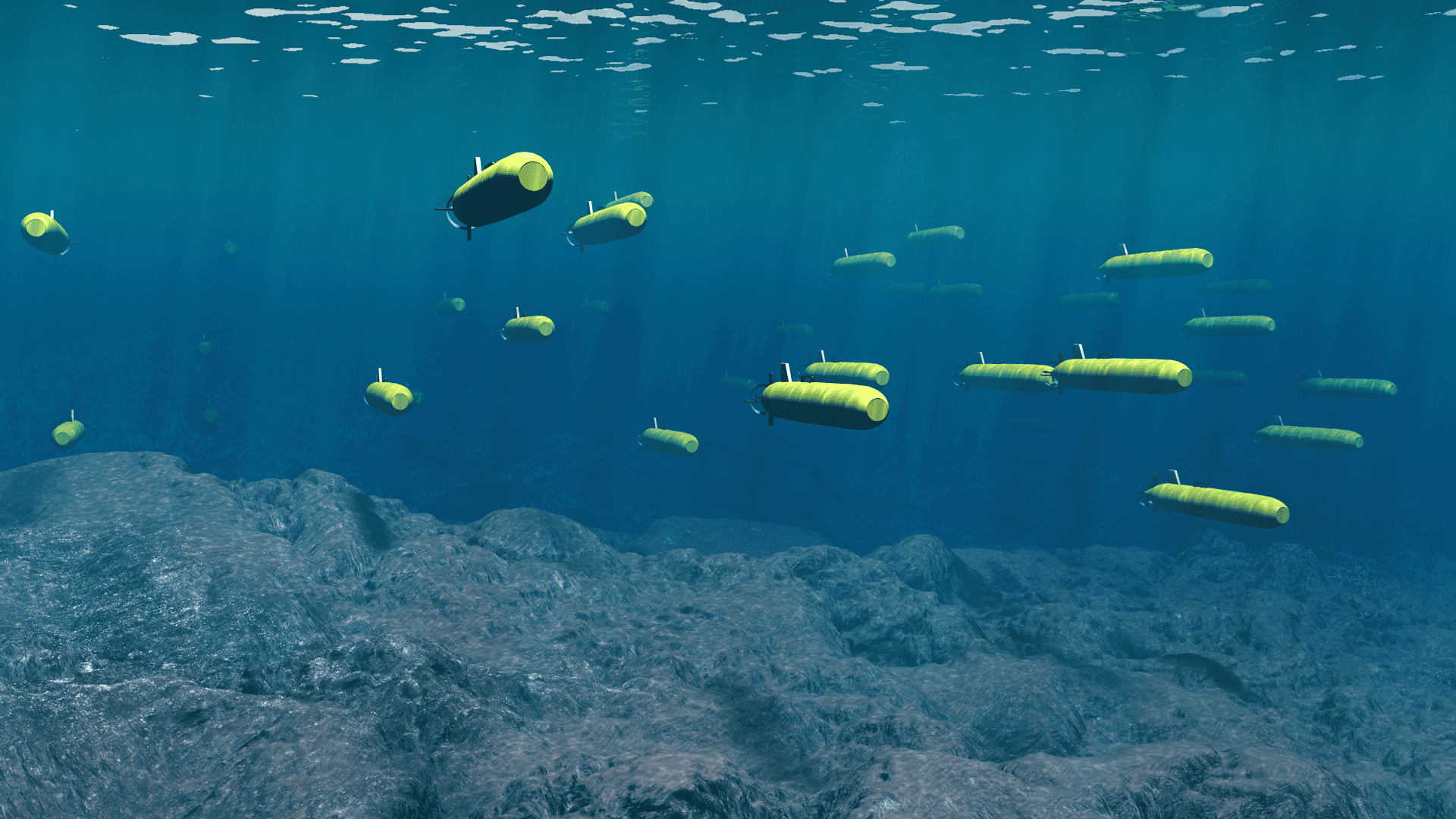
Researchers test a new, acoustic-based navigation system to solve a problem that oceanographers have grappled with for years—getting multiple underwater robots to monitor the ocean cooperatively in swarm-like fashion.
Read MoreScientists Team With Fishermen on Tracking Technology
Scientists from the Center for Coastal Studies and the Woods Hole Oceanographic Institution are working with local commercial fishermen to install video monitoring equipment on gillnets.
Read More