
Applied Ocean Physics & Engineering
Girls Just Wanna Be Engineers
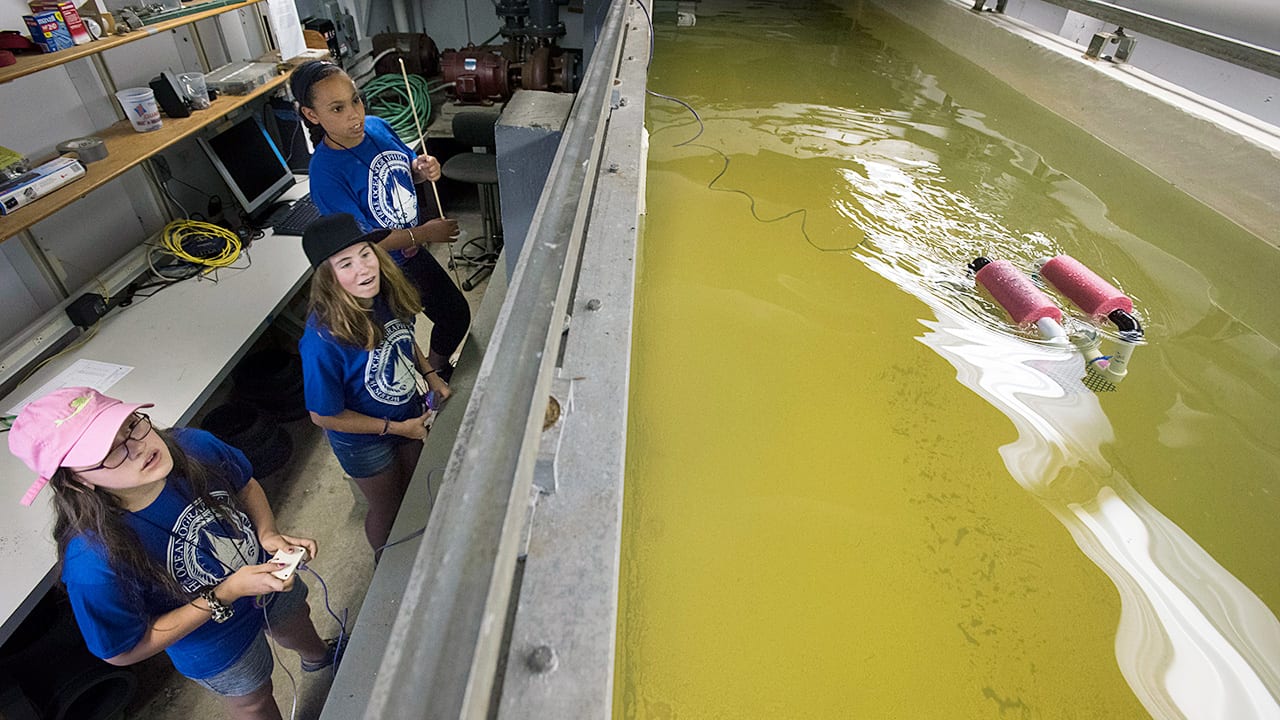
“Very few women go into engineering,” said Anna Michel, “because girls just don’t get the message that they could be engineers.” Michel, a scientist in the Applied Physics and Ocean…
Read MoreWHOI Research Engineer Selected for NASA Astronaut Program
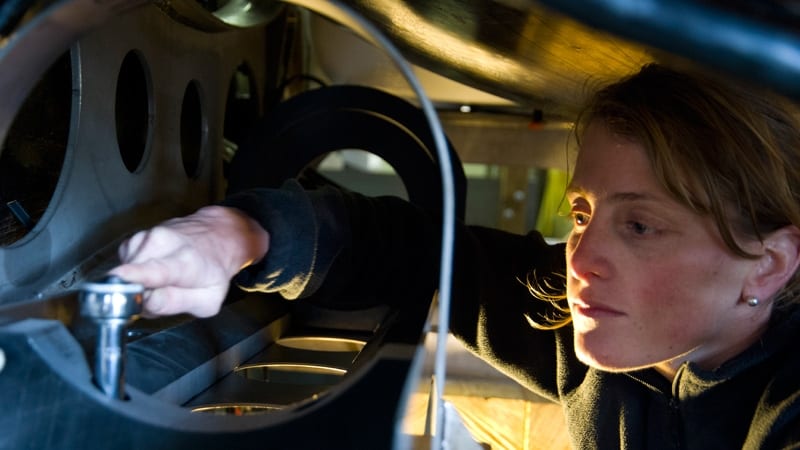
Research Engineer Loral O’Hara was introduced today at Johnson Space Flight Center as a member of NASA’s most recent class of astronauts. O’Hara was one of just 12 to be selected from an applicant pool of more than 18,300 — the largest number NASA has ever received.
Read MorePlankZooka & SUPR-REMUS
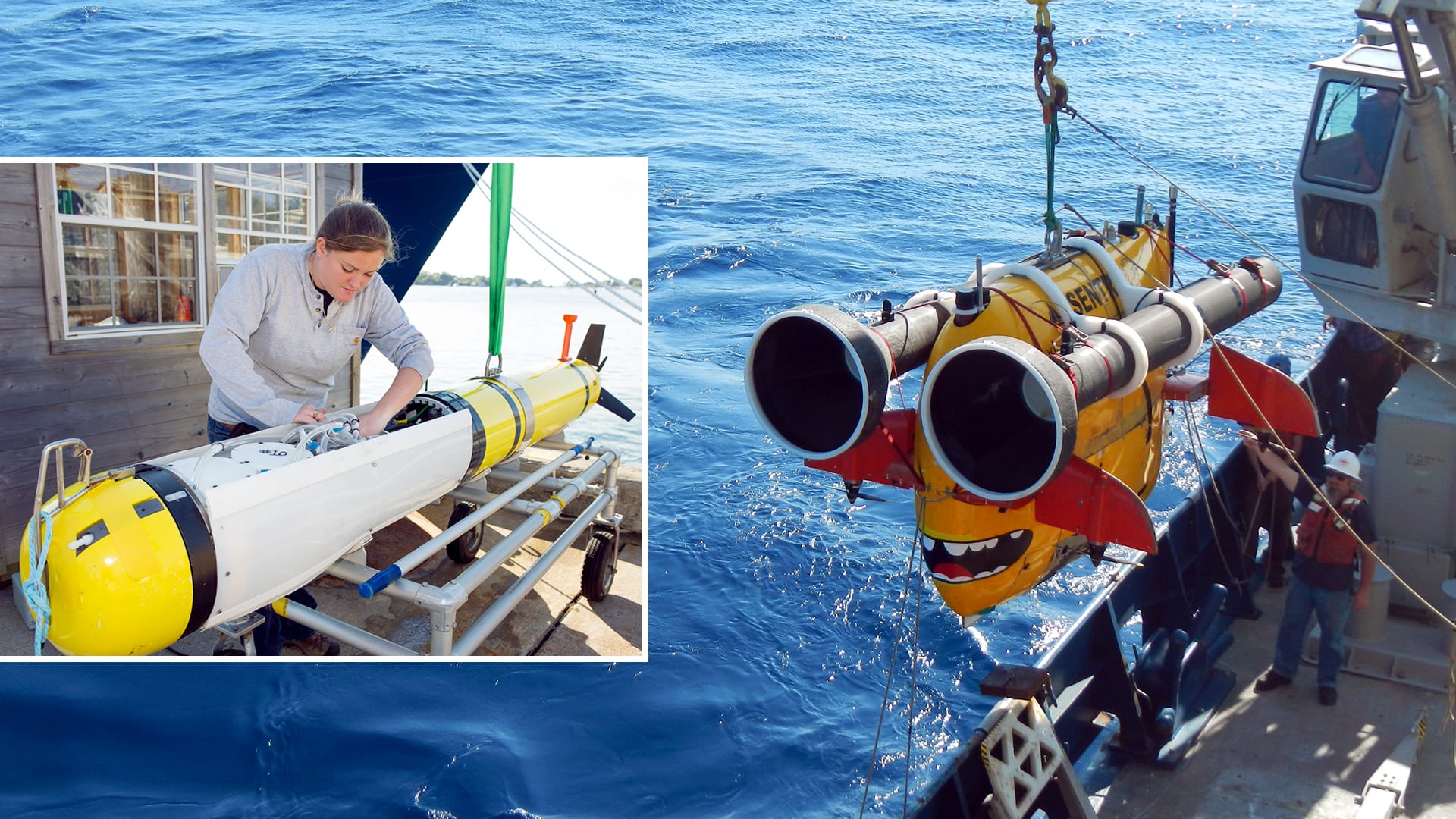
Much of marine life begins as microscopic larvae—so tiny, delicate, and scattered in hard-to-reach parts of ocean that scientists have had a tough time illuminating this fundamental stage of life…
Read MoreWhen the Hunter Became the Hunted
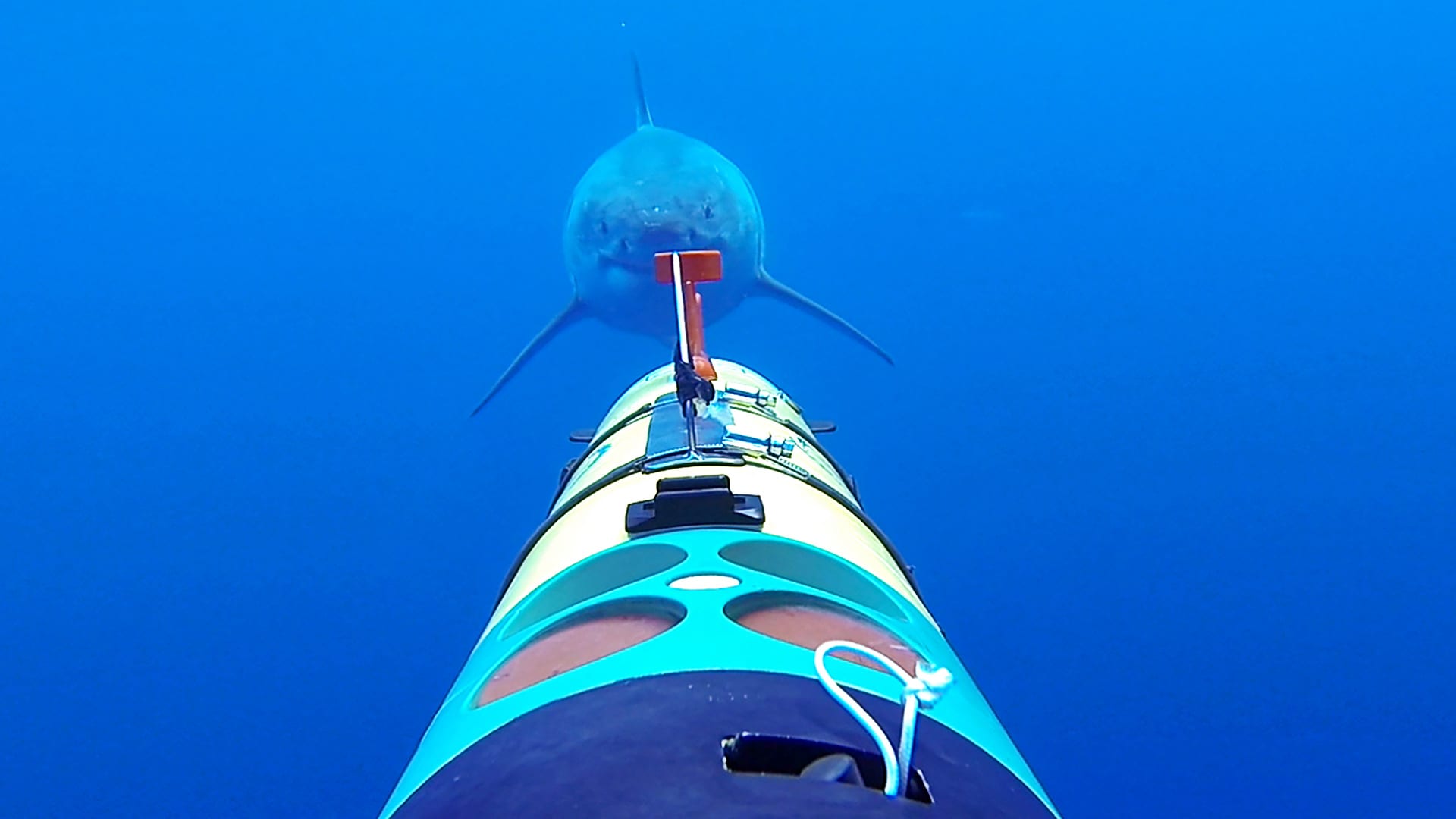
In waters off Mexico’s Guadalupe Island, Woods Hole Oceanographic Institution (WHOI) engineers deployed the REMUS SharkCam, a torpedo-shaped robotic vehicle with a special system to track and film great white…
Read MoreAncient Skeleton Discovered
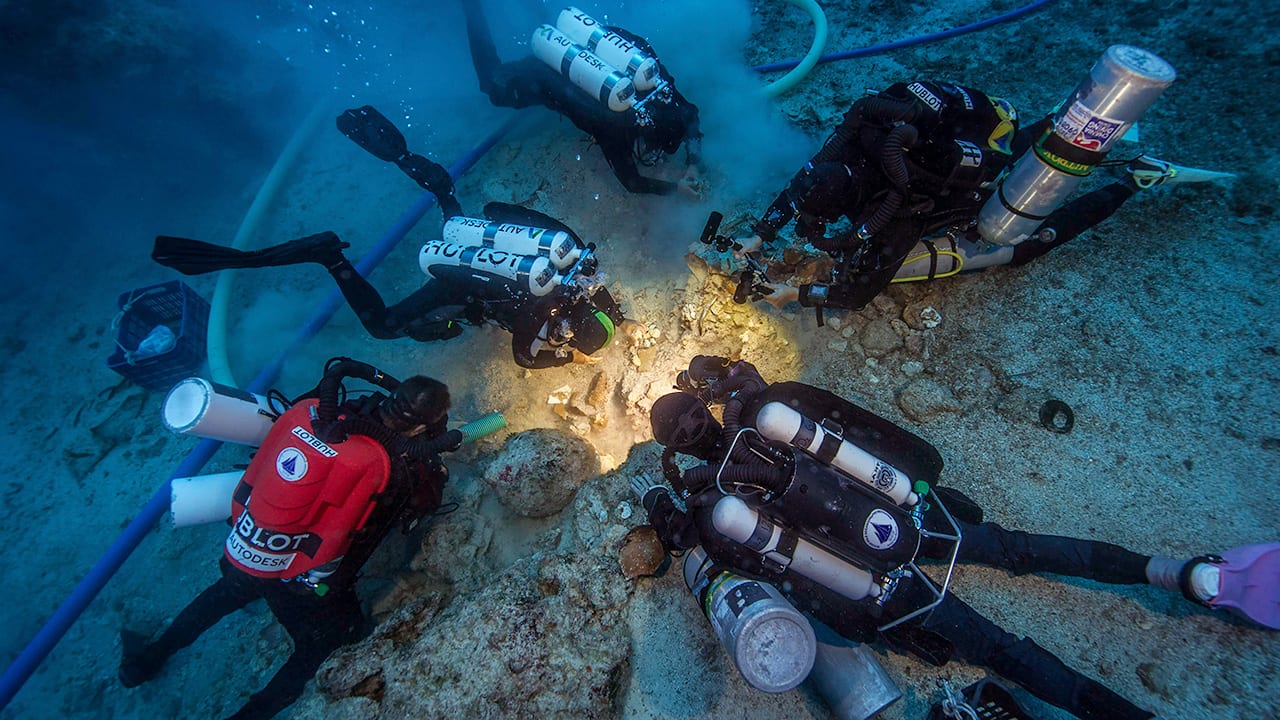
International researchers discovered a human skeleton during ongoing excavations of a ship that sank around 65 B.C. off the Greek island of Antikythera in the Aegean Sea. It is the…
Read MoreInside the Sunken USS Arizona
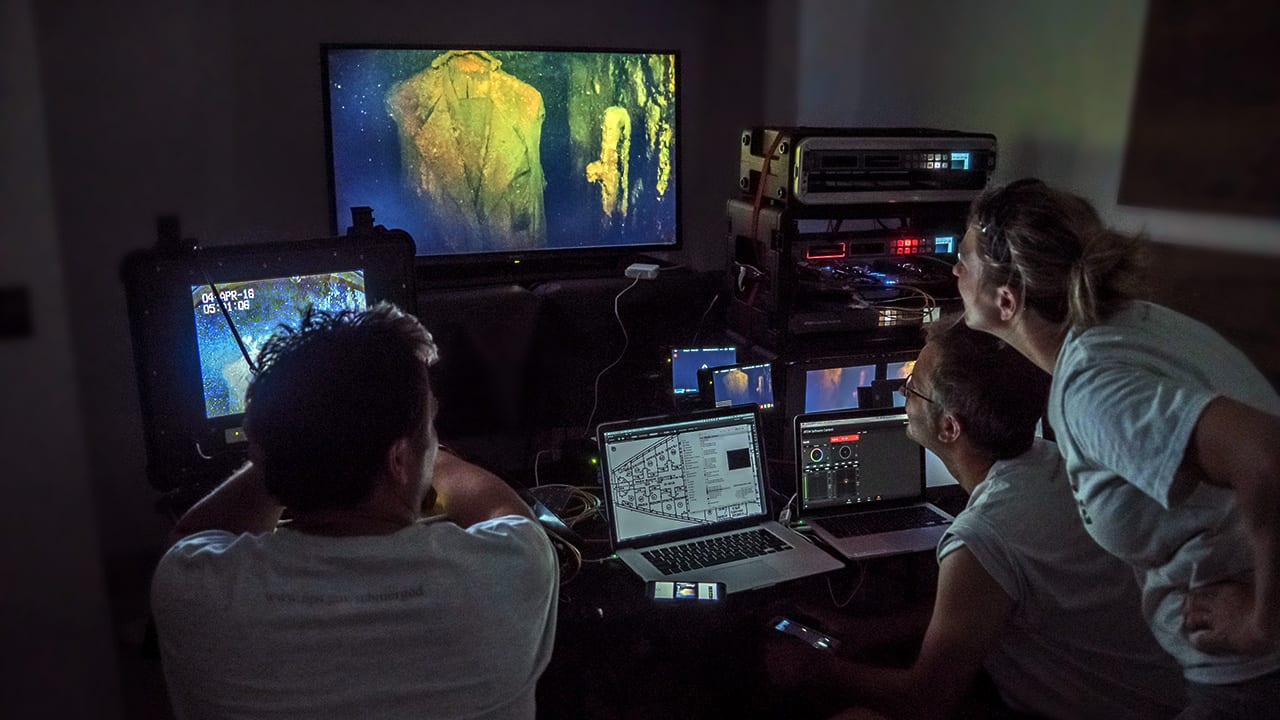
Mike Skowronski (above left) pilots a remotely operated vehicle into the remains of the battleship Arizona at the USS Arizona Memorial in Pearl Harbor, as Evan Kovacs and Maryann Morin…
Read MoreIlluminating the Ocean with Sound
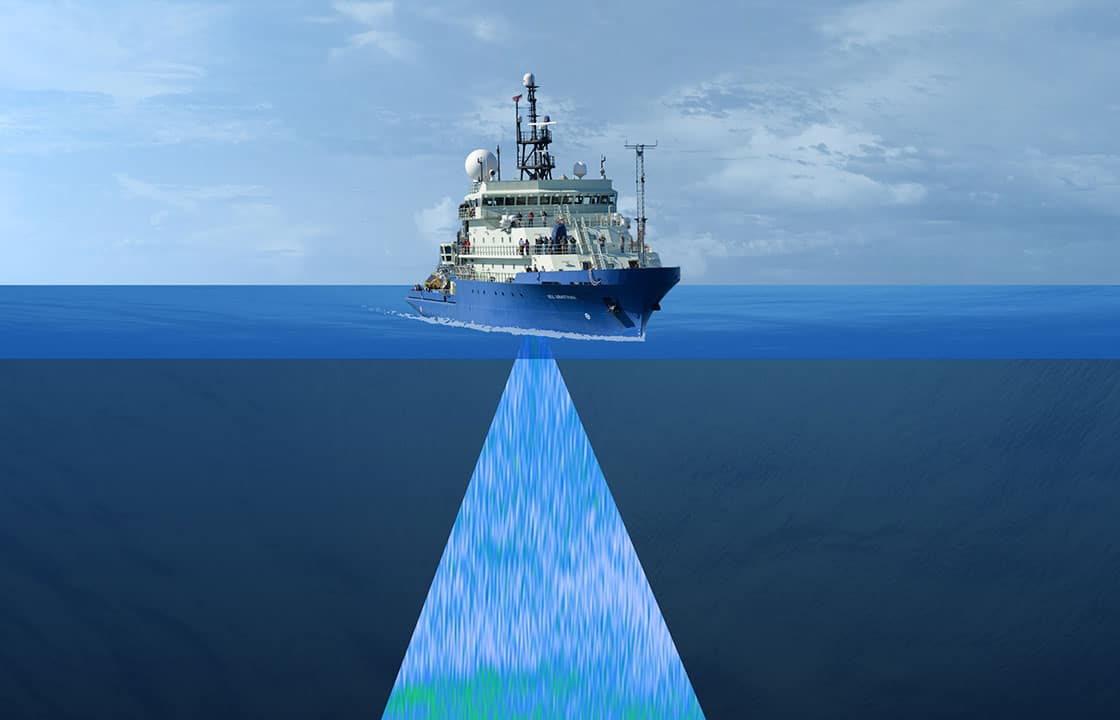
WHOI’s new research vessel Niel Armstrong is equipped with an EK80 broadband acoustic echo sounder. Using a wide range of sound frequencies, it gives scientists the ability to identify and distinguish between…
Read MoreWhy Did the El Faro Sink?
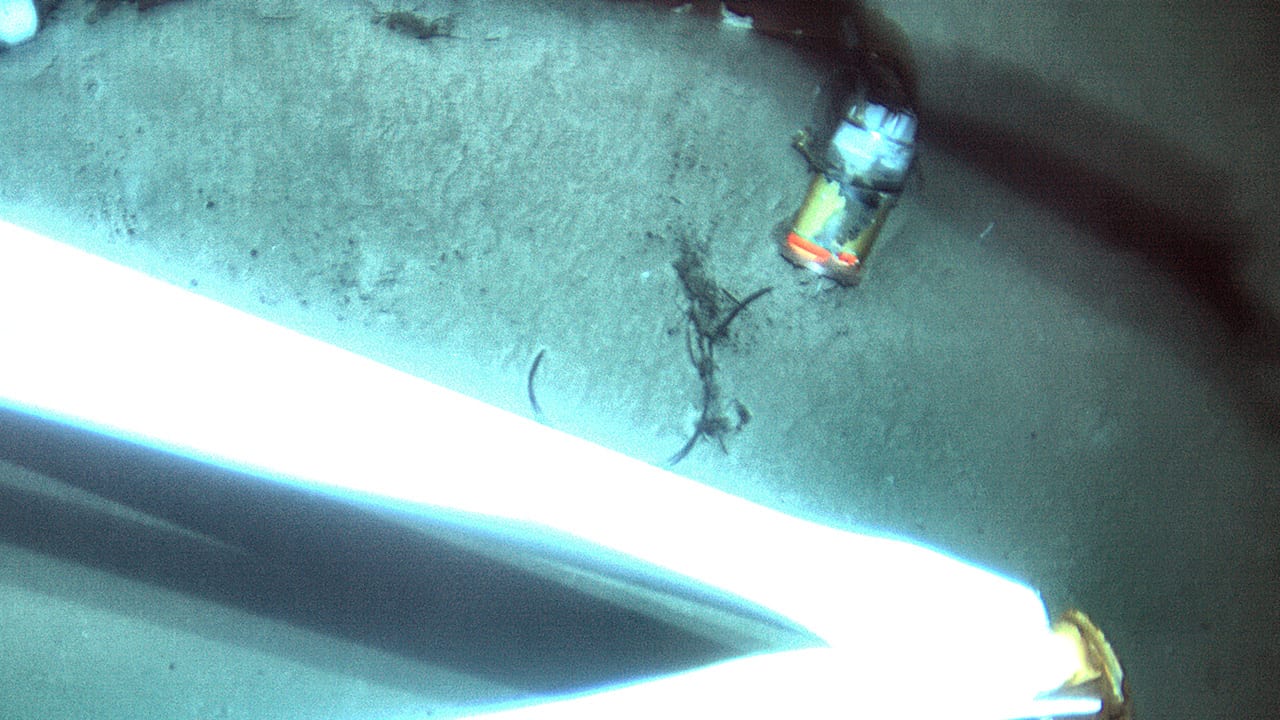
WHOI deep-sea vehicles and scientists played critical roles in searching the seafloor and locating the voyage data recorder of El Faro, the ship that sank in 2015 during Hurricane Joaquin, killing all 33 crew members.
Read MoreA New Tsunami-Warning System

After successfully testing a long-range underwater communications system that worked under Arctic Ocean ice, an engineering team at Woods Hole Oceanographic Institution (WHOI) adapted it for a very different environment—the…
Read MoreCommunicating Under Sea Ice
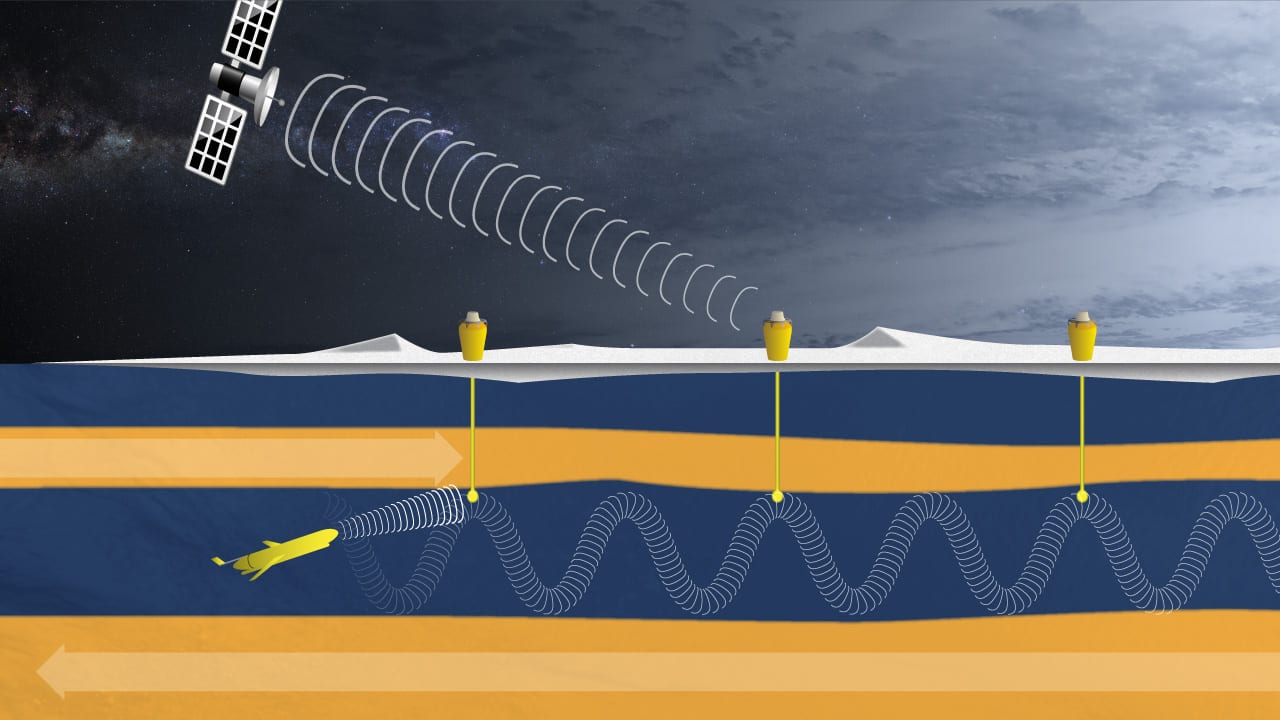
Researchers at Woods Hole Oceanographic Institution developed a new communication and navigation system that works over long distances under Arctic sea ice, allowing scientists to use autonomous underwater vehicles to explore the ice-covered Arctic Ocean.
Read MoreAll the Ocean’s a Stage
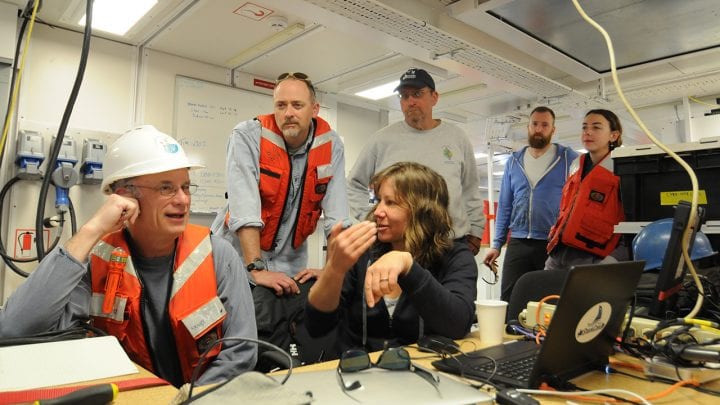
“All right, Mr. Brickley, the show begins at two o’clock,” John Kemp announced as he entered the ship’s main lab on Saturday afternoon. Kemp is the deck operations leader for…
Read MoreTo Track a Sea Turtle
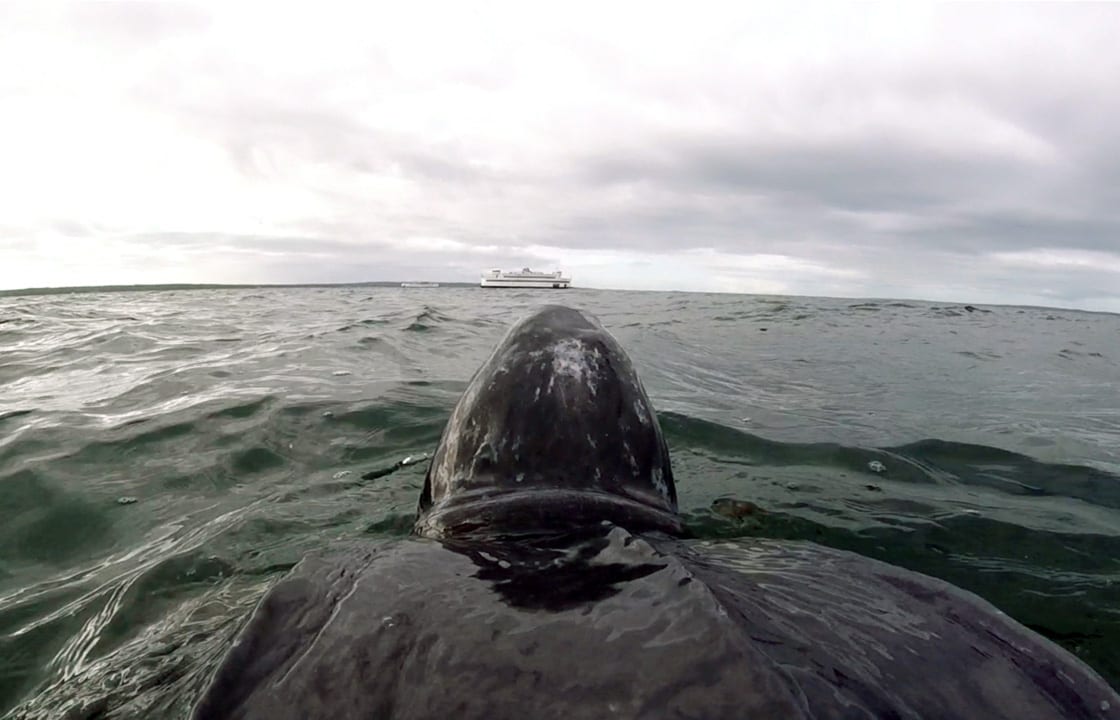
A WHOI engineer and biologist devise an autonomous system to track and film sea turtles beneath the surface, revealing a turtle’s eye view of the world.
Read MoreHow Would ‘On-Call’ Buoys Work?
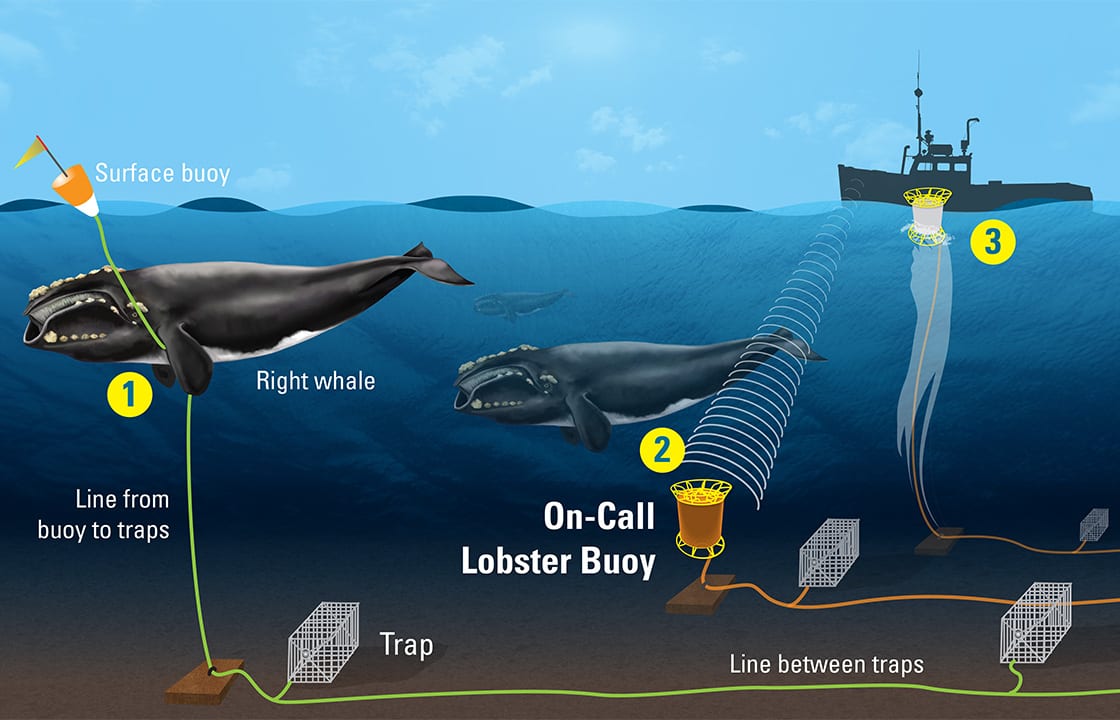
WHOI engineers are developing a new kind of lobster trap buoy that could help keep whales from getting tangled in fishing gear. Click on the numbers above to learn more. On a…
Read MoreWhale-safe Fishing Gear
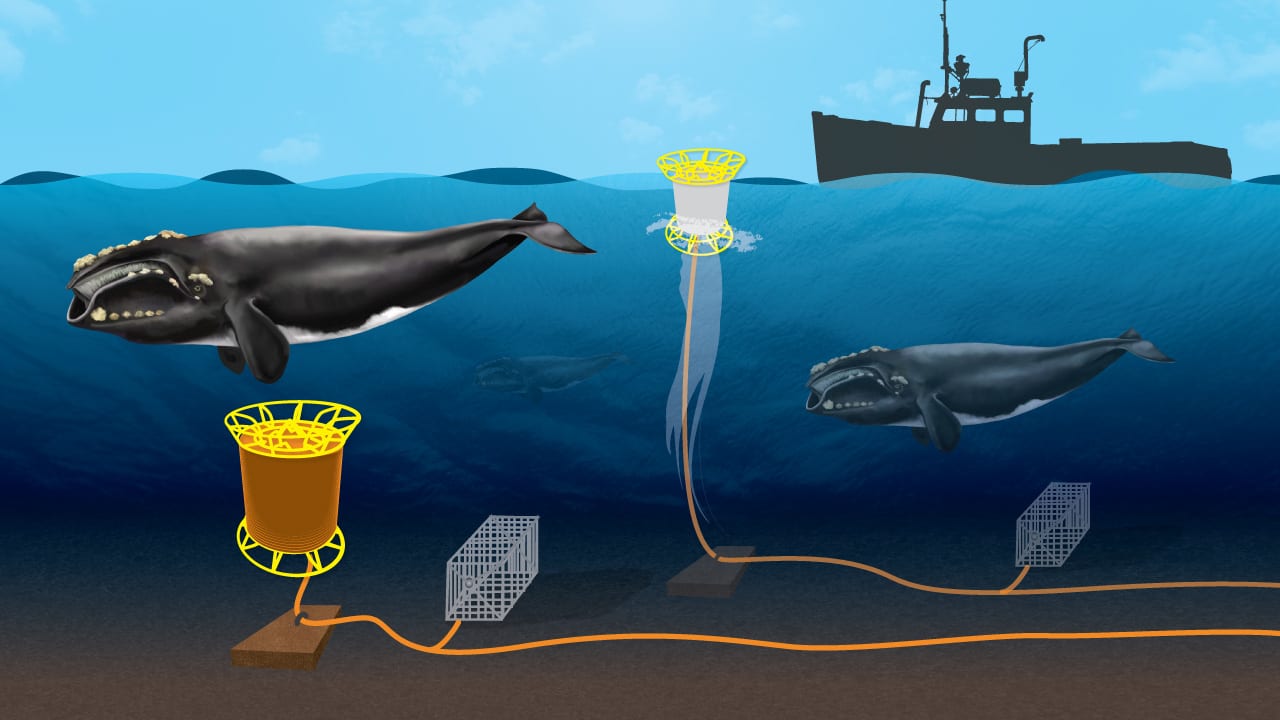
WHOI engineers are developing a new kind of lobster trap buoy that could help keep whales from getting tangled in fishing gear.
Read MoreAncient Skeleton Discovered on Antikythera Shipwreck
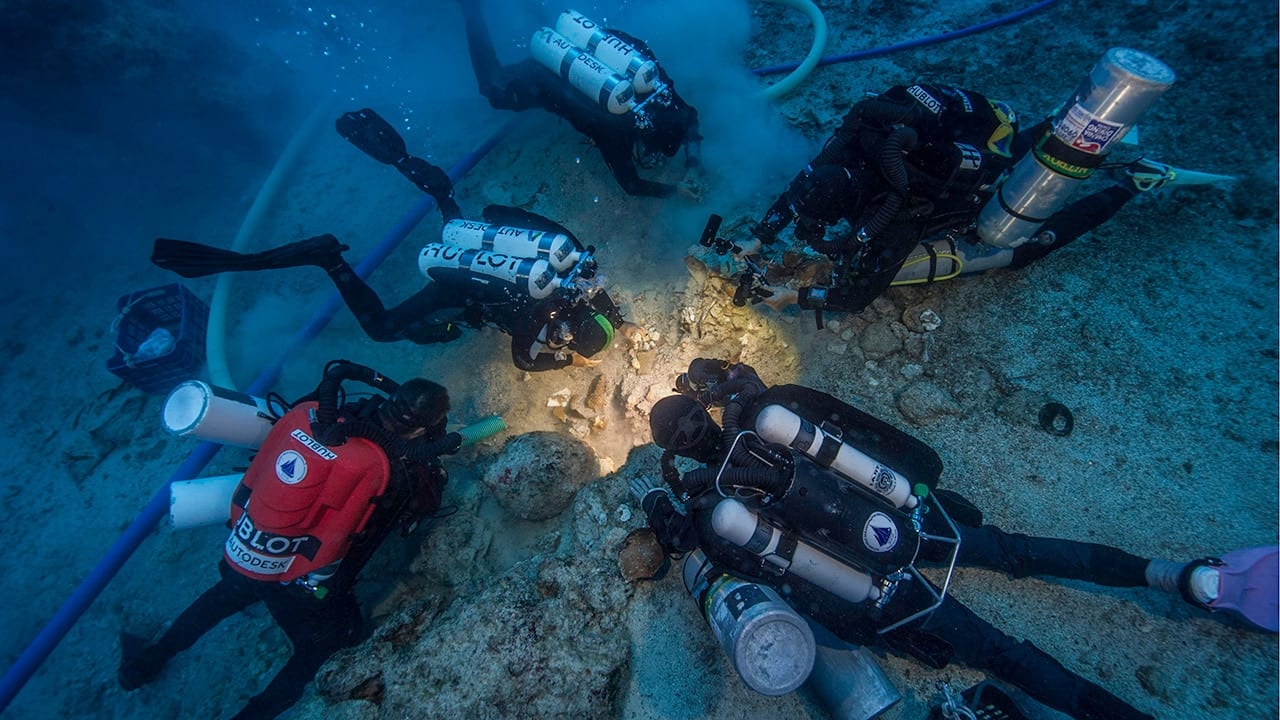
An international research team discovered a human skeleton during its ongoing excavation of the famous Antikythera Shipwreck (circa 65 B.C.) this month. The shipwreck, which holds the remains of a Greek trading or cargo ship, is located off the Greek island of Antikythera in the Aegean Sea. The first skeleton recovered from the wreck site during the era of DNA analysis, this find could provide insight into the lives of people who lived 2100 years ago.
Read MoreLet There Be Laser Light
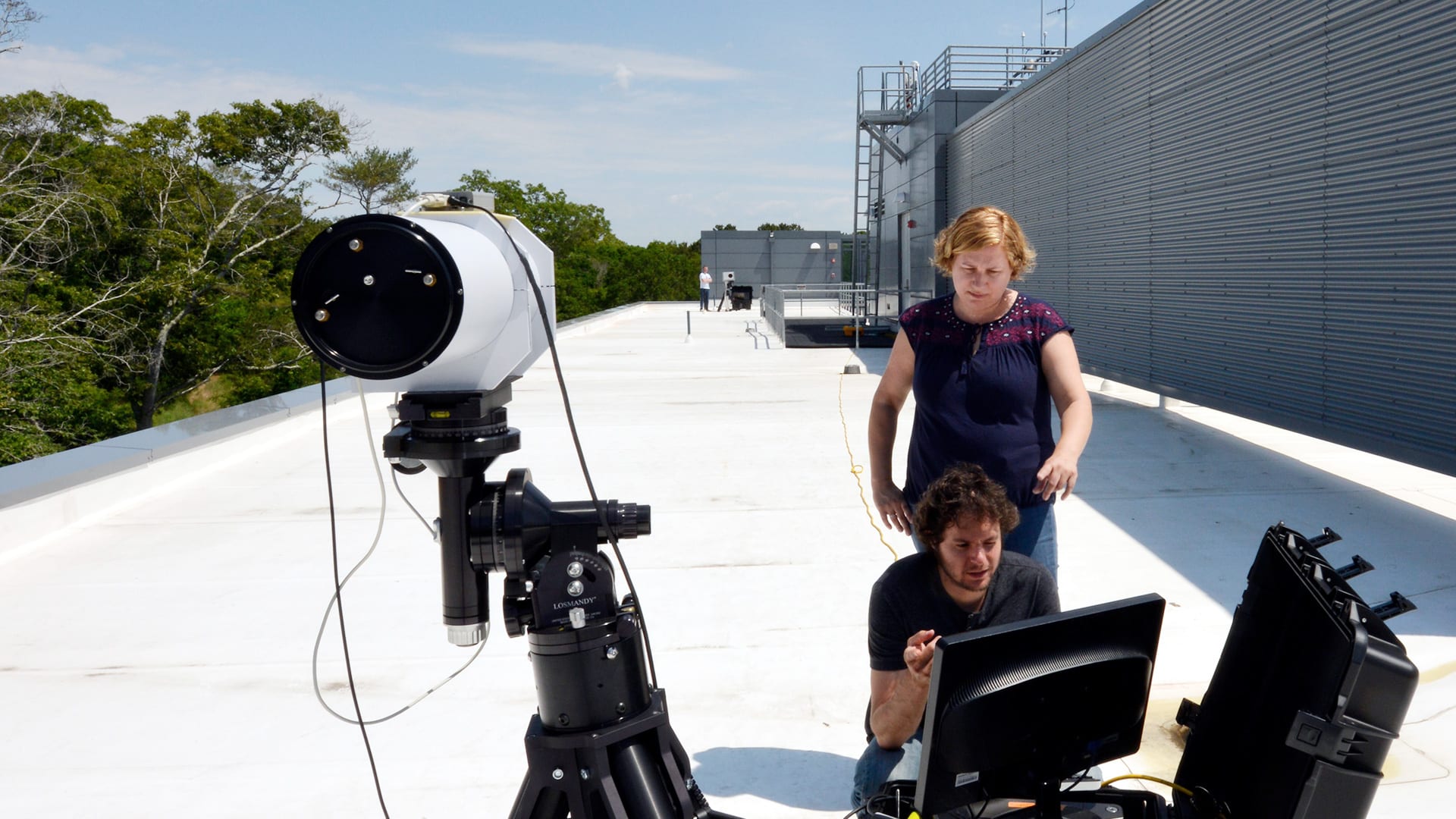
WHOI scientists are developing new sensors using lasers to detect methane, carbon dioxide, and other critical environmental gases in the air and under the ocean.
Read MoreOcean Observatories System Is Up and Running
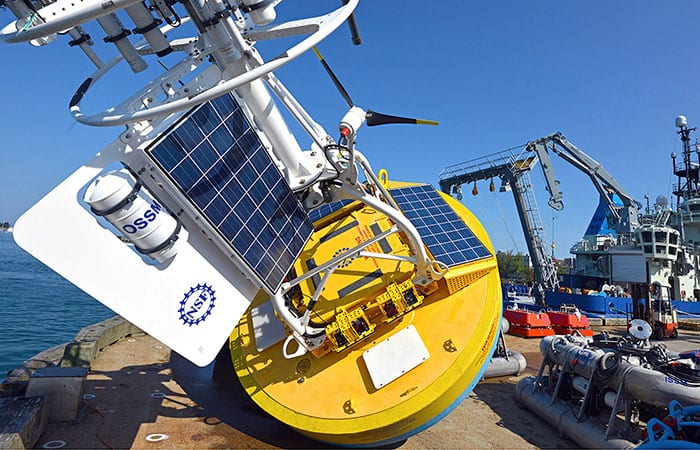
The Ocean Observatories Initiative has reached a major milestone: Its network of ocean sensor systems is now fully operational and sending a broad, continuous stream of data back to shore. Funded by the National Science Foundation with a planned life of 25 years, the OOI provides online access to a growing trove of multidisciplinary oceanographic data, freely available to researchers, educators, and the public worldwide.
Read MoreSharkCam Tracks Great Whites into the Deep
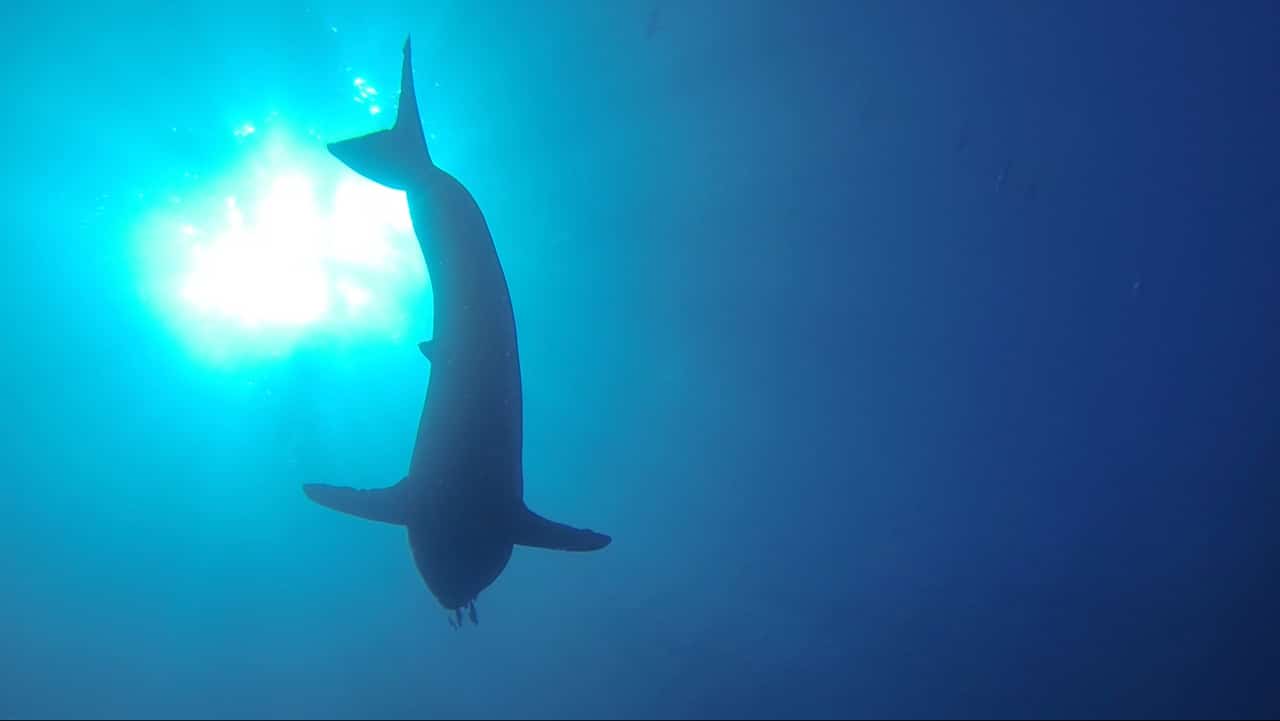
On the first trip to study great white sharks in the wild off Guadalupe Island in 2013, the REMUS SharkCam team returned with an autonomous underwater vehicle (AUV) tattooed with bite marks and some of the most dramatic footage ever seen on Discovery Channel’s Shark Week: large great white sharks attacking the underwater robot, revealing previously unknown details about strategies sharks use to hunt and interact with their prey.
Read MoreArtifacts Discovered on Return Expedition to Antikythera Shipwreck
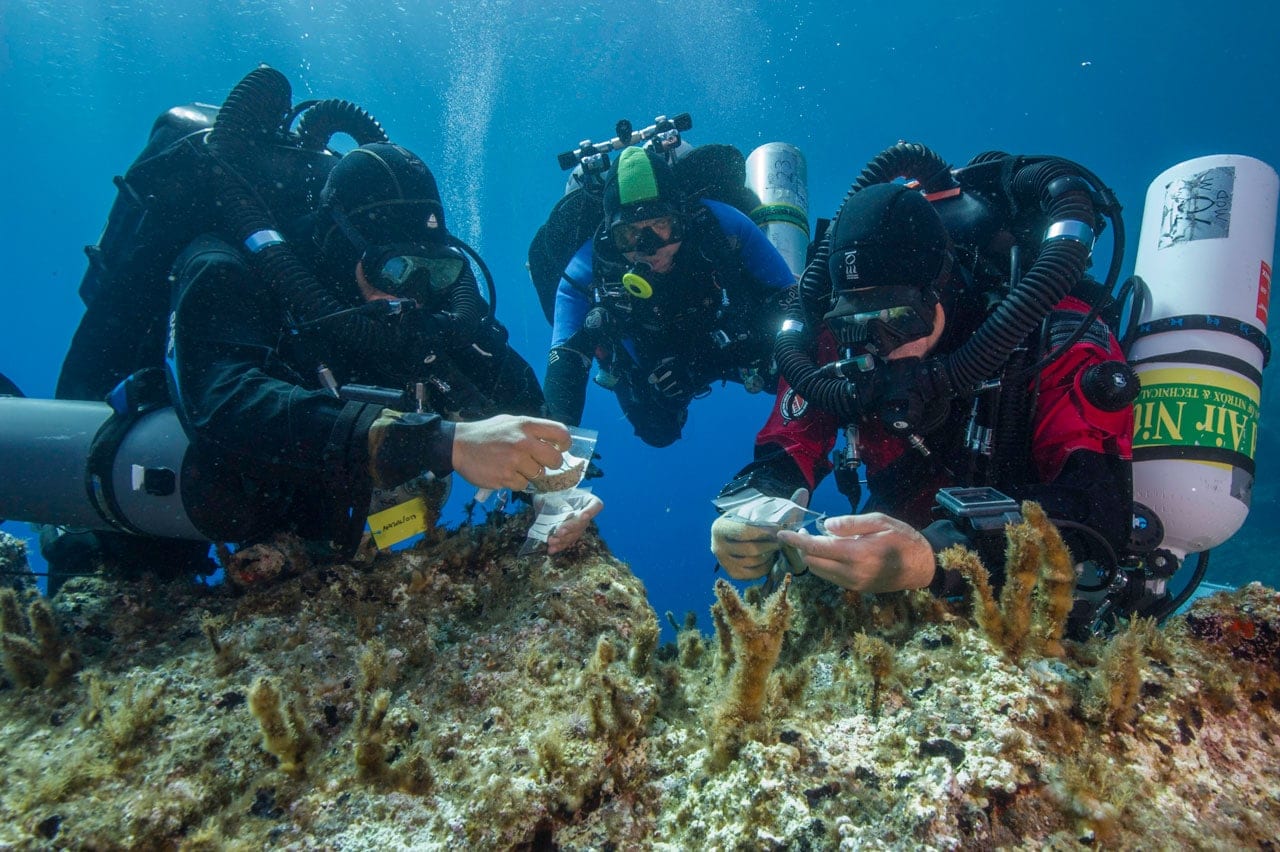
An international research team led by archaeologists and technical experts from the Hellenic Ministry of Culture and Sports and WHOI has discovered spectacular artifacts during its ongoing excavation of the famous ancient Antikythera Shipwreck off the Greek island of Antikythera in the Aegean Sea.
Read MoreA Luxury-Laden Shipwreck from 65 B.C.
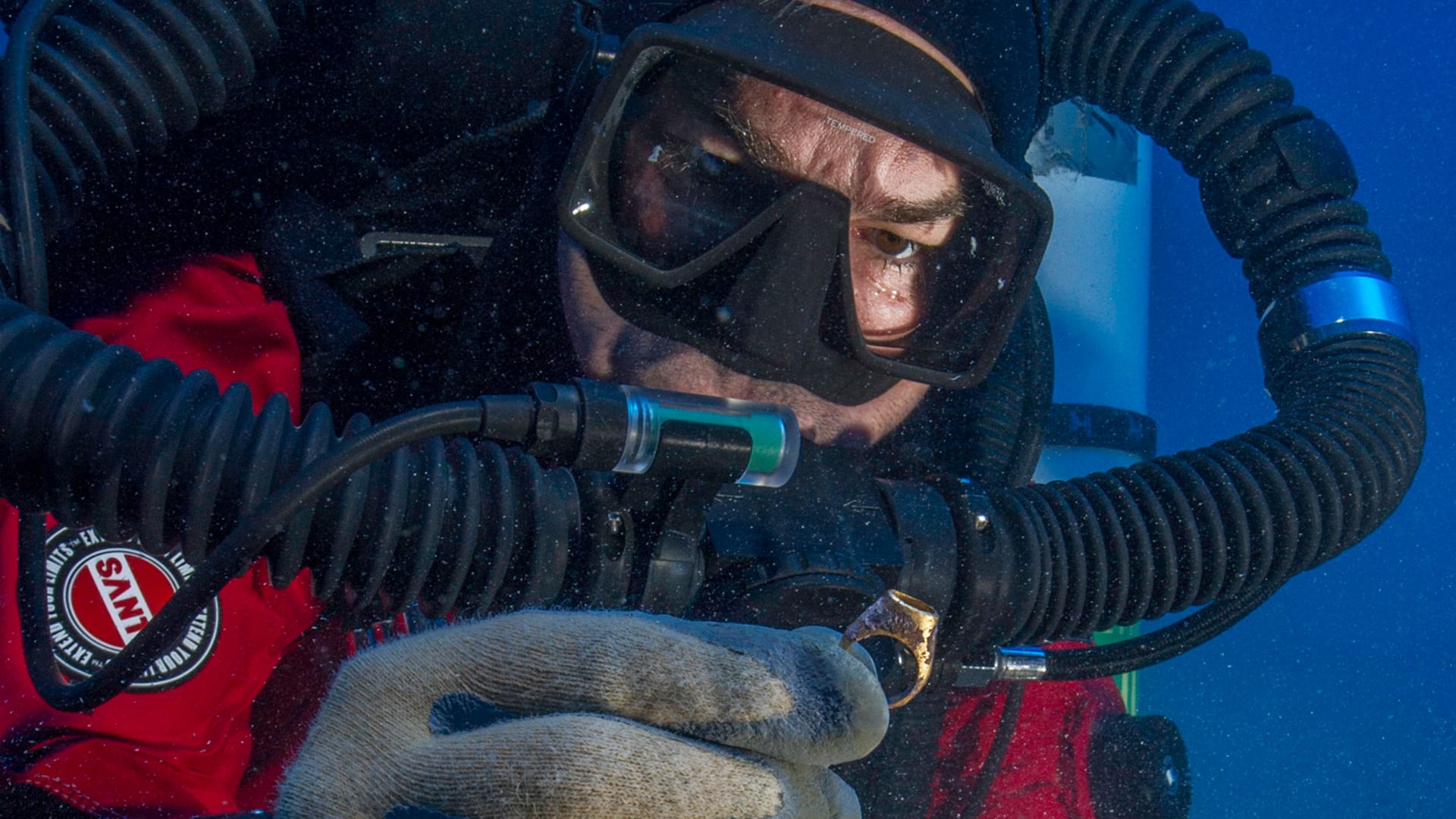
Scientists returned in 2015 and 2016 to the wreck of a 180-foot ship that sank off the Greek island of Antikythera around 65 B.C., and recovered luxury items that included…
Read MoreWHOI Technology Used in Locating El Faro Data Recorder
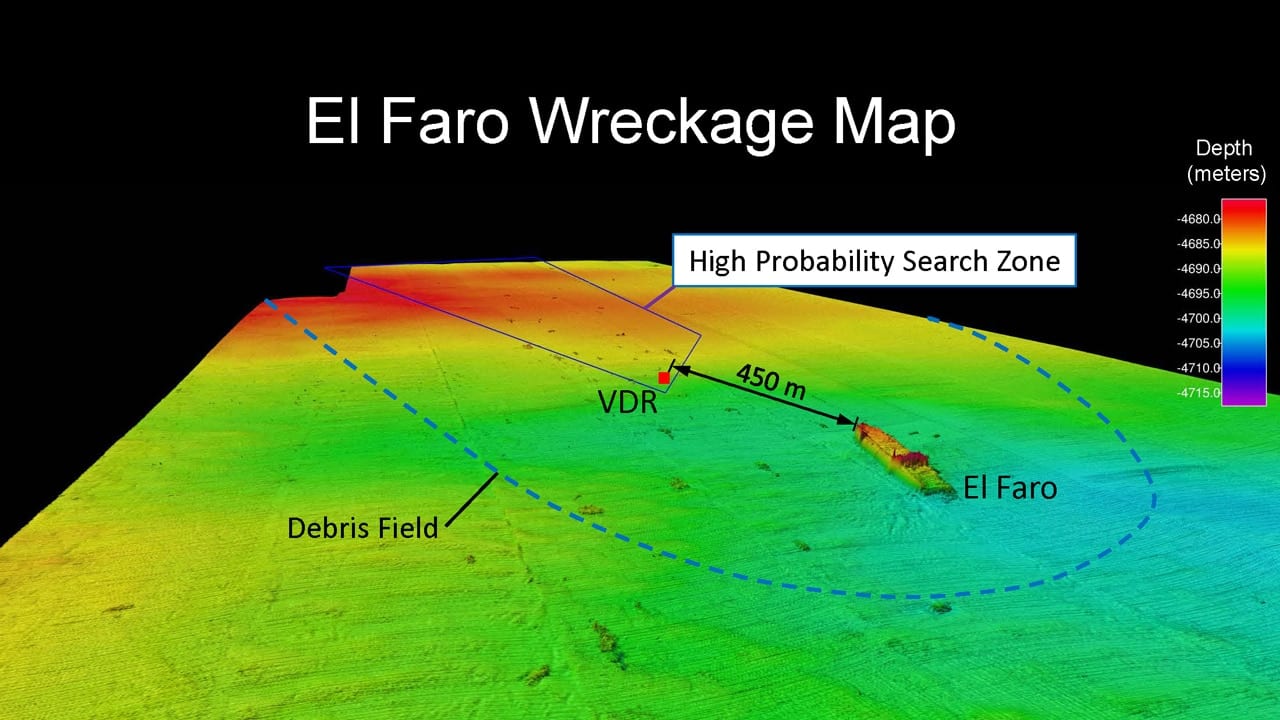
Technology and vehicles developed and operated by Woods Hole Oceanographic Institution (WHOI) scientists and engineers were instrumental in assisting the NTSB in locating the voyage data recorder (VDR) of El Faro.
Read MoreSteve Elgar Named National Security Science and Engineering Faculty Fellow
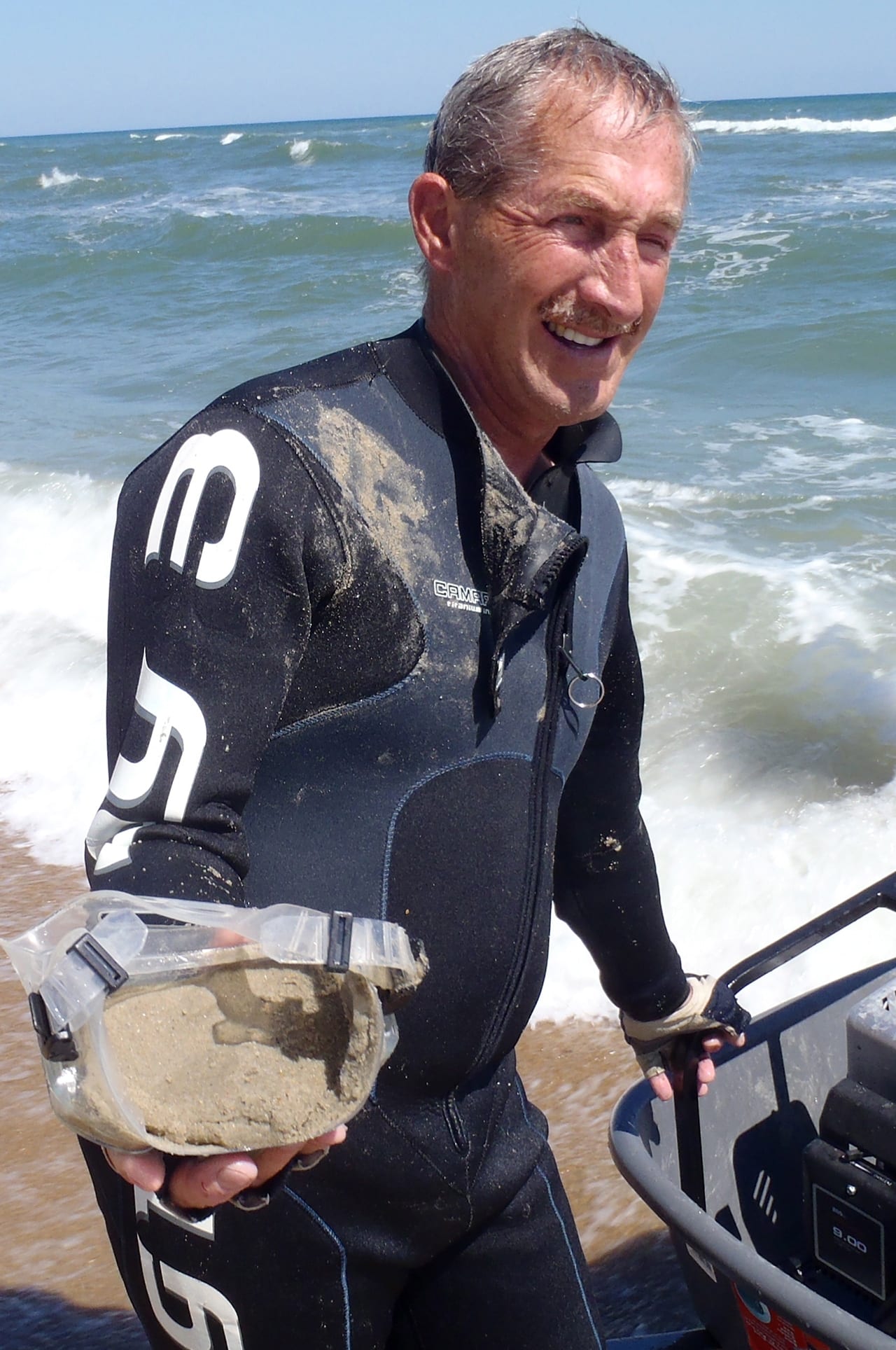
Steve Elgar, a senior scientist at Woods Hole Oceanographic Institution (WHOI), has been selected as a 2016 National Security Science and Engineering Faculty Fellow (NSSEFF) by the Department of Defense.
Read MoreSeal Whiskers Inspire Marine Technology
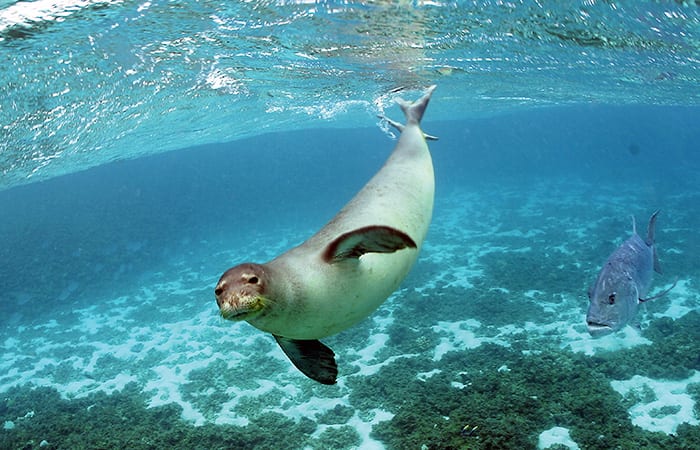
The night approaches quickly. A harbor seal plunges into the water, diving deep as the sunlight recedes. Through the dark, turbid waters, she searches for fish. Suddenly, the whiskers on…
Read MoreEpiphany Among the Manta Rays
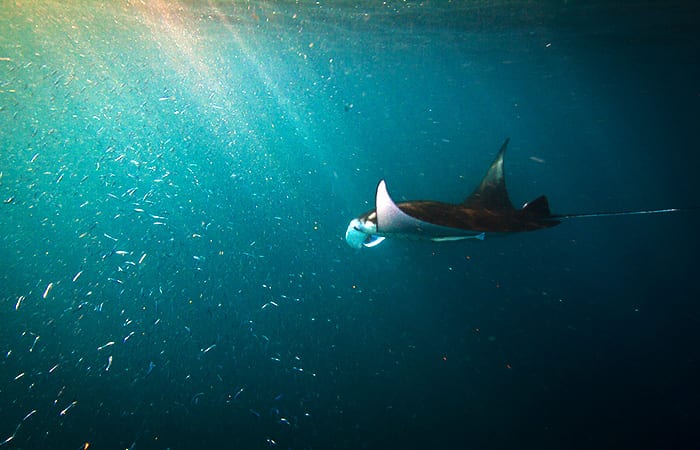
There’s a great need to collect ocean temperature data. And there are millions of scuba divers out there.
Read More